If you have dietary restrictions, eating in Vietnam is usually manageable—but clear communication matters. For Indian travellers, terms such as vegetarian, Jain, no beef, or no pork can involve very specific rules. A vegetarian traveller may avoid eggs but eat dairy, while a Jain traveller may additionally avoid onion, garlic and root vegetables. Vietnamese restaurants cannot always understand these requirements from a single label. The safest approach is simple: explain what you cannot eat, carry the requirements in writing, and communicate them before your meal is prepared. Here is what Indian travellers need to know.
Why dietary restrictions need clear communication in Vietnam?
Vietnam has its own vegetarian tradition known as an chay, which makes vegetarian food relatively accessible. However, your personal definition of vegetarian food may not always match how a restaurant prepares a dish.
Ingredients such as fish sauce, shrimp paste, oyster sauce and different broths are common in Vietnamese cuisine. A noodle or vegetable dish may therefore require checking even when no meat is visible.
Jain food requires even clearer communication because the restriction extends beyond meat and seafood. Instead of relying only on terms such as “vegetarian” or “Jain,” explain your diet ingredient by ingredient.
Vegetarian, Jain or religious restriction: What should you say?
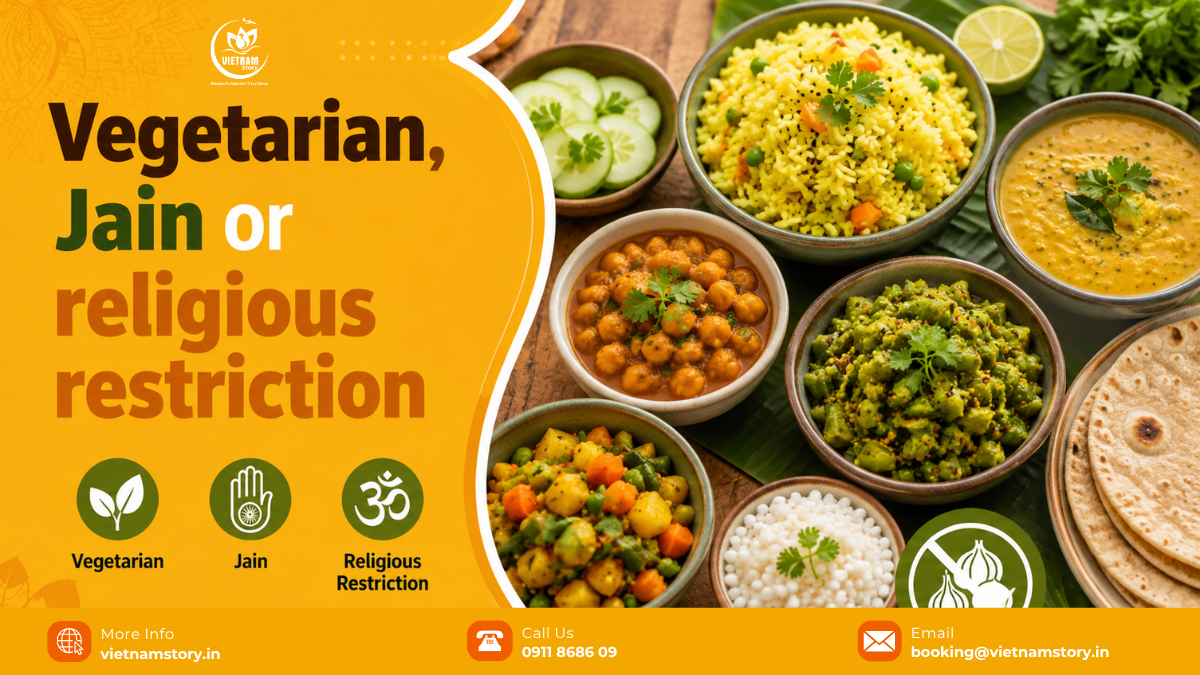
Different travellers need different levels of communication.
Vegetarian
If you avoid meat, fish and eggs but eat dairy, state those restrictions separately. At general restaurants, also check whether fish sauce, seafood-based seasoning or meat broth is used.
Jain
Tell the restaurant exactly what you avoid, which may include meat, seafood, eggs, onion, garlic and root vegetables according to your dietary practice. Do not assume a local restaurant will understand everything implied by the word “Jain.”
No Beef or no pork
If you eat other meats but avoid beef or pork, communicate that specific restriction rather than describing yourself as vegetarian.
This gives the kitchen a much clearer request to work with.
Essential Vietnamese food phrases
You do not need to speak Vietnamese fluently. Save these phrases on your phone and show them to restaurant staff when needed.
| English | Vietnamese |
| I eat vegetarian food | Tôi ăn chay |
| No meat | Không thịt |
| No fish | Không cá |
| No seafood | Không hải sản |
| No fish sauce | Không nước mắm |
| No shrimp paste | Không mắm tôm |
| No egg | Không trứng |
| No beef | Không thịt bò |
| No pork | Không thịt heo |
| No onion | Không hành |
| No garlic | Không tỏi |
| No oyster sauce | Không dầu hào |
For several restrictions, a written card is usually easier than trying to explain everything verbally.
Dietary card for Indian travellers
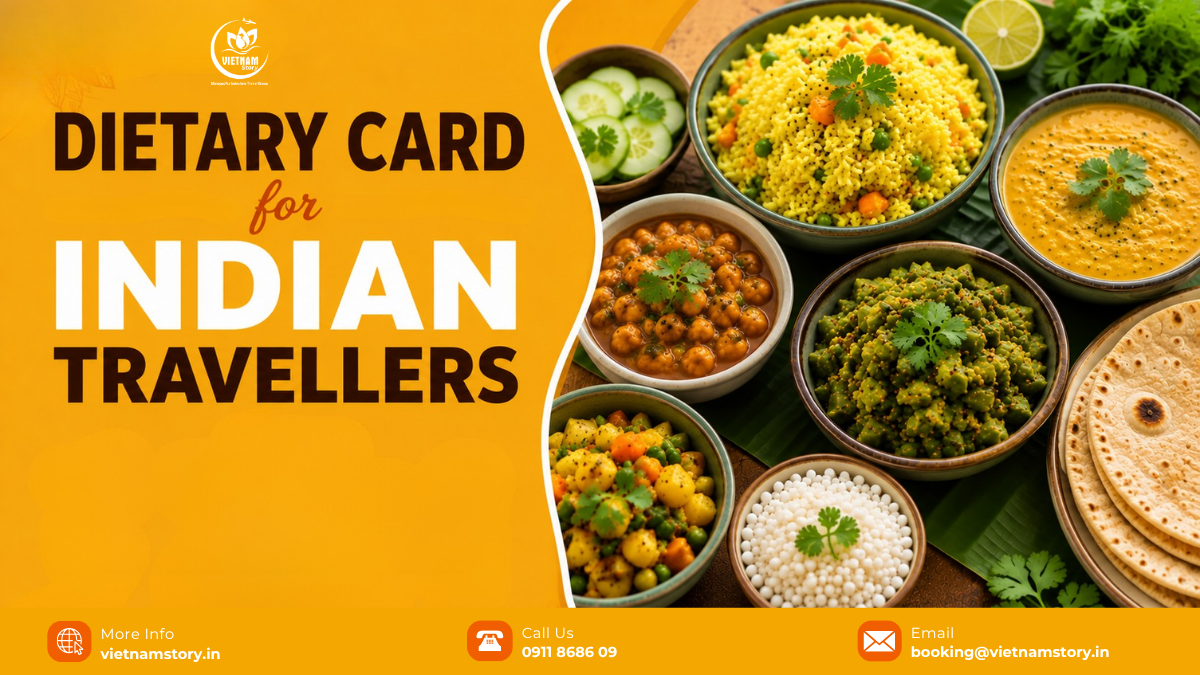
Save this card on your phone and remove any ingredients that do not apply to your diet:
Hello. I have strict dietary requirements. Please do not use:
- Meat
- Fish or seafood
- Fish sauce or shrimp paste
- Egg
- Onion or garlic
- Root vegetables
Please tell me if this dish contains any of these ingredients. Thank you.
For Jain travellers, customize the card according to the ingredients you personally avoid. A specific list is much more useful to a Vietnamese kitchen than the word “Jain” alone.
Ingredients vegetarian travellers should check
Visible meat is not the only thing that matters. Sauces and broths are equally important when ordering Vietnamese food.
- Fish sauce (Nước mắm) is commonly used as a condiment and ingredient. If you are strictly vegetarian, ask whether it is included.
- Shrimp paste (Mắm tôm) appears in some traditional dishes and should also be specified if you avoid seafood.
- Broth deserves particular attention when ordering noodle soups. Removing the meat from a meat-based soup does not necessarily make the dish vegetarian.
- Oyster sauce can be used in stir-fried dishes, including vegetables. Ask for “Không dầu hào” if you avoid it.
A simple rule helps: check how the dish is cooked, not only what you can see on the plate.
How Jain travellers should order?
Jain travellers should communicate their restrictions as a checklist rather than a single request.
Start with meat, fish, seafood and eggs. Then specify onion and garlic, followed by the root vegetables excluded from your diet. If separate utensils or particular preparation practices matter to you, ask whether the kitchen can accommodate them rather than assuming they are available.
Advance arrangements are particularly useful for cruises, group tours and destinations where restaurant choice is limited. For more detailed planning, see our Jain Food in Vietnam guide.
When should you communicate your diet?
The earlier you communicate strict requirements, the easier they are to manage.
- At a hotel, inform staff before your first breakfast and preferably before arrival if your restrictions are extensive.
- At a restaurant, show your dietary card before ordering rather than after the dish arrives.
- For a Ha Long Bay cruise, provide dietary requirements when booking and reconfirm before boarding because restaurant alternatives are unavailable once the cruise begins.
- On a group tour, tell the operator before travelling, especially when meals are included in the package.
Our Indian Food and Vegetarian Options for Group Tours guide explains how meal flexibility differs between fixed group tour formats, SIC and private tours.
Is Chay food suitable for Indian vegetarians?
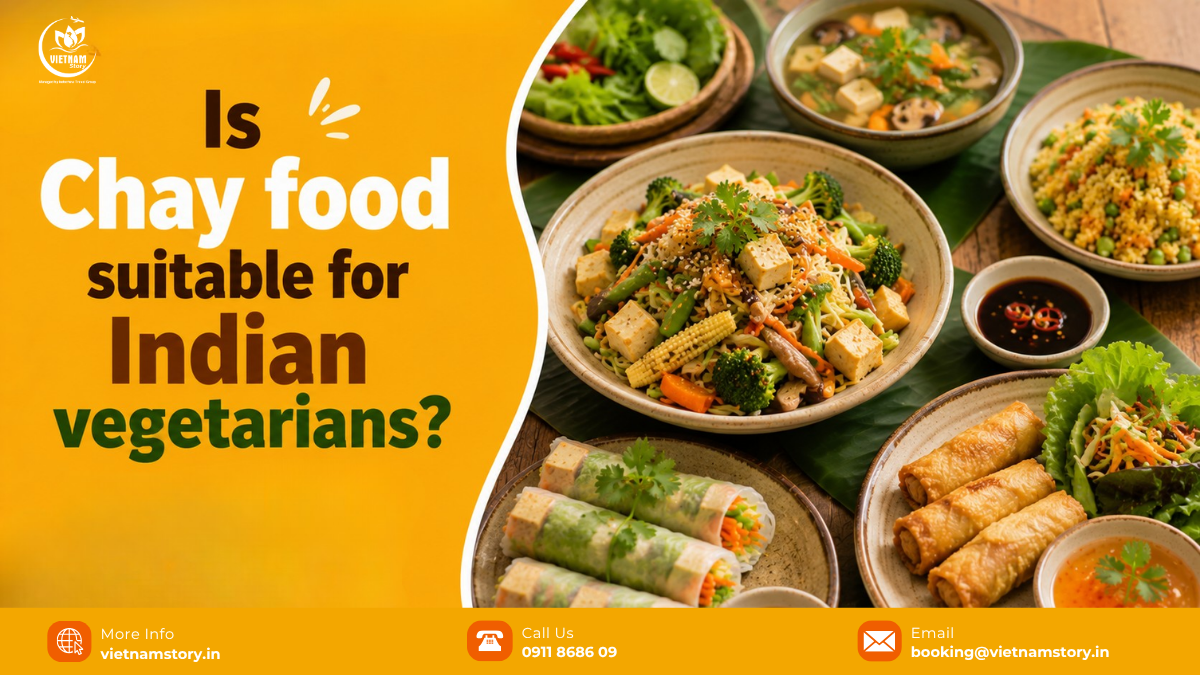
Chay restaurants are one of the most useful options for vegetarian travellers in Vietnam because vegetarian cuisine is their main focus.
However, Chay should be treated as a starting point rather than a guarantee that every dish meets every Indian dietary restriction.
A general vegetarian may find these restaurants straightforward, while Jain travellers still need to check onion, garlic and root vegetables. Travellers with allergies must communicate those separately.
For a broader look at where food is easiest to find, see our Indian Food in Vietnam: City-by-City Guide for Travellers from India.
What if you have a food allergy?
Food allergies require more caution than dietary preferences. Clearly identify the allergen and explain that it causes an allergic reaction. For serious allergies, follow the travel advice provided by your clinician and carry any medication or medical information they recommend.
Do not assume that every restaurant can guarantee separate preparation or prevent cross-contact.
Common mistakes to avoid
Simply saying “No meat” may not cover fish, seafood, eggs, fish sauce or broth. Similarly, saying “Jain” without explaining the ingredients may create confusion.
Another common mistake is judging a dish only by what is visible. A vegetable noodle soup can still have a broth or sauce that does not meet your requirements.
The best question is not simply, “Is this vegetarian?” It is: “Does this dish contain any of the ingredients I avoid?”
FAQ
How do I say “I am vegetarian” in Vietnamese?
Say “Tôi ăn chay.” If your diet is strict, also specify ingredients such as fish sauce, seafood and eggs that you avoid.
How do I explain Jain food in Vietnam?
Provide a written list of the ingredients you do not eat, such as meat, seafood, eggs, onion, garlic and relevant root vegetables.
How do I say no beef or pork?
“No beef” is Không thịt bò and “no pork” is Không thịt heo.
Should I inform my tour operator beforehand?
Yes, especially for cruises, group tours and strict vegetarian or Jain diets. Advance notice makes meal planning much easier.
Conclusion
Managing dietary restrictions in Vietnam for Indians does not mean you have to avoid Vietnamese cuisine. The key is communication. Define exactly what you cannot eat, save the important Vietnamese phrases, carry a dietary card and inform hotels, cruises or tour operators in advance when necessary. Most importantly, communicate ingredients rather than relying only on dietary labels.
Vietnam Story can incorporate vegetarian, Jain and other meal requirements when planning Vietnam Tour Packages from India, particularly for itineraries involving cruises, group meals or destinations with fewer dining options. Plan the food requirements before you travel, and once you arrive, you can focus on experiencing Vietnam rather than explaining your diet from scratch at every meal.