A Vietnam educational tour from India works best when the school or college defines the learning goals and student welfare requirements before selecting a route. Hanoi’s museums, Ninh Binh’s landscapes and Central Vietnam’s heritage can support different subjects, but not every sightseeing stop becomes a meaningful lesson. Start with student ages, the number of supervising adults, permissions, flight dates, meal needs and a realistic budget. Vietnam Story can help discuss the Vietnam travel logistics within the confirmed service scope; academic content, safeguarding and institutional approvals remain the responsibility of the school or college.
Is Vietnam good for student trips?
Yes. Vietnam can be a rewarding destination for educational and cultural visits, provided the activities match the students’ ages and learning goals.
- Hanoi offers opportunities to explore history and cultural heritage. Ninh Binh introduces river landscapes and rural environments.
- Ho Chi Minh City provides a different perspective on urban development and history, while the Mekong Delta offers opportunities to observe agriculture and waterways.
- Central Vietnam, including Da Nang, Hoi An and Hue, can support studies of heritage, architecture and tourism.
However, a successful educational tour is not simply a sightseeing holiday with students. Teachers should be able to explain what students will observe or discuss at each stop. Plan one or two meaningful learning tasks per day rather than trying to cover several disconnected attractions.
School trips vs College tours: What changes?
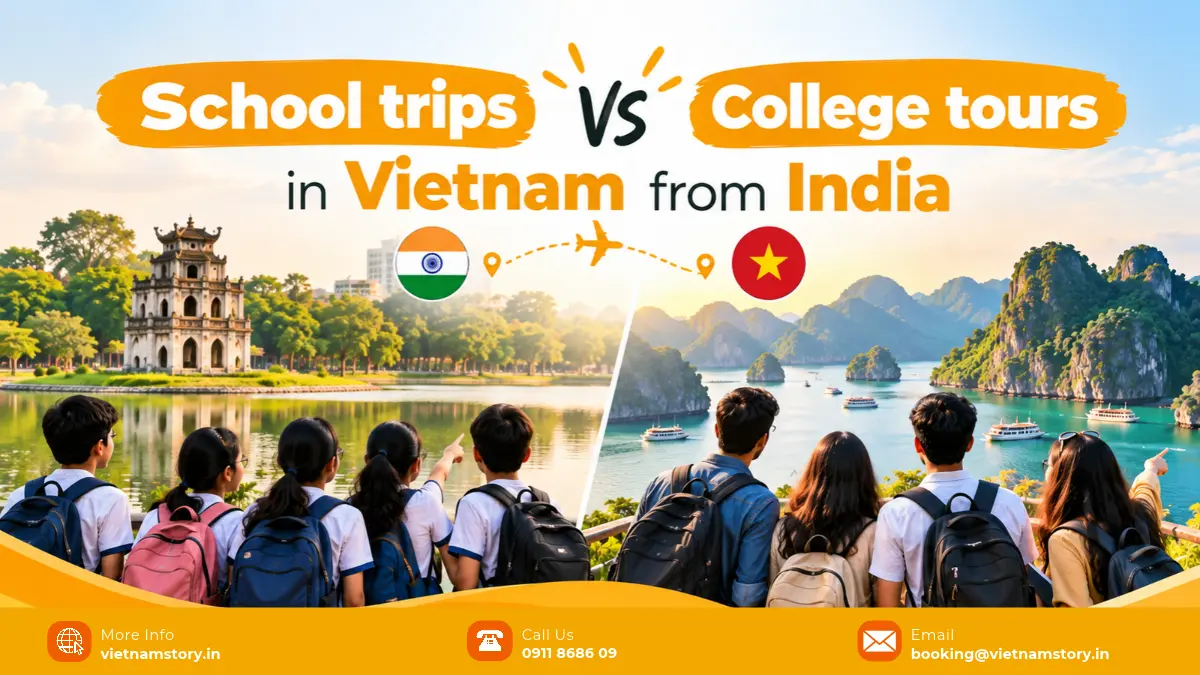
School and college groups may visit similar destinations, but their requirements are different.
| Planning factor | School groups | College groups |
| Learning focus | Curriculum enrichment and cultural awareness | Subject-specific observation and research |
| Supervision | Structured adult oversight | Institution-defined supervision and independence |
| Activities | Age-appropriate guided visits | Potential specialist or institutional visits |
| Schedule | More rest and predictable routines | Greater flexibility where appropriate |
| Accommodation | Strong safeguarding and rooming arrangements | Suitable group accommodation and conduct rules |
For younger students, predictable schedules, named supervising adults and agreed procedures for breaks and group movement are especially important. College groups may be able to work more independently, according to the institution’s rules. University meetings, school exchanges, workshops and industry visits require direct acceptance by the proposed host; they are not standard sightseeing inclusions. Choose the educational purpose before choosing the destinations.
Which Vietnam educational tour route is best?
For most short trips, one region is easier to manage than travelling across the entire country.
| Suggested route | Learning opportunities | Best suited to |
| Hanoi and Ninh Binh | History, culture, geography | School and college groups |
| Ho Chi Minh City and Mekong Delta | Urban development, agriculture, waterways | Geography and social studies groups |
| Da Nang, Hoi An and Hue | Heritage, architecture, tourism | Cultural and hospitality studies |
A four- to six-day itinerary can provide a useful regional introduction. Avoid adding domestic flights simply to collect more destinations: every extra transfer creates another attendance check, luggage movement and possible delay. For a Hanoi base, compare our Hanoi day trips by road time and activity before adding Ninh Binh or Ha Long Bay. Our Vietnam five-day tour options show general route shapes, not approved school programmes. Curriculum sessions, staff supervision and access to any specialist venue need separate confirmation.
Build learning into each day
An educational tour needs clear learning outcomes. For example, a selected Hanoi museum may support a history or ethnography topic; our Hanoi museum comparison can help teachers choose a venue relevant to the lesson and available time. A Ninh Binh excursion could introduce river landscapes and rural environments, but the day’s travel time must still be worthwhile for the age group.
College students studying tourism might observe visitor facilities, destination management and cultural interpretation. Teachers can prepare short questions before each visit and organise group discussions afterwards.
A short reflection task can connect the visit with the curriculum: ask students to note an observation, compare it with a lesson and discuss it after returning to the hotel. Teachers should lead this learning activity. If a programme requires a specialist workshop, school exchange or institutional visit, obtain the host’s written approval and confirmed timetable first. A standard sightseeing guide should not be described as a curriculum specialist without verification.
How much does a Vietnam student trip cost?
There is no fixed price for a Vietnam educational tour from India. Costs depend on departure city, travel dates, group size, hotel standards, transport and activities.
A complete budget should account for international flights, baggage, accommodation, meals, drinking water, local transport, guides, entrance fees, applicable visa expenses, insurance and contingency funds. Also clarify whether accompanying teachers’ costs are included and how these are allocated.
When comparing quotations, calculate both the final per-student amount and the total group cost, including staff travel and any minimum group-size conditions. A lower rate may exclude airport pickups, a teacher’s room, special meals, entrance fees or separately organised workshops. Use our Vietnam tour quotation checklist to compare inclusions and exclusions. The Vietnam tour packages from India illustrate general route options, but a school trip requires its own written scope and budget. Do not assume regular tour prices include academic visits or institutional supervision.
Student safety and supervision
Student safety starts with the institution’s risk assessment. The school or college should define safeguarding arrangements, the responsibilities of accompanying staff and age-appropriate supervision for travel, accommodation and activities. Do not use a general tour guide or driver as a substitute for the institution’s designated supervising adults.
Each accompanying adult should have clearly assigned responsibilities. Prepare procedures for attendance checks, medical concerns, transport delays and situations where a student becomes separated from the group. Students should know whom to contact and where to wait if they need assistance.
For boat trips, water activities or uneven terrain, ask the activity provider about boarding, safety equipment, weather restrictions and the ability to opt out. Teachers should check which activities are appropriate for their group and who can respond to an incident. Confirm emergency communication and transport arrangements with the Vietnam travel provider, but do not confuse travel assistance with the school’s safeguarding duty.
Choose suitable hotels and room arrangements
Group accommodation should be selected for location, safety and practical suitability. Confirm room occupancy limits, bed arrangements, breakfast times and the hotel’s group check-in procedures.
For school groups, room assignments and adult supervision must follow the institution’s safeguarding policies. Ask whether teachers can be accommodated near student rooms where appropriate. Check access arrangements, lifts and the distance to planned activities.
A conveniently located hotel may reduce daily travel time and make group management easier. Prepare a rooming list through the institution’s approved process, check room occupancy and allocation rules, and confirm changes with the accommodation provider. Avoid assuming that a standard family or twin room can accommodate the number of students proposed.
Plan Indian, vegetarian and Jain meals
Food arrangements are particularly important for students travelling as a group. Confirm which meals are included and where they will be served. Indian meals may be available in major destinations, but they should not be assumed at every restaurant or excursion location.
Vegetarian and Jain requirements need specific communication. Some students may avoid onion, garlic or root vegetables; food allergies must be handled separately. Our Indian food and vegetarian options for group tours guide explains group menu planning, while the dietary requirements guide helps describe exact ingredients. Ask the restaurant or caterer to confirm each relevant meal and any preparation limits in writing; do not promise that every venue can accommodate every requirement.
For younger students, predictable meal times and access to safe drinking water are also important. A meal request is only useful when the provider confirms what can actually be served.
Passports, visas and school permissions
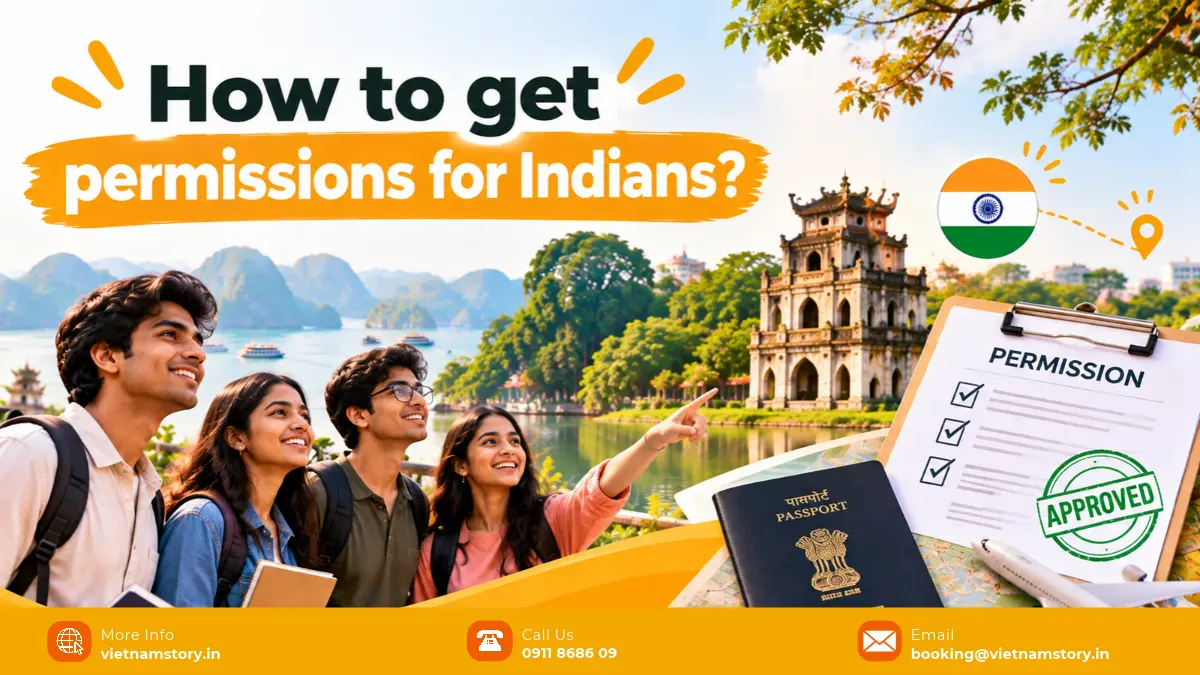
International student travel requires several layers of documentation.
Check every traveller’s passport details and the visa or entry permission appropriate to their nationality and actual purpose of travel. Indian passport holders can read our Vietnam visa planning guide, then check the official Vietnamese e-visa portal and the Embassy of India’s visitor advice. For a programme involving formal study, academic exchange or institutional activities, confirm the correct immigration arrangements with the host and the relevant authorities rather than assuming a tourist e-visa covers the activity.
For students under 18, schools should obtain the required parent or guardian consent and check whether airlines or authorities require additional documentation. The institution should also approve the itinerary and collect necessary emergency information through its authorised procedures. Travel insurance, medication arrangements and special assistance should be reviewed before departure. Do not assume that one document checklist fits every student.
How to choose a student Group Tour provider
A provider may be experienced in group travel without offering a specialised academic programme. Clarify the distinction before booking. Ask for a written proposal covering hotels, room allocation, transport, guides, meals, entrance fees, exclusions and emergency contacts. Confirm who will coordinate airport arrivals, attendance-related transport changes and communication with accompanying teachers.
If a workshop or institutional visit is advertised, request the host organisation’s confirmation, schedule and approved group size. Our Vietnam group tours for Indian travellers guide explains group formats; the comparison of private, shared and independent travel helps explain which arrangements offer more flexibility. For school or college groups, private transport can help manage a timetable, but the exact services and changes must be stated in the quotation.
Sample 5-day Hanoi educational tour
A focused Hanoi-based programme could follow this structure:
| Day | Suggested programme | Learning focus |
| Day 1 | Arrival, orientation and safety briefing | Travel readiness |
| Day 2 | Selected Hanoi museums and historic sites | History and culture |
| Day 3 | Ninh Binh landscape excursion | Geography and environment |
| Day 4 | Cultural visit, discussion and reflection | Connecting observations to lessons |
| Day 5 | Group review and departure | Learning summary |
This is an illustrative five-day Hanoi route, not an approved academic programme or a confirmed departure. It assumes suitable arrival and departure times and a single hotel base. Teachers should select actual venues for their learning goals, check opening days and activity suitability, and allow rest after international flights. Any separate workshop, exchange or institution-led session must be agreed directly with its host.
FAQs
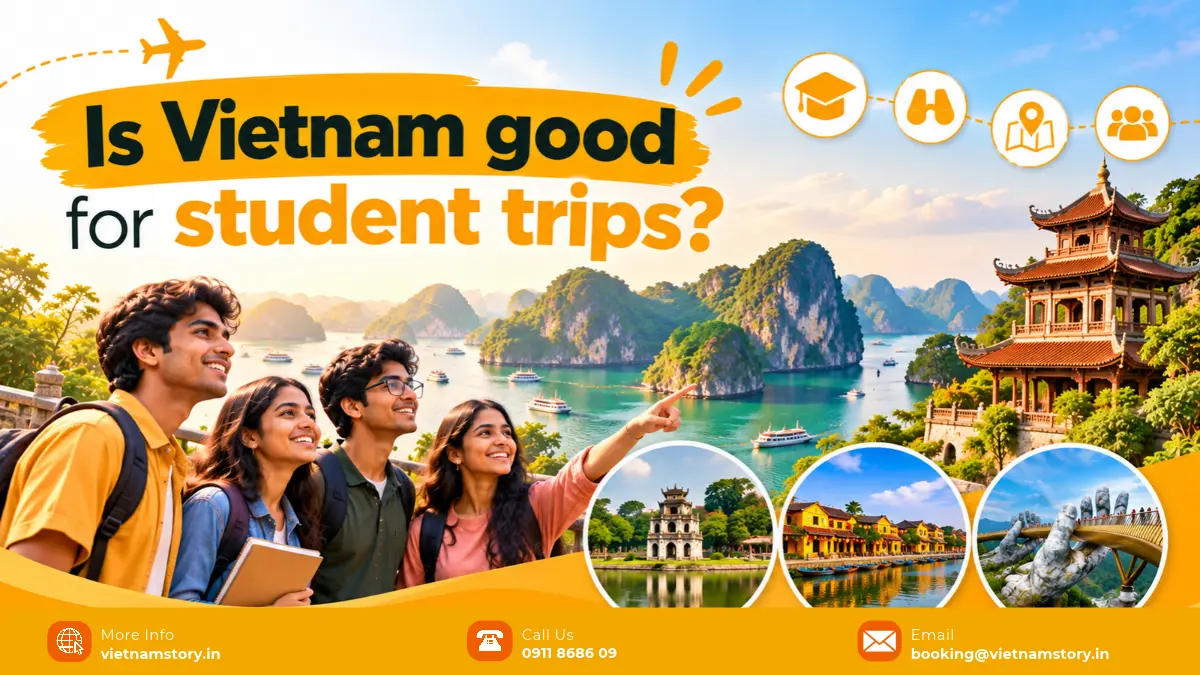
Is Vietnam good for student trips?
Yes. Vietnam offers opportunities to study history, geography, culture and tourism through guided visits and local observation. The trip should have clear learning objectives, age-appropriate activities and responsible supervision.
What should student groups plan before visiting Vietnam?
Schools and colleges should confirm learning goals, travel dates, passports, visas, permissions, supervision, accommodation, meals, transport, insurance and emergency procedures before departure.
How many days are enough for a Vietnam educational tour?
Four to six days can work for a focused regional programme. Trips involving several regions or specialist academic activities may require more time.
Can Indian vegetarian students find suitable meals?
Suitable meals may be arranged, especially in major destinations. Schools should confirm menus, allergies and specific vegetarian or Jain requirements in advance.
Conclusion
Planning a Vietnam educational visit from India? Send Vietnam Story your proposed dates, Indian departure city, number and ages of students, accompanying staff count, subject or learning goals, and any dietary or mobility requirements. We can discuss feasible Vietnam routes, accommodation, transport and sightseeing within an agreed travel scope. The institution remains responsible for educational content, safeguarding and permissions; specialist academic visits require separate approval. Compare the written programme and inclusions before confirming bookings.