When is the best time to visit Hanoi? For most first-time Indian travellers, October and November are excellent choices, with generally comfortable temperatures for walking, sightseeing and exploring the Old Quarter. March and April are also worth considering if you prefer a spring holiday. But Hanoi is a year-round destination. Winter can be surprisingly cool, while summer brings heat, humidity and heavy showers. At Vietnam Story, we recommend choosing your travel month around the experiences you want and the other Northern Vietnam destinations on your itinerary.
When is the best time to visit Hanoi?
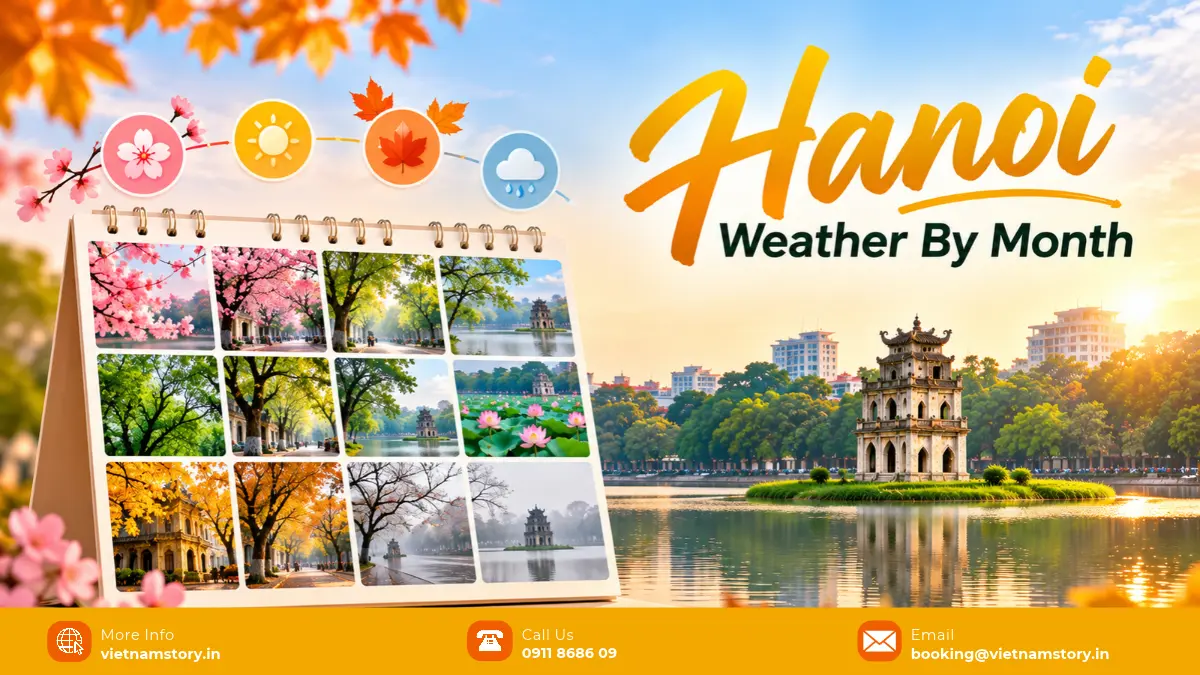
Hanoi has four recognisable seasons, although the weather does not follow an exact calendar.
| Season | Months | Typical conditions | Best for |
| Spring | March – April | Mild to warm, sometimes drizzly | Cultural sightseeing |
| Summer | May – August | Hot, humid and rainy | Flexible holidays |
| Autumn | September – November | Warm initially, becoming cooler | Walking and city exploration |
| Winter | December – February | Cool, sometimes damp or cloudy | Travellers who enjoy cooler weather |
Our recommendation: Choose October – November for comfortable sightseeing, March – April for a spring city break, or December – February if you prefer cooler weather. September can still be rainy, and April can become quite warm. No month guarantees sunshine every day.
Hanoi weather by month: Temperature and travel conditions
The figures below are rounded historical average daytime highs and nighttime lows, not forecasts or guaranteed temperature limits.
| Month | Typical high / low | What to expect |
| January | 20°C / 14°C | Cool, cloudy at times |
| February | 21°C / 16°C | Cool, occasional drizzle |
| March | 24°C / 18°C | Mild but often humid |
| April | 28°C / 22°C | Warmer, occasional showers |
| May | 32°C / 24°C | Hot, increasingly rainy |
| June | 33°C / 26°C | Hot and humid |
| July | 33°C / 26°C | Hot with frequent rain |
| August | 32°C / 26°C | Very humid, often wet |
| September | 32°C / 25°C | Warm, rain still possible |
| October | 30°C / 22°C | More comfortable autumn weather |
| November | 27°C / 19°C | Mild, generally pleasant |
| December | 22°C / 15°C | Cooler days and evenings |
“Source: Rounded 1991–2020 climate averages from NOAA-based observations at Noi Bai International Airport. Actual conditions in central Hanoi may differ.”
January and February: Cool winter weather
January and February are among Hanoi’s coolest months. Daytime temperatures can be comfortable for sightseeing, but mornings and evenings may feel chilly, particularly when conditions are damp. Unlike the bright winter weather some travellers imagine, Hanoi can experience cloudy skies and fine drizzle.
If you are arriving from a warm Indian city, pack a jacket and layers. These months suit travellers who dislike heat, although they are less predictable for sunshine and photography. Also check the dates of Tet, Vietnam’s Lunar New Year. Some restaurants, shops and attractions may operate differently during the holiday.
March and April: A pleasant spring alternative
March is a good option for travellers who want milder weather. You can explore Hoan Kiem Lake, the Old Quarter and historical landmarks without the intense heat of midsummer.
However, humidity, mist and light drizzle are possible. April becomes warmer, and some afternoons may already feel hot. Plan longer walks earlier in the day and keep a light rain layer available.
For a first visit, our Hanoi travel guide can help you choose attractions that fit your interests and available time. Choose March for milder temperatures or April if you prefer warmer conditions and can accommodate occasional showers.
May to August: Hot and rainy summer

Hanoi’s summer is hot and humid, with frequent rainfall. June and July can be particularly uncomfortable for long midday walks. August is typically among the wettest months, although rainfall varies between years. Heavy showers do not necessarily mean it rains continuously all day. You may still enjoy clear periods between showers.
For Indian families travelling during school holidays, Hanoi remains possible with sensible scheduling. Visit outdoor attractions in the morning, use museums and cafés for afternoon breaks, and choose accommodation with reliable air-conditioning. Keep your sightseeing flexible rather than arranging every hour around perfect weather.
Our where to stay in Vietnam guide explains why choosing a convenient Hanoi hotel can reduce unnecessary transfers.
September to November: Hanoi’s autumn appeal
September marks the transition towards cooler weather, but it can remain hot and rainy. October usually becomes more comfortable, making it attractive for walking around Hoan Kiem Lake and exploring the Old Quarter. November often brings milder days and cooler evenings.
For first-time Indian travellers who can choose their dates freely, October and November offer one of the strongest combinations of comfortable temperatures and enjoyable sightseeing conditions.
These months are particularly appealing if your itinerary includes cafés, markets, temples and relaxed neighbourhood walks. However, October can still experience rain, and favourable weather may increase demand for popular hotels and activities.
December: Cooler days and café weather
December is a good alternative for travellers who prefer cooler temperatures. Walking around central Hanoi can be pleasant during the day, while evenings may call for a warmer layer. The city can feel quite different from tropical destinations such as Ho Chi Minh City or Phu Quoc.
If you are travelling during Christmas or the year-end holiday period, compare accommodation options early. December is especially suitable for visitors who enjoy cultural attractions, cafés and a less heat-intensive sightseeing schedule.
Which month is best for your travel style?
Your ideal month depends on your priorities.
| Travel preference | Months to consider |
| First-time sightseeing | October–November |
| Spring city break | March–April |
| Cooler temperatures | December–February |
| Family walking holidays | March, October, November |
| Summer school holidays | May–August, with flexible plans |
| Photography and outdoor cafés | October–November, weather permitting |
For senior travellers, mild weather can help make sightseeing more comfortable, but walking distances and daily pacing matter just as much. For budget-conscious visitors, compare actual hotel and flight prices rather than assuming one season is always cheaper.
How does Hanoi weather affect Ninh Binh and Ha Long Bay?
Many Indian travellers combine Hanoi with Ninh Binh and Ha Long Bay. These destinations share Northern Vietnam’s broad seasonal patterns, but their activities are affected differently by weather.
Ninh Binh
A Ninh Binh excursion often includes boat rides, temples or outdoor viewpoints. Hot weather can make exposed walking uncomfortable, while heavy rain may affect boat operations or attraction access.
Our Ninh Binh day trip from Hanoi guide helps you choose a realistic route without trying to visit every attraction in one day.
Ha Long Bay
Ha Long Bay cruises depend on marine weather and operational safety decisions. Poor visibility, storms or other unsafe conditions can affect activities and departures, even when the weather in Hanoi seems manageable. Before booking, review cruise cancellation and rescheduling conditions.
If you are deciding whether a cruise deserves a place in your itinerary, read our guide to whether Ha Long Bay is worth visiting. Good weather in Hanoi does not guarantee suitable conditions for every Northern Vietnam excursion.
What should you pack for Hanoi?

Pack according to the season rather than assuming Vietnam is always hot.
- For summer: Bring breathable clothing, sun protection, comfortable shoes and a compact umbrella.
- For spring and autumn: Choose light layers and carry rain protection.
- For winter: Bring a warmer jacket, especially for evenings and early mornings.
Comfortable walking shoes are useful year-round because exploring Hanoi often involves pavements, crossings and historic streets. Check the forecast shortly before departure and adjust your plans if heavy rain or unusual temperatures are expected.
How should you plan Hanoi within a longer Vietnam holiday?
The best month for Hanoi may not be the best month for every other Vietnamese destination. Central Vietnam and Southern Vietnam have different seasonal patterns, so avoid applying Hanoi’s autumn recommendation to the entire country.
If you are visiting Vietnam for the first time, our first-time Vietnam itinerary can help you decide how Hanoi fits alongside Ninh Binh, Ha Long Bay and other regions. Choose the route first, then compare the weather conditions across all your destinations.
FAQs

What is the best month to visit Hanoi?
October and November are excellent choices for comfortable sightseeing. March is another attractive option, while April suits travellers who prefer warmer weather.
What is the rainiest season in Hanoi?
The wetter period generally runs from May to September, with July and August often receiving substantial rainfall. Actual conditions vary each year.
Is Hanoi too cold in December or January?
Not usually for travellers comfortable with cool weather, but mornings and evenings can feel chilly. Bring layers, especially if travelling from a warm Indian city.
Is Hanoi worth visiting in July?
Yes. Expect heat, humidity and possible heavy showers. Schedule outdoor sightseeing early, include indoor breaks and keep your itinerary flexible.
Conclusion
October and November are our top recommendations for many first-time Indian travellers, while March and April offer another good sightseeing window. Winter is suitable for those who enjoy cooler weather, and summer remains possible with flexible planning. At Vietnam Story, we recommend choosing your dates around your complete Northern Vietnam route rather than searching for one supposedly perfect month. The best Hanoi holiday is one where the weather, activities and daily pace work well together.