Ha Long Bay – Cat Ba Archipelago is a UNESCO World Heritage property because of two things: its exceptional natural beauty and its globally important karst geology. Ha Long Bay was first inscribed in 1994, its geological value was added in 2000, and in 2023 the World Heritage property was expanded through a significant boundary modification to include the Cat Ba Archipelago. The current UNESCO criteria remain (vii) and (viii).
This guide explains what those UNESCO criteria mean, why the 2023 change matters, and why conservation remains an active issue. For a broader trip overview, start with our Ha Long Bay destination guide.

Why UNESCO considers Ha Long Bay–Cat Ba Archipelago globally significant
UNESCO uses the concept of Outstanding Universal Value to describe cultural or natural places whose significance goes beyond one country. For Ha Long Bay–Cat Ba Archipelago, that value is currently recognised under two natural criteria: criterion (vii) for exceptional natural beauty and criterion (viii) for geology and geomorphology.
This distinction matters because the site is not simply famous for attractive scenery. The visible landscape — limestone towers, steep cliffs, caves, drowned depressions and marine lakes — is also evidence of an unusually large and complete karst system shaped over a long geological period.
UNESCO describes the property as the most extensive and best-known example of marine-invaded tower karst in the world and one of the most important areas of fengcong and fenglin karst. For travellers, that scientific language explains why the landscape feels so different from a normal island coastline.
| Year | What changed | UNESCO status |
|---|---|---|
| 1994 | Ha Long Bay was inscribed on the World Heritage List. | Criterion (vii) |
| 2000 | Its geological value was added to the World Heritage recognition. | Criteria (vii) and (viii) |
| 2023 | Cat Ba Archipelago was added through a significant boundary modification. | Current property remains inscribed under criteria (vii) and (viii) |
Criterion (vii): exceptional natural beauty
Criterion (vii) is the scenic-value side of the World Heritage recognition. UNESCO highlights the dramatic combination of limestone towers, vegetated islands, steep cliffs, caves, shore erosion features and enclosed waters.
This is the part of the heritage value a visitor experiences most immediately. From a boat or kayak, the view changes constantly as narrow channels open into wider water, isolated towers appear behind one another, and caves or lagoons are revealed at water level.
Criterion (viii): an outstanding marine-invaded karst landscape
Criterion (viii) is about Earth history, geology and landform development. UNESCO recognises Ha Long Bay–Cat Ba Archipelago as an outstanding large-scale example of tropical karst that has been invaded and modified by the sea.
Fengcong and fenglin
- Fengcong (Clusters): These are groups of conical peaks that are all connected and share a common base. You will see these in the larger, more mountainous islands.
- Fenglin (Towers): These are the iconic, isolated, and vertical pillars that rise dramatically and individually from the sea. This is the classic “Ha Long” look that you see on all the postcards.
What “marine-invaded” means
The modern sea occupies parts of an older karst landscape. That is why the property contains limestone towers rising directly from the water, caves and notches at shoreline level, drowned depressions and marine lakes. UNESCO notes that the property preserves a broad sequence of landforms that helps explain how tropical karst changed as sea levels and coastal processes interacted with the terrain.
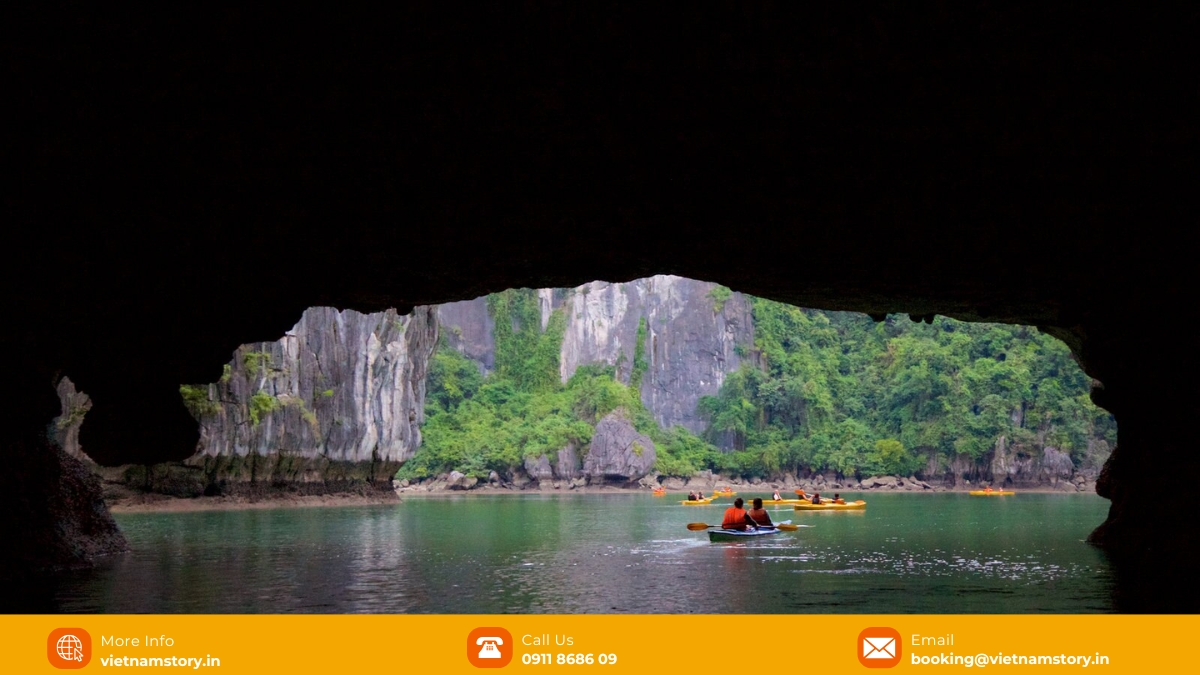
Here, the useful distinction is that geology explains why UNESCO recognises the landscape; the full formation sequence is a separate question from the World Heritage criteria themselves.
What changed in 2023 when Cat Ba was added
In 2023, UNESCO approved a significant boundary modification that added the Cat Ba Archipelago to the existing Ha Long Bay World Heritage property. The official name became Ha Long Bay – Cat Ba Archipelago.
This was not a third UNESCO criterion. The World Heritage Committee approved the enlarged property on the basis of the same two criteria, (vii) and (viii). The Committee separately encouraged Viet Nam to consider a future nomination under criterion (x), which concerns biodiversity, but criterion (x) is not currently inscribed for this World Heritage property.
The Cat Ba addition strengthened the integrity of the World Heritage landscape because the enlarged property contains a more complete sequence of tropical karst forms and sea-inundation stages. It also means current references to the UNESCO property need to distinguish the wider Ha Long Bay–Cat Ba Archipelago site from older Ha Long-only figures.
Why conservation is still an active challenge
World Heritage status does not mean conservation is complete. UNESCO’s current documentation describes tourism pressure, development, pollution control, visitor management and coordination between Quang Ninh and Hai Phong as continuing management issues.
In its 2026 decision on the property, the World Heritage Committee noted concern about the scale and pace of tourism and urban development in the buffer zone and wider setting. UNESCO reported that these pressures were already affecting visual integrity, coastal landscapes, and marine and terrestrial ecosystems, and called for stronger strategic assessment and integrated management.
For travellers, the practical lesson is simple: avoid treating words such as “pristine”, “untouched” or “perfectly protected” as literal descriptions of the whole destination. The landscape remains globally significant, but protecting that value requires ongoing management and monitoring.
How to read Ha Long Bay heritage claims correctly
- 1994: Ha Long Bay was inscribed on the World Heritage List.
- 2000: geological value under criterion (viii) was added to the World Heritage recognition.
- 2023: Cat Ba Archipelago was added through a significant boundary modification; the current property is Ha Long Bay–Cat Ba Archipelago.
- Current criteria: (vii) and (viii).
- Criterion (x): suggested for possible future consideration, but not currently inscribed.
For the authoritative wording, see the UNESCO World Heritage listing, the 2023 boundary-modification decision, and the 2026 conservation decision.
If the World Heritage landscape is one of the main reasons you want to visit, compare the route and duration of a Ha Long Bay cruise after you understand which part of the wider landscape the itinerary actually covers.