Hanoi’s Old Quarter is one of the best places to experience the character of Vietnam’s capital. Narrow streets, traditional shops, busy markets, old houses and small cafés come together in a neighbourhood that feels different at every turn. The best things to do in Hanoi Old Quarter include exploring its historic trading streets, visiting Bach Ma Temple and Dong Xuan Market, shopping along Hang Gai and enjoying the cafés around Hoan Kiem Lake. For first-time Indian travellers, allow two to three hours for a short walking tour, or half a day if you want time for food, shopping and cultural attractions. At Vietnam Story, we recommend exploring a few streets properly rather than rushing through every landmark.
What is Hanoi Old Quarter famous for?
Located immediately north of Hoan Kiem Lake, the Old Quarter is Hanoi’s historic commercial district. It is often called the “36 Streets”, a traditional expression linked to the area’s craft and trading heritage rather than an exact count of streets today.
Many street names begin with Hang, historically referring to goods or trades associated with the area. For example, Hang Bac has a long association with silverwork, while Hang Ma is known for decorative and ceremonial goods. Although businesses have changed, the Old Quarter still retains traditional architecture, narrow shopfronts and the energy of a working neighbourhood.
This is not an open-air museum. People live, work, shop and travel through these streets every day.
Best streets to explore in Hanoi Old Quarter
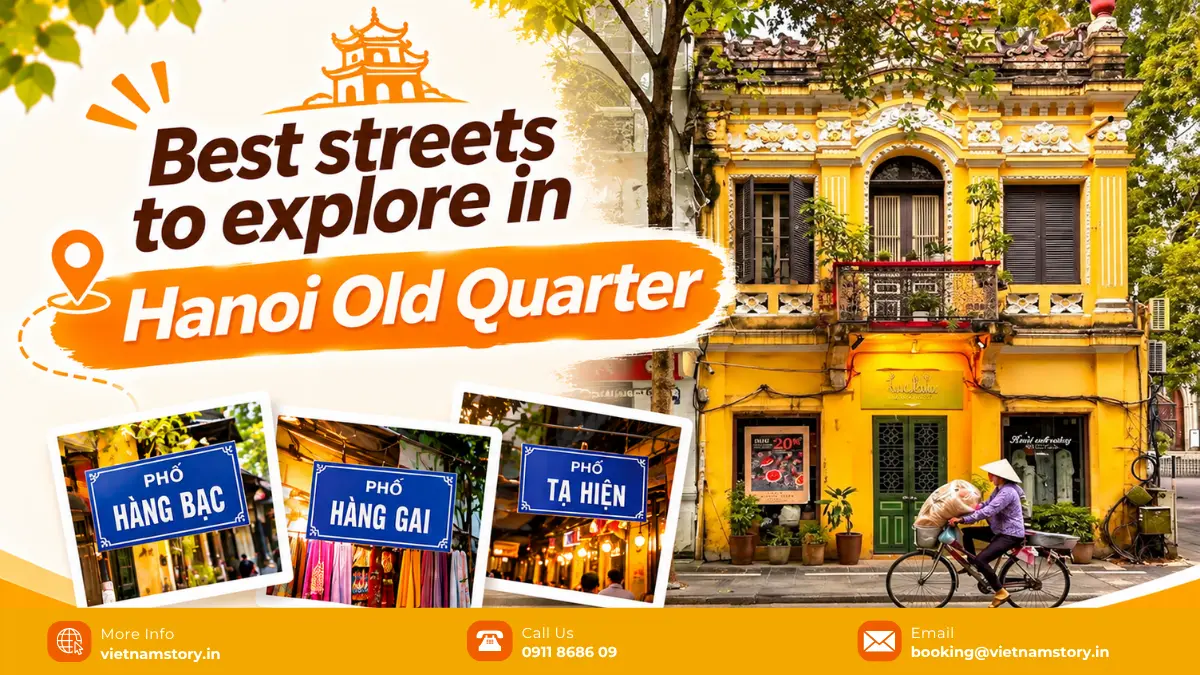
You do not need to visit all the historic streets to appreciate the neighbourhood.
| Street | Why visit? |
| Hang Gai | Silk-related shops, clothing and souvenirs |
| Hang Bac | Historic jewellery and silver-trading street |
| Ma May | Traditional streetscape and heritage houses |
| Hang Ma | Colourful decorations and seasonal merchandise |
| Hang Dao | Busy shopping street leading towards the market area |
| Ta Hien | Cafés, restaurants and lively evening activity |
The types of shops may change, so treat these as general street characteristics rather than guarantees about individual businesses. For a first visit, Hang Gai, Ma May and Hang Ma offer a useful mix of shopping, architecture and local atmosphere. For souvenir buying and market choices, use our Hanoi shopping guide; if you plan to explore after sunset, see our Hanoi evening and nightlife guide.
Hanoi Old Quarter walking route: A simple 2 – 3 hour plan
A walking route beginning near Hoan Kiem Lake is convenient for most visitors staying in central Hanoi.
Suggested route: Hoan Kiem Lake → Hang Gai → Hang Dao → Dong Xuan Market → Hang Ma → Bach Ma Temple → Hang Bac → Ma May → Ta Hien
This is a flexible sightseeing sequence, not a fixed guided tour. Some streets require short connecting walks, and the route can be shortened depending on your interests.
Stop 1: Hoan Kiem Lake
Start around Hoan Kiem Lake, just south of the historic trading streets. It is a pleasant place to observe local life, particularly in the morning. You can also visit Ngoc Son Temple, reached by the distinctive red Huc Bridge.
Check current ticketing and opening arrangements before entering.
Stop 2: Hang Gai and Hang Dao
Continue towards Hang Gai, a popular street for silk-related products, clothing and souvenirs. Hang Dao provides another introduction to Hanoi’s busy shopping culture. Browse a few shops rather than stopping at every display.
If you are buying textiles, check the material and workmanship instead of assuming every product is locally handmade.
Stop 3: Dong Xuan Market and Hang Ma
Head towards Dong Xuan Market, one of the Old Quarter’s best-known commercial landmarks. It is an active market, with sections focused on wholesale and everyday trading rather than tourist shopping.
Nearby Hang Ma becomes especially colourful around festivals and celebrations. Keep your belongings secure and allow extra time when the streets are crowded.
Stop 4: Bach Ma Temple, Hang Bac and Ma May
Visit Bach Ma Temple, an important historic religious site associated with Hanoi’s early development. Continue through Hang Bac and towards Ma May, where older buildings and narrow shopfronts offer a glimpse of the neighbourhood’s architectural character.
Ma May is also associated with a traditional heritage house that visitors may be able to enter, subject to current opening arrangements.
Stop 5: Ta Hien
Finish around Ta Hien, known for its lively cafés and evening atmosphere. If you prefer a quieter visit, explore this area earlier in the day.
For a longer Hanoi stay, our Hanoi itinerary for 2 or 3 days helps you combine the Old Quarter with other major attractions without rushing.
What else should you see near the Old Quarter?
The Old Quarter is close to several worthwhile cultural experiences. Near Hoan Kiem Lake, the Thang Long Water Puppet Theatre offers performances of traditional Vietnamese water puppetry. St. Joseph’s Cathedral is another popular landmark within the wider central Hanoi area.
If you enjoy architecture, look for traditional tube houses, characterised by narrow street-facing façades and buildings extending deeper into the plot. Rather than adding every attraction, choose one cultural stop alongside your walking route.
Our Hanoi travel guide covers more of the city’s landmarks, including the Temple of Literature, West Lake and major museums.
What food should you try in Hanoi Old Quarter?
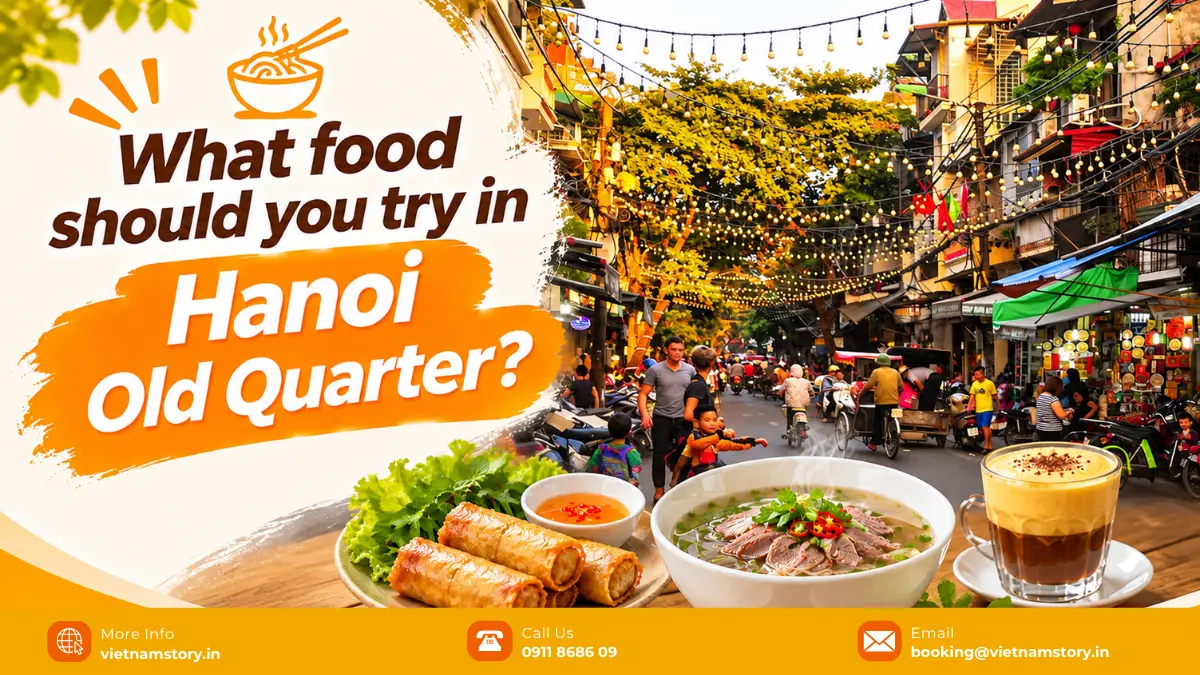
Food is one of the Old Quarter’s biggest attractions.
Popular Hanoi dishes include pho, bun cha and banh mi. The neighbourhood also has a strong café culture, including Vietnamese coffee and egg coffee. For Indian visitors, trying local food can be enjoyable, but checking ingredients is important. Traditional pho commonly contains meat-based broth, while bun cha includes grilled pork.
Some dishes that appear vegetable-based may contain fish sauce or meat stock. If you are vegetarian, ask about the broth, sauces and cooking methods. Jain travellers should explain their exact restrictions, including onion, garlic or root vegetables where applicable. Egg coffee contains egg, so it is unsuitable for travellers avoiding eggs.
Hanoi also has Indian restaurants and Vietnamese chay dining options. Our Indian food in Vietnam guide explains how to combine familiar meals with local food experiences.
Hanoi Old Quarter shopping: What is worth buying?
Shopping is part of the Old Quarter’s appeal.
You can browse silk-related products, scarves, clothing, lacquerware, souvenirs, coffee and decorative items. Hang Gai is a useful starting point for textiles, while Hang Ma is particularly interesting for seasonal decorations.
Before buying, compare prices and inspect quality. Not every item described as silk, handmade or locally produced necessarily meets that description. Some shops use fixed prices, while bargaining may be possible in market settings. Ask politely, check the final price and avoid feeling pressured to purchase.
For higher-value items, request a receipt and clarify any exchange arrangements.
Best time of day to visit Hanoi Old Quarter
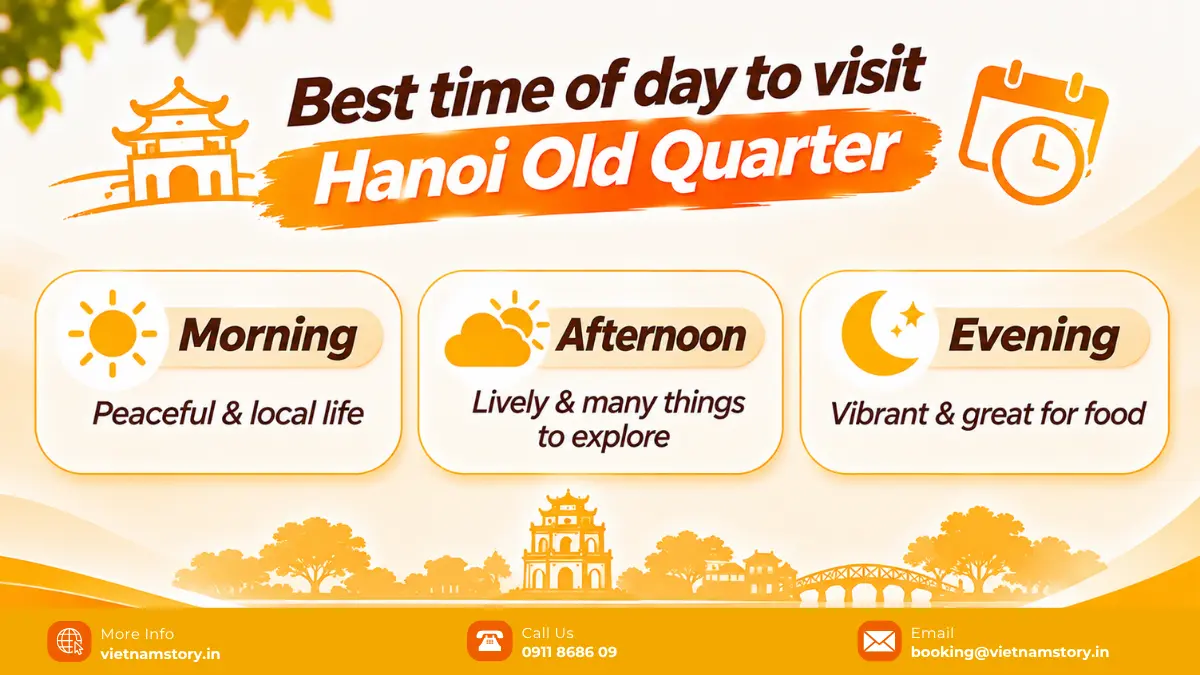
- Morning is a good time for travellers who prefer a less hectic walk and want to observe everyday neighbourhood activity.
- Late afternoon offers another comfortable sightseeing window, particularly outside the hottest months.
- Evening brings more activity around cafés, restaurants and shopping streets.
In summer, avoid scheduling your longest walk during the hottest part of the day. During rainy weather, allow extra time and watch for slippery surfaces. Weekend pedestrian arrangements around Hoan Kiem Lake and nearby streets may affect vehicle access. Check current local information before planning a pickup.
Practical tips for Indian families and first-time visitors
The Old Quarter is walkable, but its pavements are not always clear. You may encounter parked motorbikes, shop displays and busy intersections. Use marked crossings where available, remain attentive to traffic and avoid rushing across roads. Wear comfortable shoes, carry drinking water and plan café breaks.
For families with young children or elderly parents, a shorter route with two or three meaningful stops may be more enjoyable than a complete circuit. If your hotel is inside the Old Quarter, confirm whether your airport transfer or tour vehicle can reach the entrance. A hotel close to a landmark is not necessarily easy for vehicles to access.
How does the Old Quarter fit into a Vietnam holiday?
For many Indian travellers, Hanoi is the starting point for exploring Northern Vietnam. A morning or afternoon in the Old Quarter combines well with a second day of cultural sightseeing. You can then continue to Ninh Binh or Ha Long Bay, depending on your available time.
When comparing Vietnam tour packages from India, check whether your Hanoi sightseeing includes the Old Quarter, a guided walk or free time to explore independently. The best itinerary leaves room to enjoy the neighbourhood rather than treating it as a quick photo stop.
FAQs
How much time do you need in Hanoi Old Quarter?
Allow two to three hours for a short walking tour. Half a day is better if you want to shop, eat and visit cultural attractions.
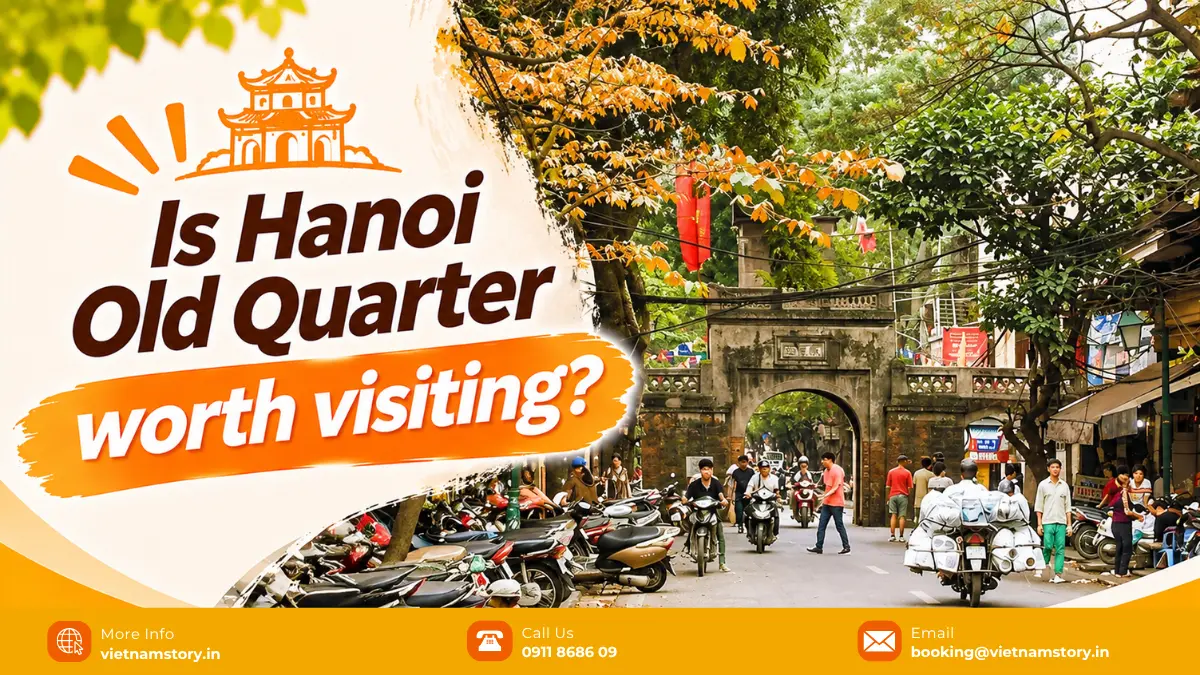
Is Hanoi Old Quarter worth visiting?
Yes. Its historic trading streets, architecture, markets and cafés offer one of the most distinctive introductions to Hanoi.
Is Hanoi Old Quarter good for shopping?
Yes. Hang Gai, Hang Dao and the streets around Dong Xuan Market offer different shopping experiences. Compare quality and prices before buying.
Can you explore Hanoi Old Quarter without a guide?
Yes. Independent walking is possible with a simple route. A local guide can provide additional historical and cultural context.
Conclusion
Hanoi’s Old Quarter is best appreciated through its everyday details: shopfronts, historic buildings, cafés, markets and the rhythm of local life. For a first visit, choose a manageable walking route and leave time for unplanned discoveries. At Vietnam Story, we recommend making the Old Quarter part of your Hanoi experience without turning it into a race between attractions. You do not need to visit every street to understand what makes this neighbourhood special.