Throughout this journey, Vietnamstory has noticed a profound connection between the people of the Malabar Coast and the people of the Mekong Delta. We both live by the rhythm of the water, we both value our spice heritage, and – most importantly – we both believe that a journey is only as good as the food served along the way. We know that for a traveller from Kerala, the biggest concern isn’t the distance or the language; it’s the stomach. You come from a land of rich Sadhya, aromatic Sambar, and fluffy Appams. Naturally, when you fly 4,000 kilometers away, you worry: “Is Vietnam vegetarian friendly?” and “Where can I find reliable Indian food in Vietnam?” In this comprehensive guide, VNS will share the “insider” evidence we have gathered over a decade to help you plan a culinary journey that respects your palate while embracing the soul of Vietnam.
Is Vietnam vegetarian-friendly for Kerala travellers?
If you are currently sitting in Kochi or Ernakulam planning your trip, let me put your mind at ease. Is Vietnam vegetarian friendly? The answer is a resounding YES, but with a cultural twist.
Vietnam is a Buddhist-majority country. For centuries, our monks and many locals have followed a tradition of eating “Chay” (vegetarian) food on the 1st and 15th of every lunar month. This means the concept of a meat-free diet is deeply respected. Unlike in some Western countries where “vegetarian” might mean a salad with tuna, in Vietnam, “Chay” is a sophisticated culinary art using tofu, mushrooms, and root vegetables to mimic textures and flavors.
For Kerala-style eaters, who are used to rice-based meals, lentils, and coconut-rich curries, Vietnam’s cuisine aligns surprisingly well. At Vietnamstory, we don’t just book your hotels, we manage your “palate journey.” We understand that while you want to taste Vietnam, you also need the comfort of a hot Dal after a long day of sightseeing. Our strategy focuses on “Anchor Meals” – using local vegetarian options by day and strategic Indian restaurant stops by night.
READ MORE: Best Vietnam Tour Packages From Kerala By Traveller Type
Key vocabulary for Kerala vegetarians in Vietnam
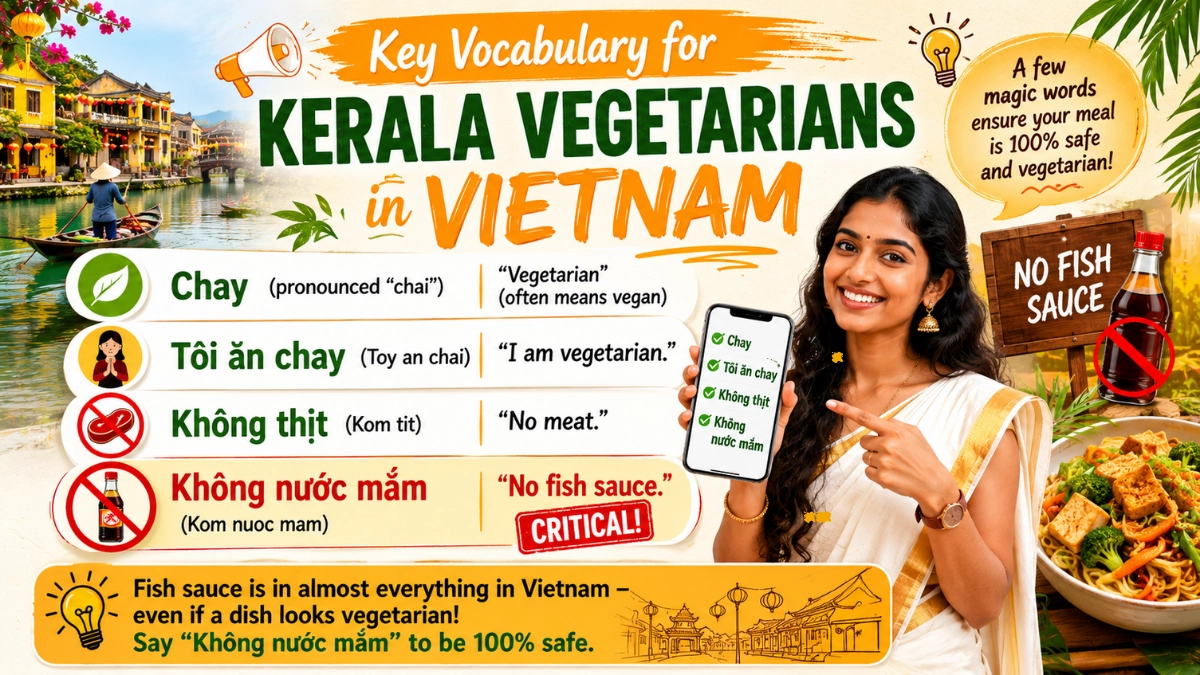
Communication is the first step to comfort. While many of our staff in tourist areas speak English, knowing a few “magic words” ensures your meal is prepared exactly to your standards. VNS always tell our Kerala guests to save these phrases on their phones:
- Chay (pronounced “chai”): This is the universal word for vegetarian. It usually implies vegan (no dairy/eggs).
- Tôi ăn chay (Toy an chai): “I am vegetarian.”
- Không thịt (Kom tit): “No meat.”
- Không nước mắm (Kom nuoc mam): CRITICAL. This means “No fish sauce.”
In Vietnam, fish sauce is our salt. It is in almost everything. Even if a dish looks vegetarian, it might have been stir-fried with fish sauce. By saying “Không nước mắm,” you ensure the chef uses soy sauce instead. This is the most important “comfort tip” for a strict vegetarian from India.
How to spot vegetarian food and restaurants?
When you are walking through the French Quarter of Hanoi or the busy streets of Saigon, look for these two signs:
- “Quán Chay”: This means a dedicated vegetarian restaurant. You can walk in with 100% confidence. There is no meat in the kitchen, and no fish sauce is used.
- “Cơm Chay”: This means “Vegetarian Rice.” These are often humble, local eateries where you get a plate of rice with 4-5 different vegetable and tofu toppings for about ₹150–₹250.
Pro tip: If your trip coincides with the full moon or the new moon, you will see yellow flags flying outside many restaurants. These signify that a special “Chay” menu is available. It is a wonderful time to be a vegetarian in Vietnam!
Vegetarian-Friendly Local Dishes Kerala Travellers Can Enjoy
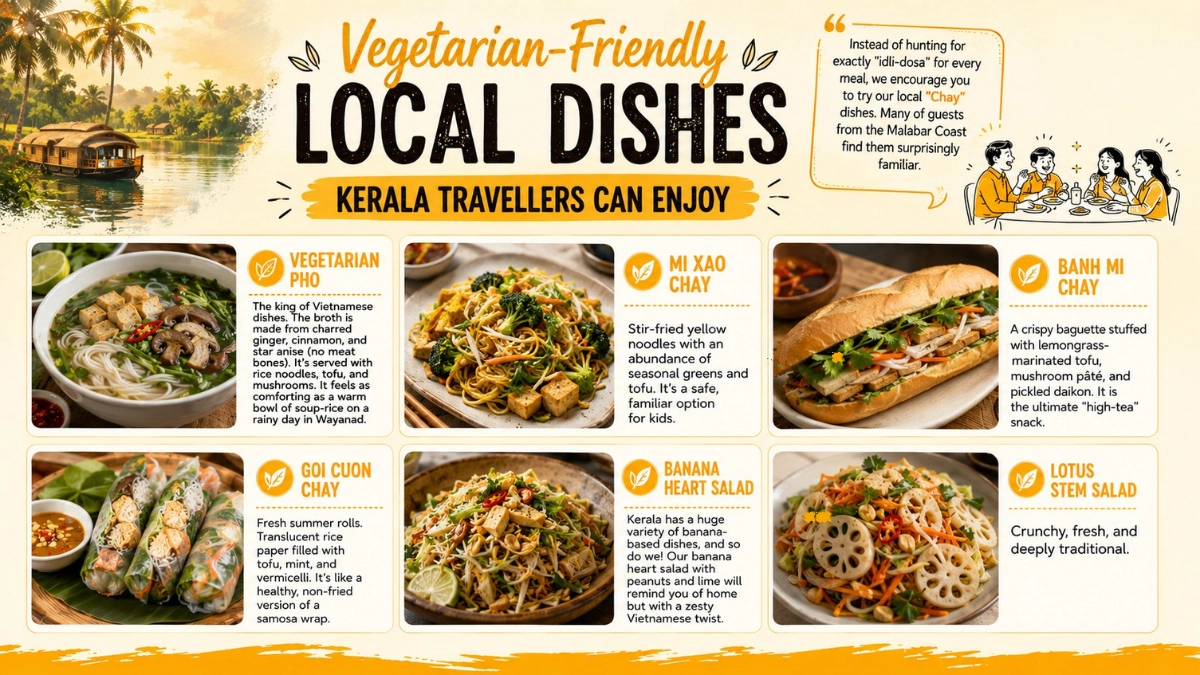
Instead of hunting for exactly “idli-dosa” for every meal, we encourage you to try our local “Chay” dishes. Many of guests from the Malabar Coast find them surprisingly familiar.
- Vegetarian Pho: The king of Vietnamese dishes. The broth is made from charred ginger, cinnamon, and star anise (no meat bones). It’s served with rice noodles, tofu, and mushrooms. It feels as comforting as a warm bowl of soup-rice on a rainy day in Wayanad.
- Mi xao Chay: Stir-fried yellow noodles with an abundance of seasonal greens and tofu. It’s a safe, familiar option for kids.
- Banh mi Chay: A crispy baguette stuffed with lemongrass-marinated tofu, mushroom pâté, and pickled daikon. It is the ultimate “high-tea” snack.
- Goi cuon Chay: Fresh summer rolls. Translucent rice paper filled with tofu, mint, and vermicelli. It’s like a healthy, non-fried version of a samosa wrap.
- Banana heart salad: Kerala has a huge variety of banana-based dishes, and so do we! Our banana heart salad with peanuts and lime will remind you of home but with a zesty Vietnamese twist.
- Lotus stem salad: Crunchy, fresh, and deeply traditional.
Indian food in Vietnam
While local food is great, we at Vietnamstory know that “food fatigue” is real. For a 10-day trip, we recommend the “1-on-1-off” strategy:
- Day 1 (Arrival): Eat at an Indian restaurant. You are tired and jet-lagged; don’t experiment yet.
- Day 2-3: Explore local “Chay” cafes and street food.
- Mid trip: Stop at a “Pure Veg” Indian anchor to recharge your spirits.
The quality of Indian food in Vietnam has reached new heights. Most restaurants import their spices and have Indian chefs. You will find:
- Paneer specialities: A must-have because “Chay” food relies on tofu, and sometimes you just need the richness of dairy.
- Vegetable biryani: Always a safe and filling option.
- South Indian specials: While mostly North Indian-focused, many spots in HCMC now serve Dosa and Idli, catering to the growing South Indian diaspora.
City-by-city food strategy
Hanoi
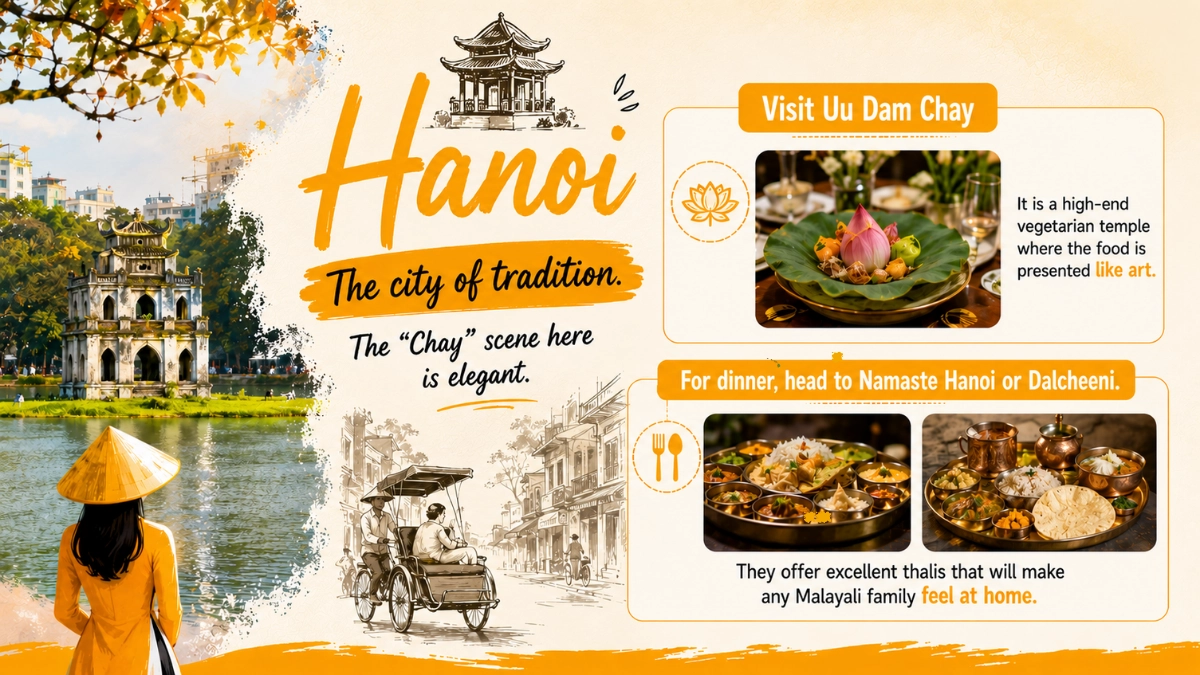
Hanoi is the city of tradition. The “Chay” scene here is elegant.
- Visit Uu Dam Chay. It is a high-end vegetarian temple where the food is presented like art.
- For dinner, head to Namaste Hanoi or Dalcheeni. They offer excellent thalis that will make any Malayali family feel at home.
Da Nang and Hoi An
This is the most relaxed region.
- In Da Nang, eat at Himalaya Indian Restaurant. It is 100% pure vegetarian and vegan – no risk of cross-contamination.
- Hoi An note: This is arguably the most veg-friendly town in the world. Visit Karma Waters for organic, plant-based meals right by the river.
- Baba’s Kitchen in Hoi An is a legend. They understand Indian spice levels perfectly. If you ask for “Malayali spicy,” they will deliver!
Ho Chi Minh City
Saigon is the “Vegan Capital” of Southeast Asia.
- You must visit Hum Restaurant. It is upscale, healthy, and uses ingredients like lotus seeds and coconut water in ways you’ve never seen.
- Tandoor and Dahi Handi are fantastic. This city has the highest density of Indian restaurants in Hanoi, Da Nang, and Ho Chi Minh, so you are never more than 10 minutes away from a hot paratha.
Practical comfort tips for Kerala travellers
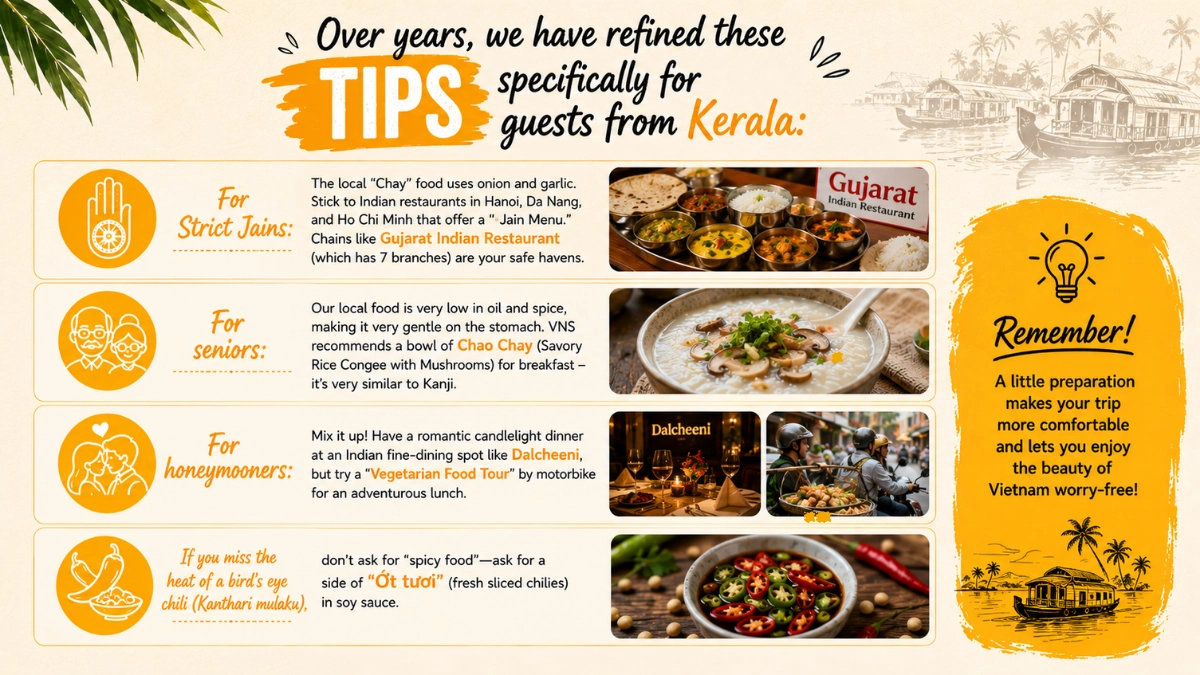
Over years, we have refined these tips specifically for guests from Kerala:
- For Strict Jains: The local “Chay” food uses onion and garlic. Stick to Indian restaurants in Hanoi, Da Nang, and Ho Chi Minh that offer a “Jain Menu.” Chains like Gujarat Indian Restaurant (which has 7 branches) are your safe havens.
- For seniors: Our local food is very low in oil and spice, making it very gentle on the stomach. VNS recommends a bowl of Chao Chay (Savory Rice Congee with Mushrooms) for breakfast – it’s very similar to Kanji.
- For honeymooners: Mix it up! Have a romantic candlelight dinner at an Indian fine-dining spot like Dalcheeni, but try a “Vegetarian Food Tour” by motorbike for an adventurous lunch.
- If you miss the heat of a bird’s eye chili (Kanthari mulaku), don’t ask for “spicy food”—ask for a side of “Ớt tươi” (fresh sliced chilies) in soy sauce.
How to use Vietnamstory’s Indian food guide
At Vietnamstory, we don’t just give you a list of restaurants. We provide a conceptual guide. Our mission is to ensure that your dietary choices enhance your travel experience rather than limiting it.
We explain the “why” behind the ingredients. For example, we teach our Kerala guests that our “Dừa Fresh” (fresh coconut) is just as sweet as the ones in Alappuzha, and our “Măng” (bamboo shoots) are prepared similarly to North Kerala styles. By understanding these links, you feel more adventurous and less homesick.
Summary
To wrap up our experience into a simple checklist for you:
- Is Vietnam vegetarian friendly? Yes, look for “Quán Chay.”
- Can I get Indian food? Yes, especially in Hanoi, Da Nang, and HCMC.
- The vocabulary: “Tôi ăn chay” and “Không nước mắm.”
- The “anchor” strategy: Use Indian food for dinner to ensure everyone sleeps with a full, happy stomach.
- The Kerala connection: Embrace the rice, the coconut, and the fresh fruits—they are the threads that connect our two cultures.
Vietnam and Kerala share a deep soul. We both value hospitality, family, and the joy of a good meal. Reaching us from “God’s Own Country” has never been easier, and VNS promises you that you will return home not just with photos of emerald bays, but with the lingering taste of a country that welcomed you like family.