“Fishing village” can mean very different things in Lan Ha Bay. Cai Beo is the historical fishing and aquaculture community beside Cat Ba, with an archaeological site linked to coastal settlement thousands of years ago. Tra Bau is better understood as a Lan Ha Bay cruise and aquaculture area where kayaking or other on-water activities may be included depending on the vessel and route.
If a community visit is important to your trip, check the exact named stop rather than choosing a cruise simply because the description says “fishing village”. The route, boarding point and activities matter more than the label.
Cai Beo and Tra Bau are not the same experience
| Place | What it is best understood as | Best for | What to confirm |
| Cai Beo | Historical fishing and aquaculture community near Ben Beo, Cat Ba, with a nationally recognised archaeological site | Community context, maritime history and Cat Ba-side sightseeing | Whether the route actually passes or stops at Cai Beo–Ben Beo |
| Tra Bau | Lan Ha Bay aquaculture and cruise area used on some sightseeing and overnight itineraries | Kayaking, bay scenery and an on-water activity stop | Exact activity, operating conditions and whether it is included on your sailing date |
| Cua Van / Vung Vieng | Ha Long Bay cultural or floating-village experiences on different routes | Travellers comparing village-style stops across the wider bay system | Which Ha Long route your vessel uses |
If you are comparing Lan Ha with the better-known cultural stops in Ha Long Bay, use our guide to Ha Long Bay floating villages. It separates Cua Van, Vung Vieng and Ba Hang instead of treating all floating communities as one attraction.

Cai Beo: the historical fishing-community stop
Cai Beo is the stronger choice when your interest is the history of coastal settlement and fishing life around Cat Ba. The archaeological site lies near Ben Beo on the southeastern side of Cat Ba. It was first identified in 1938 and was later recognised as a national archaeological relic.
Archaeological layers at Cai Beo include evidence associated with coastal settlement from roughly 7,000 years ago. That does not mean the present floating community has remained unchanged for 7,000 years. The useful distinction is between the ancient archaeological record and the modern fishing and aquaculture community that travellers see today.
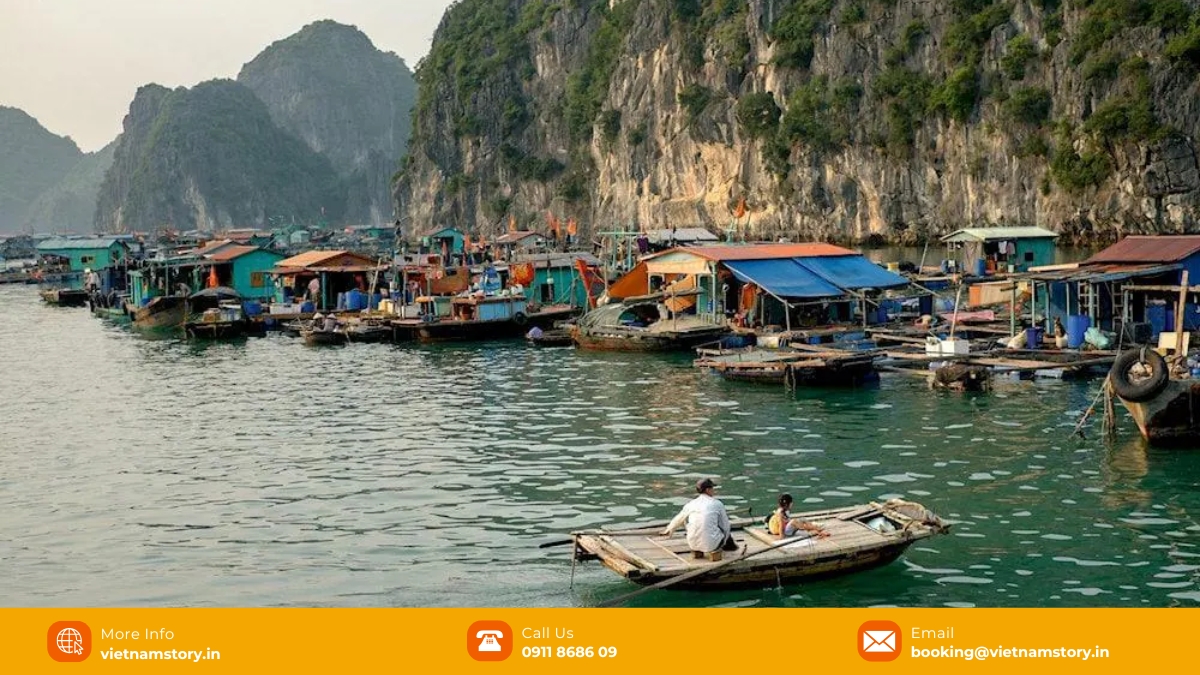
For trip planning, Cai Beo also matters because access is no longer limited to a simple Cat Ba-side excursion. New inter-bay itineraries introduced in 2026 include Cai Beo–Ben Beo on some Ha Long–Lan Ha routes. That gives travellers more ways to encounter the area, but it still does not make Cai Beo a guaranteed stop on every Lan Ha cruise.
If your main goal is an inland village experience rather than a floating community, compare this with Viet Hai Village. Viet Hai sits inside Cat Ba’s island landscape and works very differently from Cai Beo.
Tra Bau: an activity and aquaculture area rather than a historic village stop
Tra Bau is often described online as a “floating village”, but that wording can create the wrong expectation. For travellers, it is more useful to think of Tra Bau as a Lan Ha Bay aquaculture and cruise area. Current inter-bay itineraries list Tra Bau as a Lan Ha stop while listing Cai Beo–Ben Beo separately as the fishing-village area.
On a cruise, Tra Bau may be used for kayaking, tender-boat movement, anchoring or sightseeing around the limestone and aquaculture landscape. What actually happens depends on the vessel, weather, water conditions and the operator’s programme for that day. We would not book a cruise on the assumption that clam harvesting, fishing with local residents or another hands-on activity is automatically included.

For the detailed route decision, use the dedicated Tra Bau guide. If kayaking is your priority, also check the exact activity area rather than assuming every Lan Ha sailing uses the same stop.
Which stop fits your trip?
| Your priority | Better fit | Why |
| Maritime history and community context | Cai Beo | The archaeological story and present fishing/aquaculture setting give the stop more cultural depth |
| Kayaking and an on-water cruise activity | Tra Bau | The area is commonly used as part of Lan Ha cruise programmes |
| A classic Ha Long floating-village comparison | Cua Van or Vung Vieng | These belong to different Ha Long route experiences and should be compared separately |
| Very short Northern Vietnam itinerary | Whichever is already included in the best-fitting cruise | Adding a separate detour usually creates more transfer time than value |
For most first-time visitors, the village or aquaculture stop should support the cruise you already want rather than determine the entire trip. Cabin standard, route length, boarding point, transfer timing and the other stops usually have a bigger effect on the overall experience.
What should you confirm before booking?
- Exact vessel and sailing date: route names alone are not enough because programmes can differ by boat and operating day.
- Exact stop: ask whether the itinerary includes Cai Beo, Tra Bau, another aquaculture area or no village-style stop at all.
- Boarding and disembarkation point: Tuan Chau, Ha Long, Cat Ba and other piers create different transfer plans.
- Activity format: kayaking, bamboo boat, tender transfer and shore visits are not interchangeable.
- Mobility and family fit: confirm life jackets, boat transfers and how much getting in and out of small craft is required.
- Vegetarian or Jain meals: confirm meals with the cruise before payment rather than relying on food availability at a village stop.
How this fits an India-to-Vietnam itinerary
For Indian families, couples and groups, the main planning question is usually whether Lan Ha deserves a day cruise or an overnight stay within the wider Northern Vietnam route. A village-style stop adds value when it already fits that route; it is rarely worth making the itinerary busier just to collect another named attraction.
If you are travelling with seniors, young children or strict meal requirements, we would prioritise a comfortable vessel, manageable transfer and confirmed food arrangement before choosing between Cai Beo and Tra Bau. The broader Ha Long Bay travel guide can help you decide how much time the bay deserves before you choose the exact stop.
If Cai Beo or Tra Bau is a priority for your trip, send your travel dates, number of travellers, preferred cruise length and any vegetarian or Jain requirement. We can check the current vessel and route before you pay instead of assuming the stop from a generic cruise description.
Go to the full page to view and submit the form.
FAQs
Is Cai Beo the same as Tra Bau?
No. Cai Beo is a historical fishing and aquaculture community beside Cat Ba with an important archaeological site. Tra Bau is a Lan Ha Bay aquaculture and cruise area used on some sightseeing and activity programmes.
Is Cai Beo really 7,000 years old?
Archaeological layers at Cai Beo include evidence of coastal settlement dating back roughly 7,000 years. It is more accurate to say the archaeological site has that deep history than to describe the present floating community as unchanged for 7,000 years.
Can a Ha Long cruise include Cai Beo or Tra Bau?
Yes. Inter-bay routes connecting Ha Long and Lan Ha introduced in 2026 include Tra Bau and, on some itineraries, Cai Beo–Ben Beo. This applies only to the relevant licensed routes and vessels, not every Ha Long cruise.
Is a fishing-village visit guaranteed on a Lan Ha cruise?
No. Check the current itinerary for your exact sailing. Route programmes can change with operating permissions, weather, water conditions and the vessel’s schedule.
Conclusion
Cai Beo and Tra Bau should not be sold as interchangeable “fishing villages”. Choose Cai Beo when the historical community context matters most; choose a route using Tra Bau when kayaking and on-water scenery fit your trip better. In both cases, confirm the exact vessel and stop before booking.
If you are still building the wider holiday, compare Vietnam tour packages from India by duration and route first. The best Lan Ha stop is the one that fits the trip without forcing unnecessary transfers or another night into an already full itinerary.