If you are interested in history, architecture or the India–Champa connection, the Da Nang Museum of Cham Sculpture is worth adding to your city day. You do not need half a day for it. For most travellers, around 60–90 minutes is enough to see the main galleries without rushing; allow longer if Cham art or archaeology is one of the reasons you are visiting Central Vietnam.
Our advice is to treat the museum as context rather than another box to tick. If My Son Sanctuary is also in your itinerary, the museum helps you understand the deities, symbols and sculptural styles you will see there.
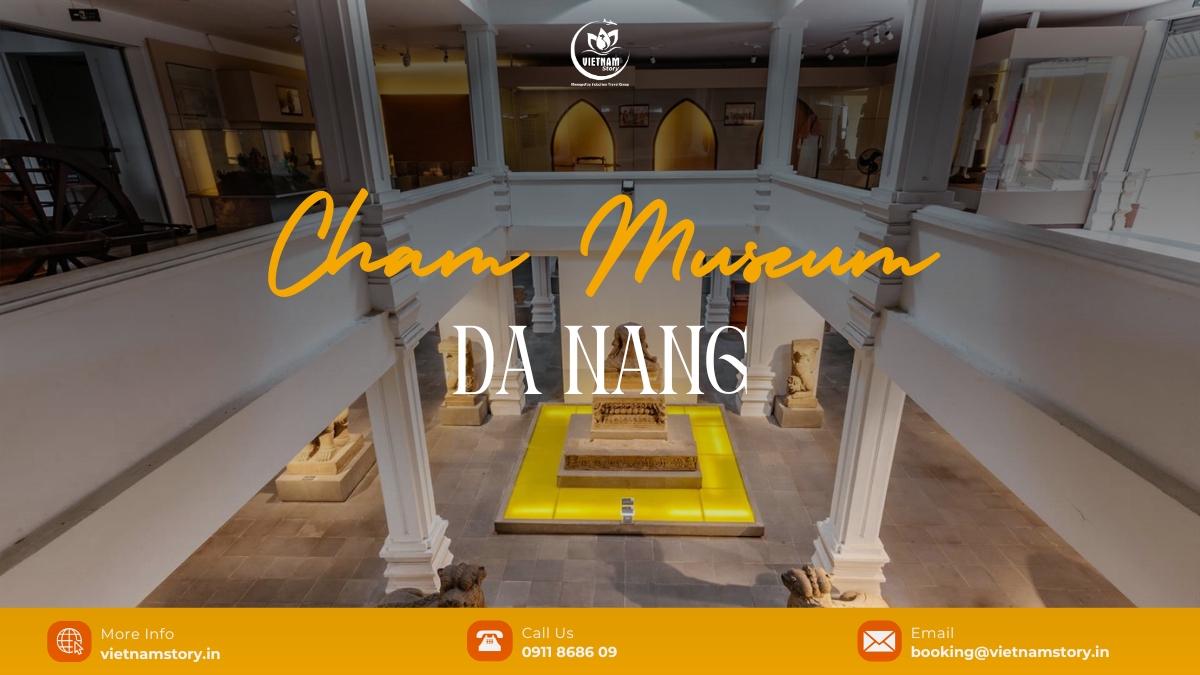
Is the Da Nang Museum of Cham Sculpture worth visiting?
Yes, if you want cultural context for Central Vietnam. The museum is especially useful for travellers who plan to visit My Son, enjoy Hindu and Buddhist art, or want a quieter indoor stop between Da Nang’s outdoor attractions.
If your trip is very short and your priorities are beaches, food and Ba Na Hills, the museum is easier to skip. But for travellers who enjoy heritage, it adds something that a viewpoint or market cannot: it shows how Champa developed its own artistic language while drawing on religious ideas that also travelled from India across Southeast Asia.
Quick visitor information for 2026
| Planning point | Current information |
|---|---|
| Location | No. 2, 2 Thang 9 Street, Hai Chau Ward, Da Nang |
| Opening hours | 07:30–17:00 |
| General admission | 60,000 VND |
| Residents and students | 20,000 VND, subject to current eligibility conditions |
| Time to allow | About 60–90 minutes for most first-time visitors; longer for art and archaeology enthusiasts |
The hours and admission prices above follow Da Nang Tourism’s 2026 visitor update. Because operational details can change, recheck the official Da Nang Tourism information shortly before your visit.
Getting there and using the museum services
The museum is easy to add to a central Da Nang day. It sits on 2 Thang 9 Street near the Han River and Dragon Bridge, so a taxi or ride-hailing car is usually the simplest option if you are staying away from the riverfront. If your hotel is already in central Hai Chau, walking may be just as practical.
For a first visit, the free web-based audio guide is useful because it lets you spend more time on the pieces that interest you instead of reading every panel. Connect to the museum Wi-Fi, open chamaudio.com and choose Vietnamese, English or French. You can select individual artefacts or follow the suggested sequence.
If you are travelling as a group and want more explanation, the museum also offers guided visits for groups of five or more. Current Da Nang visitor information asks English- or French-speaking groups to arrange the guide at least three days in advance, so this is something to confirm before you arrive rather than at the last minute.
A few practical rules are worth knowing: large luggage is not taken into the galleries, hand luggage over 3 kg should be left at the luggage counter, and flash photography and tripods are not allowed. Food and drinks should stay outside the exhibition rooms, and the sculptures should not be touched.
What should you look for inside?
Do not try to read every label. The collection is large, so a first visit is easier when you follow the main regional galleries and look for how the style changes from one area and period to another.
One useful shortcut is to look for the museum’s National Treasures. Da Nang Tourism reported that the collection reached nine recognised National Treasures after three additions in 2024. For a first visit, pieces such as the My Son E1 Altar, Tra Kieu Altar, Dong Duong Altar and the Laksmin̄dra-Lokeshvara/Tara statue give you a strong introduction to Cham religious art without trying to cover the entire collection.
My Son Gallery
This is the natural starting point if My Son is part of your trip. The gallery brings together sculpture connected with the temple complex and makes the religious world of Champa easier to recognise. Look at the pedestals, divine figures and decorative details before you worry about memorising dates.
Tra Kieu Gallery
Tra Kieu is useful for seeing how narrative scenes were carved into stone. Some reliefs have been interpreted through stories familiar from the Hindu tradition, including the Ramayana, although individual scenes can be debated by scholars. That uncertainty is part of what makes the gallery interesting rather than something that needs to be simplified into one fixed story.
Dong Duong Gallery
Dong Duong shows a different side of Champa, with stronger Buddhist influence. If you have already associated Cham art only with Hindu temples, this gallery helps widen the picture.
Thap Mam and later styles
The later galleries tend to feel more stylised and ornamental. Mythical animals, guardians and more elaborate forms make the shift in artistic style easier to see, even if you are not an art-history specialist.

Why does the museum feel familiar to Indian travellers?
You will recognise ideas and symbols, but the art is distinctly Cham. Hindu deities, sacred motifs and cosmological ideas reached Champa through long cultural and maritime connections with the Indian world. Cham artists then reworked those ideas through local materials, aesthetics and religious practice.
That distinction matters. The most interesting part of the visit is not finding “Indian art in Vietnam”, but seeing how a shared religious vocabulary developed into something recognisably different in Central Vietnam.
The museum now preserves more than 2,000 artefacts, including hundreds of Cham sculptures dating broadly from the 5th to the 15th centuries. Recent 2026 reporting from the museum also highlights its ongoing work to document and digitise the collection.
Should you visit the museum before or after My Son?
If you can choose, visit the museum first. Seeing the sculptures and learning the basic visual language makes the brick towers and sanctuaries at My Son easier to understand later.
If your itinerary puts My Son first, the museum still works well afterwards. In that order, it helps you reconnect the archaeological site with individual sculptures and regional styles in a more controlled setting.
You do not need to force both into the same half-day. My Son deserves its own excursion time; the museum is easier to combine with central Da Nang sightseeing.
How does the museum fit into a Da Nang day?
The museum is in central Da Nang, so it works best as a short cultural stop rather than a standalone day plan. You can pair it with the Han River, Dragon Bridge, a market or a slower café break without creating another long transfer.
If the weather turns very hot or wet, the museum is also one of the easier indoor activities to keep in reserve. For the wider city plan, use our Da Nang travel guide to decide what deserves a full day and what can be grouped together.
Who should spend longer here?
- History and archaeology travellers: allow more time for labels and regional differences.
- Visitors going to My Son: use the museum to understand the religious and artistic context.
- Indian families with older children: the shared Hindu vocabulary can make the collection easier to discuss, especially if the children already recognise some deities and stories.
- Travellers with limited interest in museums: keep the visit focused on the main galleries rather than trying to cover everything.
A short history of the museum
The museum developed from early efforts to preserve Cham sculpture collected from archaeological sites across Central Vietnam. Construction of the original building began in 1915 and the museum opened to the public in 1919. The architecture combines early French colonial design with details inspired by Cham temple forms, which is why the building itself feels closely connected to the collection rather than like a neutral gallery box.
What matters for a visitor today is that the museum brings works from different periods and regions into one place. You can see changes in religion, artistic style and regional influence without travelling to every archaeological site separately.
Practical tips before you go
- Go earlier in the day if you prefer a quieter visit.
- Give yourself at least an hour; do not squeeze the museum into the final 20 minutes before closing.
- Use the museum and My Son as complementary experiences rather than duplicates.
- Check current visitor rules before arrival if you are carrying large bags or need a specific accessibility service.
- Take photos only where current museum rules allow, and avoid flash around sensitive displays.

Planning the rest of your Central Vietnam trip
If the museum and My Son are among your priorities, give heritage enough space instead of adding them around a packed attraction list. Vietnam Story’s Da Nang tour and itinerary guide can help you compare how Da Nang, Hoi An, My Son and other Central Vietnam stops fit into a 4–7 day route.
FAQs
How long should I spend at the Cham Museum?
About 60–90 minutes is a practical first visit. Spend longer if you want to read the gallery information in detail or have a strong interest in archaeology and religious art.
Is the Cham Museum suitable for children?
It can work well for older children who enjoy history, mythology or visual art. For younger children, keep the visit shorter and focus on a few striking sculptures rather than every gallery.
Should I choose the Cham Museum or My Son if I only have time for one?
Choose My Son if you want the archaeological site and outdoor temple setting. Choose the museum if you have less time, prefer an indoor visit or want to concentrate on the sculptures and artistic detail.