While most travelers come to Ha Long for the water, the Quang Ninh Museum is the definitive cultural landmark of the city. Known as the “Black Pearl,” this architectural masterpiece offers a deep dive into the 500-million-year history of the region – from prehistoric sea life to the “glory of coal.” At Vietnam Story, we recommend this as the perfect cultural “half-day” for Indian families and history enthusiasts looking to understand the soul of the bay beyond the cruise deck.
The incredible architecture: A vision of coal and sea
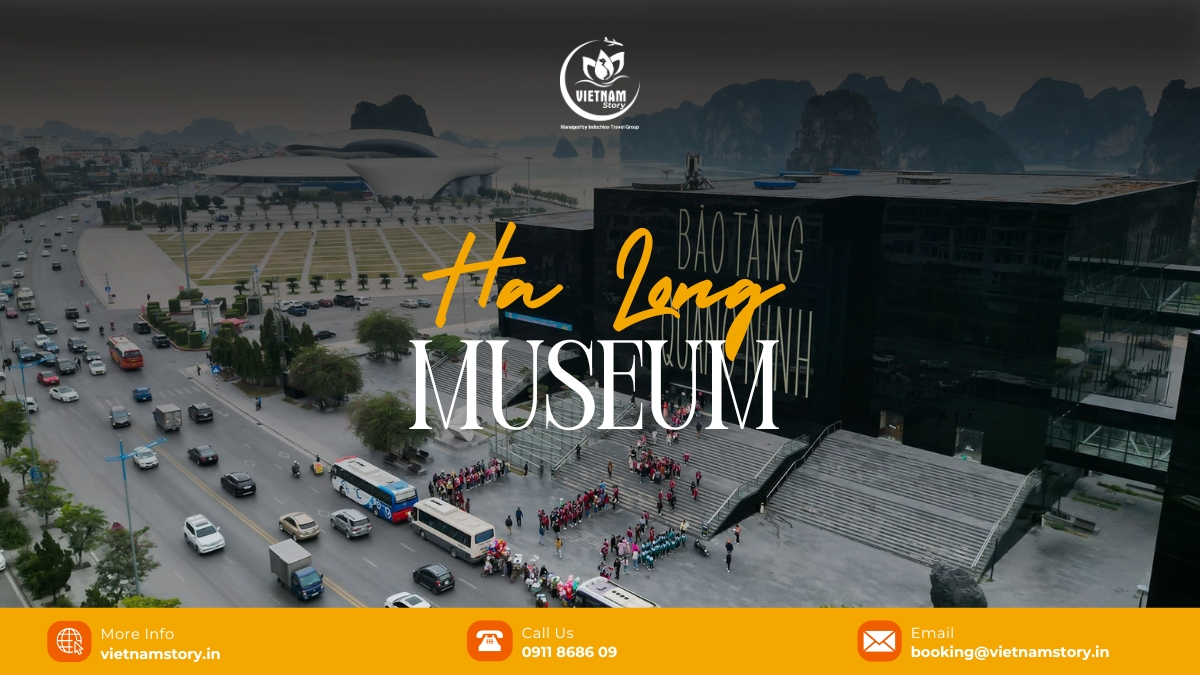
The first thing that will take your breath away is the building itself. Designed by the world-renowned Spanish architect Salvador Perez Arroyo, the museum is a designated Type I National Museum and a winner of the prestigious “Architecture of the Year” award. The building is a work of art, a giant sculpture that tells the story of our land. Let’s explore its unique design. The most striking feature is the building’s exterior, which is completely clad in 14,000 square meters of semi-tempered black glass. This brilliant design is meant to symbolize a giant, raw lump of coal, the mineral that is the foundation of our province’s history and wealth. The black glass also creates a giant, spectacular “mirror” effect, beautifully reflecting the emerald waters and the limestone karsts of the bay. The entire site actually consists of three massive, interconnected blocks – the Museum, the Library, and the Convention Center- all linked by a sophisticated overhead bridge system. As you approach the entrance, you will be greeted by a massive, 28-ton block of raw Anthracite coal. This is the largest single block of coal in all of Vietnam (a Guinness World Record!), mined from a depth of 176 meters. It is a powerful and proud symbol of our mining heritage. The mysterious, dark black exterior gives way to a surprisingly brilliant, minimalist, and pure white interior. This is a beautiful and deliberate design choice, meant to symbolize the hidden light and the precious gems that are found deep within the earth.
READ MORE:
Exploring the three thematic floors of Halong Museum
The museum is brilliantly organized into a chronological and thematic journey that takes you from the bottom of the sea to the depths of a coal mine, using modern lighting and incredible 3D technology to bring the story to life. Each floor is a completely different and immersive world. Let’s begin our journey.
Floor 1: Nature, Biodiversity & A Walk Through the 3D Bay
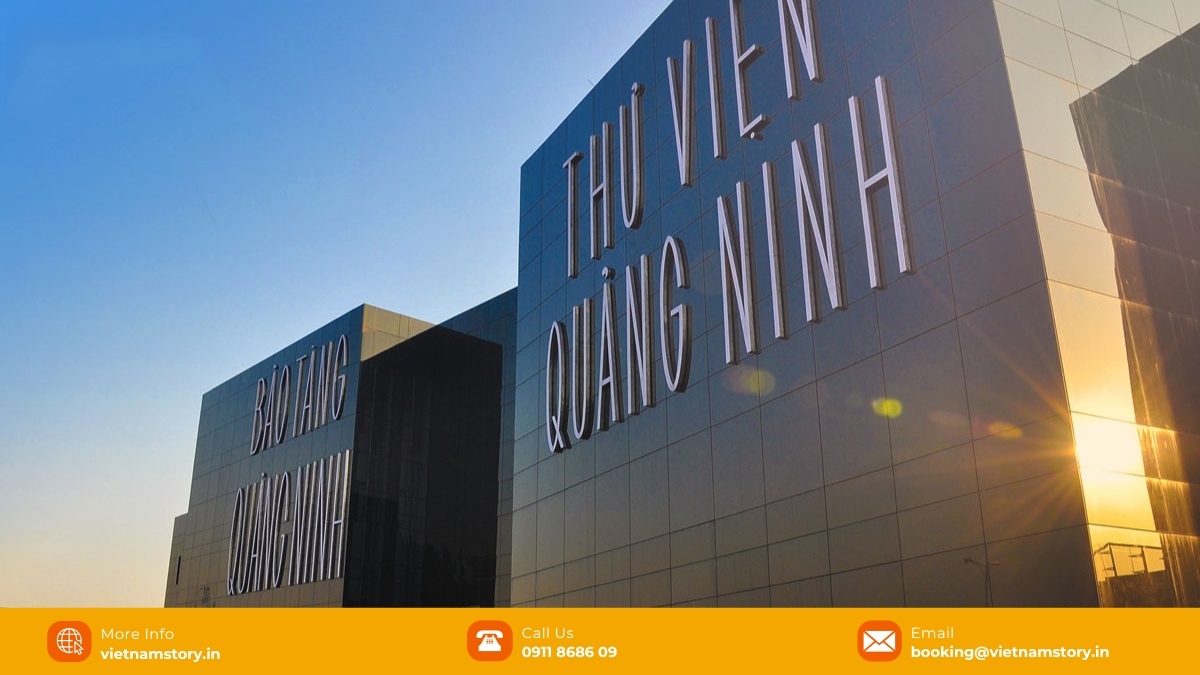
- The Karst Pillars: As you enter, you will be surrounded by four large, fabric-wrapped tubular columns that stretch to the ceiling. These represent the iconic “rocky mountains” of Ha Long Bay, immediately immersing you in the landscape.
- An Ocean World: This floor is dedicated to the natural history of the bay. You will see giant, real whale skeletons and a fascinating collection of marine life. The highlight is a brilliant 3D projector system that covers the floor, creating a stunning simulation that makes you feel like you are walking along the seabed, with fish swimming beneath your feet.
- The UNESCO Story: This is where you will learn about the incredible, 500-million-year geological formation of the bay’s iconic limestone islands.
READ MORE: Your Ultimate Guide to 8 Amazing UNESCO World Heritage Sites in Vietnam
Floor 2: The “Wooden Boat” of Human History
- A Unique Design: The entire second floor is masterfully designed to look and feel like the interior of a traditional wooden ship, connecting you to our rich maritime history.
- Buddhism & The Spirit of the Land: This section houses a massive and beautiful replica of the famous Dong Pagoda and showcases incredible artifacts from the Truc Lam Zen Sect, a unique Vietnamese school of Buddhism that originated on the nearby sacred Yen Tu Mountain.
- A Diary of War and Resilience: The exhibits here chronicle our nation’s Resistance Wars against the French and the Americans, with a special focus on highlighting the specific and heroic contributions of the region’s brave coal miners.
- Our Maritime Glory: You will also see powerful replicas of the Dau Go wooden stakes, the very weapons used in the historic Bach Dang River victory against the Mongol invaders.
Floor 3: A Simulation of the “Coal Mine”
- An Underground Experience: This is a truly unique and immersive experience. The entire floor is a life-sized, walk-through simulation of a real coal mining tunnel. You will walk through the dark, narrow passages, hearing the sounds of the mine and seeing the tools and machinery up close.
- A Tribute to Our Mining Heritage: This floor is a powerful tribute to the grueling yet “honorable” history of Vietnam’s coal capital. You will see massive mining machinery, trucks, and powerful statues of the miners, giving you a deep appreciation for the hard work that built our province.
The crown jewels: The museum’s national treasures
The museum is home to over 135,000 different artifacts, including some that are officially recognized as priceless national treasures of Vietnam. These are the most precious and historically significant items in the entire collection.
- The Ngoa Van – Yen Tu Gold Box (from the 14th Century): This is a breathtaking, lotus-shaped golden box from the Tran Dynasty, which was used for important spiritual rituals. It is the only precious golden relic of its kind ever found in Vietnam, making it an incredibly rare and important treasure.
- The Quang Chinh Bronze Drum: This is a rare and beautiful artifact from the ancient Dong Son culture (dating back to the 3rd–2nd Century BC). It features a unique and intricate 16-pointed star pattern on its surface.
- The Bai Tho Inscriptions: You can also see replicas of the beautiful and historic poems that were carved directly into the rock face of Bai Tho (Poem) Mountain by our ancient kings.
READ MORE: Poem Mountain Ha Long: The ultimate Ha Long Bay viewpoint
Our tailored tips for a perfect visit for Indian travelers
At Vietnam Story, we want to ensure your visit to the “Black Pearl” is as comfortable and culturally seamless as possible. Here is my special advice for you.
- A Delicious Indian meal nearby: The museum is located in the modern Monbay Residential Area. We have a wonderful tip for you: a fantastic Indian restaurant called Curry Junction is located just a 2-minute walk away (in Block A8-22). This makes it the perfect and most convenient spot for a delicious post-museum lunch or a relaxing glass of Masala Chai.
- Excellent accessibility for seniors: The museum is one of the few cultural sites in Northern Vietnam that has full elevator and ramp access to all its floors. This makes it an ideal and very comfortable destination for families who are traveling with elderly parents or those with mobility challenges.
- A note on photography fees: Taking photos with your phone is completely free. However, if you are a keen photographer and wish to use a professional DSLR camera, the museum often requires you to pay a small fee (usually between 100,000 – 500,000 VND). When you travel with us, our guides will handle all these permits in advance for you.
Your 2026 practical visitor information
- Location: The museum is located on the beautiful coastal road, Tran Quoc Nghien Street. It is about a 10-minute drive from the city center and a 30-minute drive from the Tuan Chau Port.
- Opening hours: The museum is open from Tuesday to Sunday, from 8:00 AM to 12:00 PM and then from 1:00 PM to 5:00 PM. It is closed on Mondays.
- Entrance fees: The fees are very affordable.
- Adults: 40,000 VND (~₹135)
- Students: 20,000 VND
- Children (under 1.2m): Free
- Audio guides: At most of the major exhibits, you will find QR codes that you can scan with your phone to get an English audio description, which is very helpful.
The Vietnamstory “Golden Rules” for your visit
For a perfect half-day trip, Vietnamstory.in recommends you pair your visit to the museum with a scenic drive along the beautiful Coastal Road and a quick photo stop at the architecturally unique Dolphin Palace (the Planning Exhibition Center) located right next door. For the most spectacular photos of the building’s exterior, we suggest you arrive around 9:00 AM. At this time, the morning sun hits the black glass at an angle that creates the most incredible and dramatic “mirror” photos of the bay. While the museum is a modern space, the second floor contains important spiritual and religious relics. Vietnamstory.in recommends you wear modest attire that covers your shoulders and knees to show respect to the Yen Tu Buddhist exhibits.
Conclusion
While sunny days in Ha Long are for the bay, the Quang Ninh Museum is the perfect and most rewarding activity for a cloudy or rainy afternoon. It is an incredible, world-class indoor attraction that allows you to continue your exploration and learning, no matter what the weather is doing outside. Its comfort, its accessibility for all ages, and its convenient location make it a smart and practical addition to any itinerary, transforming a potential “down day” into a fascinating cultural highlight. It is the perfect plan B that is good enough to be plan A. Let VietnamStory help you create a smart and flexible itinerary that is prepared for any weather. We can include a visit to this magnificent museum, ensuring that your time in Ha Long is always filled with wonderful and enriching experiences. Get in touch with us to plan your trip, and discover the perfect all-weather destination in the heart of the bay.