Food planning works differently when you travel independently and when you join a group tour. On your own trip, you can open a map, choose an Indian restaurant, change your dinner time, or leave a restaurant if the menu does not suit you. On a Vietnam group tour, restaurants, meal times, and sometimes menus are selected before you arrive. That makes one question particularly important for travellers from India: Will my Vietnam group tour include Indian food, and what happens if I am vegetarian or Jain? The answer depends primarily on the type of tour you book. Indian-focused fixed departures may include Indian meals as part of the package. International Seat-in-Coach (SIC) tours are more likely to use Vietnamese or international restaurants. Private and small-group arrangements usually provide greater flexibility because meals can be coordinated around fewer travellers. Understanding these differences before booking is far more useful than searching for restaurants after your tour has already started.
Do Vietnam group tours include Indian food?
Some do, but you should never assume that “meals included” means “Indian meals included.” A Vietnam tour package might include breakfast, lunch, and dinner while using completely different meal formats. Breakfast may be the hotel’s international buffet, lunch could be a Vietnamese set menu near the attraction, and dinner could be at an Indian restaurant.
Similarly, “vegetarian meal available” does not necessarily mean Indian vegetarian food. It may simply mean that the local restaurant can provide a meat-free Vietnamese meal.
Before booking, distinguish between three promises:
- Indian meal means the operator plans to serve Indian cuisine.
- Vegetarian meal means a meat-free option is available, but the cuisine may be Vietnamese or international.
- Jain meal requires more specific ingredient control and should be confirmed separately rather than assumed from a vegetarian label.
This distinction should influence which type of tour you choose.
Indian fixed-departure group tours
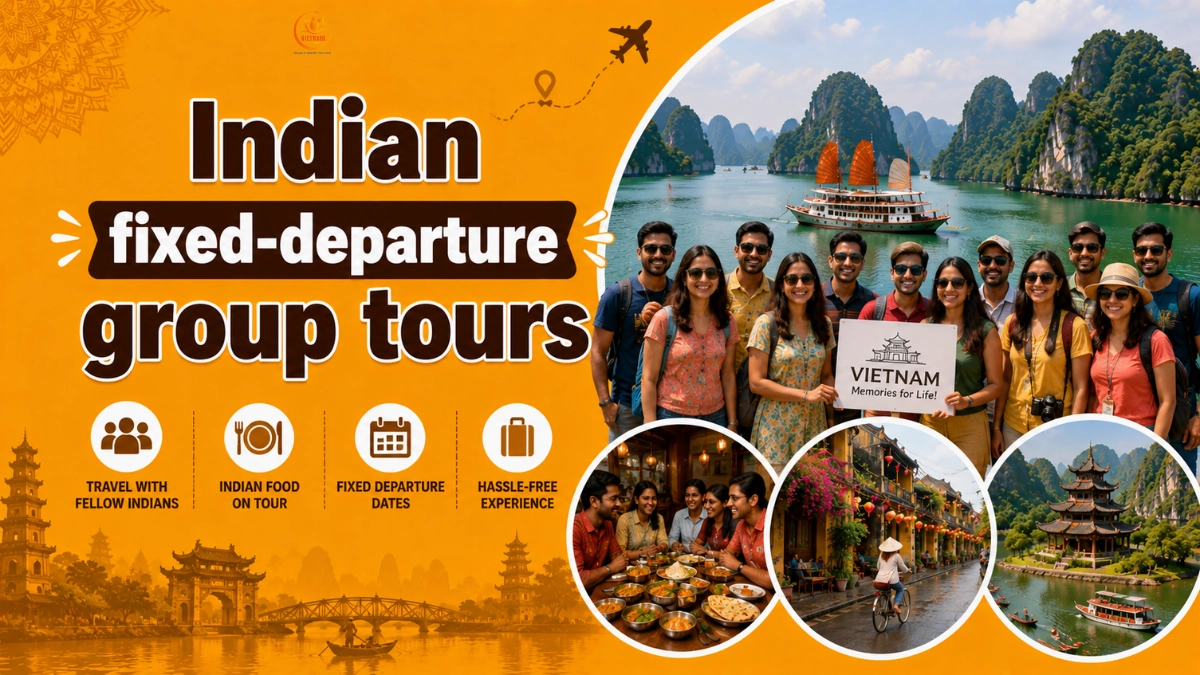
Indian-focused group departures are generally the easiest conventional group format for travellers who want familiar food.
Because the majority of guests have similar dining expectations, operators may schedule Indian restaurants for selected lunches or dinners and design the itinerary around those meal stops.
This format works well for families, senior travellers, first-time international visitors, and groups that prefer familiar meals throughout the holiday. The trade-off is flexibility. Restaurants and meal times are typically predetermined for the whole group. If most guests eat standard vegetarian or non-vegetarian Indian food while one traveller requires a strict Jain meal, adapting the same kitchen service can be more complicated.
Therefore, do not ask only whether a group tour “includes Indian food.” Ask which meals are Indian, which are local, whether they are buffet or set menu, and how special diets are handled.
International SIC tours
SIC, or Seat-in-Coach tours, combine travellers who may come from many different countries. These tours can be affordable and convenient for sightseeing, but Indian cuisine is usually not the basis on which their meal programme is designed. If lunch is included, expect the restaurant and menu to serve the broader international group rather than specifically Indian travellers.
Vegetarian options may still be possible, particularly when requested beforehand, but travellers should be comfortable eating Vietnamese or international vegetarian food.
SIC tours make the most sense for solo travellers, younger couples, budget-conscious visitors, and anyone happy to experience local food.
If having dal, roti, paneer, or Jain meals every day is essential to your comfort, an international SIC tour with multiple included meals may not be the most suitable format. One alternative is to choose SIC sightseeing where meals are not included and arrange your own dinner afterwards when the schedule allows.
Private and small-group tours
Private tours generally offer the greatest meal flexibility because the itinerary serves your family or group rather than an entire coach.
Restaurants can be selected with your dietary requirements in mind, meal times can sometimes be adjusted, and specific requests can be communicated before arrival. This becomes particularly useful when several requirements overlap.
For example, a family may include grandparents who prefer Indian food, children who need mild dishes, vegetarians, and one Jain traveller. Managing those preferences for six people is very different from changing the meal programme for a 40-person group.
Private or small-group travel is particularly useful for multigenerational families, strict vegetarians, Jain travellers, groups with allergies, and travellers who consider food an important part of overall trip comfort.
It does not mean every meal needs to be Indian. Instead, it gives you more control over which meals should be familiar and where local Vietnamese food can be included.
Which tour type gives you the most food flexibility?
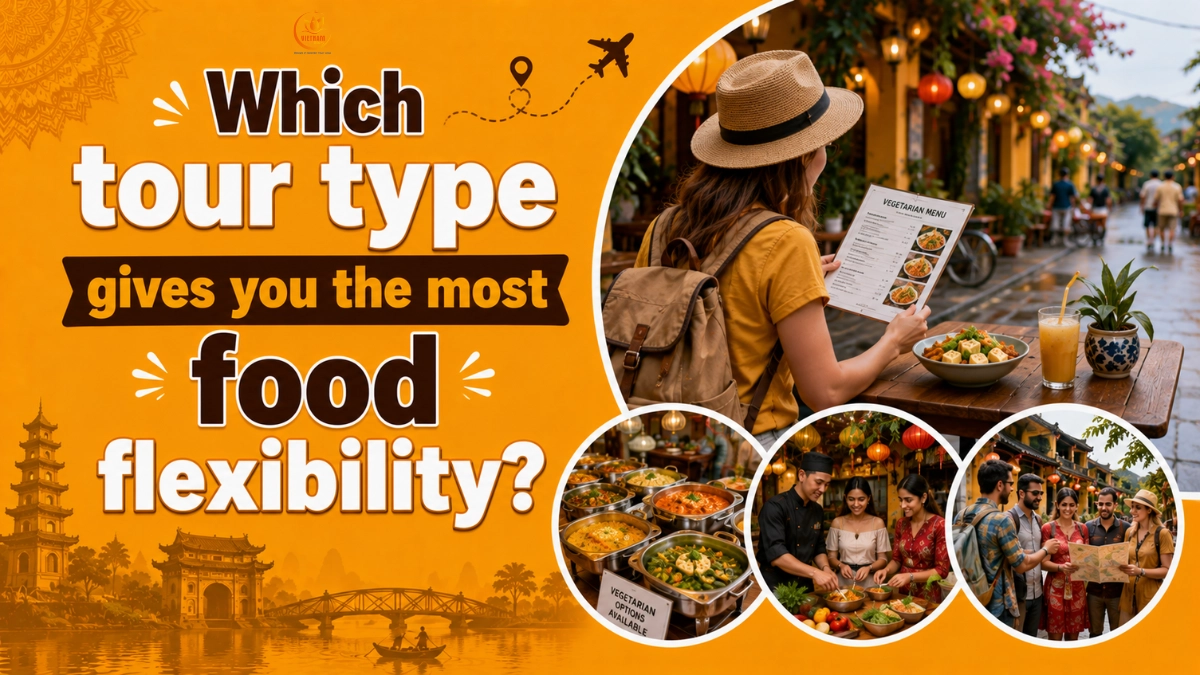
The differences become clearer when compared directly.
| Tour Type | Indian Food Access | Vegetarian Flexibility | Jain Flexibility | Best For |
| Indian Fixed Group | High if specified | High | Moderate | Families, seniors, first-timers |
| International SIC | Low | Moderate | Limited | Budget and local-food travellers |
| Private/Small Group | Can be planned | High | Highest | Families, strict diets |
| Cruise Segment | Depends on vessel/menu | Usually requestable | Requires advance confirmation | Ha Long Bay itineraries |
These are planning guidelines rather than guarantees. Actual meal arrangements depend on the specific operator, restaurant, cruise, and package you book. Always check the inclusions before paying.
What should you ask before booking a Vietnam group tour?
The phrase “Indian meals included” is not detailed enough to make a booking decision. Ask your operator for the actual meal structure.
For example:
- “How many Indian lunches and dinners are included?”
- “Are vegetarian meals prepared separately or selected from the same buffet?”
- “Can the restaurants accommodate Jain requirements?”
- “What meals are provided during Ha Long Bay or other excursions?”
- “Are any lunches Vietnamese set menus?”
- “Can dietary requirements be added to my booking?”
You do not necessarily need restaurant names months in advance, as operational details can change. What matters is getting the meal commitment clear. If a package promises five Indian dinners, that should be distinguishable from a package that merely says “dinner included.”
How vegetarian travellers should request meals
Vietnam is relatively easy for vegetarian travellers, but terminology matters.
Vietnamese vegetarian cuisine comes from a strong Buddhist vegetarian tradition and can provide an excellent alternative when an Indian restaurant is not practical. However, a vegetable dish at a general restaurant should not automatically be treated as vegetarian. Sauces, broths, and seasonings may contain ingredients you avoid.
When dietary restrictions are strict, explain what you do not eat, rather than only saying “vegetarian.” For example, tell your operator whether you avoid meat, seafood, eggs, fish sauce, shrimp paste, or other ingredients. This makes the request much easier to communicate throughout the tour.
What Jain travellers need to confirm
Jain meals require more planning than standard vegetarian meals because the restrictions involve ingredients beyond meat and seafood. If you follow a Jain diet, provide the operator with your specific requirements when booking. Do not depend on the word “Jain” alone, especially when that information must pass from a travel company to a guide and then to a Vietnamese kitchen.
State the ingredients you avoid, including onion, garlic, root vegetables, eggs, or other restrictions relevant to your practice. If preparation methods or cross-contact are important to you, mention those requirements separately as well.
Large group tours can sometimes accommodate Jain meals, but the degree of flexibility depends on the restaurants used. Private and smaller groups generally make detailed coordination easier. For more extensive planning, our Jain Food in Vietnam guide covers city selection, hotels, restaurants, cruises, and dietary communication.
Where are group meals easiest to arrange?
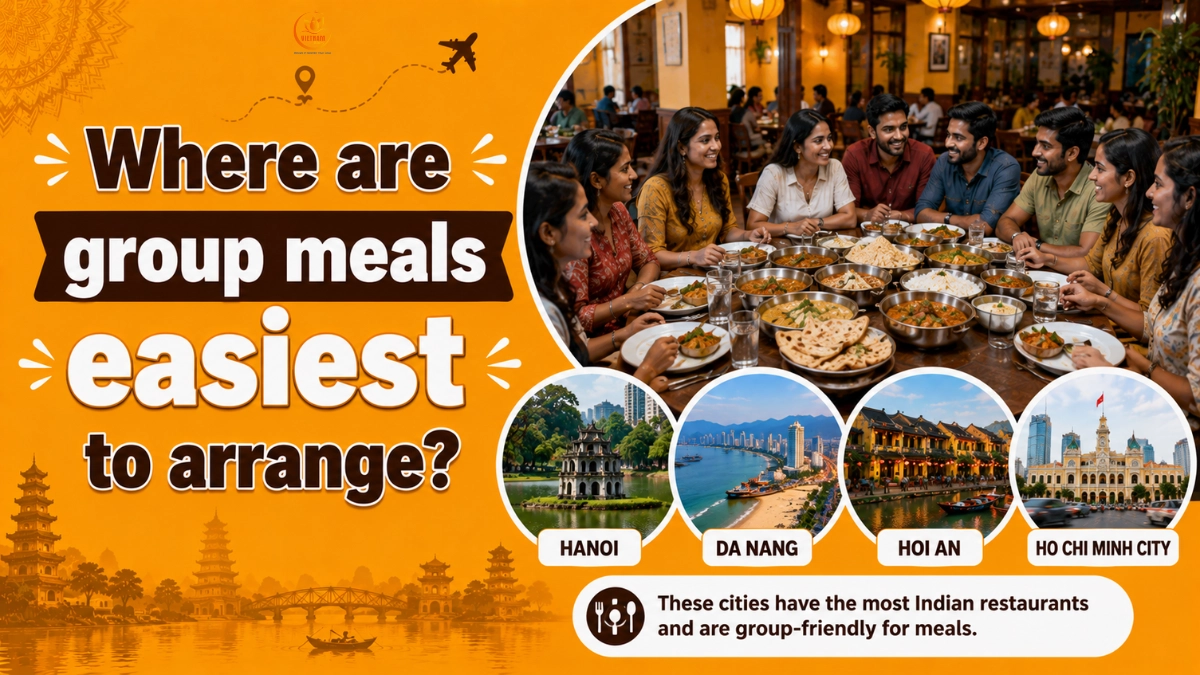
Food logistics vary significantly across Vietnam. Hanoi, Da Nang, Hoi An, and Ho Chi Minh City are the easiest destinations because Indian and international dining options are more developed. This means group operators have more alternatives when choosing restaurants. Destinations outside the main cities require a different approach.
Ha Long Bay
Once your cruise leaves the harbour, your restaurant choices are limited to the vessel.
Dietary requirements should therefore be submitted before departure. Ask what vegetarian or special meals the selected cruise can provide rather than assuming all cruises offer the same options.
Ninh Binh
Ninh Binh is manageable because it can be visited from Hanoi or incorporated into a short North Vietnam route. Depending on the tour structure, lunch may be local while Indian meals remain anchored in Hanoi.
Sapa and Ha Giang
Remote mountain destinations offer fewer Indian dining options. Vegetarian travellers comfortable with local cuisine have more flexibility. Travellers requiring Indian or strict Jain meals should discuss the food plan before including these destinations in a group itinerary.
The lesson is simple: the further you move from Vietnam’s major tourism hubs, the more important advance meal planning becomes.
What should you carry as food backup?
If your route stays around Hanoi, Da Nang, Hoi An, and Ho Chi Minh City, you generally do not need to travel with a suitcase full of food. A small comfort kit is still useful. Dry snacks such as khakhra, roasted snacks, nuts, or other familiar shelf-stable foods can help during long road transfers, early departures, and excursions.
Travellers with strict dietary requirements may also prefer carrying suitable ready-to-eat meals for situations where local alternatives are limited. Backup food should provide reassurance, not replace the entire culinary experience.
Common mistakes when booking food on group tours
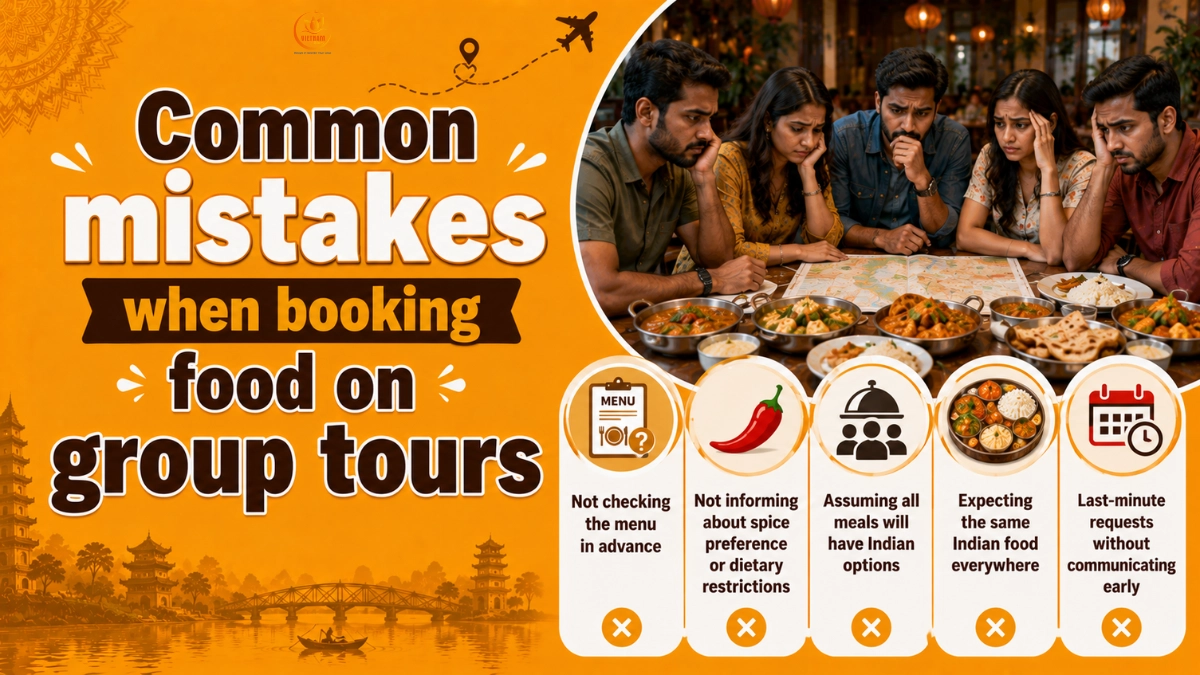
The most common mistake is assuming that “meals included” means suitable meals included. The second is informing the operator about a strict diet only after arriving in Vietnam. Restaurants serving groups often work with planned menus, so advance notice can significantly improve what can be arranged.
Another mistake is choosing the cheapest tour format and expecting private-tour flexibility. An international SIC excursion and a private family tour are fundamentally different products. Finally, do not treat vegetarian and Jain requirements as interchangeable. Being precise before booking prevents many problems on the ground.
FAQ
Do Vietnam group tours include Indian food?
Indian-focused group tours may include Indian meals, while international SIC tours generally do not design their meal programmes specifically around Indian cuisine. Check exactly which meals are included before booking.
Can I request vegetarian meals on a Vietnam group tour?
Yes, vegetarian options can often be requested, but the cuisine may be Vietnamese rather than Indian. Submit dietary requirements before travelling.
Can Jain travellers join group tours?
Yes, but confirm the exact meal arrangements before booking. Smaller groups or private tours usually provide greater flexibility for complex dietary requirements.
Is vegetarian food available on Ha Long Bay cruises?
Many cruises can accommodate vegetarian requests, but options vary. Confirm dietary requirements with the selected cruise in advance.
Which Vietnam destinations are easiest for Indian group travellers?
Hanoi, Da Nang, Hoi An, and Ho Chi Minh City provide the strongest food infrastructure. Remote destinations generally require more planning.
Conclusion
Indian food and vegetarian options are widely manageable on Vietnam tours, but the level of convenience depends on the tour structure you choose. An Indian fixed-departure group offers familiarity and simplicity. An international SIC tour offers affordability and a more local experience but less control over meals. Private and small-group tours provide the greatest flexibility for families, vegetarians, Jain travellers, and travellers with specific dietary requirements.
Before booking, do not stop at “Are meals included?” Ask what meals are included, what cuisine is served, how vegetarian and Jain requests are handled, and what happens during cruises or remote excursions.
Vietnam Story designs Vietnam travel for Indian travellers with these practical requirements in mind. Whether you prefer a social Vietnam Group Tour or a more customised journey, the goal is the same: build the meal plan into the trip from the beginning so food supports your Vietnam experience rather than limiting it.