You come from a land of rich, aromatic spices and a deeply rooted vegetarian culture. Naturally, when you fly 4,000 kilometers away, you worry: “Is Vietnam vegetarian friendly?” and “Where can I find reliable Indian food in Vietnam?” In this comprehensive guide, Vietnamstory will share the “insider” evidence we have gathered over many years to help you plan a culinary journey that respects your palate while embracing the soul of Vietnam.
How vegetarian-friendly is Vietnam for Jaipur travellers?
If you are currently sitting in Jaipur planning your trip, let’s put your mind at ease. Is Vietnam vegetarian friendly? The answer is a resounding YES, but perhaps not in the way you expect.
Vietnam’s vegetarian culture is rooted in Mahayana Buddhism. For centuries, Vietnamese people have observed “Ngay Chay” (Vegetarian Days) on the 1st and 15th of every lunar month. This has given birth to a sophisticated culinary tradition known as “Chay” (pronounced exactly like your Indian “Chai”).
For Jaipur-style eaters, who often follow strict vegetarian or Jain diets, this means you aren’t just limited to “salads” or “steamed vegetables.” You can enjoy steaming bowls of vegetarian food in Vietnam for Indians, ranging from local noodle soups to rich, aromatic Indian thalis.
At Vietnamstory, we don’t just provide a driver; we provide a “culinary bridge.” We always suggest that our Jaipur clients bookmark our food-style notes to learn how to alternate between light Vietnamese “Chay” by day and a comforting Indian “Anchor Meal” by night.
READ MORE: Best Vietnam Tour Packages From Jaipur By Traveller Type
How to say “I’m Vegetarian” in Vietnam?
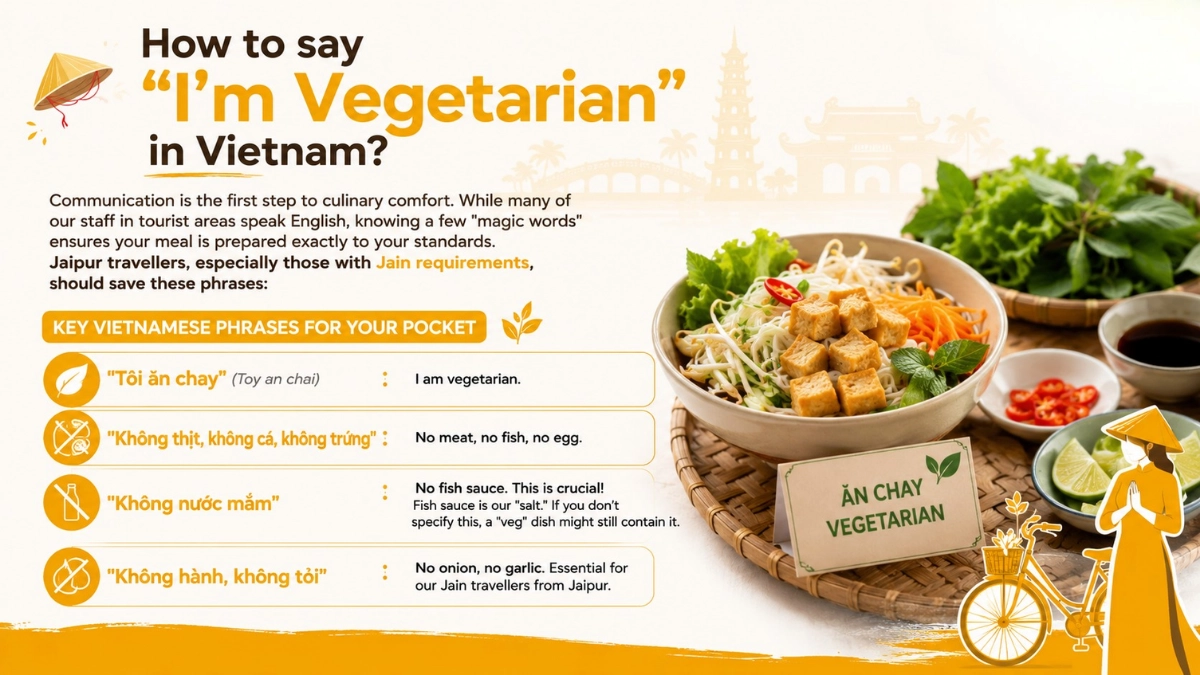
Communication is the first step to culinary comfort. While many of our staff in tourist areas speak English, knowing a few “magic words” ensures your meal is prepared exactly to your standards. Jaipur travellers, especially those with Jain requirements, should save these phrases:
Key Vietnamese phrases for your pocket
- “Tôi ăn chay” (Toy an chai): I am vegetarian.
- “Không thịt, không cá, không trứng”: No meat, no fish, no egg.
- “Không nước mắm”: No fish sauce. This is crucial! Fish sauce is our “salt.” If you don’t specify this, a “veg” dish might still contain it.
- “Không hành, không tỏi”: No onion, no garlic. Essential for our Jain travellers from Jaipur.
Menu sign-reading
When walking the streets of Hanoi or Saigon, look for signs that say “Quán Chay” or have a yellow flag with a “卍” symbol. These are 100% vegetarian establishments where you can walk in with total confidence.
Vegetarian-friendly Vietnamese meals Jaipur travellers can adopt
Don’t spend your whole trip hunting for paneer. Our local “Chay” food is surprisingly reminiscent of the textures you enjoy in Rajasthan. Here are the staples you should try:
- Phở Chay: Our national dish, but with a twist. The broth is made from charred ginger, cinnamon, star anise, and root vegetables (no meat bones). It is served with rice noodles, tofu, and mushrooms. It’s as comforting as a warm bowl of soup-rice on a rainy day.
- Mì Chay: Instant or fresh yellow noodles in a vegetable broth.
- Bún Chay: Cold rice vermicelli topped with crispy fried tofu, fresh herbs, peanuts, and a soy-based dressing. It is light, healthy, and keeps you energized for sightseeing in the tropical heat.
- Mì Xào Chay: Stir-fried noodles with an abundance of seasonal greens and tofu.
- Cơm Chiên Ngũ Sắc: Five-color fried rice. Visually, it looks like a mild Veg Pulao and is a huge hit with Indian children.
- Bánh Mì Chay: A crispy baguette stuffed with lemongrass tofu, mushroom pâté, and pickled daikon. It is the ultimate “high-tea” snack for those used to Jaipur’s kachoris.
- Gỏi Cuốn Chay: Fresh summer rolls. Translucent rice paper filled with tofu, mint, and vermicelli, served with a savory peanut dipping sauce.
City-by-city strategy for Indian food
The secret to a successful 10-day trip is not treating the whole country the same. Each city has a different “Food DNA.” Here is how to use Indian restaurants in Hanoi, Da Nang, and Ho Chi Minh strategically.
Hanoi – The North Indian Heritage
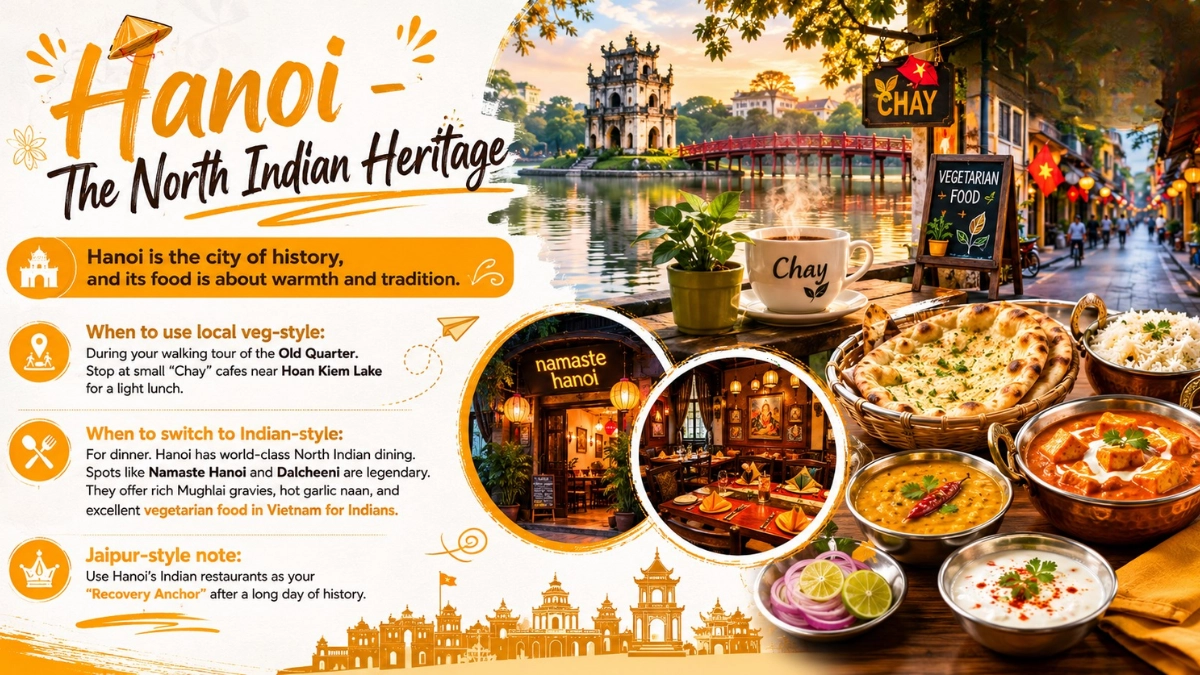
Hanoi is the city of history, and its food is about warmth and tradition.
- When to use local veg-style: During your walking tour of the Old Quarter. Stop at small “Chay” cafes near Hoan Kiem Lake for a light lunch.
- When to switch to Indian-style: For dinner. Hanoi has world-class North Indian dining. Spots like Namaste Hanoi and Dalcheeni are legendary. They offer rich Mughlai gravies, hot garlic naan, and excellent vegetarian food in Vietnam for Indians.
- Jaipur-style note: Use Hanoi’s Indian restaurants as your “Recovery Anchor” after a long day of history.
Da Nang and Hoi An – The beach and lantern vibe
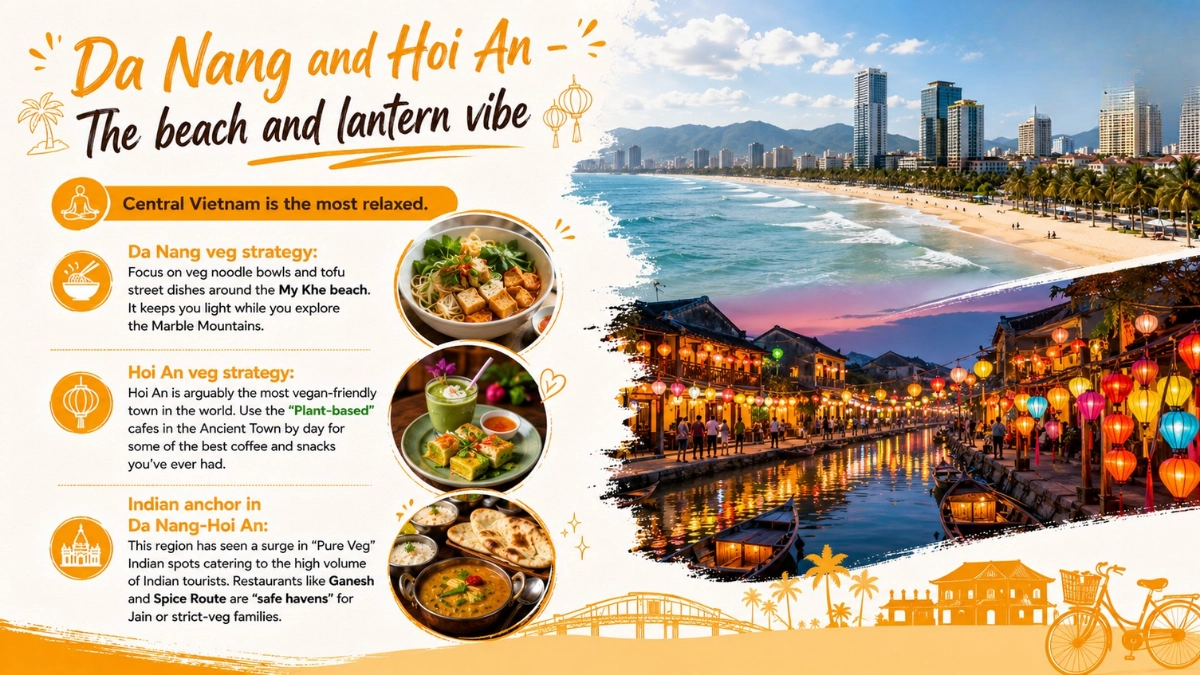
Central Vietnam is the most relaxed.
- Da Nang veg strategy: Focus on veg noodle bowls and tofu street dishes around the My Khe beach. It keeps you light while you explore the Marble Mountains.
- Hoi An veg strategy: Hoi An is arguably the most vegan-friendly town in the world. Use the “Plant-based” cafes in the Ancient Town by day for some of the best coffee and snacks you’ve ever had.
- Indian anchor in Da Nang-Hoi An: This region has seen a surge in “Pure Veg” Indian spots catering to the high volume of Indian tourists. Restaurants like Ganesh and Spice Route are “safe havens” for Jain or strict-veg families.
Ho Chi Minh City – The vegan and international hub
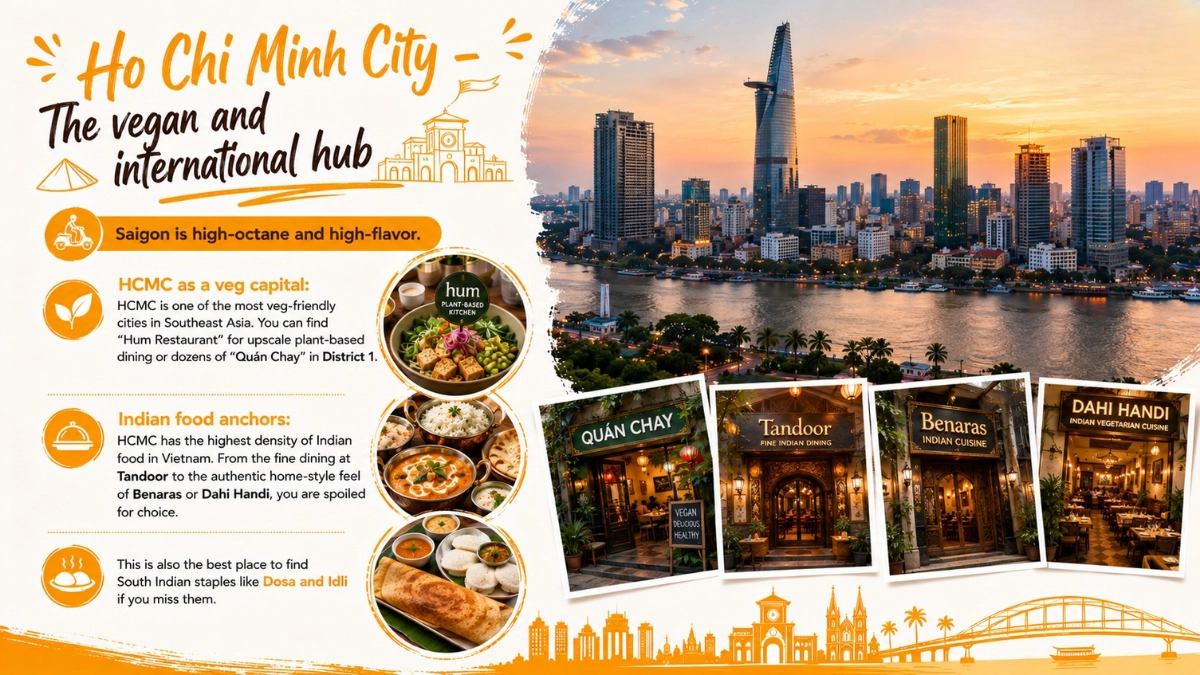
Saigon is high-octane and high-flavor.
- HCMC as a veg capital: HCMC is one of the most veg-friendly cities in Southeast Asia. You can find “Hum Restaurant” for upscale plant-based dining or dozens of “Quán Chay” in District 1.
- Indian food anchors: HCMC has the highest density of Indian food in Vietnam. From the fine dining at Tandoor to the authentic home-style feel of Benaras or Dahi Handi, you are spoiled for choice. This is also the best place to find South Indian staples like Dosa and Idli if you miss them.
The “Jain-style” and super-strict veg strategy
We know that for you, “Vegetarian” is just the beginning; the avoidance of root vegetables and onions is paramount. Please do not assume a local “Chay” restaurant is Jain-friendly. While they don’t use meat, they do use onions and garlic for flavor.
- The Indian anchor: Stick to reputable Indian restaurants in Hanoi, Da Nang, and Ho Chi Minh that explicitly offer a “Jain Menu.” Most of our partner chefs are Indian and will prepare a fresh curry base without onion/garlic if you give them 30 minutes’ notice.
- The “plain and simple” rule: When in local Vietnamese spots, ask for “Đậu hũ chiên sả” (Tofu fried with lemongrass) and “Cơm trắng” (Plain steamed rice). It is simple, safe, and delicious.
Jaipur-specific habits: Adapting your palate
Coming from Jaipur, your eating habits are unique. Here is how to adapt:
- Frequent meals: In Jaipur, you might have small bites throughout the day. In Vietnam, our Bánh Mì Chay and Gỏi Cuốn Chay are perfect handheld options that you can pair with our incredible coconut water.
- Tea-time culture: Jaipurites love their tea. While we are a coffee nation, we have incredible Lotus Tea. It is floral, soothing, and a great substitute for Masala Chai during your afternoon break.
- For seniors and kids: Vietnamese veg noodle soups are very gentle on the stomach. We always advise our senior guests to use Vietnamese food for lunch to stay active and light for the afternoon tours, then fall back on a heavy Indian thali for dinner.
- Snack buffer: VNS always tells our Jaipur families to bring a small stash of Khakhra or Namkeen. These are perfect for the 4-hour drive to Ha Long Bay when you just need a quick crunch of home.
Practical tips for a comfortable culinary journey
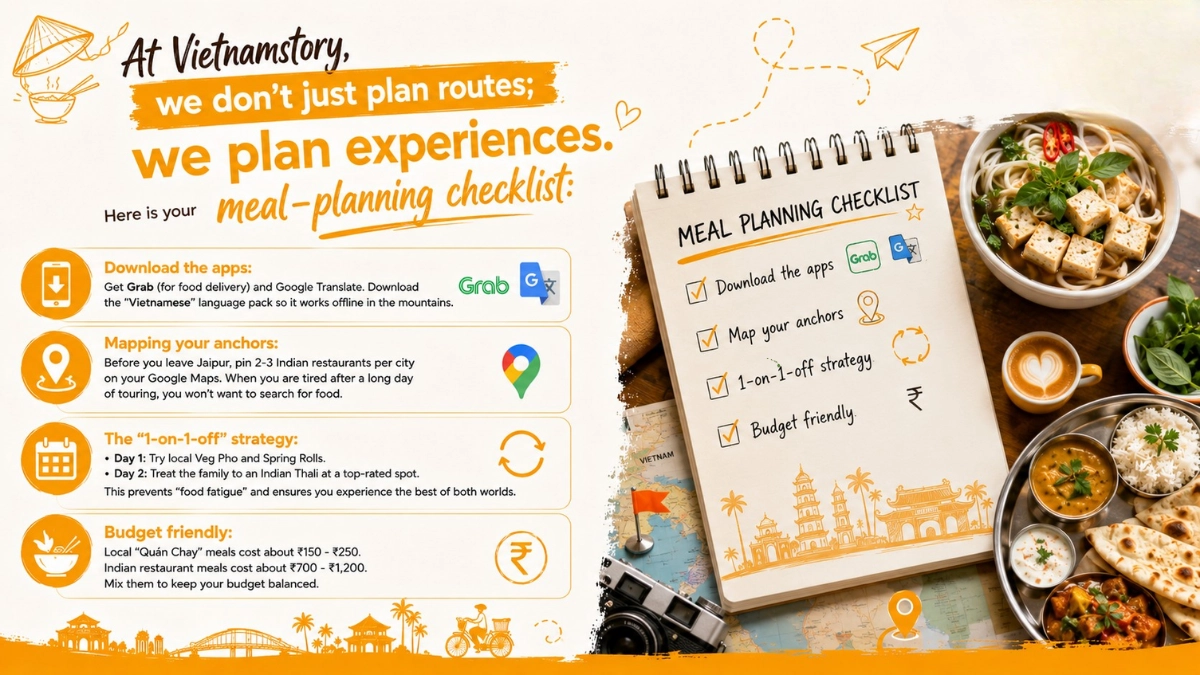
At Vietnamstory, we don’t just plan routes; we plan experiences. Here is your meal-planning checklist:
- Download the apps: Get Grab (for food delivery) and Google Translate. Download the “Vietnamese” language pack so it works offline in the mountains.
- Mapping your anchors: Before you leave Jaipur, pin 2-3 Indian restaurants per city on your Google Maps. When you are tired after a long day of touring, you won’t want to search for food.
- The “1-on-1-off” strategy:
- Day 1: Try local Veg Pho and Spring Rolls.
- Day 2: Treat the family to an Indian Thali at a top-rated spot.
- This prevents “food fatigue” and ensures you experience the best of both worlds.
- Budget friendly: Local “Quán Chay” meals cost about ₹150 – ₹250. Indian restaurant meals cost about ₹700 – ₹1,200. Mix them to keep your budget balanced.
Summary
- Is Vietnam vegetarian friendly? Yes, it’s a global leader in “Chay” cuisine.
- Indian Food in Vietnam: Abundant in major cities; high quality and authentic.
- Indian restaurants in Hanoi, Da Nang, Ho Chi Minh: These are your “Safe Havens” for home-style comfort.
- For Jaipur Travellers: Embrace the rice and tofu by day, enjoy the paneer and dal by night.
Vietnam and Jaipur are two regions that share a deep soul. We both value hospitality, family, and the joy of a good meal. Reaching us from the Pink City has never been easier, and VNS promises you that you will return home not just with photos of emerald bays, but with the lingering taste of our incredible food. If you need help mapping out your culinary journey, visit our Vietnamstory Jaipur-to-Vietnam pages. We are here to ensure your story in Vietnam is as delicious as it is beautiful.