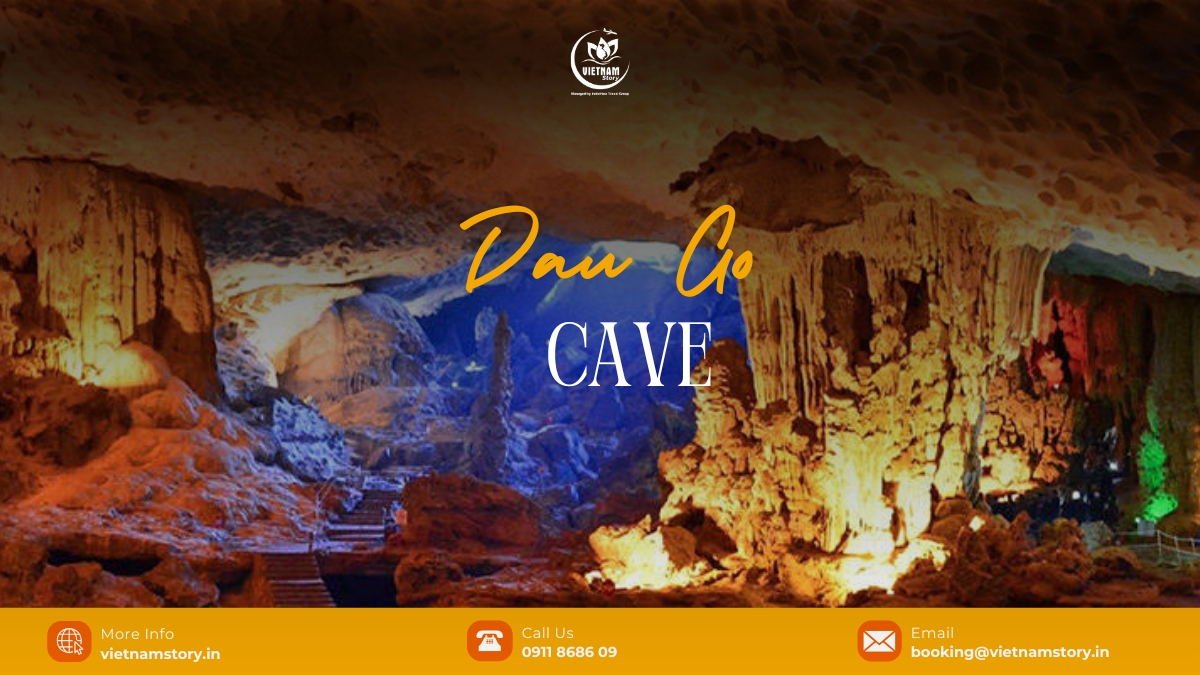
Dau Go Cave, which translates to the “Wooden Stakes Cave,” is one of the largest and most magnificent karst systems in the entire bay. Formed over 2 million years ago, its beauty is so profound that when French explorers first discovered it in 1938, they were so captivated by its grandeur that they famously nicknamed it the “Grotte des Merveilles,” which means the “Grotto of Wonders.” At Vietnamstory, we love to highlight Dau Go Cave as a premier and essential stop for our Indian travelers. It offers a rare and powerful blend of massive natural architecture, a surprisingly thriving biodiversity, and a profound connection to Vietnam’s heroic history of defending our nation.
Location and How to get to Dau Go Cave?
Where is Dau Go Cave located, and how do you visit it from the main Tuan Chau port? The cave is wonderfully situated right in the heart of Hạ Long Bay, making it a very convenient and popular stop on many cruise itineraries. Its central location makes it an easy and rewarding part of any Ha Long Bay exploration. Let’s look at the details.
The cave is situated on Dau Go Island, which is approximately 3 km from the Tuan Chau International Marina and about 6 km from the main Bai Chay tourist area. The entrance to the cave sits at a beautiful elevation of 27 meters above sea level. The cave is primarily accessible as part of the Route 1 boat tours, which are the most common day-trip routes in Ha Long Bay. From Tuan Chau/Bai Chay, it is a very short and scenic 20-30 minute cruise from the main ports to reach Dau Go Island.
A visit to Dau Go Cave is almost always paired with a visit to the nearby and equally beautiful Thien Cung Cave (the Heavenly Palace Cave), which is located just 300 meters away on the same island. It is a standard and much-loved stop on the popular 4-hour day cruises and is also included in many luxury overnight cruise routes. To reach the entrance of the cave, you will need to climb a set of 90 stone steps. This short climb is a beautiful experience in itself, as it rewards you with a stunning panoramic vista of the emerald bay just before you step into the cavern.
The Legend of the “Wooden Stakes”: A Tale of Heroism
Why is it called Dau Go Cave, and what is the incredible history behind its name? The name “Đầu Gỗ” (which means Wooden Stakes) is not just a name; it is a powerful link to one of the most pivotal and heroic moments in all of Vietnamese history. This cave is a place of national pride, a symbol of our resilience and ingenuity.
- The Great Bach Dang Victory (in the year 1288): Our great national hero, General Tran Hung Dao, used this massive and well-hidden cavern as a secret military base. It was here that he hid thousands of sharp, ironwood stakes. These stakes were later planted in the bed of the nearby Bach Dang River, creating a brilliant trap that helped to destroy the invading Mongol fleet in one of our most famous victories.
- Alternative Origins of the Name: There are other, more humble legends about the name as well.
- A Fishermen’s Shelter: Some believe the name comes from a time when local fishermen would shelter here from storms to fix their boats. The name for this was “Giau Go” or “Hiding Wood.”
- The Island’s Shape: Others say that from a distance, the island itself resembles a giant piece of wood (gỗ) floating on the water.
The geological highlights of the Three Chambers
What kind of beautiful formations can you see inside, and how many chambers does the cave have? Dau Go Cave covers a massive 5,000 square meters, with its magnificent ceilings reaching up to 25 meters high. The cave is naturally divided into three distinct and majestic “rooms,” each with its own unique character. Stepping inside is like entering a grand, natural palace. Let’s walk through its chambers.
- The First Chamber: This chamber features the largest cave entrance in all of Ha Long Bay, a massive opening that is 17 meters wide and 12 meters high. From the outside, it is said to resemble the mouth of a “giant jellyfish.” This large entrance allows the chamber to be flooded with beautiful, natural light. Inside, your guide will point out incredible formations that resemble lions, turtles, and even two fighting cocks.
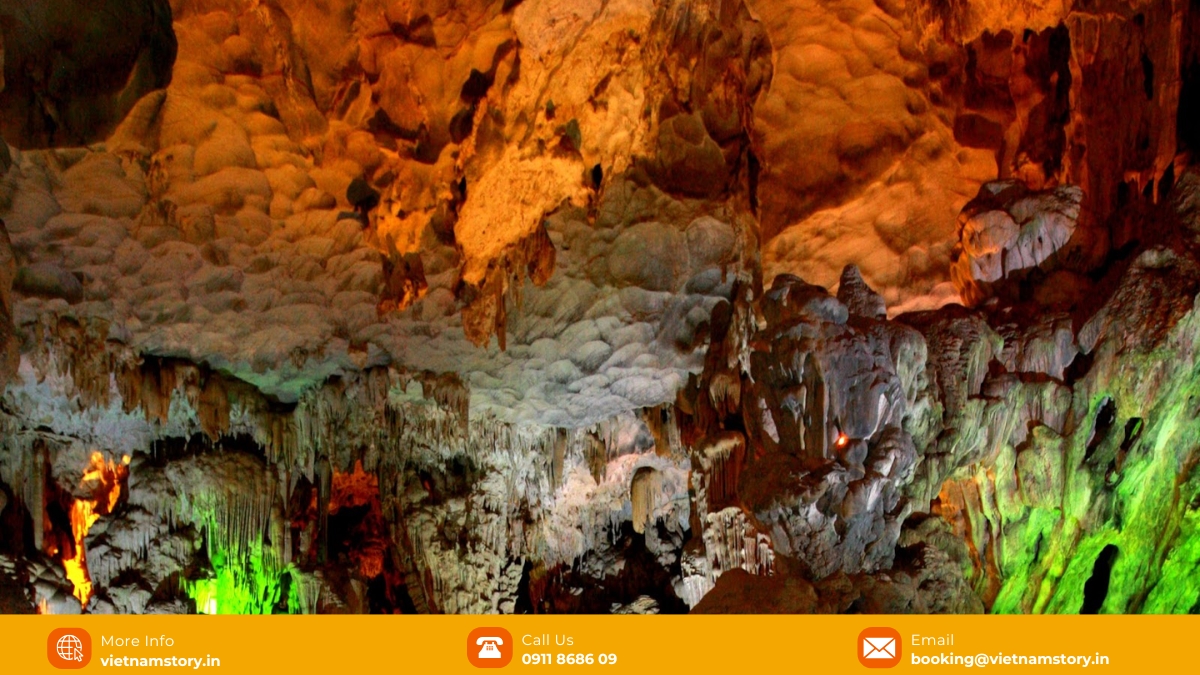
- The Second Chamber: You then pass through a narrower passage into the second chamber, which feels like a mysterious “kaleidoscope” of light and shadow. The stalactites here are breathtaking, looking like cascading stone waterfalls and shimmering “stone flowers.”
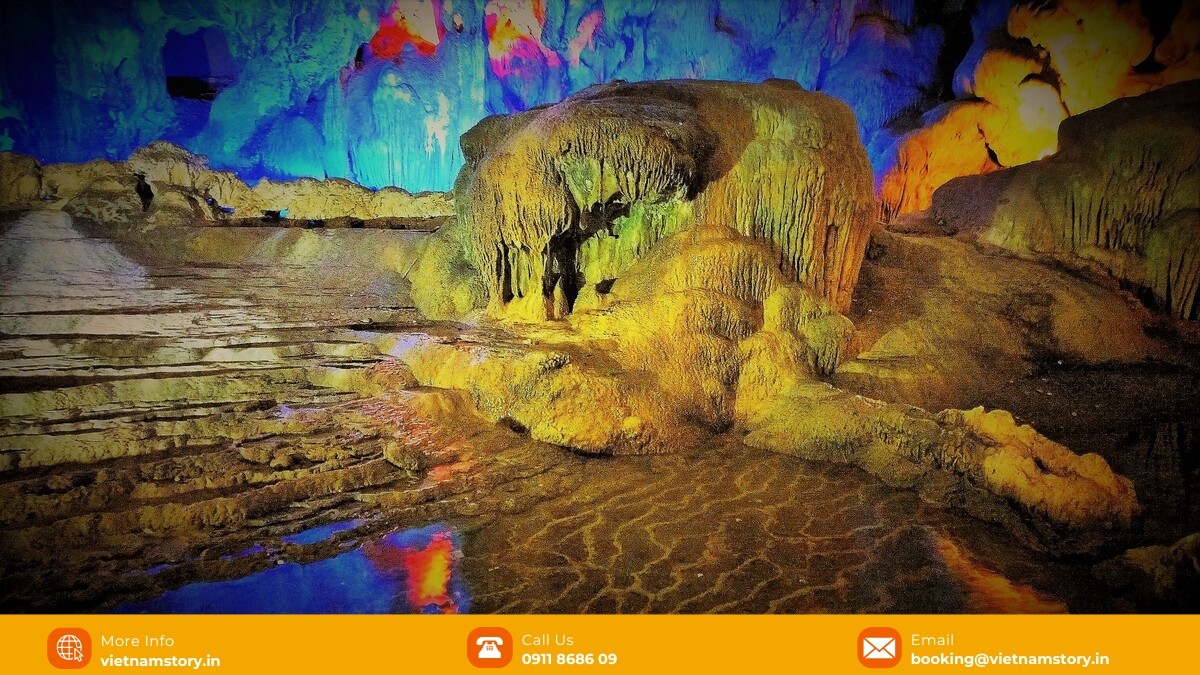
- The Third Chamber: This is the most historical and spacious section of the cave. This is the area where the wooden stakes were believed to have been hidden. It also houses a beautiful, clear freshwater well that, according to legend, never runs dry. The rock formations in this chamber are often said to resemble a “kingdom of heroes,” with shapes that look like petrified soldiers, elephants, and ancient citadels.
- A Royal Connection: Just to the right of the entrance, you will find a stone stele that is engraved with a beautiful poem written by our Emperor Khai Dinh in 1917. He was so moved by the cave’s “divine beauty” that he was inspired to leave his poetry carved in stone for all to see.
The Flora and Fauna of the Cave
What kind of wildlife lives in Dau Go Cave? Unlike many of the drier caves in the bay, Dau Go’s massive entrance and its naturally high humidity have allowed it to support a surprisingly thriving “living” ecosystem. This is not just a cave of stone; it is a cave of life.
- The Flora: The entrance to the cave is like a lush, hidden garden. You will find a beautiful variety of ferns, mosses, and even ancient timber trees that thrive in the sunlight-filtered moisture of the cavern’s mouth.
- The Fauna: The high, vaulted ceilings of the cave are a sanctuary for flocks of Swiftlet birds, whose nests are a prized local delicacy. This is a rare sight that you do not see in most of the other caves. It is also home to a population of bats.
- The Marine Life: The clear freshwater well in the third chamber and the surrounding damp areas are home to small creatures like crabs, insects, and geckos.
Practical tips for Indian travelers
Is the cave suitable for families, and what should you wear? A little bit of preparation will make your visit to this magnificent grotto a comfortable and enjoyable one.Here are our final tips for your adventure.
- The best time to visit: The best seasons to visit are from September to November or from April to June. This is when you will find the most pleasant weather, the best natural lighting, and the stone steps are most likely to be dry and safe.
- The best photography spots: The most iconic photos you can take are of the huge “jellyfish” entrance from your boat and of the beautiful, cascading stone “waterfalls” in the second chamber.
- A unique aerial perspective: For a true luxury experience, you can consider a seaplane tour over Ha Long Bay. This 25-minute flight will take you soaring 300 meters above the bay, giving you an incredible aerial view of the massive karst formation of Dau Go Island.
- What to prepare:
- Please wear anti-slip sports shoes, as the stone steps and the interior of the cave can be damp and slippery.
- It is a good idea to bring some mosquito repellent for the wooded climb up to the entrance.
- You might want to bring a light jacket or a scarf, as the temperature inside the massive cavern stays at a cool 20-22°C, which can feel chilly after the heat outside.
Conclusion
For the curious traveler who wants to experience all that Ha Long Bay has to offer, a visit to Dau Go Cave is an essential piece of the puzzle. It perfectly combines the three greatest elements of the bay into one incredible stop: breathtaking natural beauty, fascinating local legends, and a deep, tangible connection to Vietnamese history. It is an experience that engages your mind as much as it dazzles your eyes, offering a complete and satisfying exploration that goes far beyond just a pretty view. Let VietnamStory help you piece together that perfect, complete Ha Long Bay experience. We can ensure your itinerary includes this magnificent and historically significant cave, providing you with a journey that is as intellectually enriching as it is visually stunning. Get in touch with us to plan your trip, and discover the complete wonder of Ha Long Bay.