
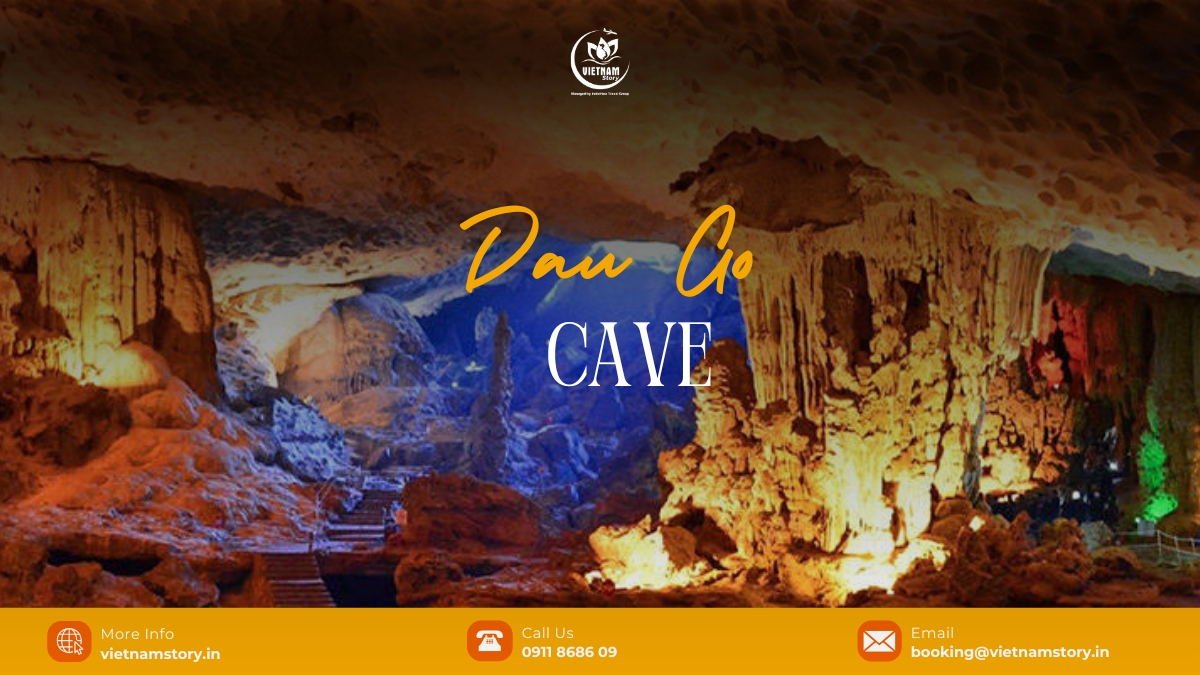
Đầu Gỗ Cave is a large three-chamber cave on Đầu Gỗ Island, about 3 km from Tuan Chau International Marina. Its wide entrance admits substantial natural light, giving the first chamber a greener, more open appearance than many fully enclosed caves in Ha Long Bay.
The cave is also associated with several stories about the origin of the name “Đầu Gỗ”. VNS keeps those stories separate from verified geology: the limestone itself is hundreds of millions of years old, while the cave developed much later through karst processes. Current Ha Long Bay management information does not identify one exact discovery year.
Where is Đầu Gỗ Cave, and which route includes it?
Đầu Gỗ Cave is on Đầu Gỗ Island, about 3 km from Tuan Chau International Marina. The Ha Long Bay Management Department places it about 300 metres from Thiên Cung Cave, so the two caves are commonly associated with the same western sightseeing area.
The current official Route 1 itinerary includes both Thiên Cung and Đầu Gỗ. That makes the booked route more useful than a generic “day cruise” or “overnight cruise” label when you want to know whether this cave is included.
Reaching the cave involves a climb from the landing area and continued walking inside. Official sources differ on the exact entrance elevation, so VNS does not use one disputed metre figure or a fixed step count as the main accessibility test. Travellers with knee, balance or mobility limitations should ask the operator about the current walking setup before booking.
Why is it called Đầu Gỗ Cave?
There is more than one explanation for the name. A well-known story links the cave to wooden stakes associated with the Trần dynasty’s resistance to Mongol forces, but the Ha Long Bay Management Department presents this as one traditional explanation rather than a proven record that the cave served as a secret military warehouse.
More recent management material also cites explanations recorded in Quang Ninh sources: the island’s shape was compared with a large timber log, or local fishermen sheltering in the small protected coves left pieces of wood while repairing boats. VNS therefore treats the origin of the name as local history and legend with competing versions, not one settled military fact.
What will you see inside the three chambers?
Current Ha Long Bay management information gives the cave an area of about 5,000 m², a length of roughly 500 metres and a large entrance around 17 metres wide and 12 metres high. The visitor route moves through three main chambers.
- First chamber: the wide entrance admits substantial natural light. Stalactites, stalagmites, moss and other moisture-loving plants are especially noticeable around this brighter section.
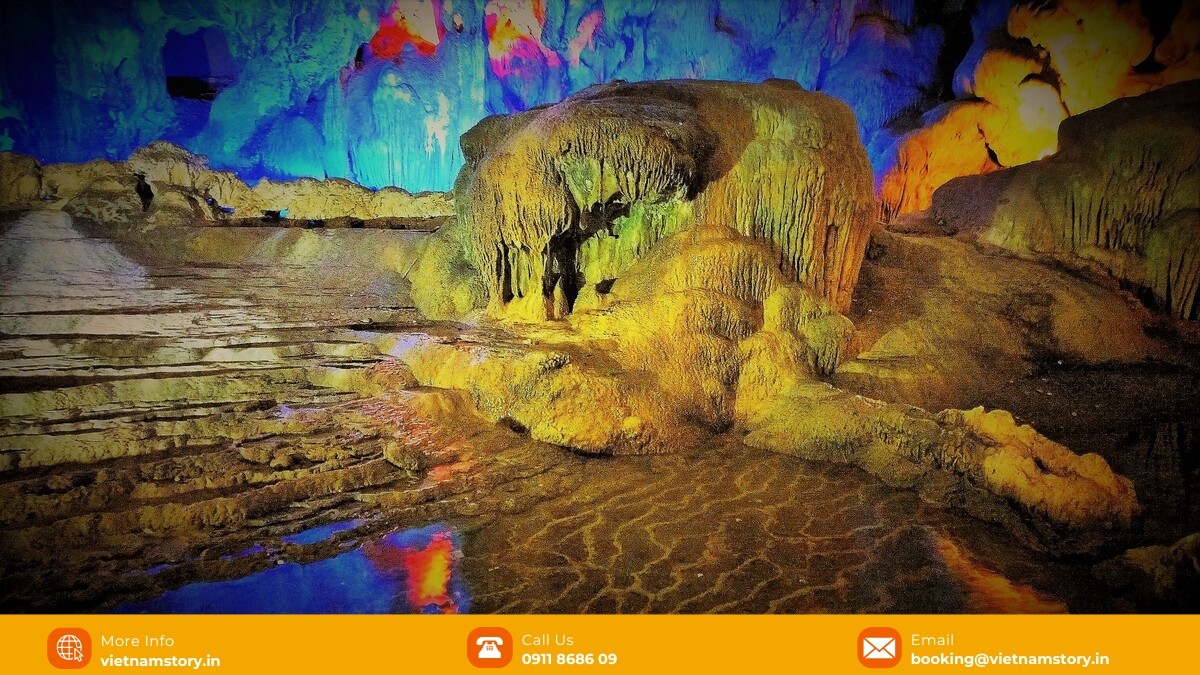
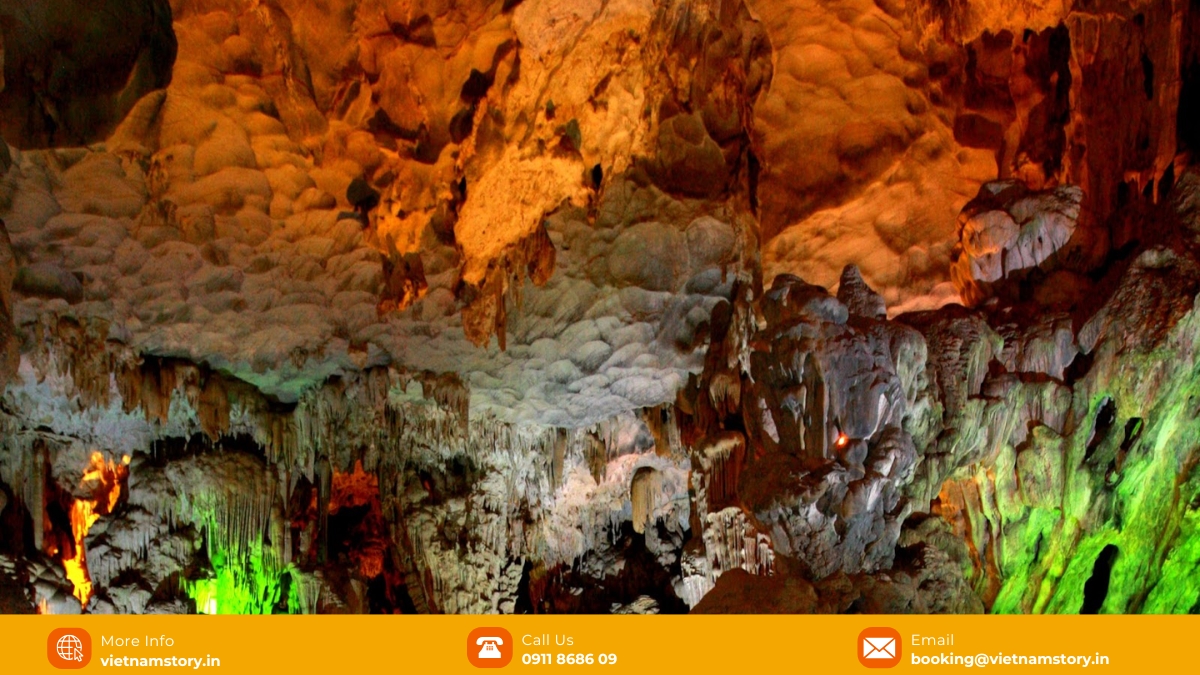
- Second chamber: the cave becomes deeper and darker, with denser formations and less direct daylight.
- Third chamber: the deepest section includes a natural freshwater well and a quieter, more enclosed atmosphere.
The geological value is more important than assigning every formation a fixed object or character. A 2026 management article explains that the limestone bedrock is around 340–360 million years old, while the cave itself developed much later through prolonged karst processes, groundwater action, tectonic change and ancient sea-level shifts.
Why does Đầu Gỗ feel greener than many Ha Long caves?
The large entrance admits natural light and moisture, creating suitable conditions for ferns, orchids, moss and other green vegetation around the entrance area. This is one of the details highlighted by current Ha Long Bay management material.
Current management material supports the visible plant life around the entrance, but it does not provide a detailed visitor-facing wildlife checklist. VNS therefore avoids promising particular bird, bat or small-animal sightings inside the cave.
Practical visitor tips for Đầu Gỗ Cave
- Check the route first: official Route 1 includes Đầu Gỗ and Thiên Cung, but not every Ha Long cruise follows Route 1.
- Wear shoes with good grip: the approach and cave route involve stone steps and surfaces that may be damp.
- Consider mobility before booking: this is not a step-free attraction. Travellers with knee, balance or walking limitations should ask the operator about the current excursion setup.
- Use the current operating information: visitor hours and route operations can change, so check the management authority or your operator close to travel rather than relying on an old timetable.
- For photos: the wide entrance and the first chamber use more natural light than the deeper sections. Expect the lighting conditions to change as you move further inside.
Is Đầu Gỗ Cave worth including?
Đầu Gỗ is a strong choice if you want a cave with a wide daylit entrance, three distinct chambers and a layer of local history and legend. It is not a universal stop on every Ha Long cruise, so the decision starts with whether your booked itinerary follows Route 1 and whether the stair-and-walking requirement suits your group.
For current factual information, see the Ha Long Bay Management Department’s Đầu Gỗ Cave page and the official Route 1 itinerary. If this cave is a priority, compare current Ha Long Bay cruise options by route rather than assuming it is included by cruise category.