When most people think of Northern Vietnam, they think of the world-famous Ha Long Bay. However, as an expert in the region, Vietnamstory often directs our guests toward its quieter, emerald sister: Lan Ha Bay. Lan Ha offers a more pristine, less-crowded experience while maintaining the same breathtaking limestone beauty. But to truly appreciate the scale of this UNESCO Biosphere Reserve, you cannot simply stay on the deck of a boat. You must climb. Finding the right Lan Ha Bay viewpoint is the difference between seeing a postcard and living within one. At Vietnamstory, we specialize in making these transitions seamless. Most of our guests begin their adventure with a curated Lan Ha Bay Cruise, using the luxury of the ship as a base before heading into the rugged heights of Cat Ba Island to find the best panoramic vistas. In this guide, we will share the “insider” knowledge on where to find the most dramatic views.
The ultimate Lan Ha Bay viewpoint comparison
Not all viewpoints are created equal. Depending on whether you are traveling with active teenagers, seeking a romantic sunset, or looking for a gentle walk with elders, your choice of destination will change. Some traditional spots have seen infrastructure upgrades, while others remain raw and challenging.
This comparison matrix helps you match your fitness level and photography goals to the perfect Lan Ha Bay viewpoint. While Ngu Lam Peak offers the most comprehensive 360-degree jungle-and-sea view, Cannon Fort remains the best for those who prefer easy accessibility and historical charm. To help you decide which height is right for you, we have compiled this status report:
| Viewpoint | Location | Best for | Effort level | Status / Fees |
| Ngu Lam Peak | Cat Ba National Park | 360° Jungle + Sea | Moderate Trek | Open. 80,000 VND (Park Entry). |
| Cannon Fort | Cat Ba Town edge | History & Harbor | Very Easy | Officially Closed (View from cafes). |
| Monkey Island | Monkey Island | Aerial Bay Views | Strenuous | Open. Sharp rocks; boat access. |
| Nui Hai Peak | East Cat Ba | Sunset “Sea of Karsts” | Challenging | Rising Star. Best for hikers. |
| Butterfly Valley | Park trails | Valley cliffs, karsts, climbing | Moderate | |
| Viet Hai Peak | Cat Ba National Park | Remote Isolation | Strenuous | Open. Part of full-day jungle treks. |
This comparison serves as your roadmap, helping you navigate fees and accessibility during your Northern Vietnam holiday. It ensures that you don’t end up on a strenuous rock scramble if you were looking for a relaxed sunset photo with a cocktail in hand.
READ MORE: Where Is Lan Ha Bay? The Ultimate Insider Guide For Indian Travelers
Discovering the top 4 panoramic Lan Ha Bay viewpoint experiences
Each of these spots tells a different story – one of jungle resilience, one of wartime history, and one of raw, volcanic beauty. The most iconic Lan Ha Bay viewpoint experiences are Ngu Lam Peak, Cannon Fort (and its alternatives), Monkey Island, and Nui Hai Peak. These locations offer a diverse range of perspectives, from the lush interior of the National Park to the shimmering harbor of Cat Ba Town, ensuring a complete visual journey of the region.
Each of these locations requires a different approach to your day. Here is what you can expect when you reach these heights:
Ngu Lam Peak (The king of panoramas)

Located inside the heart of Cat Ba National Park, this is the “must-do” trek for a bird’s-eye view of the UNESCO Biosphere Reserve. The hike is a 1.5km trail that takes approximately 45 – 60 minutes. The path winds through the Kim Giao forest; the second half features steep stone steps and newly renovated 2025 railings for safety.
When you reach the highest gazebo, you are rewarded with a jagged, raw 360-degree view of limestone “waves” stretching to the horizon. The entry fee is 80,000 VND. Our tip? Carry a pashmina, the peak can be surprisingly windy and cool even in the heat of summer.
Cannon Fort and Ngoc Mountain (The sunset legends)
While the interior tunnels of Cannon Fort remain closed for conservation, the area is still the premier sunset hub. If the main gates are blocked, we head to Ngoc Mountain in Cat Ba Town. It offers a similar elevation with clear views of the harbor and the colorful floating fishing boats. You can still take a motorbike or taxi up the Cannon Fort access road to specific “Sunset Cafes” that remain operational, offering a Lan Ha Bay viewpoint with the added comfort of a fresh fruit juice.
Monkey Island viewpoint (The “mordor” climb)
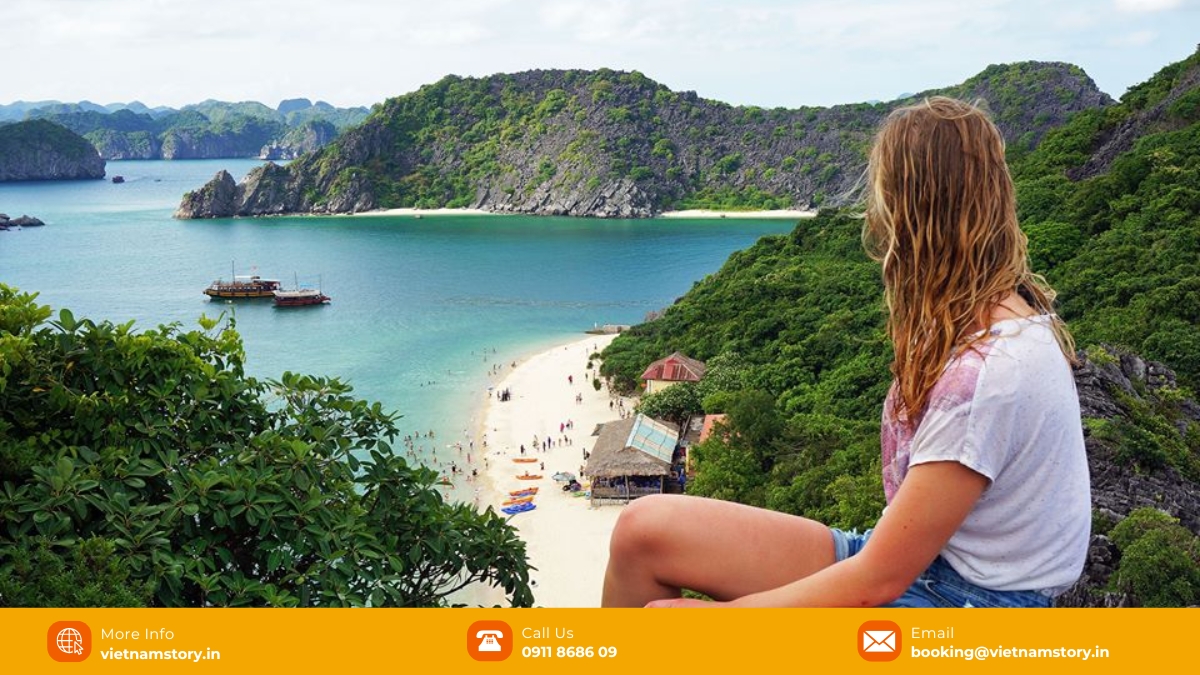
Moneky Island viewpoint is the most challenging Lan Ha Bay viewpoint in the region. We must warn our guests: do not attempt this in flip-flops! The “path” is made of razor-sharp volcanic rock and requires a hand-over-hand scramble. However, the reward is a vertical shot looking directly down into a crescent-shaped bay where traditional wooden junks anchor. The water color here is a deep, vibrant turquoise that looks incredible on camera. Just watch your gear—the monkeys are bold and will snatch your phone before you can snap a photo if you aren’t careful!
Nui Hai Peak (The professional’s choice)
For those who find Ngu Lam too “touristy,” Nui Hai (Hai Peak) offers a more rugged, less-trodden path. This is a rising star in the trekking scene. It is higher and steeper than Ngu Lam, providing the best angle for “Golden hour” photography, as the sun sets directly behind the layers of forest and sea, creating a shimmering effect across the karsts.
Specialized Vietnamstory guide for Indian travelers visiting a Lan Ha Bay viewpoint
For the best experience at a Lan Ha Bay viewpoint, Indian travelers should prioritize sturdy footwear (avoiding sandals for treks), plan for high humidity levels of 90%+, and time their visits for the “clarity months” of March and November. These small adjustments ensure that your trek is safe, comfortable, and visually stunning. Here are the specific factors we always discuss with our guests before we start the climb:
- Footwear and grip: we often see our guests wearing stylish sandals, but for these treks, sturdy sneakers or hiking shoes are mandatory. The high humidity makes the limestone rocks as slippery as ice.
- The “clarity months”: If you are visiting for Holi (March) or Diwali (November), you are in luck! These are the “misty-to-clear” transitions. The air is crisp, offering the sharpest visibility of the year for those wide-angle landscape shots you see on Instagram.
- Hydration and heat: Jungle treks are dehydrating. In Northern Vietnam, the humidity can make a 1km walk feel like 5km. We always ensure our private cars carry at least 1.5L of mineral water per person for the Ngu Lam trek.
- Photography gear: Use a wide-angle lens for the summits to capture the “Sea of Karsts,” but we recommend a telephoto lens for the harbor views to capture the intricate details of the floating fishing villages.
READ MORE: Lan Ha Bay Caves: Your Guide to the “Secret Gallery” of Wonders
What most guides miss about a Lan Ha Bay viewpoint?
Beyond the standard tourist paths, there are secrets to Lan Ha Bay that only those of us who live here know. The bay is evolving with new eco-regulations and hidden trails that few general tourists ever see.
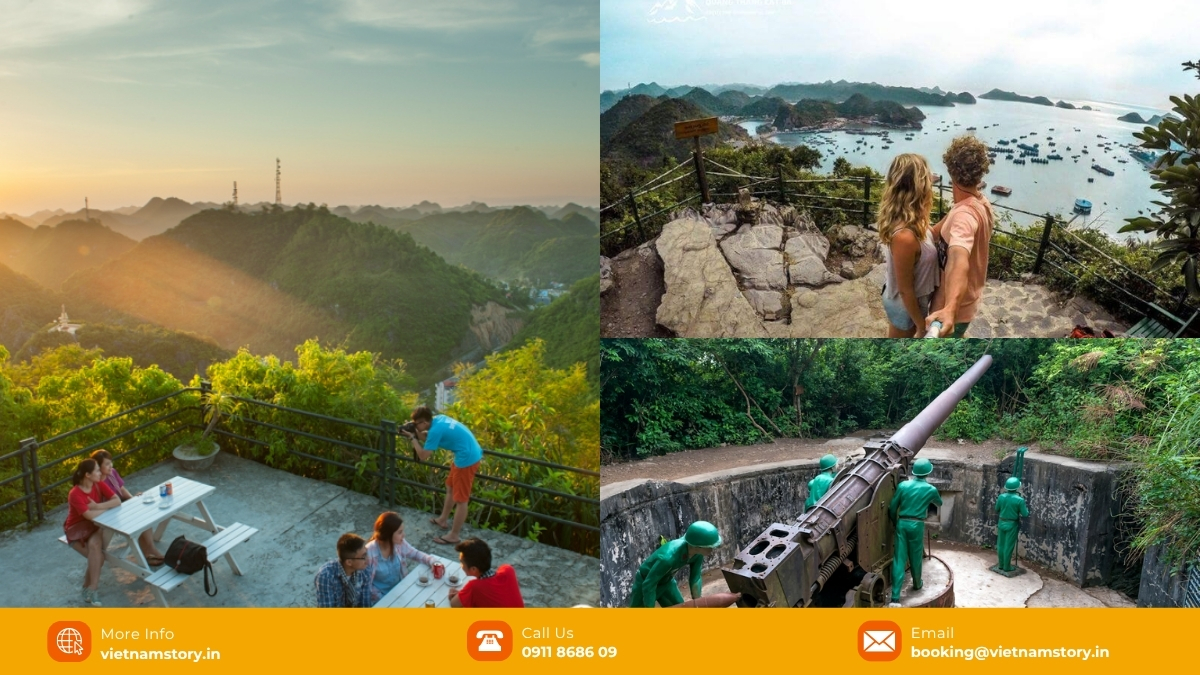
To truly master the Lan Ha Bay viewpoint experience, you must look for the “Cloud Sea” phenomena in early spring, explore the “unofficial” views in Butterfly Valley, and respect the strict drone restrictions within the National Park. These “insider” details will give your trip a level of depth that others will miss. Let me share a few “hidden” secrets with you:
- The “cloud sea” window: In February and March, Ngu Lam Peak often sits above the morning mist. If you arrive at the summit by 7:30 AM, you can see the karst tips poking through a white blanket of clouds – a sight usually reserved for the high mountains of Sapa.
- Butterfly valley alternative: If the main trails at the National Park are crowded, the Butterfly valley (Lien Minh) offers “unofficial” viewpoints. It is a rock-climbing haven with a “Jungle Book” aesthetic that offers a unique green-on-green perspective of the island’s interior.
- Drone restrictions: Please be aware that drones are strictly banned within the National Park to protect the endangered Cat Ba Langur. To get that legal aerial perspective for your videos, we recommend using the Sun World Cable Car or taking photos from your cruise’s top deck while out in the open bay.
Crafting your Lan Ha Bay viewpoint itinerary
Planning your day is essential to avoid the midday heat and the largest crowds. we always suggest a “Peak-to-Plate” approach, where we combine a morning climb with a rewarding local seafood (or vegetarian) lunch in the town harbor.
We recommend two primary structures for visiting a Lan Ha Bay viewpoint: the “Classic Half-Day” for those who want to see the National Park and caves, and the “Sunset Special” for those who want to end their day with a golden glow over the harbor. Here is how we typically structure these days for our guests at Vietnam Story:
The classic half-day
- 8:00 AM: Cat Ba National Park (Ngu Lam Peak Trek).
- 11:00 AM: Visit the historic Hospital Cave.
- 12:30 PM: Fresh seafood or Indian-style lunch in Cat Ba Town harbor.
The sunset special
- 3:30 PM: Hike to the rugged Nui Hai Peak.
- 5:30 PM: Golden Hour photography at the summit.
- 6:30 PM: Downward trek for dinner at a harbor-view cafe in town.
READ MORE: Which Is Better Halong Bay Or Lan Ha Bay?
Conclusion
The Lan Ha Bay viewpoint is more than just a place to take a photo, it is a place to find perspective. When you stand atop Ngu Lam Peak or look down from Monkey Island, you realize how vast and ancient our world truly is. For our friends from India, who come from a land of such rich history and grand landscapes, we know these mountains feel like a familiar, emerald home.
At Vietnamstory, we are ready to help you find your own “viewpoint”. Whether you want the thrill of the climb or the peace of a sunset cafe, we will make sure your journey is comfortable, safe, and culturally respectful. We look forward to seeing you at the summit!