Ha Long Bay is no longer just a singular destination; it is a 500-million-year-old museum of Earth’s history that now officially includes the Cat Ba Archipelago. This expanded UNESCO complex spans over 65,000 hectares, making it one of the largest and most ecologically significant marine-invaded karst landscapes on Earth. At Vietnamstory, we help our Indian travelers peel back the layers of this landscape – from the ancient 18,000-year-old cultures hidden in its caves to the rare langurs and dolphins that call its emerald waters home. If you are planning your voyage, our Halong Bay Cruise remains the gold standard for luxury and cultural immersion. In this article, we will walk you through the most fascinating and up-to-date facts about Halong Bay to ensure your visit to this World Wonder is as meaningful as it is beautiful.
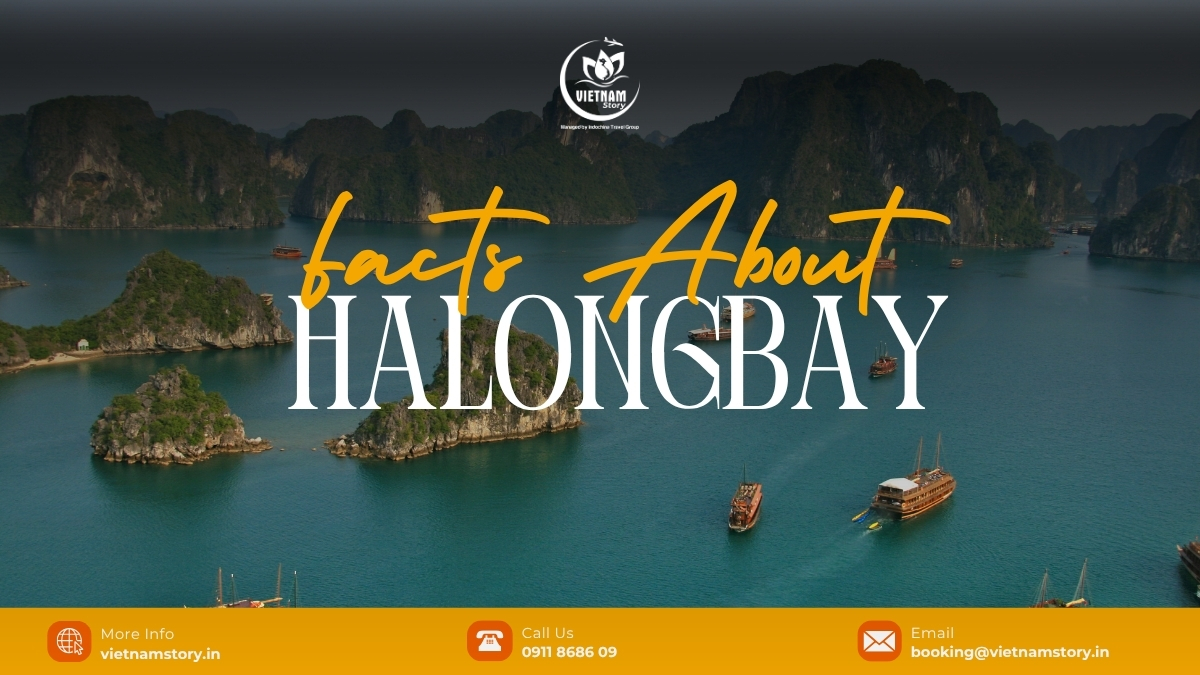
Geography and record-breaking scale: Facts about Halong Bay
The first thing every traveler notices is the sheer, overwhelming scale of the bay. In late 2023, a historic shift occurred when UNESCO officially merged Ha Long Bay with the Cat Ba Archipelago, creating a massive, unified heritage site. This redefinition has changed how we map the region and how we experience its vastness.
The most significant geographic facts about Halong Bay center on its massive expansion, now covering over 65,000 hectares and containing 1,133 limestone islands. This unified territory has seen a staggering 105% growth in tourism, welcoming millions of visitors who come to witness its shallow but biologically rich emerald waters. To understand the magnitude of this landscape, consider the following geographic and statistical breakdown for the current eason:
| Feature | Ha Long side | Cat Ba side | Total unified site |
| Number of islands | 775 islands (core zone) | 358 islands | 1,133 limestone islands |
| Core area | 1,553 km² | Included in Archipelago | 65,650 hectares |
| Highest point | Sea level to ~200m | 331m (Ngu Lam Peak) | 331 meters |
| 2025/26 visitor growth | 2.3 million (Q1 2025) | Record 1.2M (Q1 2025) | 105% increase over 2024 |
When you stand on the deck of your cruise, you are floating on surprisingly shallow water, averaging only 4 to 10 meters in depth. Yet, this shallow basin supports a staggering ecosystem of over 4,910 species. This unique combination of shallow sea and towering stone makes it a geographical anomaly found nowhere else on this scale.
A 500-million-year masterpiece and geological
For our Indian guests who appreciate the timelessness of the Himalayas, the geology of Ha Long Bay offers a different kind of ancient majesty. These islands were not pushed up by tectonic collisions alone, they were sculpted by the patient hands of the sea over half a billion years.
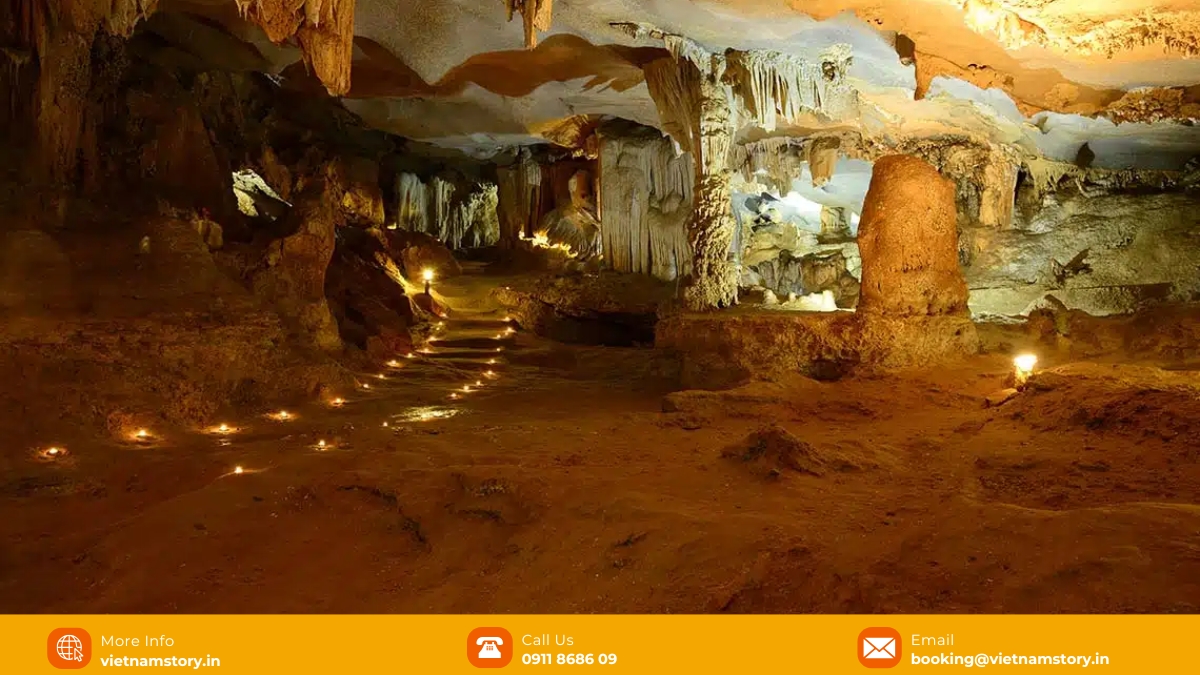
Geological facts about Halong Bay reveal it as a “living museum” of tower karst topography, formed from limestone that dates back 500 million years. It is globally unique for its 138 saltwater lakes and the recent discovery of rare marine species, such as the Cladocroce pansinii sea sponge, proving that the bay still holds many scientific secrets.
The formation of this maritime maze is a complex story of Earth’s evolution. To help you appreciate the rocks you will be photographing, here is the scientific “secret” behind the beauty:
- Paleozoic foundations: The limestone began forming 500 million years ago during the Ordovician-Silurian periods. Imagine, these rocks were forming before the first dinosaurs ever walked the earth!
- The “karst” sculpting: This is the world’s most extensive example of marine-invaded tower karst. Scientists use the terms fenglin (isolated towers) and fengcong (clusters of peaks) to describe how the sea has flooded the valleys between ancient pillars.
- Evolutionary labs: The region contains 138 saltwater lakes—representing one-third of the world’s total. Because these lakes are enclosed by limestone walls, the life inside them evolves differently than in the open sea, much like the Galapagos Islands.
- A living frontier: Even in 2024, the bay made headlines with the discovery of a brand-new species of giant sea sponge, Cladocroce pansinii, found inside a hidden rock tunnel. This proves that even today, we are still discovering new life in these ancient waters.
Legends and human history: Cultural facts about Halong Bay
In Vietnam, we say that every mountain has a soul and every bay has a dragon. For your visit to be truly immersive, you must understand the spiritual and heroic layers of the landscape. To us, the bay is a symbol of protection and resilience.

Cultural facts about Halong Bay are rooted in the legend of the “Descending Dragon,” who protected Vietnam by spitting jewels that became islands. Beyond the myths, the bay has a rich 18,000-year human history, including the heroic 13th-century battle where the “Wooden Stakes” (Dau Go Cave) were used to defeat Mongol invaders. When we guide Indian families through the caves, we always share these three distinct “eras” of our history to provide context to the carvings and artifacts you see:
- The legend of the pearls: “Ha Long” translates literally to “Descending Dragon.” Legend says that during the founding of the country, a mother dragon and her children spat pearls into the sea to form a defensive wall against northern invaders. Those pearls became the 1,969 islets we see today.
- The three ancient cultures: Archaeologists have identified three distinct prehistoric eras within the bay: the Soi Nhu (18,000–7,000 BC), the Cai Beo (7,000–5,000 BC), and the eponymous Ha Long culture (5,000–3,500 years ago). These people lived in the caves you will visit, like Sung Sot or Me Cung.
- The battle of Dau Go: This cave, known as the “Cave of Wonders” or “Wooden Stakes Cave,” earned its name during the 1288 battle against the Mongols. General Tran Hung Dao hid massive, iron-tipped wooden stakes here, which were later planted in the Bach Dang River during low tide to sink the enemy’s fleet.
Vietnamstory tailored facts about Halong Bay for Indian travelers
There are specific connections between our two cultures that make Ha Long Bay feel like a home away from home. Modern facts about Halong Bay for Indian tourists include its recent fame as a Bollywood filming location for the film Silaa. Additionally, the bay has pioneered eco-friendly standards, such as the ban on single-use plastics and the transformation of floating villages into “living museums” to balance tourism with heritage conservation.
At Vietnam Story, we make sure you don’t miss these culturally relevant highlights that other tours might overlook:
- The Bollywood trail: The $4 million action-romance film “Silaa” (starring Sadia Khateeb and directed by Omung Kumar) filmed for several days at Tuan Chau and various iconic spots in the bay. We can guide you to the exact viewpoints where the film’s most romantic scenes were shot!
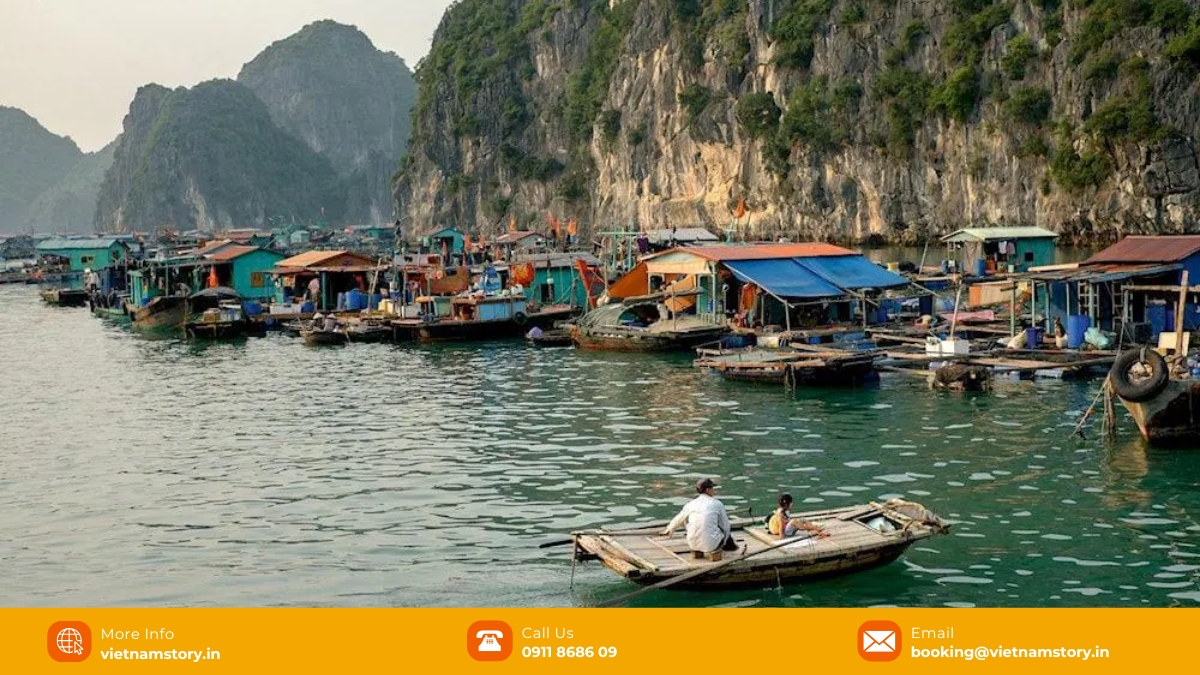
- The floating village evolution: To preserve the water quality, the master plan has relocated most residents of the floating villages to land-based housing. However, villages like Cua Van and Vung Vieng remain as “living museums.” You can still visit them to see the traditional way of life, but with a new focus on education and conservation.
- Strict eco-standards: Premium cruises have moved toward a 100% plastic-free environment. For our Indian guests who are environmentally conscious, you will be pleased to find refillable glass bottles, bamboo toiletries, and high-tech waste management systems on board, ensuring your footprint is as light as possible.
Rare facts and biodiversity highlights about Halong Bay
If you are a nature lover or traveling with curious children, the biodiversity of the bay is perhaps the most exciting part of the journey. The limestone islets are not just rocks; they are “islands of life” that house species found nowhere else on this planet.
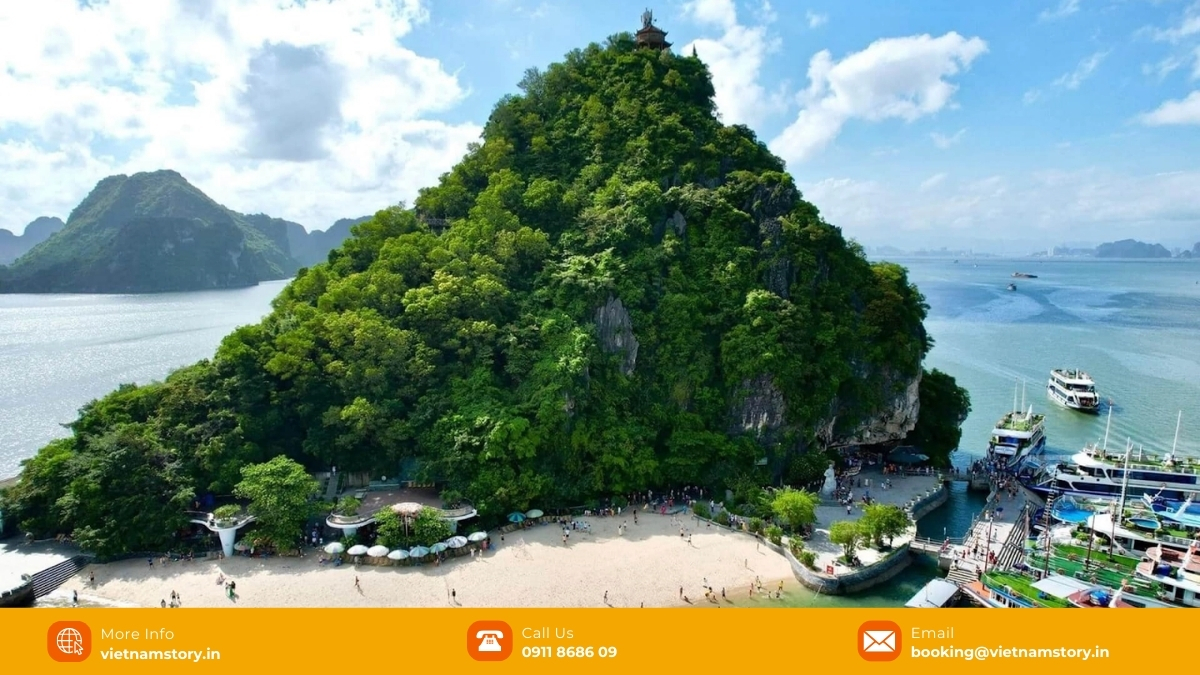
Some of the most rare facts about Halong Bay involve its wildlife, specifically the Cat Ba Langur, which has a tiny population of only 82 individuals globally. The bay also features the mesmerizing phenomenon of bioluminescent plankton and the rare “pink” Indo-Pacific humpback dolphins, alongside the spiritual Dinh Huong Islet featured on our national currency. While you are on the sundeck, keep your binoculars ready for these incredible sightings and rare phenomena:
- The Langur census: The Cat Ba Langur is one of the top 25 most endangered primates in the world. The population is estimated at just 82 individuals. They live only on the limestone cliffs of Cat Ba and are a symbol of our conservation efforts.
- Bioluminescent magic: During the summer months, if you are in the darker, less-polluted coves of Lan Ha Bay (the southern extension of the unified site), you can experience night kayaking through glowing bioluminescent plankton. Every stroke of your paddle will ignite a blue, neon light in the water.
- The 200,000 VND connection: If you have a 200,000 VND note in your pocket, look at the back. The islet featured there is Dinh Huong (Incense Burner Islet). It represents the Vietnamese people’s spiritual connection to the heavens and is a “must-see” photo stop on our cruises.
- The pink dolphins: In the outer bay regions, near the boundary of the Tonkin Gulf, lucky travelers may spot the Indo-Pacific humpback dolphin. These rare creatures often appear to have a pinkish hue, creating a truly magical sight against the emerald water.
Conclusion
As we have explored, the facts about Halong Bay paint a picture of a destination that is much more than a beautiful vista. It is a place where half a billion years of geology, thousands of years of human bravery, and rare, delicate biodiversity come together in a single, breathtaking emerald landscape. For our Indian travelers, Ha Long Bay offers a sense of “Shanti” (peace) and “Adbhut” (wonder) that is truly unique. Whether you are following in the footsteps of Bollywood stars, learning about the 13th-century battles of General Tran Hung Dao, or simply watching the sunset over the “Fenglin” peaks, Ha Long Bay is a place that will touch your heart. At Vietnam Story, we are ready to welcome you with open arms and local expertise. We understand the specific needs of our Indian guests – from the importance of high-quality Indian vegetarian meals on board to the desire for a pace of travel that allows for both relaxation and discovery. We invite you to join us on our Halong Bay Cruise to witness these facts in person and write your own story in the Land of the Descending Dragon.