A Vietnam holiday becomes much easier when you do not have to choose between seeing the country’s highlights and finding food your family will enjoy. For Indian travellers, especially families with children or seniors, food can influence the entire itinerary. You may want to try Vietnamese cuisine at lunch but still look forward to dal, roti, paneer, dosa, or familiar vegetarian food after a long sightseeing day.
The good news is that you can build a Vietnam itinerary with Indian food options without designing the entire holiday around restaurants. Major cities such as Hanoi, Da Nang, Hoi An and Ho Chi Minh City remain the strongest food anchors, but secondary destinations are not all equally difficult. Ninh Binh now has dedicated Indian restaurant clusters around Tam Coc and Trang An, while an overnight Ha Long Bay cruise still requires meal planning with the cruise because you cannot simply leave the boat for another restaurant. For most first-time travellers, a 7-day Hanoi → Ha Long Bay → Da Nang → Hoi An route provides the best combination of iconic sightseeing, manageable transfers, and access to Indian food.
Which Vietnam Itinerary is best if Indian food matters?
Your ideal route depends on how many days you have and how strongly your group depends on familiar meals.
| Duration | Recommended Route | Best For |
| 5 Days | Da Nang → Hoi An | Families, couples, short holidays |
| 7 Days | Hanoi → Ha Long Bay → Da Nang → Hoi An | Most first-time Indian travellers |
| 10 Days | Hanoi → Ha Long Bay → Da Nang → Hoi An → Ho Chi Minh City | Travellers wanting more variety |
| 10+ Days | North → Central → South | Full Vietnam experience |
If this is your first trip, seven days is the sweet spot. You get the cultural atmosphere of Hanoi, an overnight Ha Long Bay experience, the beaches of Da Nang, and the lantern-lit streets of Hoi An while remaining close to major tourism hubs.
FOOD LOGIC → TRIP LENGTH
Keep the food anchors, then compare the package at the duration you have
Indian-food access should help shape the route, but it should not force the trip into one fixed itinerary. Once the number of days is known, compare the package options at that duration and keep Hanoi, Da Nang or Ho Chi Minh City as practical meal anchors where they fit.
7-day Vietnam itinerary with Indian food options
This route works well for first-time travellers, families, couples, vegetarians, and groups travelling with seniors who want Vietnam’s major highlights without making food logistics unnecessarily complicated.
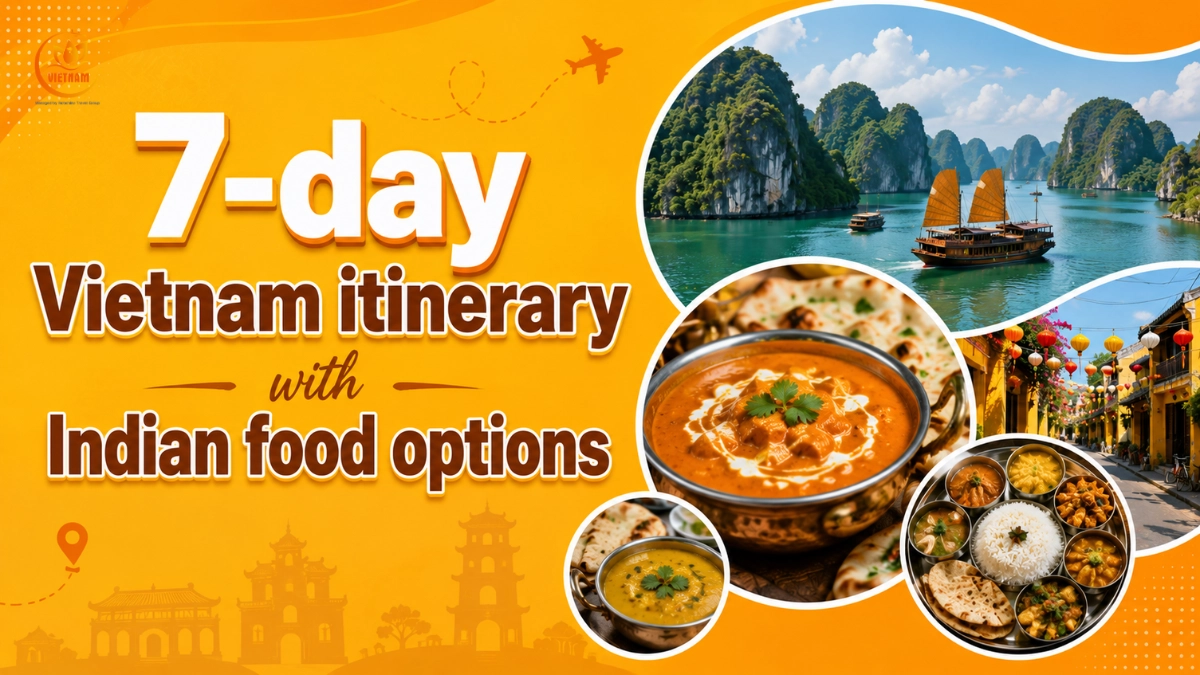
The itinerary is: Hanoi → Ha Long Bay → Da Nang → Hoi An. Instead of searching for an Indian restaurant at every attraction, use Hanoi and Da Nang as your main food anchors and plan meals carefully on excursion days.
Day 1: Arrive in Hanoi
Arrive in Hanoi, check in, then explore Hoan Kiem Lake and the Old Quarter before an optional Water Puppet Show. Stay centrally so Indian food is easy to find for your first dinner.
Day 2: Explore Hanoi
Visit the Temple of Literature and selected historical attractions, with time for the Old Quarter and café culture. Try Vietnamese or Chay food for lunch and choose Indian food for dinner if you prefer a familiar meal.
Day 3: Hanoi to Ha Long Bay
Travel to Ha Long Bay and board an overnight cruise, with activities depending on the cruise programme. Inform the cruise about Indian, vegetarian, Jain, or other dietary requirements before departure.
Day 4: Ha Long Bay to Da Nang
Enjoy the morning on Ha Long Bay before continuing to Da Nang. Check in, relax around My Khe Beach, and use Da Nang as your main Indian food anchor in Central Vietnam.
Day 5: Ba Na Hills and Golden Bridge
Spend the day exploring Ba Na Hills and the Golden Bridge. Have a substantial breakfast before leaving, then return to Da Nang for a relaxed Indian dinner.
Day 6: Hoi An Ancient Town
Explore Hoi An Ancient Town, local shops, cafés, and the riverside before staying into the evening for the lantern atmosphere. This is a good day to combine local Vietnamese food with an Indian meal if preferred.
Day 7: Da Nang and Departure
Keep the final day relaxed with breakfast, My Khe Beach, cafés, or souvenir shopping before heading to the airport.
Why the 7-day route works so well for Indian travellers?
The biggest advantage is that food support and sightseeing follow the same geographic logic.
Hanoi provides a strong northern base before Ha Long Bay. Da Nang then provides another convenient base for Central Vietnam, with Hoi An accessible without introducing complicated travel days. You get very different experiences while maintaining only a few major food anchors.
For travellers who want a broader comparison of routes before deciding, our Best Vietnam Itinerary for First-Time Indian Travellers explores North-only, Central-only, North + Central, and full-country options.
5-day alternative: Da Nang and Hoi An
If you have only 5 days and Indian food availability is a major priority, consider focusing entirely on Central Vietnam. A simple route could look like:
- Day 1: Arrive in Da Nang, My Khe Beach and relaxed dinner.
- Day 2: Ba Na Hills and Golden Bridge.
- Day 3: Marble Mountains and Hoi An Ancient Town.
- Day 4: Relaxed Da Nang day or another Central Vietnam excursion.
- Day 5: Breakfast, shopping and departure.
This itinerary suits honeymooners, families with younger children, seniors, and travellers who prefer fewer hotel changes.
Da Nang can remain your base throughout the trip, which means you can identify restaurants that suit your family early and return to them when needed.
It is the simplest option if low logistics + predictable food access matter more than covering multiple regions.
10-day alternative: Add Ho Chi Minh City
With 10 days, you can extend the 7-day North + Central route into South Vietnam. Spend the first seven days following Hanoi, Ha Long Bay, Da Nang, and Hoi An, then continue to Ho Chi Minh City.
- Day 8: Fly to Ho Chi Minh City and explore the central districts.
- Day 9: City sightseeing or a selected day excursion.
- Day 10: Shopping, final meal and departure.
This version works for travellers who want to experience Vietnam’s North, Central, and South regions and are comfortable adding another domestic flight.
Ho Chi Minh City is particularly useful as the final food anchor because its large international dining scene provides plenty of choice at the end of a longer journey. For a full-country itinerary, consider flying into one region and departing from another where suitable flights are available rather than automatically returning to your arrival city.
Where is Indian food easiest to find in Vietnam?
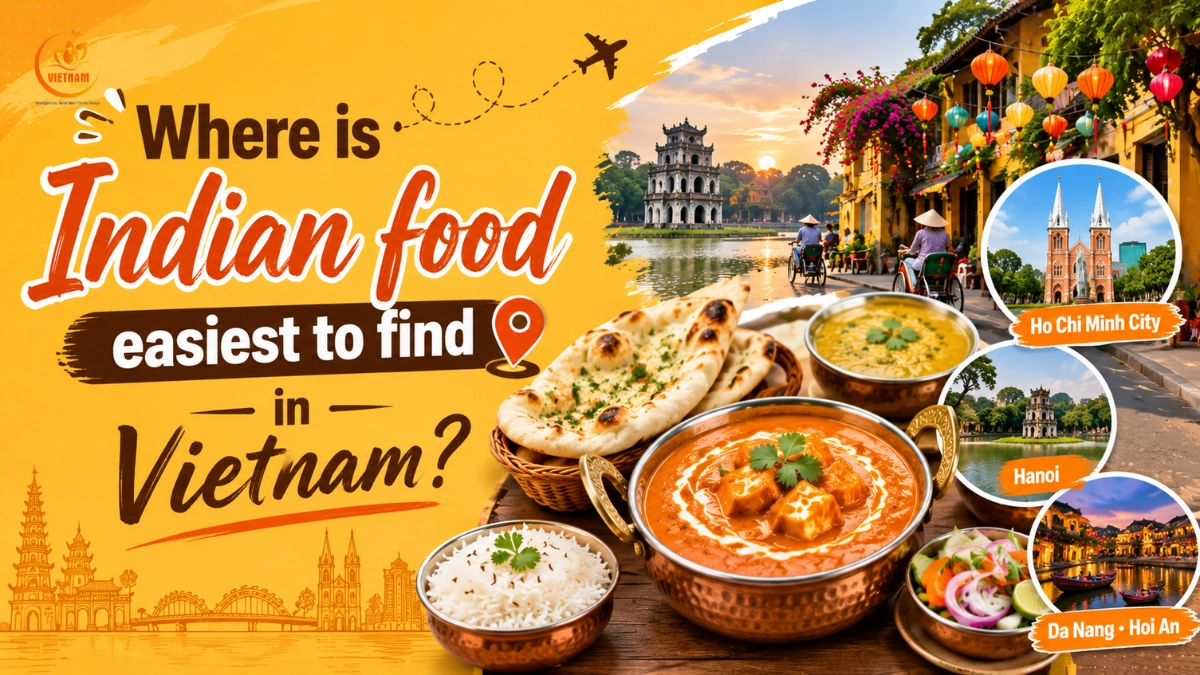
Indian dining becomes easier in Vietnam’s major tourist centres and less predictable as you move toward smaller or remote destinations.
| Destination | Indian Food Ease | Planning Strategy |
| Ho Chi Minh City | Very High | Excellent major-city food anchor |
| Hanoi | High | Stay centrally for easier restaurant access |
| Da Nang | High | Strong base for Central Vietnam |
| Hoi An | Moderate–High | Mix Indian and local dining |
| Ha Long Bay | Moderate | Arrange meals with cruise beforehand |
| Ninh Binh | Moderate–Good | Tam Coc and Trang An restaurant clusters |
| Remote mountain areas | Limited | Prepare food arrangements in advance |
For Ninh Binh specifically, use our Indian restaurants in Ninh Binh guide to choose between the Tam Coc and Trang An clusters instead of treating the whole destination as food-limited.
This does not mean you should avoid destinations with fewer Indian restaurants. It means the food plan should match the destination: Ninh Binh now has usable restaurant clusters, while cruises and genuinely remote areas still need more advance coordination.
How to choose hotels when Indian food matters
A beautiful hotel is not necessarily the right hotel for your itinerary. If your family expects Indian food regularly, location matters almost as much as room quality. A resort far outside the city may look attractive but can create additional transport every time someone wants a familiar meal.
Before booking, consider three questions: Is the hotel near the sightseeing areas you will use most? Are suitable restaurants reasonably accessible? Can the hotel accommodate your breakfast requirements?
For families and seniors, reducing unnecessary journeys for meals can make the entire holiday feel easier.
Do you need Indian food at every meal?
Usually, no. For many Indian travellers, the best strategy is to combine familiar food with local experiences.
Breakfast can be handled at the hotel, lunch can become an opportunity to try Vietnamese cuisine during sightseeing, and dinner can be Indian when your family wants something familiar after a long day.
The balance depends entirely on your group. Some travellers happily eat Vietnamese food throughout the trip. Others, particularly children, seniors, strict vegetarians, or travellers with specific dietary requirements, may prefer Indian meals more frequently.
A good itinerary should accommodate both without making food the only factor determining where you travel. How often you choose Indian meals also changes the daily budget, so check our Vietnam food prices in Indian rupees guide if you want to estimate meal costs before finalising the route.
Common food-planning mistakes to avoid
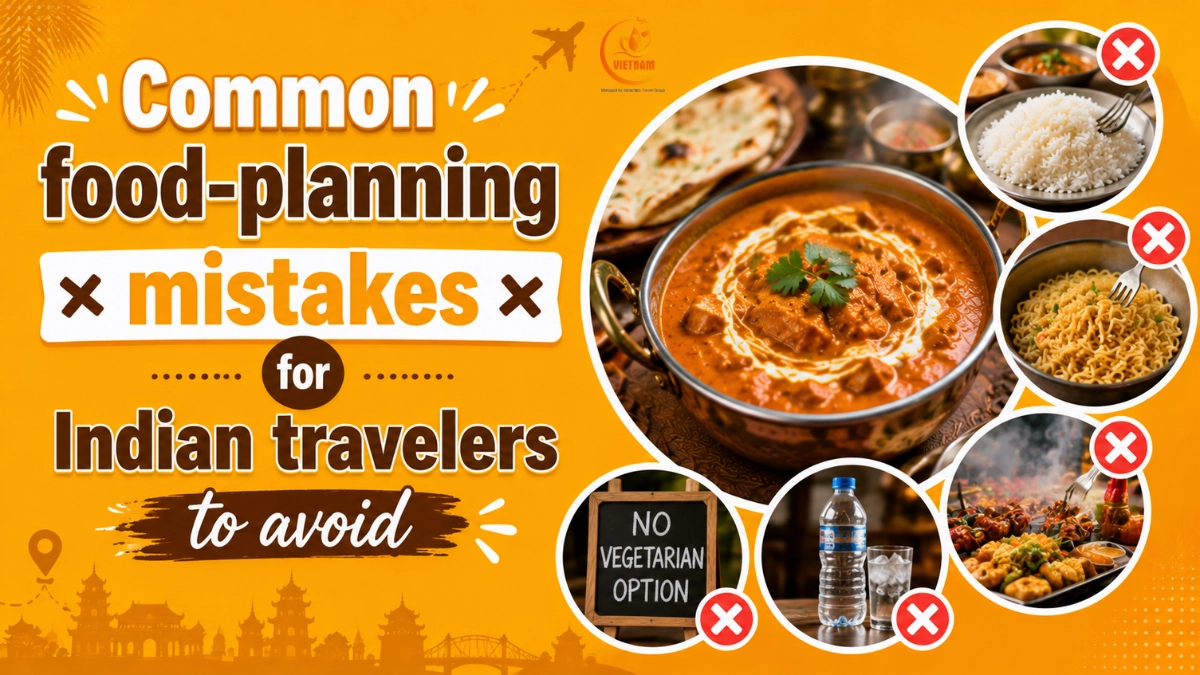
The biggest mistake is booking the entire itinerary first and thinking about food only after hotels and tours are confirmed. Instead, identify your main food anchors while choosing the route. Also avoid changing hotels unnecessarily. Staying in a well-connected base for several nights makes restaurant access, breakfast coordination, and dietary communication much easier.
Finally, do not assume every “vegetarian” dish meets Indian dietary expectations. Vietnamese cuisine uses ingredients and seasonings differently, so travellers with strict requirements should communicate them clearly.
If food hygiene is also a concern, our Food Safety Tips in Vietnam for Indians explains drinking water, street food, seafood, children and senior dining considerations in greater detail.
Frequently asked questions
Can I find Indian food throughout Vietnam?
Indian food is easiest to find in major destinations such as Hanoi, Da Nang, Hoi An, and Ho Chi Minh City. Availability is more limited in smaller and remote areas, so advance planning becomes more important.
Which Vietnam itinerary is best if my family prefers Indian food?
For first-time visitors, Hanoi → Ha Long Bay → Da Nang → Hoi An offers an excellent balance of sightseeing and access to familiar food.
Can I get Indian food on a Ha Long Bay cruise?
Dietary options depend on the cruise. If Indian, vegetarian, Jain, or other specific meals are important, provide your requirements before booking and reconfirm them before departure.
Is Vietnam suitable for Indian vegetarians?
Yes. Major cities offer Indian restaurants, while Vietnam also has an extensive Buddhist vegetarian tradition known as Chay. Strict vegetarians should still verify sauces, broths, and other ingredients.
Conclusion
Indian food can absolutely be part of your Vietnam holiday without becoming the centre of every travel decision.
The smarter strategy is to build your route around strong bases. For seven days, use Hanoi and Da Nang as food anchors, with Ha Long Bay and Hoi An providing contrasting travel experiences. For a shorter trip, stay around Da Nang and Hoi An. With ten days, add Ho Chi Minh City for a broader journey across Vietnam.
At Vietnam Story, we design Vietnam Tour Packages from India around the way Indian travellers actually travel—including itinerary pace, family needs, vegetarian and Jain preferences, and meal coordination where required.
That way, you can spend your holiday deciding whether the next view should be Ha Long Bay or the Golden Bridge—not wondering where your next meal will come from.