
One of the most common questions we receive while planning itineraries is regarding the official status of the bay. Many ask, “Is it really one of the 7 wonders of the world halong bay?” The answer is a resounding yes, though with a specific distinction. While it is not part of the Ancient 7 Wonders like the Pyramids, Ha Long Bay was inaugurated into the elite “New 7 Wonders of Nature” list in 2011. This global recognition joined a geological history of 500 million years to create what is now the most sought-after maritime experience in Southeast Asia. At VietnamStory, we specialize in showing our Indian guests the “Wonder” beyond the postcard. Our curated Halong Bay Cruise packages are designed to ensure you witness this geological masterpiece with the highest standard of Indian hospitality and comfort. Let us explore why this bay earned its place among the world’s most elite natural sites.
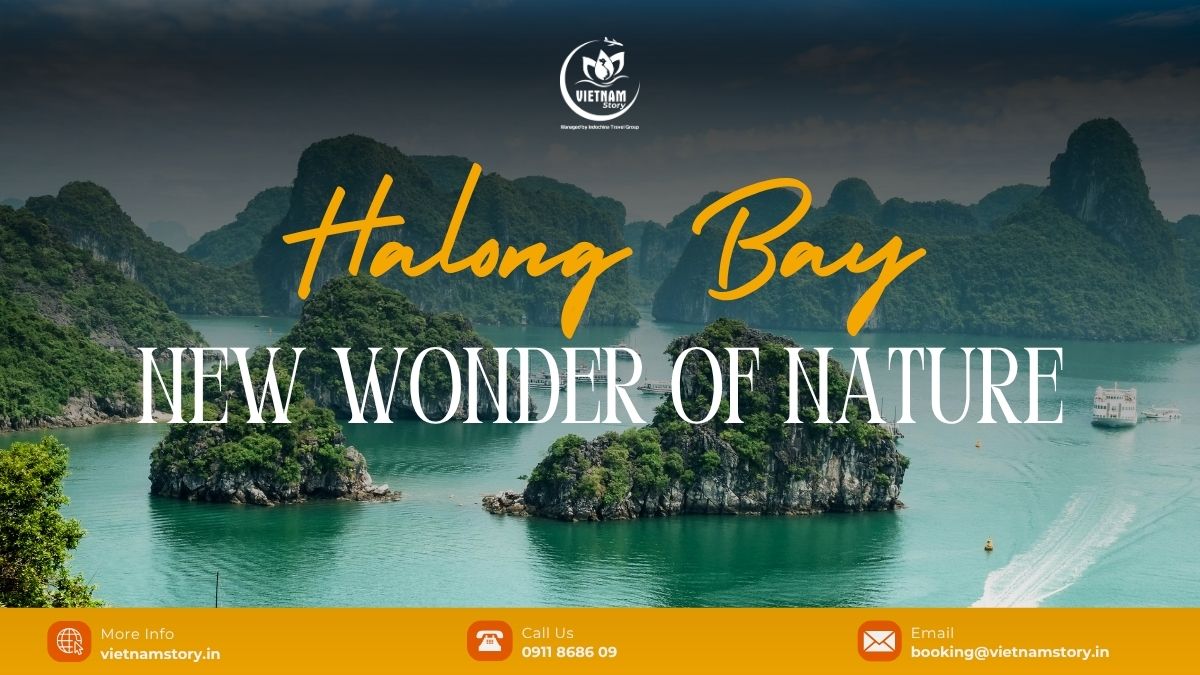
Understanding the global distinction of the 7 Wonders of the World Halong Bay
The journey to becoming a global “Wonder” was not an easy one. In 2011, after a four-year global campaign and over 100 million votes from every corner of the planet, Ha Long Bay was officially crowned a New 7 Wonder of Nature. This wasn’t just a local award; it was a global mandate that placed our bay alongside other legends like the Amazon Rainforest and Iguazu Falls.
Why is Ha Long Bay considered part of the new 7 wonders of the world? It earned this title through a massive global popular vote in 2011, joining an elite list of seven geological masterpieces recognized for their unique natural beauty and ecological significance. It stands as a testament to the world’s collective appreciation for Vietnam’s “marine-invaded tower karst” landscape. For our Indian guests who love to know the “company” we keep, Ha Long Bay shares this specific “Wonder” status with:
- The Amazon Rainforest (South America)
- Iguazu Falls (Argentina/Brazil)
- Jeju Island (South Korea)
- Komodo Island (Indonesia)
- Puerto Princesa Underground River (Philippines)
- Table Mountain (South Africa)
Interestingly, during the voting process, Ha Long Bay consistently ranked near the very top of the polls. This was due to its sheer scale – nearly 2,000 islands – and the fact that it is the most extensive example of a drowned karst landscape on Earth.
READ MORE: InterContinental Halong Bay Resort: Luxury at the Gateway to a UNESCO World Heritage Site
What makes Halong Bay become one of 7 Wonders of the World?
What makes Ha Long Bay truly unique is that its “Wonder” status is not just a popular title, it is backed by the scientific rigors of UNESCO. Very few places on Earth hold both the “New 7 Wonders” title and multiple UNESCO World Heritage listings. This double-layered recognition ensures that the bay is protected by international laws, keeping the emerald waters pristine for your visit.
The status of the 7 wonders of the world halong bay is reinforced by its UNESCO World Heritage status, first granted in 1994 for beauty and in 2000 for geology. In 2023, this was expanded to include the Cat Ba Archipelago, creating a singular, massive protected zone that validates the bay as a scientific marvel of tropical karst evolution. When you sail through the bay today, you are moving through a landscape that has been 500 million years in the making. Geologists from around the world come here to study two distinct karst forms:
- Fengcong: Clusters of limestone peaks that look like a “stone forest” rising from the sea.
- Fenglin: Isolated, dramatic towers that stand alone against the horizon.
In late 2023, the UNESCO site was significantly expanded to include the entire Cat Ba Archipelago. This means that when you book a “Halong Loop” tour, you are actually exploring a unified 65,000-hectare ecological masterpiece.
Measuring the 7 Wonders of the World Halong Bay by the numbers
To truly grasp the “Wonder,” one must look at the evidence provided by the sheer scale of the archipelago. It is difficult to imagine nearly 2,000 islands in a single bay until you are standing on the sundeck of your cruise ship, watching them pass by like giant sleeping dragons. The physical evidence of why this is one of the 7 wonders of the world is found in its staggering numbers: over 1,600 islands, 59 explored caves, and dozens of endemic species. These figures represent a “living library” of Earth’s history, offering thousands of hidden lagoons and prehistoric sites that await the modern traveler.
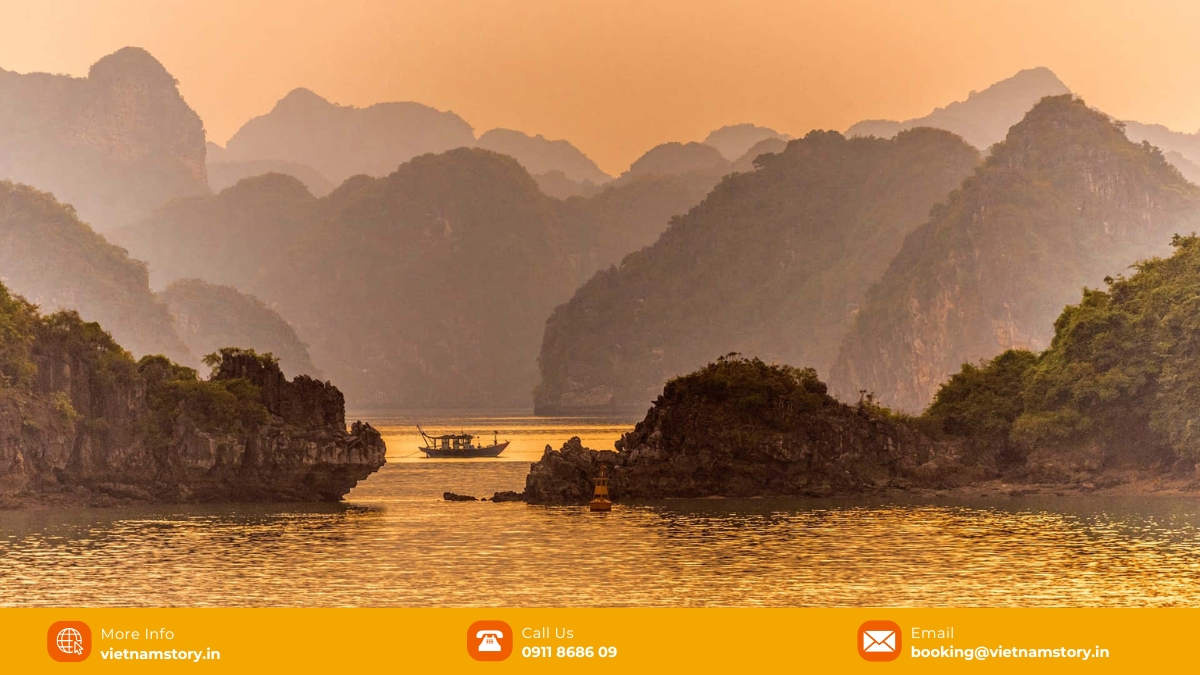
To help you visualize the magnitude of this “Wonder” for your trip, we have prepared this quick-reference impact matrix:
| Category | Feature | Traveler impact |
| Limestone karsts | 1,969 islands | Provides thousands of “hidden lagoons” accessible only by kayak. |
| Biodiversity | Endemic Species | Home to 14 endemic plant species found nowhere else on Earth. |
| Human history | Soi Nhu Culture | Archaeological evidence of life dating back 18,000 years. |
| Speleology | Ancient Caves | 59+ explored grottos, including the massive Sung Sot (Surprise Cave). |
When you consider these numbers, you realize that a simple day trip is never enough. Every island and every cave has its own micro-ecosystem, contributing to the bay’s status as a global natural treasure.
Why do Indian travelers love Halong Bay?
Indian travelers are drawn to the 7 wonders of the world halong bay because of the “Legend of the Descending Dragon,” which mirrors the rich mythology of India. This cultural connection, combined with the availability of high-quality Indian vegetarian and Jain cuisine on luxury cruises, makes the bay feel like a home away from home.
The legend of “Ha Long” (which means “Descending Dragon”) says that during the founding of Vietnam, a mother dragon and her children spat jewels into the sea to form a defensive wall against invaders. These jewels became the 1,969 islands. Our Indian guests often remark how this feels like a scene from an Indian epic. To match this world-class scenery, we at Vietnam Story ensure our partner cruises provide:
- Authentic Indian kitchens: Dedicated chefs preparing Paneer Tikka, Dal Makhani, and hot Naan.
- Jain integrity: Strict “No-Onion, No-Garlic” meals prepared with separate cookware.
- Photographic icons: Strategic stops at Ti Top Island and Luon Cave to capture those “Wonder” shots for your social media.
Navigating the Wonder: Logistics for Halong Bay
Planning a visit to a global “Wonder” requires a bit of strategy, especially as popularity grows. The infrastructure has been streamlined, but the “how” and “when” are still the most important decisions you will make.
Visiting Halong Bay is most rewarding during the “Golden Window” of March and April. To truly experience the depth of this natural masterpiece, we recommend a 3-day/2-night loop, which utilizes the new 2.5-hour expressway from Hanoi to reach the more pristine, remote sectors of the bay. As your local expert, here is our logistics checklist:
- Timing: March and April are the peak shoulder season, offering clear skies for photography with slightly fewer crowds than the summer rush.
- The Route: If you only take a day trip, you only see the “busy” part. To see the “Wonder” part, you must take the 3D2N Loop. This takes you into Bai Tu Long and Lan Ha Bay, where the water is clearer and the silence is profound.
- Transport: Avoid the old bumpy roads. We only use the new 5B Expressway, which cuts the travel time from Hanoi to Tuan Chau Harbor to just 2.5 hours in a luxury private van.
The “living library” within Halong Bay
One thing that the standard travel brochures often miss is that this wonder is “alive.” It is not just a static mountain range in the water, it is a dynamic biological and geological archive. A rare attribute of Halong Bay is its role as a “Living Library,” where the limestone islands bear horizontal “notches” that act as historical markers of sea-level changes. It is also the exclusive home of the Cat Ba Langur, one of the rarest primates on Earth, making every sighting a once-in-a-lifetime event.
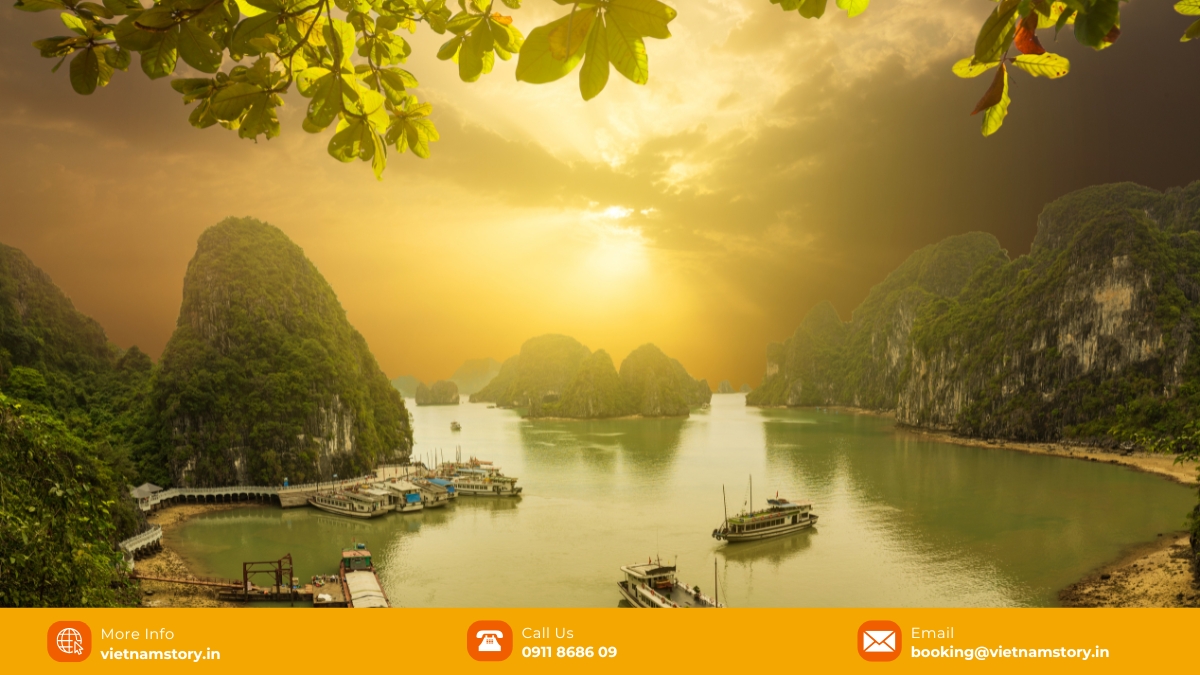
When you are on your kayak, we always tell our guests to look closely at the base of the islands. You will see deep horizontal “notches” carved into the stone. These aren’t just from the waves, they are records of where the sea level sat thousands of years ago. Furthermore, in the Lan Ha Bay section of the wonder, we have the Cat Ba Langur. With fewer than 80 individuals left in the wild, seeing one swinging from the limestone cliffs is a spiritual experience that highlights the fragility and “Wonder” of this ecosystem.
Safety and conservation: Protecting Halong Bay
Modern conservation efforts for the 1 of 7 wonders of the world – Halong Bay include a strict “Zero-Plastic” policy and digitized UNESCO monitoring. These measures, combined with the bay’s naturally safe, shark-free swimming zones, allow you to physically immerse yourself in the wonder while supporting its long-term survival. When you travel with Vietnamstory, you are part of this protection:
- No-plastic policy: All premium cruises have now eliminated single-use plastics. We provide you with reusable metal bottles and bamboo amenities.
- Digital monitoring: Now, the entries are managed via QR codes to ensure we never exceed the “carrying capacity” of the caves and islands.
- Safe swims: As mentioned in our safety guides, the bay remains one of the safest maritime zones in Asia. There are no predatory sharks, and the waters are calm, allowing you to swim directly into the heart of the “Wonder.”
Conclusion
The 7 wonders of the world halong bay is more than just a title on a plaque, it is a feeling of being small in the face of ancient majesty. For our friends from India, this bay offers a unique blend of mythological grandeur and modern luxury. Whether you are watching the sunrise over the karsts or enjoying a Jain feast on a sunset sundeck, you are part of a story that began half a billion years ago.
At Vietnamstory, we are ready to welcome you to our home. We handle the logistics, the dietary needs, and the local secrets so that you can simply focus on the beauty of the Mother Dragon.
Top Halong Bay Tours You’ll Love


Vietnam Highlights 7 Days: From Hanoi to Phu Quoc
Hanoi - Halong bay - Da Nang - Hoi an ancient town - Phu Quoc


8 Days Vietnam Journey: Culture, Heritage & Natural Wonders


Hanoi - Halong - Sung Sot - Titop - Luon Cave - Hanoi


Serenity Grandeur Cat ba cruise
Lan Ha Bay - Cat Ba - Cai Beo Floating Village - Viet Hai Village - Turtle Island - Tai Keo Cave


Hanoi - Lan Ha Bay - Dark And Bright Cave - Hanoi