
Indian travelers have a unique soul for travel – you appreciate grand scales, vibrant colors, and most importantly, you value the safety and comfort of your family above all else. When planning a journey through Northern Vietnam, many of our guests look at the deep, emerald waters of the Gulf of Tonkin and ask one very specific question while booking their Halong Bay Cruise: “Are there sharks in Halong Bay?” It is a natural curiosity – after all, when you see those majestic limestone karsts rising from the sea, you want to know if it is truly safe to jump in for that perfect “Bollywood” swimming shot. In this guide, we will clarify every detail regarding marine life, historical safety records, and protocols to ensure your peace of mind.
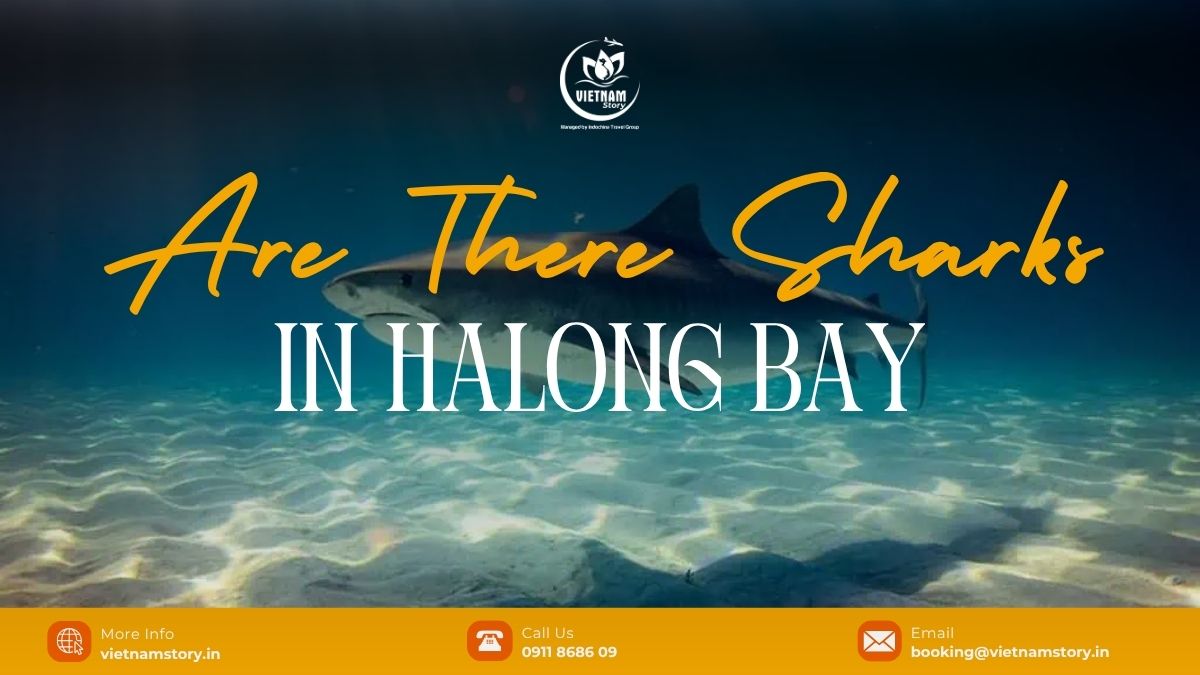
Are there sharks in Halong Bay? The geological and biological reality
When guests ask me about the presence of sharks, they are usually thinking of the large, predatory species they see in movies. To understand the reality of the bay, we must look at the unique geography of this UNESCO World Heritage site. Ha Long Bay is not the open ocean; it is a sheltered, shallow maritime maze.
Large, predatory sharks are effectively non-existent in the tourist areas of Ha Long, Lan Ha, and Bai Tu Long Bays. The shallow karst waters, high volume of engine noise from cruise ships, and heavy local fishing activity create a natural environment that is entirely unsuitable for deep-sea predators. To provide specific evidence for this, let us look at three environmental factors that keep the bay shark-free for swimmers:
- Shallow karst waters: Most cruise anchorages and swimming lagoons in the bay are relatively shallow, often under 10 – 15 meters deep. Large sharks like Great Whites or Tiger Sharks prefer the deep, cold shelves of the open ocean, which are hundreds of kilometers away from our sheltered karsts.
- The “noise barrier”: The Bay is a bustling hub. The constant hum of cruise ship engines and the daily activity of local fishing boats create a high-vibration environment. Sharks are sensitive creatures that generally avoid loud, high-traffic areas, preferring the silence of the deep sea.
- The “pigeye” incident clarified: You might occasionally see a viral headline from 2017 about a “Pigeye Shark” (Carcharhinus amboinensis) found near the shore. We always tell our guests: this was a rare, isolated stranding of a non-aggressive species. In the nearly ten years since, there hasn’t been a single significant live sighting of a predatory shark in the tourist “loops.”
Analyzing the historical safety record: Are there sharks in Halong Bay that attack?
There has never been a recorded shark attack on a tourist in the entire history of Ha Long Bay tourism. While Vietnam has seen a handful of shark-related incidents over the last century, they occurred exclusively in deep-water regions of Central and South Vietnam, hundreds of miles away from the North’s brackish, limestone-protected waters. To understand how safe the bay truly is, consider these historical facts:
- Zero attacks in the North: While regions like Quy Nhon or Phu Quoc have deep-sea drop-offs and coral reefs that can attract larger fish, the North is different. The brackish water (a mix of salt and fresh water from river runoff) and the limestone geography are simply not the right habitat for aggressive shark species.
- Global safety comparison: Statistically, you are significantly safer swimming in Ha Long Bay than in almost any coastal region in Australia, South Africa, or even parts of the USA. The bay is effectively a giant, natural, salt-water swimming pool protected by 1,969 islands.
Because of this impeccable safety record, we confidently encourage our guests to enjoy the water. However, a responsible guide always prepares for the “small things.”
The marine safety matrix
If sharks aren’t the problem, what should you actually look out for? We manage marine safety through a structured matrix. While the “shark threat” is negligible, there are minor seasonal factors that we monitor to ensure your 2D1N or 3D2N cruise is perfect. The primary marine risks for swimmers are seasonal jellyfish and tidal currents, both of which are easily managed with proper equipment and professional guidance. While the likelihood of encountering a shark is effectively zero, our safety matrix ensures that we have mitigation strategies for every other minor possibility.
To help you visualize the safety landscape for your 2026 voyage, please refer to our current safety matrix:
| Risk factor | Likelihood | Mitigation strategy |
| Sharks | Negligible | No action needed, swim freely in approved zones. |
| Jellyfish | Moderate | Seasonal (mostly May – July). We provide soothing balms and rash guards. |
| Strong currents | Low | Life jackets are mandatory; swimming is limited to sheltered coves. |
| Boat traffic | Low/Managed | Swimming is only allowed in “Quiet Zones” marked by buoys. |
As your local expert, we ensure that all our partner cruises strictly adhere to this matrix. We never anchor in high-traffic shipping lanes, and we always check the water conditions before the captain gives the signal to jump in.
Specialized insights for Indian travelers: Swimming safely in Halong Bay
Indian travelers can enjoy the bay with total confidence by choosing supervised swimming sessions and enclosed lagoons. In the current March climate (22–26°C), the water offers peak visibility, allowing you to see the harmless marine life clearly, while our recommended “Lan Ha Bay Loop” provides a more intimate, swimming-pool feel for families. Here is how we customize the “swimming story” for our Indian guests:
At Vietnam Story, we only partner with cruises – like Mon Cheri or Indochina Junk – that maintain a “Life-Watch” policy. During every swimming session, a crew member is on the sundeck or a tender boat with a whistle and life rings, specifically watching over the guests.
For those traveling with young children, we often recommend the Lan Ha Bay Loop. The lagoons here are more enclosed and the water is generally clearer than the central bay. It feels less like the open sea and more like a massive, natural infinity pool.
Are there sharks in Halong Bay at night?
While dangerous sharks are absent, the bay is alive with fascinating marine creatures that add to the magic of the journey. Some of these are even part of the “shark” family, but they are more like the friendly pets of the ocean.
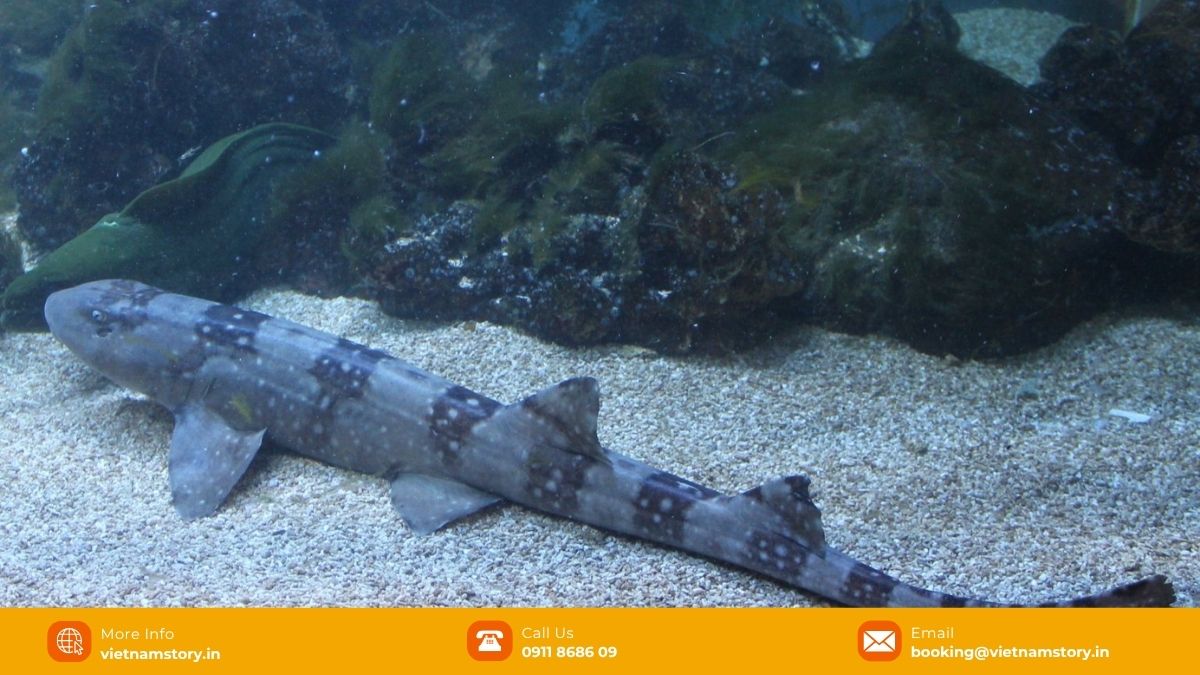
The only “sharks” you are likely to encounter are the harmless Bamboo Shark and the shy Catshark. These tiny, bottom-dwelling species are a highlight for eco-tourists and are often seen during night activities like squid fishing. Far from being a danger, seeing one is traditionally considered a sign of good luck in Vietnamese maritime culture. Let me share a few “insider” secrets about the creatures you actually might see:
- The “Bamboo Shark” encounter: During our night squid fishing activity, lucky travelers occasionally hook a small Bamboo Shark. These are rarely more than 1 meter long and have no interest in humans. Our Indian guests always find it a “blessed journey” when they catch and release one of these small creatures.
- Bioluminescent “ghost” fish: In the remote reaches of the Bai Tu Long loop, if you kayak at night, you might see “glowing streaks” in the water. These are small fish darting through bioluminescent plankton. It looks magical – like a scene from Avatar – and is perfectly safe.
- Catsharks: These are shy, nocturnal fish that hide in the crevices of the limestone. As we move toward more eco-conscious tourism, seeing a Catshark while snorkeling is considered a rare and wonderful sighting for nature lovers.
Emergency protocols and water quality: Ensuring a premium experience
To conclude our safety guide, it is important to mention the infrastructure that supports your holiday. Ha Long Bay is not just a natural wonder, it is a highly regulated tourism zone where emergency response and environmental health are top priorities.
Modern cruises are equipped with comprehensive medical facilities and quick-response boats to ensure immediate care if needed. Additionally, the “UNESCO Green Sails” initiative has led to a $42 million cleanup program, ensuring that the water you swim in is not only shark-free but also meeting high international cleanliness standards. When you sail with Vietnam Story, you are protected by these “invisible” safety layers:
- Onboard medical readiness: Every 5-star ship in our collection carries advanced first-aid kits and has crew members trained in CPR and water rescue.
- The “fast-link” system: In the highly unlikely event of a medical emergency, every cruise has a high-speed tender boat that can reach the mainland in under 20–30 minutes, where ambulances are on standby at the international ports.
- Water clarity upgrades: The Bay has effectively banned single-use plastics. This means no floating bags or bottles to interfere with your swim. The water is fresher and cleaner than it has been in decades, making the “emerald” color truly pop in your vacation photos.
Conclusion
So, are there sharks in Halong Bay? Technically, only the tiny, harmless ones that bring you good luck. For the predatory ones that cause worry, the answer is a firm no. Ha Long Bay is a sanctuary of peace, where the biggest “danger” is simply not wanting to leave at the end of your cruise.
At Vietnamstory, we are here to ensure that your transition from the bustling cities of India to the silent karsts of Vietnam is seamless. We handle the logistics, we vet the safety protocols, and we ensure the Jain-friendly meals are ready on board. All you need to do is pack your favorite swimwear and prepare for the adventure of a lifetime.
Top Halong Bay Tours You’ll Love


Vietnam Highlights 7 Days: From Hanoi to Phu Quoc
Hanoi - Halong bay - Da Nang - Hoi an ancient town - Phu Quoc


8 Days Vietnam Journey: Culture, Heritage & Natural Wonders


Hanoi - Halong - Sung Sot - Titop - Luon Cave - Hanoi


Serenity Grandeur Cat ba cruise
Lan Ha Bay - Cat Ba - Cai Beo Floating Village - Viet Hai Village - Turtle Island - Tai Keo Cave


Hanoi - Lan Ha Bay - Dark And Bright Cave - Hanoi