Vietnamese food makes more sense when you read it by region, not as a single “top dishes” list. Broadly, Northern cooking often leans towards clearer broths and more restrained seasoning, Central Vietnam is known for stronger chilli, fermented and savoury flavours, while Southern food often tastes sweeter and uses more coconut, herbs and fresh produce. These are useful tendencies rather than fixed rules: the same dish can change from one city, cook or family to another.
For travellers, the practical question is not “How many famous dishes can I tick off?” It is which local foods fit naturally into the route you are already taking, and which ingredients you need to check if you are vegetarian, Jain, vegan or avoiding particular meats. If chopsticks are new to you, the separate beginner chopstick guide covers the grip and the few table-etiquette rules that actually matter.

Vietnamese food by region: the quickest way to understand the menu
| Region | What you are likely to notice | Useful dishes to recognise | Good travel base |
|---|---|---|---|
| North | Often lighter, less sweet and more broth-focused; herbs and condiments are frequently added at the table | Phở, bún chả, chả cá, bánh cuốn | Hanoi |
| Central | Often more chilli-forward, savoury and concentrated; many small dishes and regional noodle styles | Bún bò Huế, mì Quảng, cao lầu, bánh bèo | Hue, Da Nang, Hoi An |
| South | Often sweeter, with more coconut, herbs and bold sauces | Cơm tấm, hủ tiếu, bánh xèo, bún thịt nướng | Ho Chi Minh City, Mekong Delta |
This regional pattern is useful for planning, but do not treat it as a rigid rule. A bowl of phở in Hanoi and one in Ho Chi Minh City can look and taste different, and individual restaurants adapt recipes to local customers.
Northern Vietnam: start with broth, grilled pork and rice noodles
Hanoi is the easiest place to understand Northern Vietnamese food because several well-known dishes are part of everyday city eating rather than tourist-only experiences.
Phở is the obvious example, but the useful thing to know is that there is no single “choose beef, chicken or tofu” template that defines the dish. Broth, garnish and serving style vary by region and shop. If you want the full dish-level explanation, use our phở guide rather than treating this national overview as the owner of that topic.
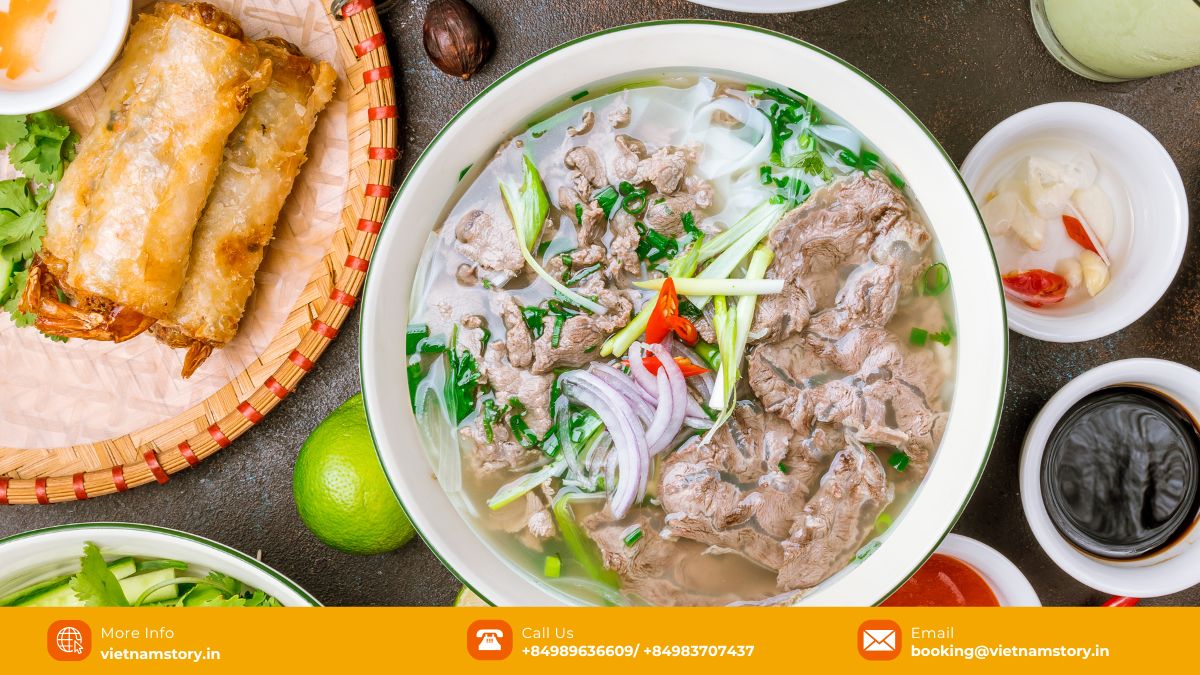
Bún chả is another Hanoi dish worth recognising: grilled pork is served with rice noodles, herbs and a dipping broth. Bánh cuốn uses thin steamed rice sheets, while chả cá is associated with turmeric-seasoned fish, dill and noodles. You do not need all of them in one day. If you have only one or two meals in Hanoi, choose by what you actually enjoy eating rather than by fame.
Central Vietnam: Hue, Da Nang and Hoi An do not taste the same
Central Vietnam is the part of the country where a route-based food approach is especially useful. Hue, Da Nang and Hoi An are geographically close, but their signature dishes are not interchangeable.
Hue is closely associated with bún bò Huế and a wide range of smaller rice- and tapioca-based dishes. The city also carries a strong royal-court food tradition, but that does not mean every “Hue food” restaurant is serving historic imperial cuisine.

Da Nang and Quang Nam food traditions bring dishes such as mì Quảng into the route. Hoi An is associated with cao lầu and several local noodle and rice dishes. If your itinerary already includes these cities, local food is easy to add without building a separate “food tour” day.
That is usually the better trade-off: let the route create the food opportunities. We would not add a new city only to eat one dish unless food is one of the main reasons for the trip.
Southern Vietnam: rice plates, noodles and a sweeter flavour profile
Ho Chi Minh City works well as a food base because it combines Southern dishes with cooking traditions from many other parts of Vietnam.
Cơm tấm is one of the most recognisable Southern meals: broken rice is commonly served with grilled meat, egg or other accompaniments. Hủ tiếu is a broad noodle-dish family with several local styles. Bánh xèo is a crisp rice-flour pancake commonly filled with savoury ingredients and eaten with herbs and dipping sauce.
In the Mekong Delta, coconut, freshwater produce, fish and tropical fruit appear more often in local meals. If the Mekong is already part of your itinerary, food is one reason to spend time outside the coach or boat schedule rather than rushing back to Ho Chi Minh City.
Fresh rolls and fried rolls are not the same dish
English menus often group several Vietnamese dishes under “spring rolls”, which can be confusing.
- Gỏi cuốn are fresh rice-paper rolls, commonly served cold with herbs and a filling such as shrimp, pork, tofu or vegetables depending on the restaurant.
- Chả giò / nem rán are fried rolls. Names and fillings vary by region.
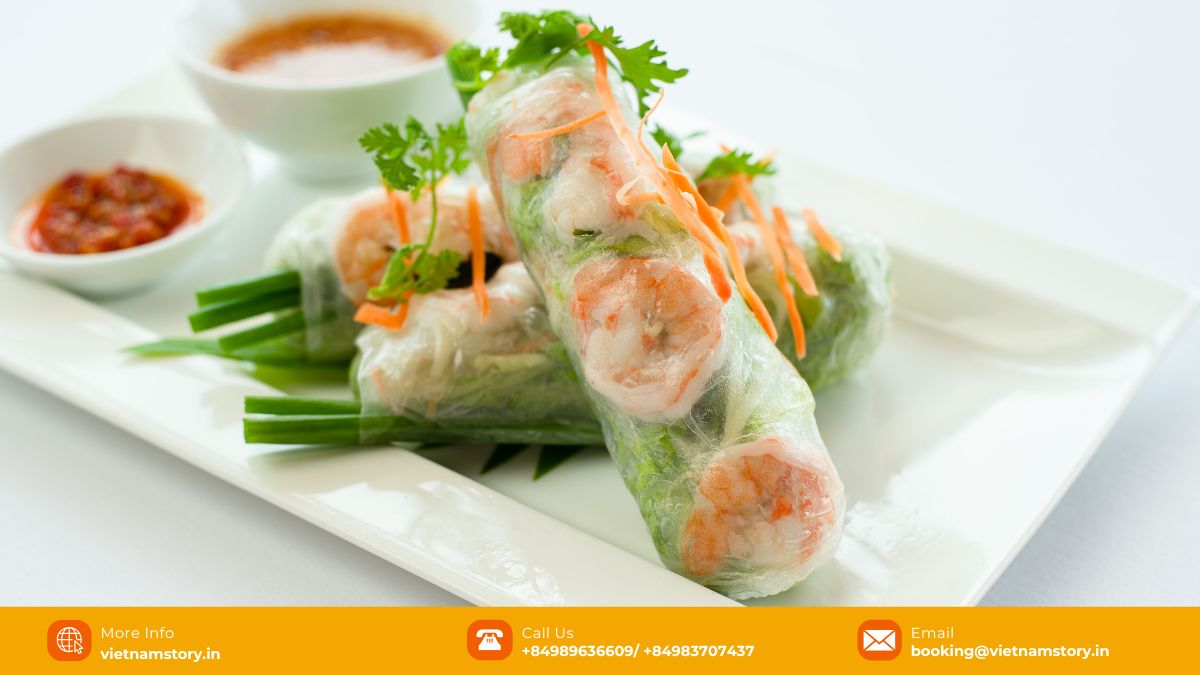
If you are vegetarian or have allergies, do not infer the ingredients from the English name alone. The filling and dipping sauce matter just as much as the wrapper.
What should vegetarian and Jain travellers check?
Vietnam is generally manageable for vegetarian travellers, especially in major cities, but “vegetarian”, “vegan” and “Jain” are not interchangeable requirements.
The Vietnamese word chay is useful when looking for vegetarian food, particularly at vegetarian restaurants. But a dish that appears meat-free can still contain fish sauce, shrimp paste, meat-based broth or other ingredients that matter to your diet. Jain requirements may also exclude onion, garlic and root vegetables, which a restaurant will not necessarily understand from the word “vegetarian”.
If this affects your trip, use our dedicated dietary restrictions guide for vegetarian, Jain and other food requirements. It owns the ingredient-checking and communication problem; this page does not try to replace it.
If your group wants familiar meals as well as local food, the practical approach is to use large cities as anchors. Our Indian food in Vietnam guide shows where that is easier to plan.
Street food: choose by turnover and cooking process, not by “authenticity”
Street food is part of everyday eating in Vietnam, but “street” does not automatically mean better, cheaper or more authentic. A simple local restaurant can be just as representative and may be easier for families, seniors or travellers with dietary restrictions.
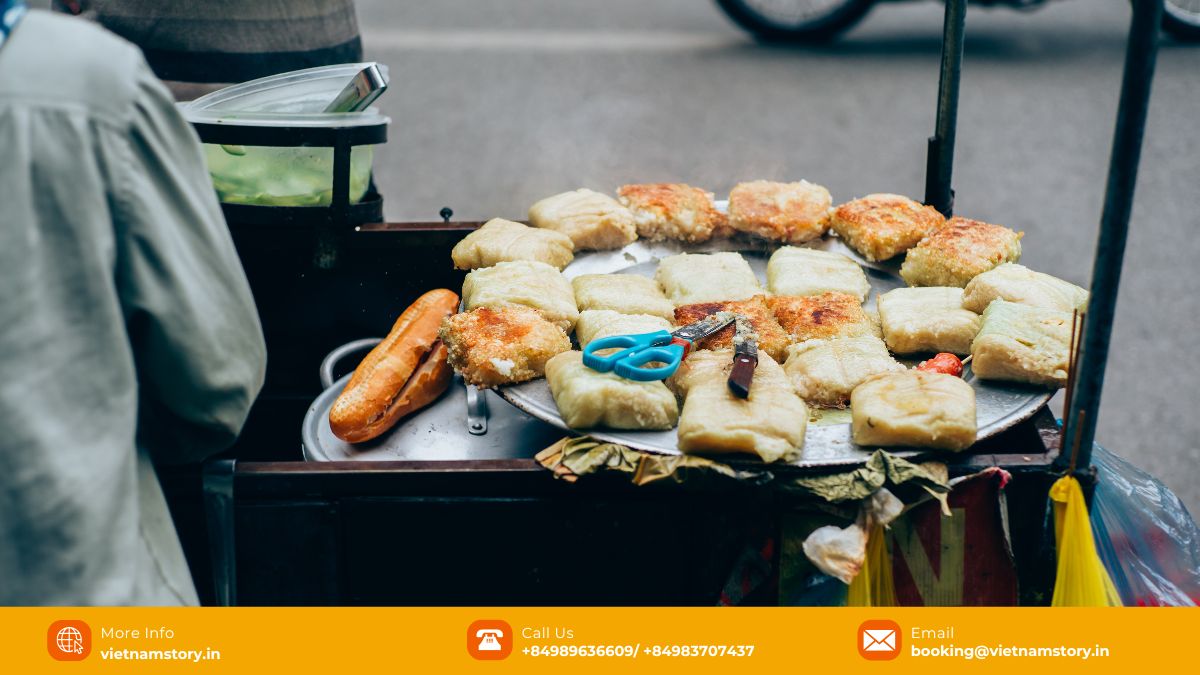
For a practical safety framework—especially with children, elderly family members or sensitive stomachs—use the separate Vietnam food-safety guide. Food hygiene is a health topic and should not be reduced here to generic advice such as “eat where locals eat”.
Coffee, fruit and desserts deserve their own stops
Vietnamese drinks are not one single “strong Robusta + phin” formula. Phin-brewed coffee is important, but cafés also use blends, espresso machines and different preparation methods. If coffee is part of your trip, see our Vietnamese coffee guide.
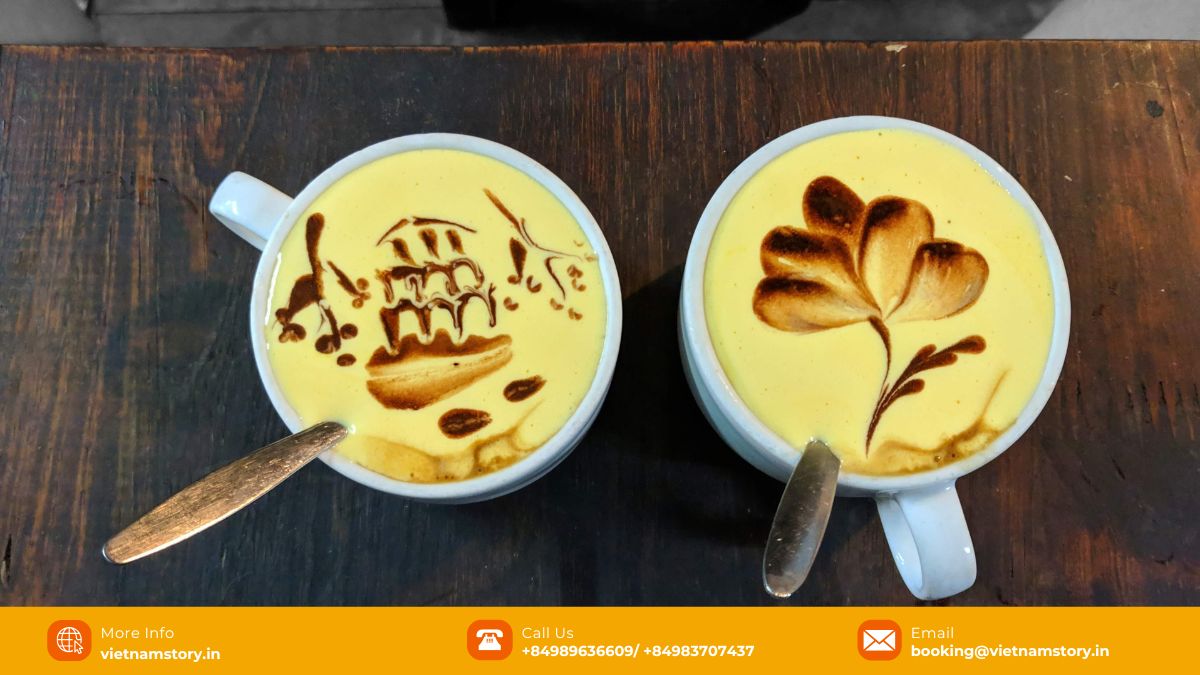
Egg coffee (cà phê trứng) is especially associated with Hanoi. It is sweet and rich enough that we would treat it more like a dessert stop than a normal black-coffee replacement. The dedicated egg coffee guide explains what it tastes like and how it fits into a Hanoi route.
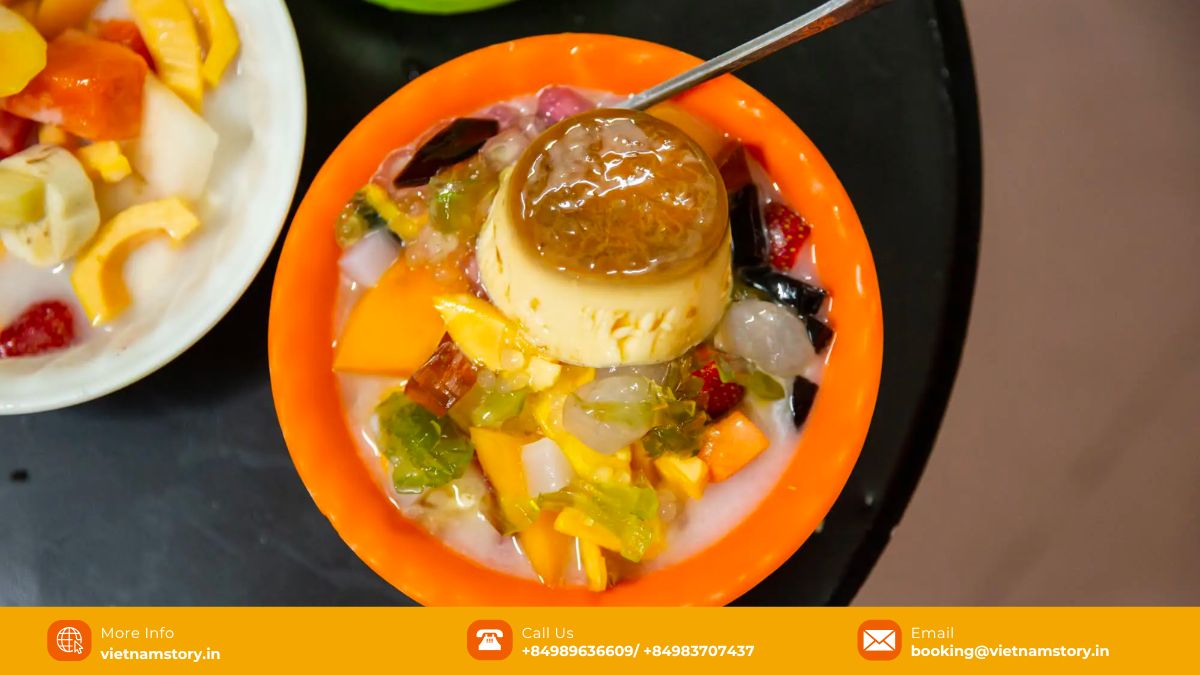
For a lighter option, tropical fruit is easy to add through markets, breakfast buffets and fruit shops. Seasonal availability changes, so use the separate fruits in Vietnam guide if fruit is a particular interest.
Do you need a food tour or cooking class?
Not necessarily. A food tour is most useful when you want help identifying dishes, ordering from small vendors or understanding a neighbourhood through food. A cooking class makes more sense when the preparation itself interests you.
If your itinerary is already tight, neither is essential. One well-chosen local meal in Hanoi, one Central specialty in Hue or Hoi An, and one Southern meal in Ho Chi Minh City can show more regional contrast than trying to squeeze a formal food activity into every stop.
A practical food strategy for a first Vietnam trip
| Your priority | What we would do |
|---|---|
| Try Vietnamese food without making food the whole trip | Choose one local dish in each region already on your route. |
| Vegetarian or Jain requirements | Plan suitable restaurants before long day trips and explain ingredients, not just labels. |
| Children or seniors prefer familiar food | Use Hanoi, Da Nang/Hoi An and Ho Chi Minh City as reliable meal anchors and mix Indian and Vietnamese meals. |
| Food is a major reason for travelling | Give Hanoi and Ho Chi Minh City more meal time, and keep Hue/Hoi An if Central specialties matter to you. |
| You dislike very spicy food | Do not assume all Vietnamese food is spicy; ask about chilli separately, especially in Central Vietnam. |
The useful takeaway
You do not need a list of twenty “must-eat” dishes to understand Vietnamese cuisine. Start with the route: Hanoi for Northern food, Hue–Da Nang–Hoi An for Central specialties, and Ho Chi Minh City or the Mekong Delta for Southern flavours. Try the dishes that fit those stops, then use specialist guides when you need detail on phở, coffee, dietary restrictions or food safety.
That approach gives you a clearer sense of how Vietnamese food changes across the country without turning every meal into another sightseeing checklist.
Put Vietnamese food into your itinerary without overplanning every meal
Food is easier to enjoy when it follows the places you are already visiting. If you are planning a multi-city holiday, compare the Central Vietnam route with Vietnam tour packages from India and tell Vietnam Story about vegetarian, Jain or allergy requirements before the quote is prepared. Restaurant availability and specialist meal preparation must be reconfirmed; no tour should imply those services are automatic.