
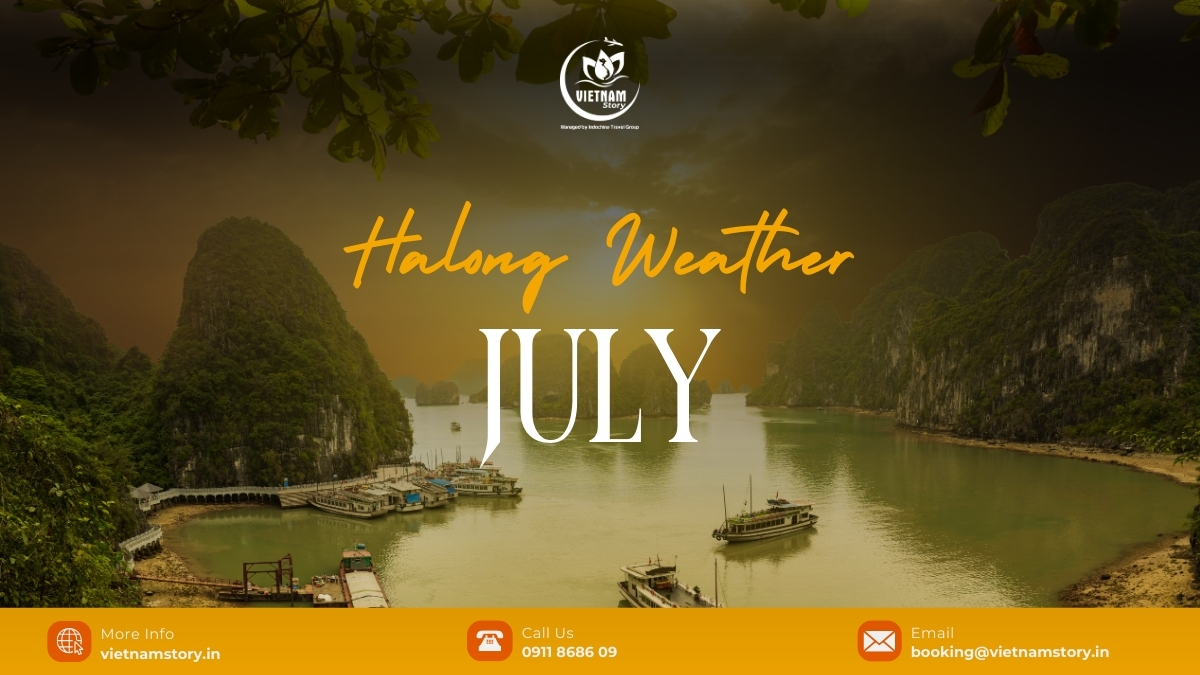
July is one of Ha Long Bay’s hotter and wetter monsoon months. A trip can still operate normally, but heavy rain, thunderstorms and tropical-weather systems create more uncertainty for cruises and outdoor activities. Use this page when July is fixed; the main planning tool is flexibility, not a promise of “secret-season value”.
Keep a backup plan for any weather-sensitive day and recheck the operator’s sailing status close to departure. A discounted room or cruise is not useful if the route does not operate safely.
What July usually feels like in Ha Long Bay
Long-term Ha Long climate averages put July at about 28.1°C mean air temperature, with average highs around 30.3°C, lows around 26.3°C and roughly 317 mm of precipitation. Average sea temperature is about 30.1°C.
July is therefore both hot and very wet. Warm water can make swimming attractive, but heavy rain, thunderstorms and tropical-weather systems create one of the year’s higher levels of uncertainty for marine activities and cruise schedules.
July demand is not automatically “low season”
Domestic summer holidays can keep family sailings and popular routes busy. We would check the actual weekend, cabin inventory and route rather than assume wet-season weather means empty boats or deep discounts.
What July changes for the cruise plan
| Decision | July implication | How we would plan it |
|---|---|---|
| Swimming | Sea temperature is very warm | Only use an operating swim stop when local conditions permit. |
| Kayaking / bamboo boat | Heat and thunderstorms can change timing | Follow the operator’s actual route/activity decision instead of a fixed early-morning window. |
| Caves / viewpoints | Hot, humid walking conditions | Hydrate, pace climbs and use grip footwear on wet steps. |
| Cruise operation | Greater weather disruption risk | Keep onward travel sensible and recheck sailing status close to departure. |
Activities that can still work in July
- Cave visits: useful when the route includes them; they should not be sold as guaranteed “natural air-conditioning”.
- Kayaking / bamboo boat: works when the day’s weather and route permit it.
- Swimming: warm water is not a substitute for local safety checks.
- Indoor cruise time: valuable if a shower changes the outdoor programme.
Heat, meal and comfort checks for Indian travellers
For July, we focus on pacing and hydration rather than branded “Monsoon Signature” packages. Families with children or seniors may prefer fewer exposed climbs during the hottest part of the day.
Confirm vegetarian/Jain food with the actual vessel before booking; do not assume special Aam Panna, Masala Chaas or picnic kits are standard inclusions.
How to compare cruise options without chasing a discount
In a weather-sensitive month, clear cancellation/rescheduling terms, indoor common space and route quality are more useful than an old percentage-discount claim. Compare the live quote for the same date, cabin and inclusions.
We do not promise an automatic no-cost replacement trip if weather prevents sailing. The written operator/booking terms determine the actual remedy.
What to pack for July
- quick-drying, breathable clothing;
- a light waterproof layer;
- sun protection and water;
- non-slip footwear;
- a dry bag or waterproof phone protection.
Should you switch to Lan Ha or Bai Tu Long because it is July?
Not automatically. A neighbouring bay can create a different route and boarding experience, but we would not claim it is reliably protected from the same regional weather system. Choose Ha Long, Lan Ha or Bai Tu Long for route/experience reasons first, then check the weather affecting that exact programme.
Use our Ha Long vs Lan Ha comparison if the route itself is still undecided.
What to verify close to a July sailing
- short-range rain, wind and marine forecast;
- operator sailing status;
- swimming/kayaking availability;
- road-transfer timing in heavy rain;
- onward flight/train margin.
For the wider monsoon pattern, use the Ha Long Bay weather guide.
July needs a weather-flexible itinerary
July can still deliver a good Ha Long trip, but flexibility is part of the plan—not an optional extra. We would choose a good route and transparent weather policy first, then let the actual forecast decide how much of the outdoor programme is realistic.