
Vietnamese coffee is not one drink and there is no single “local” way to order it. If you want something strong and relatively unsweetened, start with cà phê đen. If you prefer creamy and sweet, cà phê sữa đá is the easy first choice. Bạc xỉu uses more milk and less coffee, while Hanoi egg coffee and Hue salt coffee are better treated as regional specialties rather than as the default Vietnamese cup.
The traditional phin filter is still one of the clearest symbols of Vietnamese coffee culture, but modern cafés also use espresso machines, pour-over brewers and other methods. For travellers, the useful skill is therefore not memorising one “authentic” ritual. It is knowing what the main drinks mean, how sweet or strong they are likely to be, and which coffee experience fits the route you already have.
What makes Vietnamese coffee different?
Traditional Vietnamese café coffee is strongly associated with dark-roasted coffee, Robusta beans and the metal phin filter. Robusta remains important to Vietnam’s coffee identity, particularly in the Central Highlands, but it should not be treated as the only coffee grown or served in the country. Da Lat and the surrounding highlands are also important for Arabica and specialty-coffee production, and modern cafés increasingly work with different beans and brewing styles.
That distinction matters when you order. A pavement café serving cà phê sữa đá, a specialty roaster in Da Lat and a modern espresso bar in Ho Chi Minh City can all be part of Vietnamese coffee culture without serving the same style of cup.
What is a phin?
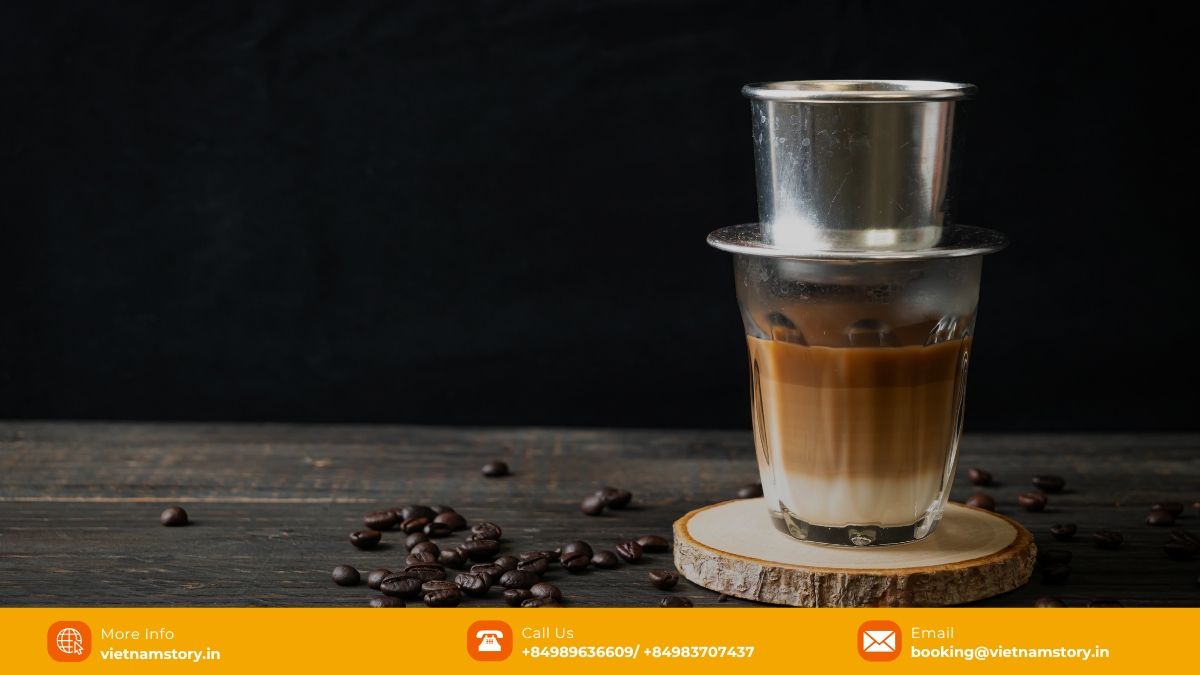
A phin is a small metal gravity filter that sits directly over a cup or glass. Ground coffee is held inside the filter while hot water passes through slowly. The result is usually a compact, concentrated brew that can be drunk black or combined with condensed milk and ice.
Some cafés bring the phin to the table and let the coffee finish dripping in front of you. Others prepare the coffee before serving it. Neither approach makes the drink more or less “real”; it is simply a service choice.
If the brewing equipment itself interests you, watching a phin drip is worth doing at least once. If you only want a good drink before sightseeing, you do not need to turn the process into a ceremony.
Which Vietnamese coffee should you order?
| Drink | What to expect | Best starting point for |
|---|---|---|
| Cà phê đen | Black coffee, served hot or over ice depending on the order | Travellers who want less sweetness and a stronger coffee-forward taste |
| Cà phê đen đá | Black coffee with ice | Hot-weather days when you do not want milk |
| Cà phê sữa đá | Coffee with sweetened condensed milk and ice | A simple first Vietnamese coffee if you like sweet, creamy drinks |
| Bạc xỉu | More milk and less coffee than a typical milk coffee | People who find black coffee or cà phê sữa đá too intense |
| Cà phê trứng | Coffee topped with a thick egg-based cream | A Hanoi specialty that sits closer to coffee-and-dessert |
| Cà phê muối | Coffee with a salty-creamy element | A Hue specialty if you like sweet-salty flavour combinations |
| Cà phê dừa | Coffee combined with coconut in a chilled, creamy style | Travellers who prefer a sweeter, dessert-like cold drink |
Cà phê sữa đá or bạc xỉu: which is easier for a first coffee?
For many first-time visitors, the practical choice is between cà phê sữa đá and bạc xỉu.
Choose cà phê sữa đá when you still want the coffee to lead the drink but prefer it softened by condensed milk and ice. Choose bạc xỉu when you want a milkier, sweeter drink with a smaller coffee component.
This is more useful than assuming all Vietnamese coffee is extremely bitter or highly concentrated. Preparation and proportions vary considerably from one café to another.
Where do egg coffee and salt coffee fit?
Egg coffee is a Hanoi specialty. It is important enough to have its own VNS guide, so this page only needs to place it in the wider coffee map. The usual version combines strong coffee with a whipped egg-based topping, producing a much richer drink than ordinary black or milk coffee. If Hanoi is already on your route, see our Vietnamese egg coffee guide for the history, taste and dietary checks.
Salt coffee is most closely associated with Hue. Contemporary versions commonly combine coffee with a lightly salty cream or milk layer. If Hue is already part of a Central Vietnam route, it is an easy regional drink to try; we would not add a separate city detour only for one cup.
Coconut and yoghurt coffee appear on café menus in several cities and are better understood as popular variations than as essential national traditions.
How should you order Vietnamese coffee?
You do not need much Vietnamese to order. The drink name itself usually does most of the work.
- đen = black
- sữa = milk
- đá = ice
- nóng = hot
If sweetness matters, ask the café whether they can make the drink ít ngọt (less sweet). With condensed-milk drinks, reducing sweetness may also mean using less milk, so the result can change both sweetness and texture.
Do not assume that an English menu translates every coffee style consistently. When in doubt, ask what is actually in the drink rather than relying only on the English name.
What should vegetarian, Jain or dairy-free travellers check?
Black coffee itself is straightforward, but several popular Vietnamese coffee drinks include ingredients that matter for dietary requirements.
- Cà phê sữa đá normally contains dairy-based sweetened condensed milk.
- Egg coffee contains egg and commonly dairy.
- Bạc xỉu is milk-heavy.
- Coconut coffee should not automatically be assumed dairy-free; many recipes also contain condensed milk or another dairy ingredient.
If your requirements are strict, explain the actual restriction rather than assuming “vegetarian”, “vegan” or “Jain” will be interpreted in the same way everywhere. Our dietary restrictions in Vietnam guide covers the communication side in more detail.
Which city gives you the most useful coffee experience?
You do not need to build a Vietnam itinerary around coffee unless coffee itself is one of your main interests. For most travellers, one or two well-chosen café stops are enough.
Hanoi: phin coffee and egg coffee
Hanoi is the natural place to combine a standard Vietnamese coffee with egg coffee. It works particularly well as a slow morning or afternoon stop around the Old Quarter rather than as a separate sightseeing excursion.
Hue: salt coffee
If you are already visiting Hue for the Imperial City or a Central Vietnam route, salt coffee gives you a genuinely regional addition without consuming much itinerary time.
Ho Chi Minh City: milk coffee, bạc xỉu and café variety
Ho Chi Minh City is useful when you want to see the range between pavement coffee, long-established local styles and modern specialty cafés. Cà phê sữa đá and bạc xỉu fit naturally here.
Da Nang: choose by drink and area
Da Nang has enough café variety that a fixed “best coffee shop” list ages quickly. Use our Da Nang coffee guide if the city is already on your route; it compares drinks and café areas rather than forcing a permanent ranking.
Da Lat: best if the coffee itself is the interest
Da Lat and the surrounding highlands make more sense when you want to understand where coffee comes from, not just drink it. Coffee farms, roasteries and specialty cafés can justify a longer stop for an enthusiast. If coffee is only a casual interest, a café break in Hanoi, Hue, Da Nang or Ho Chi Minh City is easier to fit into a first Vietnam trip.
Do you need to drink coffee “like a local”?
No. Vietnam has pavement cafés, takeaway counters, traditional phin shops, large domestic chains and modern specialty bars. There is no single behaviour that proves you are drinking coffee correctly.
If a phin is served at the table, let it finish dripping. If your drink comes ready-made, drink it when it suits you. Add ice or adjust sweetness if the café offers that option. The useful cultural observation is simply that cafés are an everyday social space in Vietnam—not that every customer follows the same ritual.
How we would fit Vietnamese coffee into a trip
For a first visit, we would keep it simple:
- Only one coffee stop: choose cà phê sữa đá, black coffee or bạc xỉu according to your taste.
- Hanoi on the route: add egg coffee if the richer style appeals to you.
- Hue on the route: try salt coffee instead of adding another generic café stop.
- Da Nang on the route: choose a café by the area you are already visiting.
- Coffee is a major interest: consider Da Lat or a highland coffee experience.
There is little value in crossing a city to chase a café simply because an old list calls it the “best in Vietnam”. Match the drink to the city and the route you already have.
Where Vietnamese coffee fits in the wider food picture
Coffee is one part of Vietnam’s food culture, not a substitute for understanding regional cuisine. If you are still deciding what to eat and drink across North, Central and South Vietnam, start with our Vietnamese Food Guide, then use specialist pages such as this one only when you want more depth.