
The breathtaking landscape of Ha Long Bay is the result of a 500-million-year geological saga involving ancient oceans, massive tectonic shifts, and the relentless artistry of tropical erosion. Now, it stands as the world’s premier example of “marine-invaded tower karst,” a rare geological phenomenon that distinguishes it from any other landscape on Earth. In this guide, we will walk you through the scientific evidence and the ancient legends that explain exactly how this masterpiece came to be.

The geological timeline: From seabed to spire and How Halong Bay was created?
Ha Long Bay’s history is not measured in years, but in eons. Its story is written in layers of limestone over 1,000 meters thick, formed through four distinct eras. To understand the bay today, we must travel back half a billion years to when Vietnam was at the bottom of a vast, warm ocean.
To answer “How was Halong bay created?”, we must look at a timeline that spans 500 million years. It began with the accumulation of marine life on an ancient seabed, followed by massive tectonic uplifts that pushed the land above water, millions of years of chemical weathering by rain, and a final “drowning” by the sea after the last Ice Age. The creation of the bay can be broken down into these fascinating periods:
- 500 – 240 million years ago (The deposition phase): During the Ordovician to Permian periods, the region was a deep, warm tropical sea. Generations of ancient corals, shells, and marine organisms deposited calcium carbonate. Over millions of years, the weight of the ocean compressed these remains into the thick grey strata we call the Cát Bà and Quang Hanh limestone layers.
- 240 – 30 million years ago (The uplift phase): Powerful tectonic shifts – specifically the Caledonian and Indosinian orogenies – uplifted these layers from the ocean floor. This movement transformed a flat seabed into a massive, high-altitude limestone plateau.
- 20 million years ago to 11,000 years ago (The karst phase): This is when the “sculpting” began. In our tropical climate, heavy rain mixed with CO2 to form carbonic acid. This acid slowly dissolved the limestone, creating deep fissures, isolated towers, and the vast underground chambers you see today.
- 11,000 years ago to present (The inundation phase): As the last Ice Age ended, global sea levels rose significantly. The ocean rushed in and “drowned” the landlocked valleys, transforming what were once mountain peaks into the 1,600+ islands that dot the emerald lagoons today.
READ MORE: Best things to do in Halong Bay
Understanding the unique way how Halong Bay was created
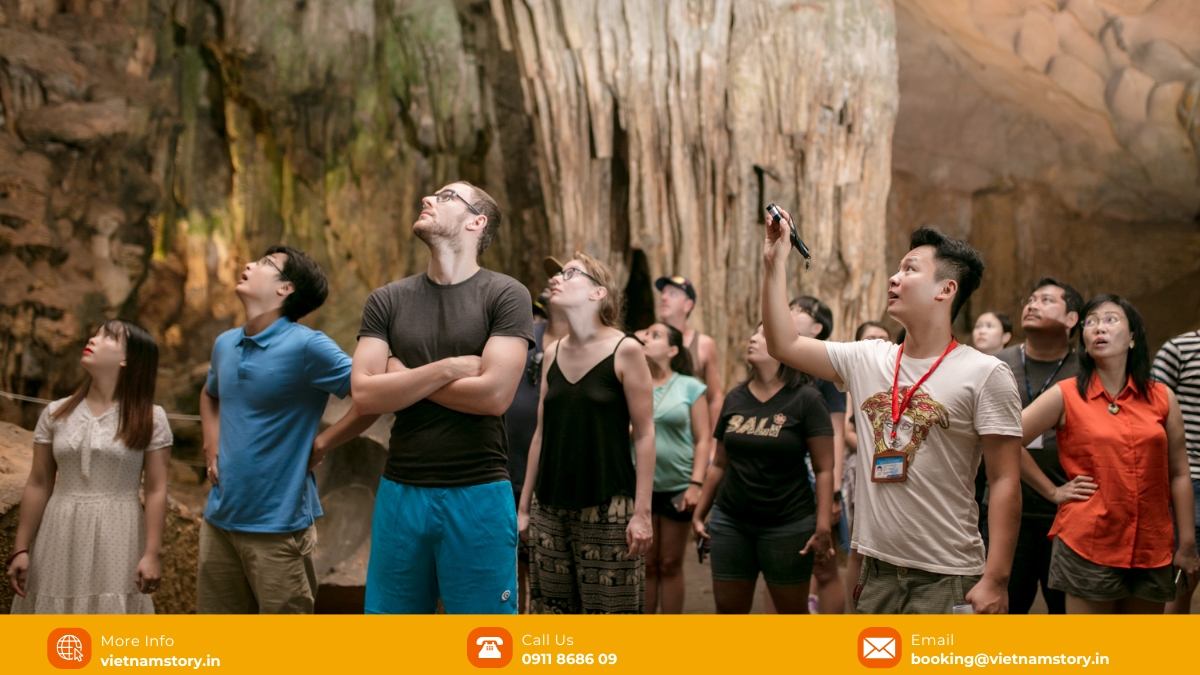
Unlike the land-based karsts you might see in China or Thailand, Ha Long Bay is uniquely shaped by its intimate relationship with the sea. The way the salt water interacts with the stone is a critical part of the answer to “how was Halong bay created?” Ha Long Bay was created using the unique mechanism of “drowned karst” evolution. This involved the formation of two distinct stone shapes – Fengcong (clusters) and Fenglin (towers) – and a process called bio-erosion. This interaction between chemical rainwater and mechanical sea waves creates the “notched” islands and three specific categories of caves found throughout the bay. When you are kayaking through the bay, we always tell our Indian guests to look for these three scientific markers:
- Fengcong and Fenglin: You will see two types of formations. Fengcong are connected clusters of peaks that look like a “stone forest.” Fenglin are the dramatic, isolated vertical towers. Some of these towers are so steep that they have a height-to-width ratio of 6:1, looking like stone fingers pointing to the heavens.
- Marine notching: Look at the base of the islands at water level. You’ll see deep horizontal “notches” carved into the rock. These are not just from waves; they are carved by the chemical action of salt water and tiny organisms, a process called bio-erosion. This process continues to shape and reshape the bay every single day.
- The three types of caves: Our scientific research identifies three cave categories that explain the bay’s plumbing system:
- Old Phreatic Caves: Formed millions of years ago below the ancient water table (e.g., the massive Sung Sot Cave).
- Karstic Foot Caves: Formed by horizontal water flow at the base of cliffs during the sculpting phase.
- Marine Notch Caves: Formed at the current sea level by modern wave action and bio-erosion.
A summary of the 4 stages of formation
To help you visualize this half-billion-year process for your trip, we have prepared a concise summary. It helps to keep this in mind when you are looking at the different colors and textures of the rocks from your cruise balcony. This data provides concrete evidence for how Halong Bay was created across four distinct stages. By identifying the specific period and geological event, travelers can recognize the thick grey strata or the massive “Surprise Cave” as direct results of Earth’s internal movements and external sculpting forces. Please refer to the following table to see the transformation of the Bay:
| Stage | Period | Geological event | Visible result today |
| Deposition | 500M – 240M ya | Marine life accumulation | Thick, grey limestone strata. |
| Uplift | 240M – 30M ya | Orogeny/Plate movement | The “birth” of mountains from the sea. |
| Sculpting | 20M – 11K ya | Chemical weathering | Formation of Sung Sot and Thien Cung caves. |
| Inundation | 11K ya – Present | Post-Ice Age sea rise | The “Drowned” landscape of 1,600+ islands. |
As you sail through the bay, you are essentially moving through a 500-million-year-old museum. Every island you pass is a chapter in the Earth’s biography.
Legend and science: The “descending Dragon” and the soul
While geologists point to tectonic plates and carbonic acid, Vietnamese culture offers a “Storyteller” perspective. For our guests from India – a land where every river and mountain has a divine origin – the myth of the bay’s creation often feels more “real” than science.
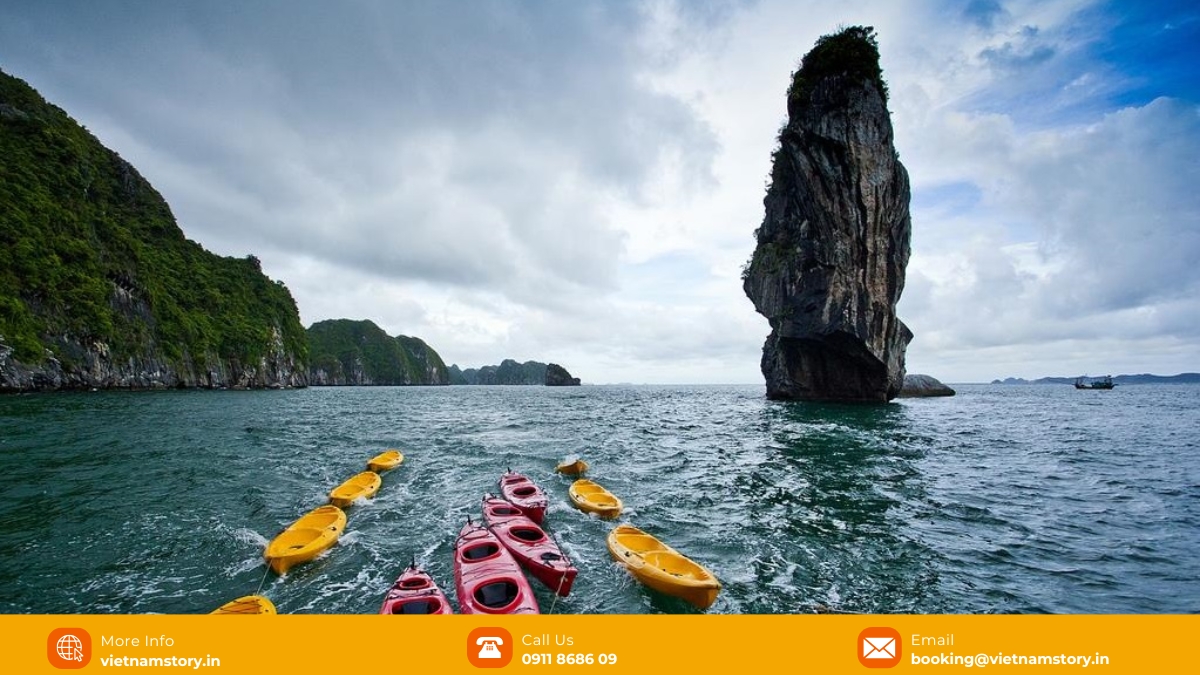
Culturally, the answer to “how was Halong bay created?” is found in the legend of the Mother Dragon and her children. Sent by the gods to protect Vietnam, they spat jewels that became islands to block invaders. This perspective provides the bay’s soul, complementing scientific facts with a narrative of protection and beauty that resonates deeply with the Indian spiritual tradition. The legend is so important that it gives the bay its name:
- The Legend: To defend the early Vietnamese against invaders from the north, the gods sent a family of dragons. Instead of fire, the dragons spat out jade and pearls. As these jewels hit the water, they transformed into the limestone islands, creating a natural fortress that wrecked the enemy ships.
- The name: “Ha Long” literally translates to “Descending Dragon.” It marks the exact spot where the Mother Dragon decided to settle into the waters to rest after her great victory.
- The connection: When we explain this to our Indian friends, they often compare it to the myths of the Himalayas. It reminds us that nature is not just “objects,” but a living force that protects and provides.
Why does the history of the Bay matter for your journey?
At Vietnamstory, we believe that understanding how Halong Bay was created makes your holiday much richer. The bay is not just a place for a “selfie”; it is a place for discovery. We help our Indian guests connect with this “Living Museum” through exclusive insights that most standard tours miss.
For Indian tourists, understanding the creation of the bay adds layers of discovery to the trip. It allows you to appreciate the 18,000 years of human history found in the caves, the rare biodiversity of the newly expanded Cat Ba zone, and the unique opportunity to go “Fossil Hunting” during the clear, dry weather of March. Here is how the bay’s creation impacts your experience today:
- 18,000 years of human history: Beyond the rocks, the bay hosted the ancient Soi Nhu and Cai Beo cultures. Our guides will show you ancient “shell middens” in the caves – evidence of prehistoric seafood feasts!
- The expansion: Our tours explore the newly added Cat Ba Archipelago zone. Because of the way the islands were created, they isolated certain species, leading to the evolution of the Cat Ba Langur – the rarest primate in the world (only ~70 remain).
- Fossil hunting: During the dry March weather, the low tide reveals “Fossil Beaches.” On our private tours, we can show you 300-million-year-old coral patterns etched permanently into the stone.
- Indian comfort: We know that after a day of geological discovery, you want comfort. We ensure that our cruises provide certified Jain and Vegetarian kitchens, so you can discuss the 500-million-year history over a hot plate of Paneer Tikka.
The “Living Laboratory” of climate change in Ha Long Bay
There is one final secret about how Halong Bay was created that most guides overlook. Ha Long Bay is not a finished product; it is a global barometer for climate history.

Ha Long Bay is a “Living Laboratory” because its 138 marine lakes act as a historical record of our planet’s life. Every layer of stone and silt serves as a “geological diary” of sea-level changes, making your cruise a journey through the very history of how our world was created and how it continues to breathe.
The bay contains 138 marine lakes – representing one-third of the world’s total saltwater lakes. These lakes are enclosed by limestone walls, and the layers of sediment at their bottoms act as a “geological diary.” They record every major sea-level change in Earth’s history. When you sail here, you are literally cruising through a record of how our planet has breathed for half a billion years. It is a humbling thought that adds a layer of majesty to every photo you take.
READ MORE: Are There Sharks In Ha Long Bay?
Conclusion
Understanding how Halong Bay was created transforms your visit from a simple boat ride into a pilgrimage through time. Whether you believe in the tectonic plates of the scientists or the jade-spitting dragons of our ancestors, the result is a landscape that touches the soul.
At Vietnamstory, we are ready to welcome you to this 500-million-year masterpiece. We handle the logistics, the dietary needs, and the local secrets so that you can simply focus on the wonder. We look forward to seeing you on the sundeck, where the air is fresh, the water is emerald, and the stories of the Dragon are waiting to be told.
Recommended Tours


Hanoi - Lan Ha Bay - Dark And Bright Cave - Hanoi

Hanoi - Lan Ha Bay - Cat Ba - Hanoi

Hanoi - Halong - Sung Sot - Titop - Luon Cave - Hanoi
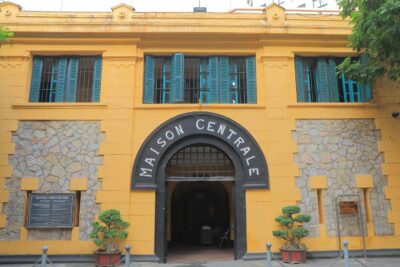

Hanoi half day city tour afternoon
Temple of Literature - Hoa Lo Prision - French Quarter

Paradise Legacy Cruise 2 days 1 night
Hanoi - Halong - Titov Island- Tung Sau Pearl Farm- Me Cung cave


5 Days 4 Nights Phu Quoc Island
Phu Quoc - Aquatopia Water Park - 4 Islands Trip - Rach Vem Village - Safari - Vin Wonder