
Understanding the climate of Lan Ha Bay is vital because, unlike the tropical south, Northern Vietnam has four distinct seasons that dictate when you can swim, when the mist creates a “mystical” photo, and when the summer heat requires a high-performance AC cabin. At Vietnamstory, we specialize in “Indian-ready” itineraries. Whether you are looking for our comprehensive Lan Ha Bay Route or our most popular Lan Ha Bay Route 2D1N Cruise Trip, we ensure your journey is timed perfectly with the local weather. Let’s dive into the specifics of the temperature and climate to ensure your holiday is flawless.
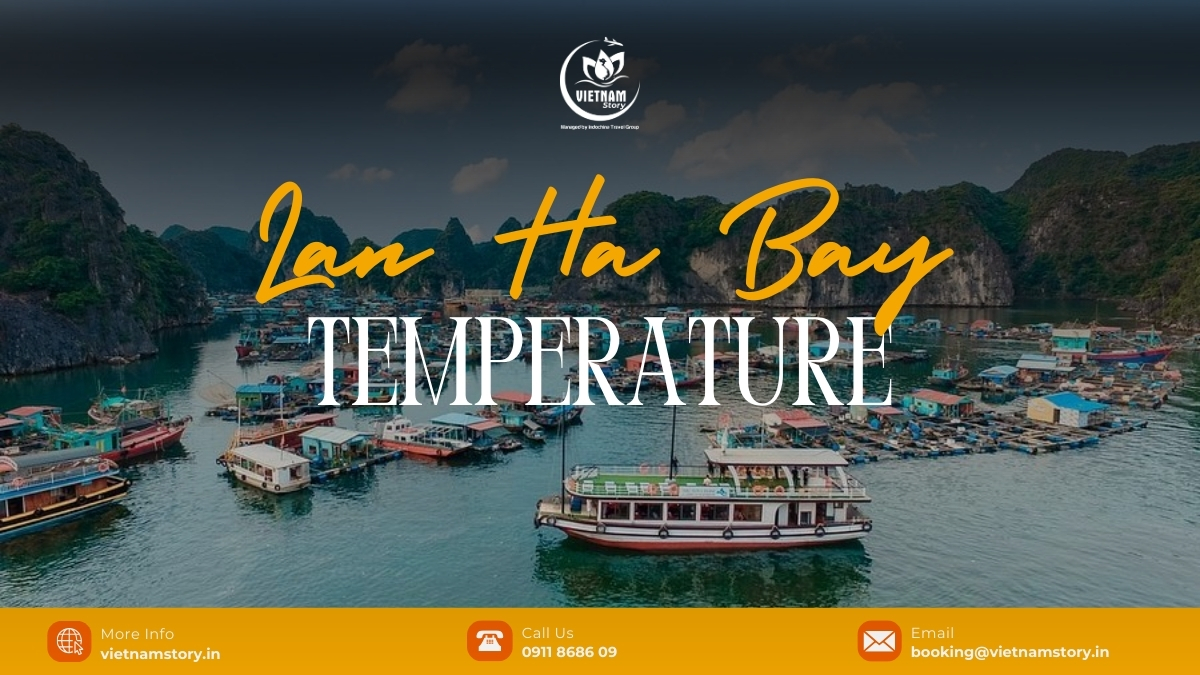
Understanding the Lan Ha Bay temperature and climate cycles
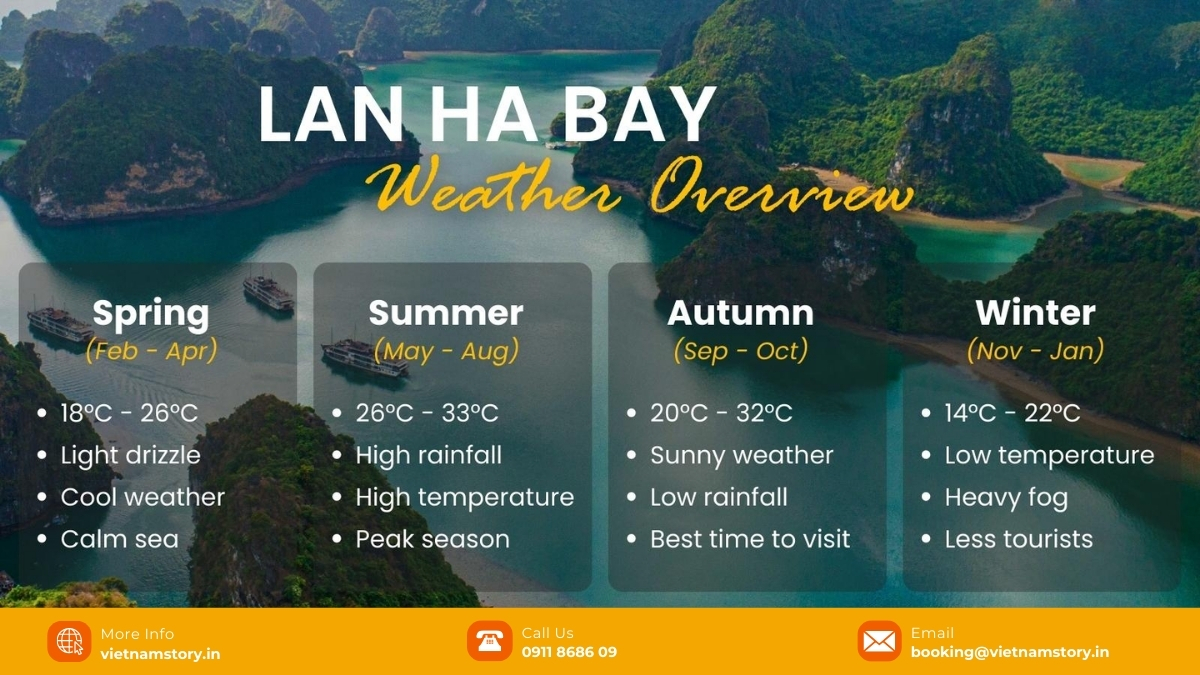
Lan Ha Bay follows a subtropical monsoon climate pattern similar to its famous sibling, Ha Long Bay, but its unique geography makes it feel slightly different. With temperatures ranging from a crisp 15°C in the heart of winter to a fiery 34°C in the peak of summer, your experience will vary wildly depending on which month you choose to sail.
The Lan Ha Bay temperature fluctuates between 15°C and 34°C annually, governed by four distinct seasons. The best time for most travelers is the window from October to April, which avoids the heavy monsoon rains and extreme summer humidity, offering the most stable conditions for cruising and kayaking.
To help you visualize the year ahead, we categorize the bay’s climate into four main “moods.” In the winter (December to February), you can expect temperatures between 15-22°C; this is the driest time but often brings an ethereal fog that photographers adore. Spring (March to May) sees the air warm up to 18-31°C with moderate rainfall. The summer (June to August) is the hottest period, with temperatures peaking at 34°C and heavy tropical storms. Finally, autumn (September to November) is the “Golden Transition,” where the air clears and temperatures sit comfortably between 20-31°C.
READ MORE: Which Is Better Halong Bay Or Lan Ha Bay?
Monthly Lan Ha Bay temperature breakdown
For our guests who like to plan with precision, a broad seasonal overview isn’t enough. You need to know if the water is warm enough for your children to swim or if you’ll need a heavy shawl for a sunset dinner on the sundeck. We are seeing slightly warmer sea temperatures, which has extended the “swimming season” for our adventurous travelers. The Lan Ha Bay temperature follows a predictable monthly climb and dip, with August being the hottest month and January being the coolest. Sea temperatures lag slightly behind air temperatures, meaning the water often stays warm enough for a dip well into late November, even as the evening air begins to feel chilly. To give you the specific evidence you need for your packing list, let’s look at the month-by-month reality of the bay:
The chilly mist (January – February)
During these months, the air temperature averages 15-20°C. The sea is around 19-22°C, which most of my Indian guests find a bit too cold for swimming. This is the “mystical” season where heavy morning fog shrouds the limestone karsts until about 11:00 AM. It’s perfect for a “slow travel” experience where you enjoy the view from a heated indoor lounge.
The spring awakening (March – April)
This is where we are right now! The air temperature is a perfect 18-26°C. The humidity is rising, but it isn’t “sticky” yet. With 5-7 hours of daily sunshine, it is the prime time for kayaking through the Dark & Bright Cave. The water is warming up to 25°C, making short swims very pleasant.
The summer surge (May – August)
The Lan Ha Bay temperature jumps to 28-34°C. July and August are the hottest months, and the “Feels Like” index can hit 40°C due to 90% humidity. While the water is a balmy 30°C (like a heated pool!), this is also the peak of the typhoon season. We monitor 2026 satellite data 72 hours in advance to keep our guests safe from these sudden tropical storms.
The golden transition (September – November)
September is the “Value Sweet Spot,” where the heat starts to break. By October and November, the air is crisp (20-29°C), the skies are the clearest of the year, and the water visibility is at its peak. This is arguably the best time for photography and sundeck yoga.
READ MORE: An Expert’s Guide To The Best Things To Do In Lan Ha Bay For Indian Travelers
A comparison table of monthly Lan Ha Bay temperature and rainfall
This data comparison highlights that the Lan Ha Bay temperature is most favorable for outdoor activities during the spring and autumn months. While the summer offers the longest hours of sunshine, the high rainfall and potential for storms make it a season that requires a flexible travel spirit and good insurance. Please refer to the comprehensive 2026 climate table below to find your perfect travel window:
| Month | Air temp (°C) | Sea temp (°C) | Rain (mm) Rainy days | Sunshine (hrs) |
| Jan | 15-19 | 19-21 | 25-40 / 8-12 | 3-4 |
| Feb | 16-20 | 20-22 | 30-50 / 10-15 | 4-5 |
| Mar | 18-23 | 21-23 | 45-70 / 12-15 | 5-6 |
| Apr | 21-26 | 23-25 | 60-90 / 10-12 | 6-7 |
| May | 25-31 | 25-27 | 110-150 / 15-18 | 6-7 |
| Jun | 28-34 | 27-29 | 160-200 / 15-18 | 5-6 |
| Jul | 28-33 | 28-30 | 200-250 / 18-22 | 5-6 |
| Aug | 28-32 | 28-30 | 180-220 / 17-20 | 5-7 |
| Sep | 27-31 | 27-29 | 150-180 / 14-17 | 6-7 |
| Oct | 24-29 | 26-28 | 80-120 / 10-12 | 6-7 |
| Nov | 20-26 | 24-26 | 50-70 / 8-10 | 5-6 |
| Dec | 16-22 | 21-23 | 30-50 / 8-10 | 4-5 |
As you can see, the sunshine hours peak in the months of April, May, September, and October. For our Indian guests who love capturing vibrant family portraits, these are the months where the natural lighting is most “HD.”
When does Lan Ha Bay temperature offer the best value?
The peak travel season (October to April) offers the most comfortable Lan Ha Bay temperature but comes with the highest demand and prices. The “value season” (May to September) offers significant cruise deals of 15-30% off, though it requires preparing for tropical heat and the small possibility of storm-related rescheduling. Let’s break down the three primary booking categories:
- The “gold standard” (october – april): This is when the Lan Ha Bay temperature is at its most stable. It’s the time for honeymooners who want a guaranteed sunset and families who want to hike the island summits without getting drenched in sweat.
- The “smart value” (may and september): These are the “shoulder months.” You might get a 1-hour “flash shower” in the afternoon, but you will also get 20% off your cabin price. The water is incredibly warm, making it the best time for those who prioritize swimming and water sports.
- The “flexible explorer” (june – august): These are the hottest months. While the domestic Vietnamese crowds are high, international luxury cruises often run exclusive promotions for the Indian market. Just ensure your itinerary includes “storm-guard” insurance, which we provide at Vietnamstory.
Vietnamstory expert advice for Indian travelers
We customize the experience based on the Lan Ha Bay temperature by providing “Winter Warmth” kits in December and “Tropical Hydration” kits in June. Most importantly, we ensure our cruise partners maintain strict temperature controls in the dining areas, so your spicy Indian meals are enjoyed in a cool, comfortable environment regardless of the humidity outside. Here are our top three “Signature” tips for our guests:
- For the honeymooners: Aim for October. The Lan Ha Bay temperature is cooling down, but the skies are a deep indigo. This is the best month for “Private Dinner on the Balcony” without any mosquitoes or humidity.
- For the multi-generational family: March or April is your best bet. The air is mild enough for grandparents to walk the deck comfortably, and warm enough for the children to splash in the ocean.
- The dietary detail: High heat in May-August can make heavy, oily food difficult to digest. We work with our chefs to ensure our Jain and Vegetarian menus focus on “Cooling Tempered” spices during the summer, switching to “Warming Ginger” profiles during the misty winters.
READ MORE: Lan Ha Bay Route 2 Day 1 Night: A Serene & Unforgettable Escape
Essential packing and gear for different Lan Ha Bay temperature windows
What you put in your suitcase can make or break your trip. Because the Lan Ha Bay temperature can swing by 10 degrees within a single day (especially in the transition months), you must pack for layers rather than just one climate. For the dry season (October-April), your bag should include light cotton layers, a pashmina for breezy evenings, and high-SPF sunscreen. For the rainy season (May-September), the focus shifts to quick-dry fabrics, a lightweight poncho, and waterproof bags for your electronics during kayaking sessions. Here is our professional checklist for your suitcase:
- Footwear: Regardless of the Lan Ha Bay temperature, always bring “Water Shoes.” The limestone rocks near the caves and beaches can be sharp. For the boat, non-slip sandals are best.
- Protection: Even when it is 18°C in February, the UV rays reflecting off the emerald water are intense. Bring reef-safe sunscreen to protect both your skin and our delicate coral restoration projects.
- Electronics: In the high humidity of June-August, your camera lenses may “fog up” when moving from an AC cabin to the deck. We always advise our guests to carry a microfiber cloth to keep their “Bollywood” shots clear!
Conclusion
Lan Ha Bay is a masterpiece of nature, and the Lan Ha Bay temperature is the rhythm to which this masterpiece dances. Whether you are witnessing the “Dragon’s Breath” mist in January or diving into the warm, tropical waves of June, the bay offers a story for every soul.
At Vietnamstory, we are ready to guide you through these seasons. We handle the logistics, the dietary needs, and the “insider” timing so that you can simply focus on the beauty.
Top Halong Bay Tours You’ll Love


Vietnam Highlights 7 Days: From Hanoi to Phu Quoc
Hanoi - Halong bay - Da Nang - Hoi an ancient town - Phu Quoc


8 Days Vietnam Journey: Culture, Heritage & Natural Wonders


Hanoi - Halong - Sung Sot - Titop - Luon Cave - Hanoi


Serenity Grandeur Cat ba cruise
Lan Ha Bay - Cat Ba - Cai Beo Floating Village - Viet Hai Village - Turtle Island - Tai Keo Cave


Hanoi - Lan Ha Bay - Dark And Bright Cave - Hanoi