
Sapa food makes more sense when you choose by the kind of meal you want, not by trying to complete a “must-eat” checklist. Cold-weather hotpots, grilled foods, preserved meats, sticky rice and highland vegetables all appear in the region, while vegetarian or stricter dietary needs require more explicit communication than a generic restaurant label.
This page owns the Sapa food and dish decision. If your question is specifically about eating with a host or as part of a village/homestay route, use our Sapa village dinner guide. For the wider trip shape, return to the Sapa travel guide.
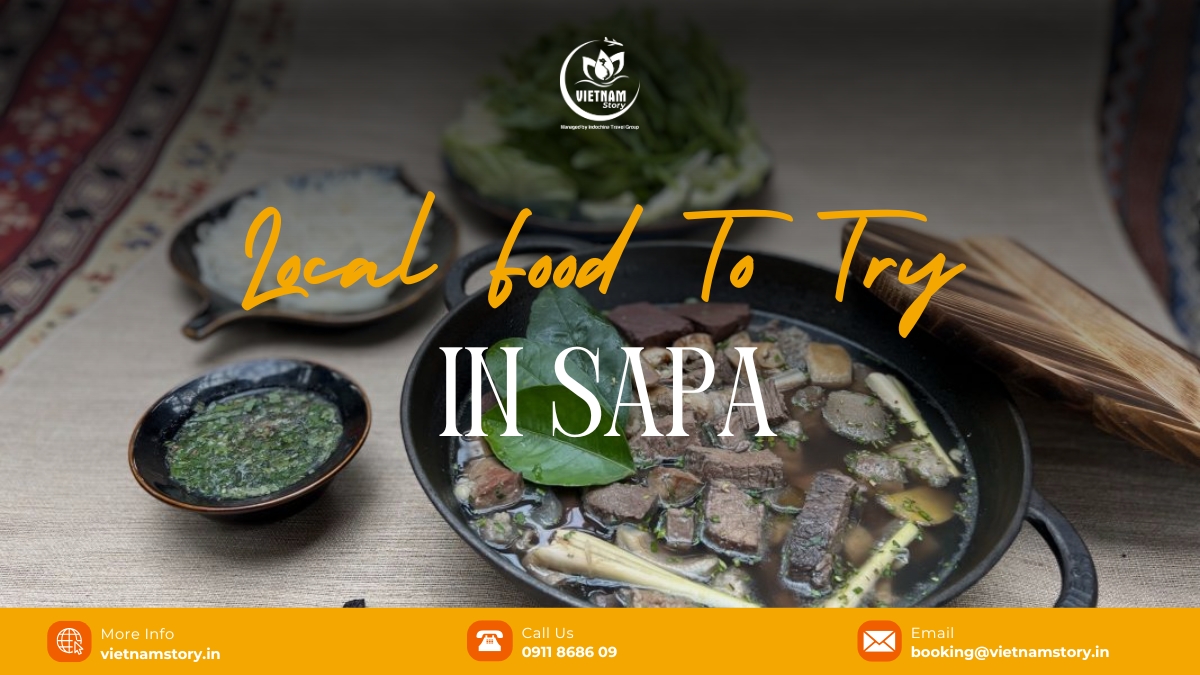
Sapa food at a glance
| Dish / food | Choose it when | What to know |
|---|---|---|
| Salmon or sturgeon hotpot | You want a warm shared dinner after a cold or active day. | Broth, sauces and shared pots may not suit every dietary restriction. |
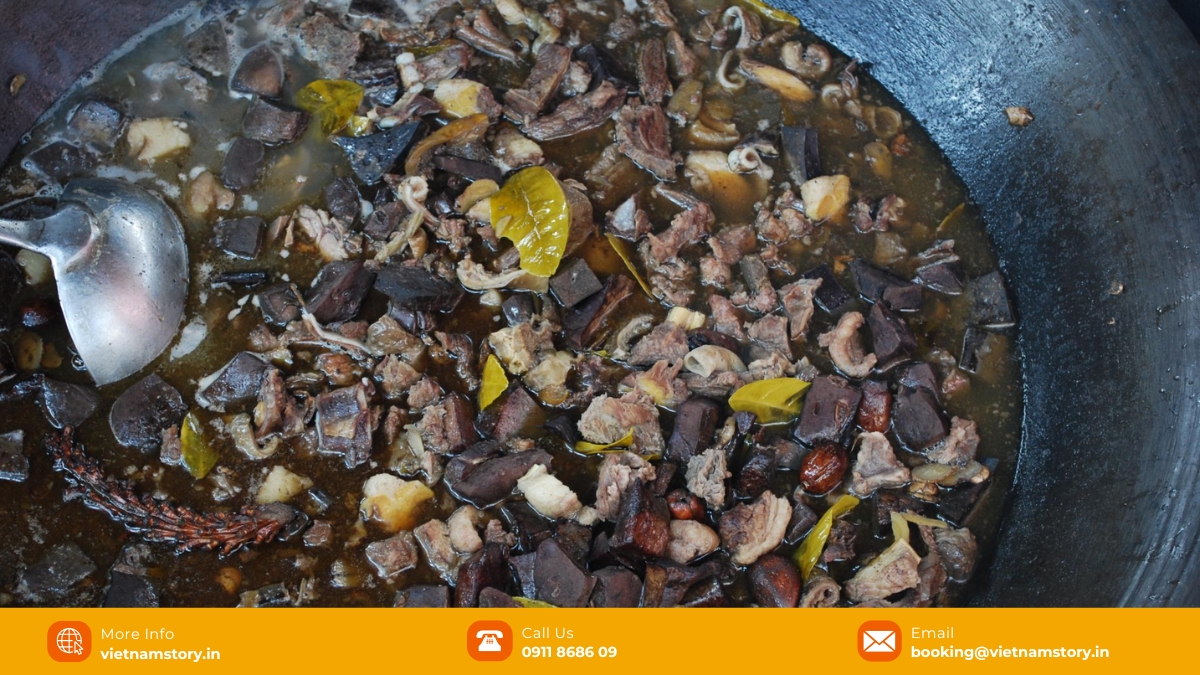
| Thắng cố | You specifically want to try a traditional Hmong-associated meat stew. | Strong flavour and meat/offal preparation can be unfamiliar; ask what the restaurant actually uses. |
| Smoked buffalo | You want a preserved/smoked highland meat or edible souvenir. | Check packaging, producer and food-safety information when buying to carry. |
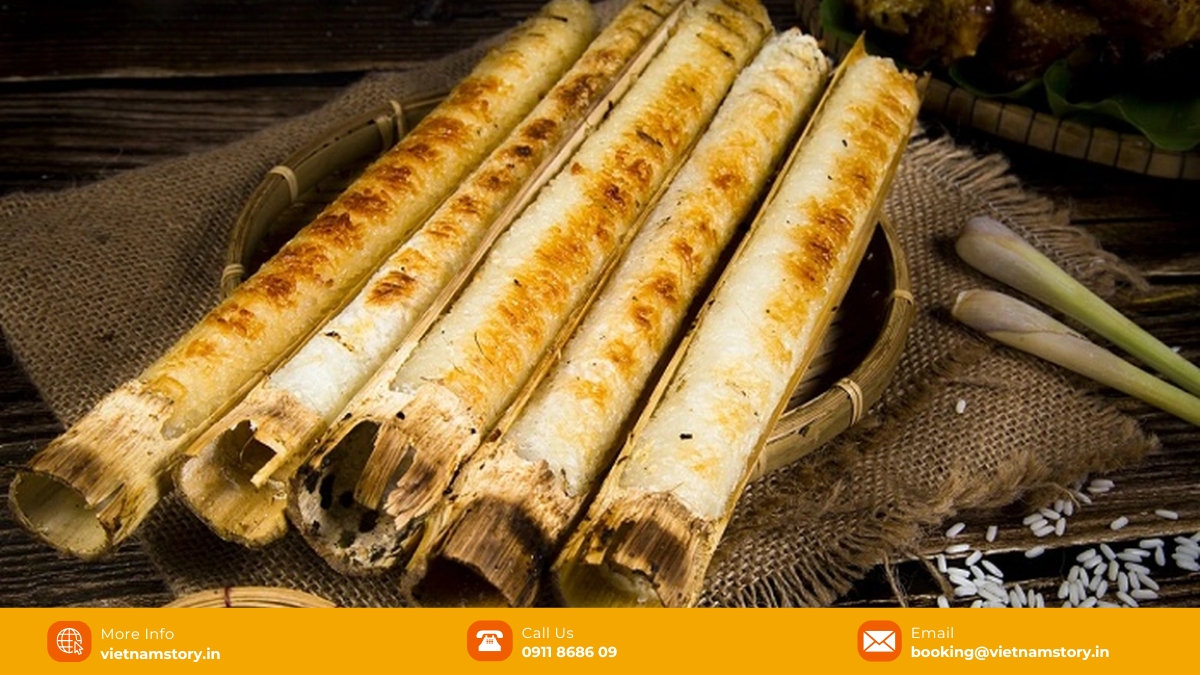
| Cơm lam | You want a simple bamboo-cooked sticky-rice dish. | Often works well as a side or snack; accompaniments determine whether the meal is vegetarian. |
| Xôi ngũ sắc | You want sticky rice coloured with plant-based ingredients in traditional preparations. | Colours and meaning vary by community/occasion; do not treat one explanation as universal. |
| Mèn mén | You want a corn-based highland staple. | Preparation and accompaniments vary; it is not simply “Hmong bread”. |
| Highland vegetables | You want a lighter local meal or need more plant-based options. | Ask about fish sauce, meat stock, egg, onion and garlic according to your diet. |
Hotpot works best as a shared evening meal
Salmon and sturgeon hotpots are widely associated with Sapa’s cooler climate and cold-water fish farming. The value is less about finding one “best restaurant” and more about whether the group actually wants a long shared meal after a trekking or mountain day.
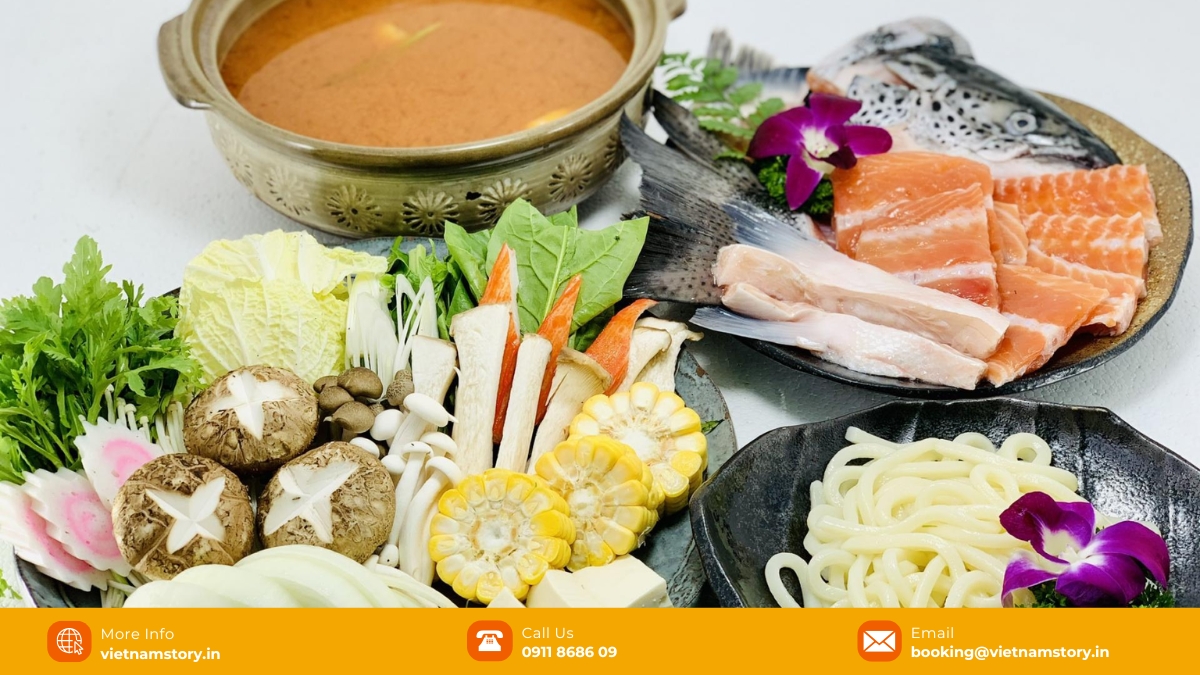
If anyone is vegetarian, Jain, vegan or has an allergy, a shared hotpot can be difficult because broth and utensils are common. Ask whether the kitchen can prepare a truly separate pot before choosing this meal.
Try thắng cố only if the preparation interests you
Thắng cố is a traditional meat stew associated with Hmong food culture in northern highland markets and communities. Modern restaurant versions can differ from older or more traditional preparations, including which meats and organs are used.
We would order it because you are genuinely curious about the dish, not because a travel article says it is compulsory. Ask what is in the pot before ordering if you are sensitive to offal, strong aromas or particular meats.
Smoked buffalo and other preserved meats are better treated as specific products
Smoked buffalo (thịt trâu gác bếp) is made by seasoning and drying/smoking meat over time. It can be served as a snack or sold packaged as a souvenir.
If buying packaged meat to take onward, check the producer, seal, expiry/storage instructions and the import rules at your final destination. An “OCOP” label can help identify an officially promoted local product, but it is not a reason to make health or quality claims beyond what the packaging supports.
Rice and corn dishes can be the easiest local foods to try
Cơm lam
Bamboo-cooked sticky rice is simple, portable and often served with sesame/peanut salt or alongside grilled foods. If you need a vegetarian meal, check the accompaniment rather than assuming the whole plate is meat-free.
Xôi ngũ sắc
Five-colour sticky rice appears in several northern ethnic food traditions and ceremonial contexts. Plant-based colourings can include leaves, roots or fruits, but the exact ingredients and symbolism are not identical across every community.
Mèn mén
Mèn mén is a steamed corn-based staple associated with Hmong food traditions. Texture and serving style are quite different from rice or bread, and it is often eaten with other dishes rather than as a stand-alone snack.
What can vegetarians eat in Sapa?
Sapa town has vegetarian and plant-based dining options, but “vegetarian” does not automatically cover Jain, vegan, no-onion/no-garlic or allergy requirements.
| If you need… | What to confirm |
|---|---|
| Vegetarian | No meat/fish; ask about fish sauce, meat broth and garnishes if they matter to you. |
| Vegan | Confirm egg, dairy, honey and animal-based sauces separately. |
| Jain / no onion / no garlic | Explain the restriction before cooking; do not assume “vegetarian” communicates it. |
| Food allergy | Name the allergen and seriousness; ask whether the kitchen can manage cross-contact realistically. |
Simple options can include rice, tofu and local vegetables, but preparation matters. A vegetable dish stir-fried with fish sauce or a shared meat pan may not meet the requirement.
Street grills and night-market food: choose by hygiene and ingredients
Evening grill stalls can be useful for vegetables, corn, mushrooms, sausages and meat skewers, but the same grill, sauces and utensils may be used across products. If cross-contact or strict vegetarian preparation matters, a dedicated restaurant kitchen is usually easier to discuss than a busy street stall.
We would check turnover, cooking temperature and how food is stored rather than using one fixed “best stall” list that becomes stale quickly.
What about black chicken, pork and other meat dishes?
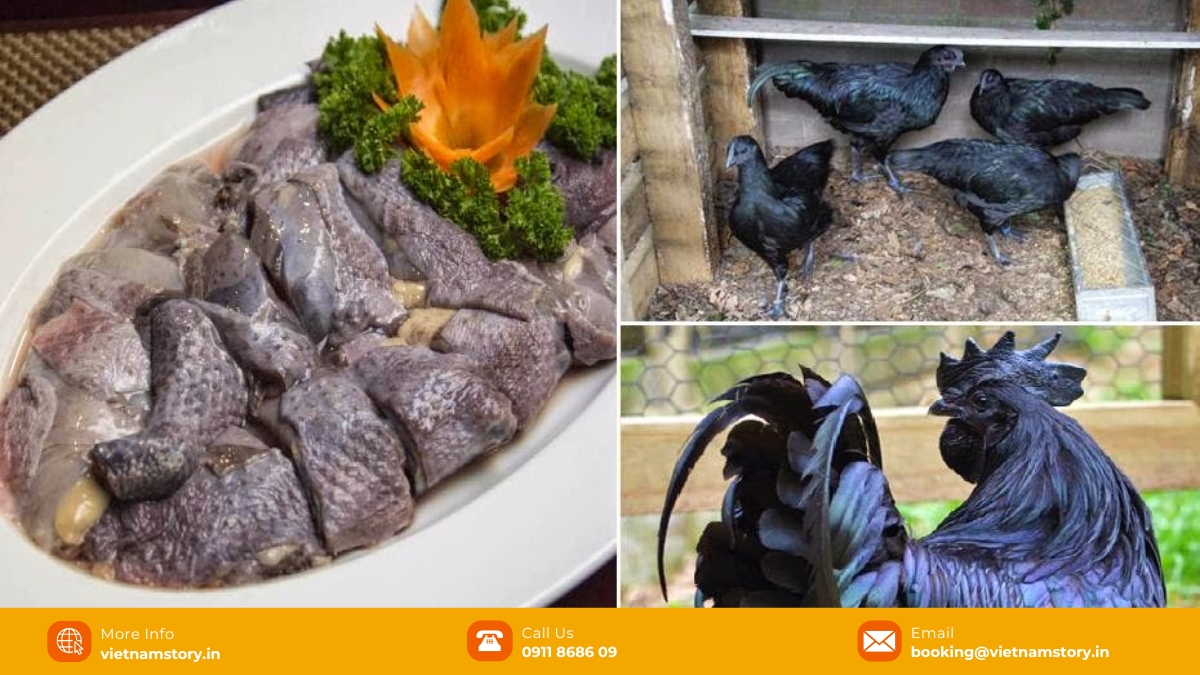
Black chicken and local pork preparations are common in Sapa restaurant menus. They are culinary choices, not health products. We would avoid claims that a dish “boosts immunity” or has a guaranteed medicinal effect unless a qualified health source supports that statement.
How a village dinner differs from eating in Sapa town
A village or homestay dinner is usually tied to the accommodation or trekking route. The useful questions are:
- who prepares the meal and where it is served;
- whether dinner is shared family-style or plated individually;
- which dishes are planned for the group;
- whether dietary restrictions were communicated in advance;
- whether the meal is included in the trek/homestay price.
Use our local dinner in a Sapa village guide when that specific experience is what you are planning.
How we’d plan meals around Sapa activities
- Fansipan day: keep meal timing flexible around cable-car operations and weather; do not rely on one summit restaurant menu for a strict diet.
- Muong Hoa trek: confirm lunch location and dietary needs before the walk, especially on longer routes.
- Village/homestay stay: tell the host/operator the exact dietary restriction before arrival.
- Town evening: use the wider restaurant choice to solve stricter dietary needs rather than forcing every local dish into the same meal.
Try local food without turning the trip into a food checklist
Choose one or two dishes that genuinely interest you, then plan the rest of the meals around comfort, timing and dietary needs. Sapa food is part of the mountain experience, but it does not need exaggerated claims about “tribal authenticity”, health benefits or what every Indian traveller will enjoy.