
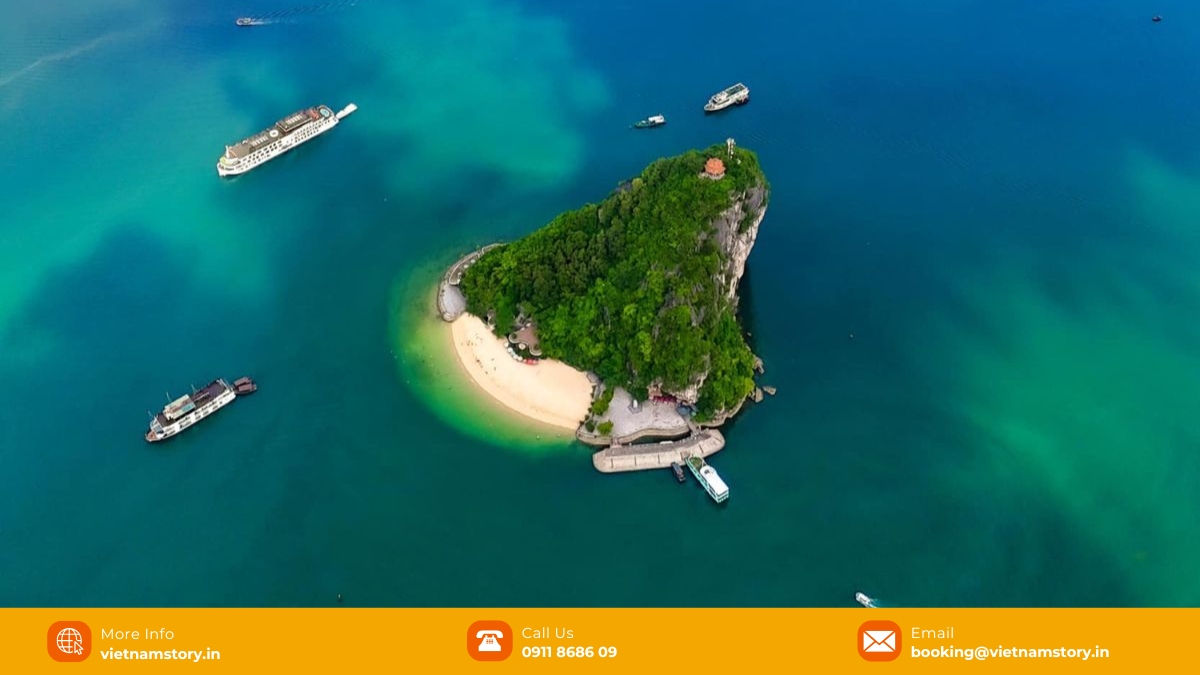
Ti Tốp Island is a Route 2 stop that combines an uphill viewpoint, a managed beach and a distinctive Vietnam–Russia friendship story. It suits travellers who want an active island stop, but the summit walk is not compulsory: families, seniors and travellers with mobility limits can decide separately whether the climb or the beach fits them better.
VNS treats Ti Tốp as one possible highlight of a classic Ha Long itinerary, not a universal “must-climb”. The useful questions are whether your route includes it, whether the uphill walk suits your group, and whether swimming is operating under suitable conditions on the day.

What is the climb to the Ti Tốp viewpoint like?
The official Ti Tốp page describes a 170-metre walking path to the top of the mountain, where visitors can look out over the surrounding bay. The route is uphill and involves stairs, so it should be treated as a genuine physical activity rather than a flat sightseeing stop.
VNS does not use one universal step count, summit-height claim or fixed climbing time as the decision rule. Pace, crowding, heat, wet steps and individual mobility can change the effort substantially. If stairs are difficult for someone in your group, the beach and lower island area can still be enjoyed without completing the summit walk.
The climb can feel moderate or demanding depending on the traveller and the day’s conditions. The practical risks are ordinary ones: steep sections, heat, wet surfaces and crowding. Shoes with reliable grip and an unhurried pace matter more than chasing one claimed step count or completion time.
For seniors, young children or anyone with knee, balance or cardiovascular limitations, VNS recommends deciding at the island whether the full climb still feels appropriate. Do not rely on an unsupported claim that one particular halfway landing provides a fixed percentage of the summit view.
READ MORE: Is Ha Long Bay worth visiting? See who it suits and when you may skip it
What is the beach experience at Ti Tốp?
At the foot of the island is a small managed beach. The Ha Long Bay Management Department gives the beach area at about 500 m² and lists swimming and beach activities among the island’s visitor uses. Before 1962, the island appeared on Ha Long Bay maps under the name Cát Nàng.

The beach is crescent-shaped, but VNS does not use an unsupported 170-metre beach-length figure or describe the water as automatically calm and safe. Swimming depends on the managed beach status, weather, water conditions and instructions on the day. The management authority was still carrying out sand-leveling and safety-oriented beach maintenance in May 2026.
The official island page confirms a system of service shops, but individual facilities and fees can change. If swimming matters to your visit, check the current beach operation with the crew and follow local warnings rather than relying on an old facilities list.
Why is the island called Ti Tốp?
Before 1962, Ha Long Bay maps used the name Cát Nàng for the island. In 1962, President Ho Chi Minh visited the island with Soviet cosmonaut Gherman Titov and proposed naming it Ti Tốp to commemorate the visit and Vietnam–Soviet friendship.
Quang Ninh later built a statue of Gherman Titov on the island in 2015. This documented history is enough to explain the name; VNS does not add an unsupported “Cemetery Island” shipwreck story or an exact statue-height claim without a strong current source.
What can you actually do on Ti Tốp Island?
The island’s two core experiences are straightforward: walk uphill for the viewpoint or use the managed beach area. The official island page also lists activities such as beach sports, kayaking and personal watercraft, but availability can vary with operating conditions and the programme running that day.

- Viewpoint walk: choose this if the panoramic bay view is the priority and stairs are comfortable for your group.
- Swimming: use only the managed beach when it is open and follow the crew, lifeguard and local warnings for the actual conditions.
- Beach and water activities: confirm what is operating during your stop rather than assuming every activity listed historically is available on every visit.
VNS planning tips for the island stop
The best use of a Ti Tốp stop depends on your group: some travellers prioritise the viewpoint, others prefer the beach, and some should skip the climb entirely. VNS plans around the activity fit rather than telling every traveller to complete the same checklist.
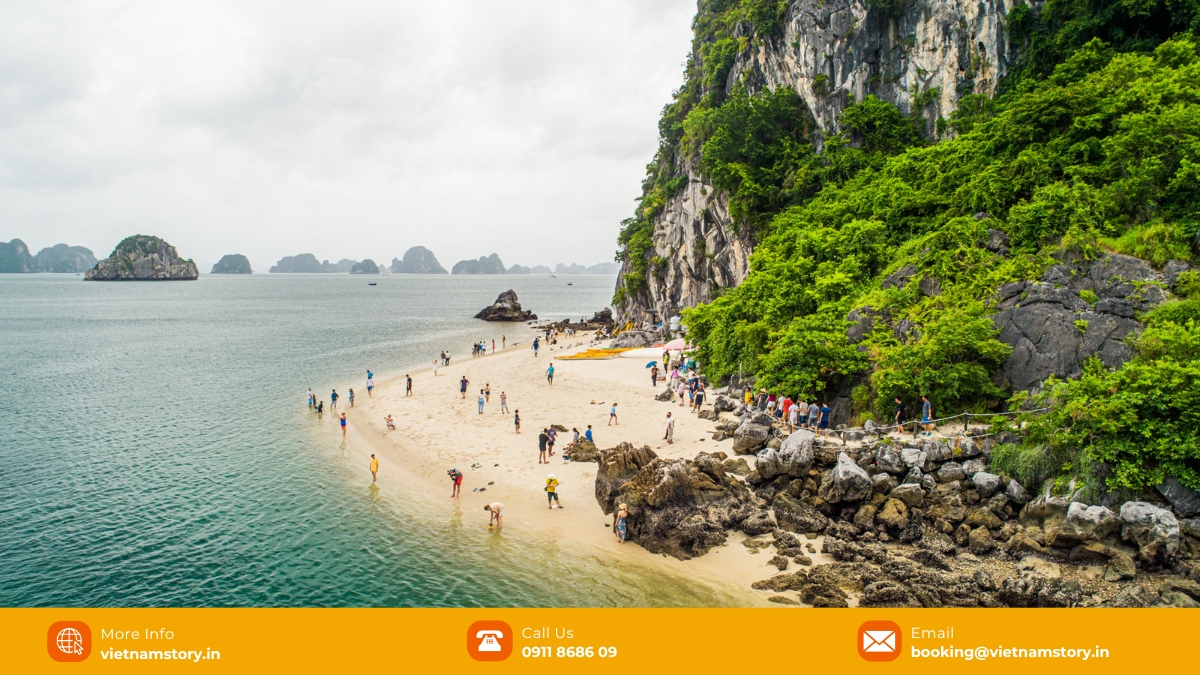
- Footwear: use shoes with reliable grip if you plan to climb; wet or crowded steps can make the route harder.
- Families and seniors: decide separately who wants to climb and who would be more comfortable staying near the beach or lower island area.
- Weather: use the short-range forecast and operator status close to travel. For the broader seasonal decision, see the Ha Long Bay best-time guide.
- Swimming: if a swim is important, confirm that the beach activity is operating and follow the actual safety conditions on the day.
Planning note: route inclusion and day-of operating conditions matter more than chasing one fixed clock-time slot for the viewpoint or beach.
Can Soi Sim be used as an alternative to Ti Tốp?
Soi Sim should not currently be treated as a reliable substitute for Ti Top. In June 2026, the Ha Long Bay Management Department said the site was still being checked and prepared for future tourism operation, so older guide descriptions should not be treated as current operating advice.

Because Soi Sim was still being prepared for future tourism operation in 2026, VNS does not publish an active Ti Tốp-versus-Soi Sim comparison table. If an operator proposes Soi Sim, confirm the current opening status, landing arrangement and available activities for your exact travel date before treating it as a substitute.
If Ti Tốp is a priority, compare current Ha Long Bay cruise options by route and confirm that Route 2 and the island stop are included. Treat meal requirements, transfer arrangements and cabin choice as separate operator questions rather than assuming they come with the Ti Tốp stop.
Conclusion
Ti Tốp is worth considering when your group wants a viewpoint and a managed beach within the same Route 2 stop. The summit walk can add a memorable panorama, but it is not required for the island visit to have value. Travellers with mobility limits can stay near the lower island or beach area and still make sensible use of the stop.
If Ti Tốp is important to your trip, confirm the route and island stop before booking. Choose the itinerary by route, stop duration and the activities that fit your group rather than by a generic luxury label. Use the confirmed programme to decide whether the viewpoint walk, beach time or both make sense for the actual stop.