
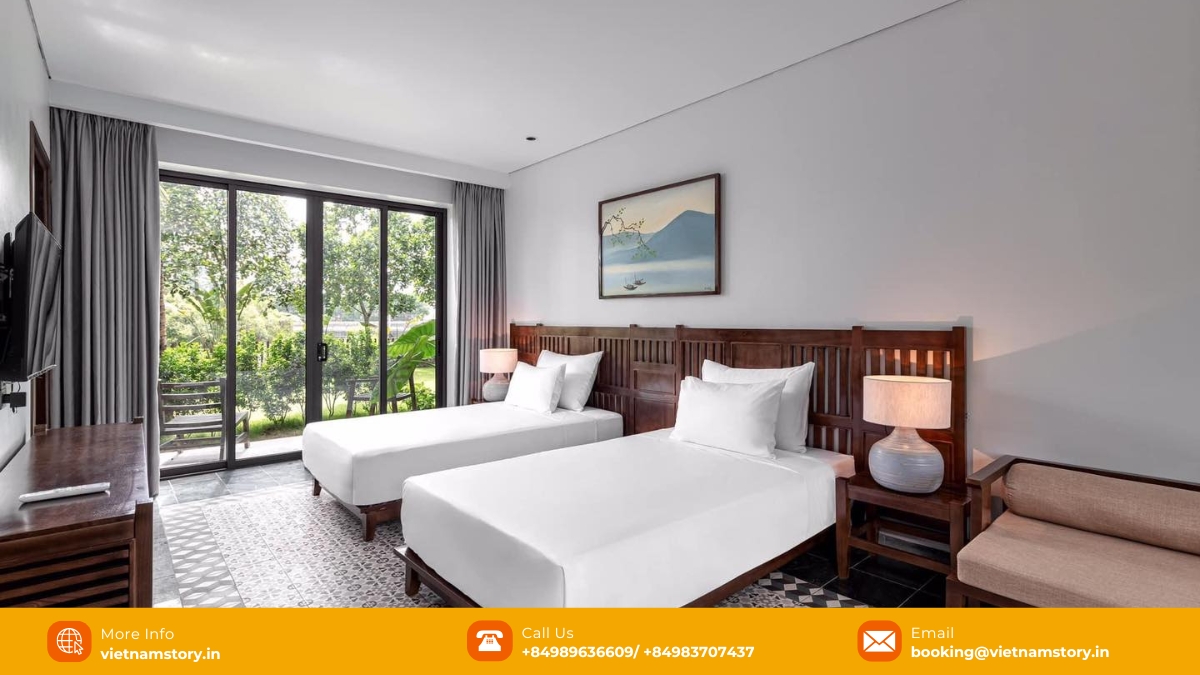
A serviced apartment can be useful for an Indian family visiting Vietnam, but “has a kitchen” is not enough information to choose it over a hotel. The location, bedroom layout, cleaning arrangements, cooking facilities, building access and the number of nights all affect whether a self-catering stay is practical.
Some families prefer hotel breakfasts and daily housekeeping. Others need more living space, simple meals for children or greater independence when arranging vegetarian food. Before comparing rates, decide which features you will actually use.
Hotel vs serviced apartment: quick decision table
| Feature | Hotel | Serviced apartment |
|---|---|---|
| Breakfast | May be included depending on the rate | May be excluded or offered separately |
| Kitchen | Not generally assumed in a standard room | Can range from a kettle and microwave to a functioning kitchenette |
| Housekeeping | Check the hotel’s actual service schedule | May be less frequent; confirm the rate and policy |
| Room layout | Connecting or family rooms may be offered | Separate bedrooms and living space may be available |
| Transport | Depends on the location, not the label | May be farther from tourist pickup points |
| Reception | Often staffed, but confirm late arrival | Self-check-in or limited front-desk hours may apply |
Neither category guarantees a better stay. Ask for the named property, exact room type and service list before booking.
What should you check in an apartment kitchen?
Ask the property to confirm the actual cooking equipment, rather than accepting a listing that simply says “kitchenette.” Does it have a working hob, pots, pans, suitable utensils, a refrigerator, sink and safe food storage? Are gas or electric cooking devices permitted, and does the building restrict strong smells or frying?
Some travellers only need hot water, cereal and simple child meals. Others expect to prepare rice, vegetables or separate Jain meals. Those are not the same requirement. Discuss what you intend to cook and get the property’s response in writing. Cooking and food delivery are subject to the property’s rules.
What about strict vegetarian or Jain requirements?
Self-catering can give a family more control over ingredients but does not guarantee a safe or compliant cooking environment. If cross-contact, utensils or certain root vegetables matter, check the kitchen setup and decide whether your own utensils or prepared food would be necessary and permitted. For a medically diagnosed food allergy, follow the separate food allergy planning checklist.
Eating out may still be more convenient on long sightseeing days. Use the Jain food in Vietnam guide to define the requirements clearly before booking accommodation.
Does a bigger apartment make up for a less convenient location?
Not always. A spacious property can be good value when a family stays for several nights, but a distant location may add repeated taxi journeys and create difficulties for older parents. Compare the address with the actual attraction and restaurant map. For a three-day Hoi An stay, for example, the practical difference between an Ancient Town location and a beach property may outweigh the size of the kitchen.
Use our Hoi An hotel-area guide or Phu Quoc hotel-area guide when the destination is known.
How should a three-generation family compare rooms?
Write down the number of actual beds and bathrooms, not only maximum occupancy. Ask whether the apartment’s sofa bed is suitable for an adult and whether the building has a lift. Check steps, stairs and the route from vehicle pickup to the apartment entrance. “Family apartment” is not a standard accessibility certification.
Our connecting rooms and extra beds guide gives a more precise checklist for different family sizes.
When does self-catering create extra work?
On a fast-moving tour, cooking and shopping take time. You may need groceries, dishwashing, storage and cleaning while also managing sightseeing and transfers. If your group changes hotels every two nights, a large kitchen may have little practical value. Conversely, a slower beach stay can justify the extra space.
Use the three-generation family itinerary guide to decide whether a slow single-base holiday is a better fit before choosing accommodation.
Questions to send the accommodation provider
- What is the exact property, unit and bedroom configuration?
- Which cookware, appliances and utensils are physically present?
- Is cooking permitted, and are there restrictions?
- Is breakfast available or charged separately?
- What housekeeping, linen and towel services are included?
- Are there a lift, stairs or access obstacles?
- Can we check in if the flight reaches Vietnam late at night?
- What is the cancellation, damage-deposit and electricity policy?
How Vietnam Story would compare the stay
We would select the route and hotel area before deciding between a hotel and a serviced apartment. For a longer family stay, we can ask properties about kitchen access and room configuration while comparing Vietnam tour packages from India. Kitchen equipment, breakfast, private transfers and dietary arrangements must be explicitly confirmed for the selected property and quotation.
FAQ
Is an apartment always cheaper for a family of five?
No. Compare the total rate, number of bedrooms, taxes, cleaning charges and added transport; an attractive nightly price may not be the best overall value.
Can we cook Indian food in a Vietnam apartment?
Only if the property’s actual facilities and rules allow the cooking you plan to do. Ask directly rather than relying on generic listing categories.
Is hotel breakfast automatically easier for Jain guests?
No. A buffet may have vegetarian options but not satisfy strict ingredient or preparation rules. Confirm details with the kitchen.