Vung Vieng is a Route 4 cultural stop on the Bai Tu Long side of the Ha Long sightseeing system. It preserves the story and cultural traces of a former fishing community, while present-day visits focus on interpretation, small-boat experiences and route-based sightseeing rather than observing an unchanged residential floating village.
VNS sees Vung Vieng as most useful for travellers who want fishing-community history and a quieter cultural stop between the bay’s caves and limestone scenery. The practical questions are whether the booked programme follows Route 4 and which bamboo-boat, kayak or cultural activities are actually operating on the travel date.
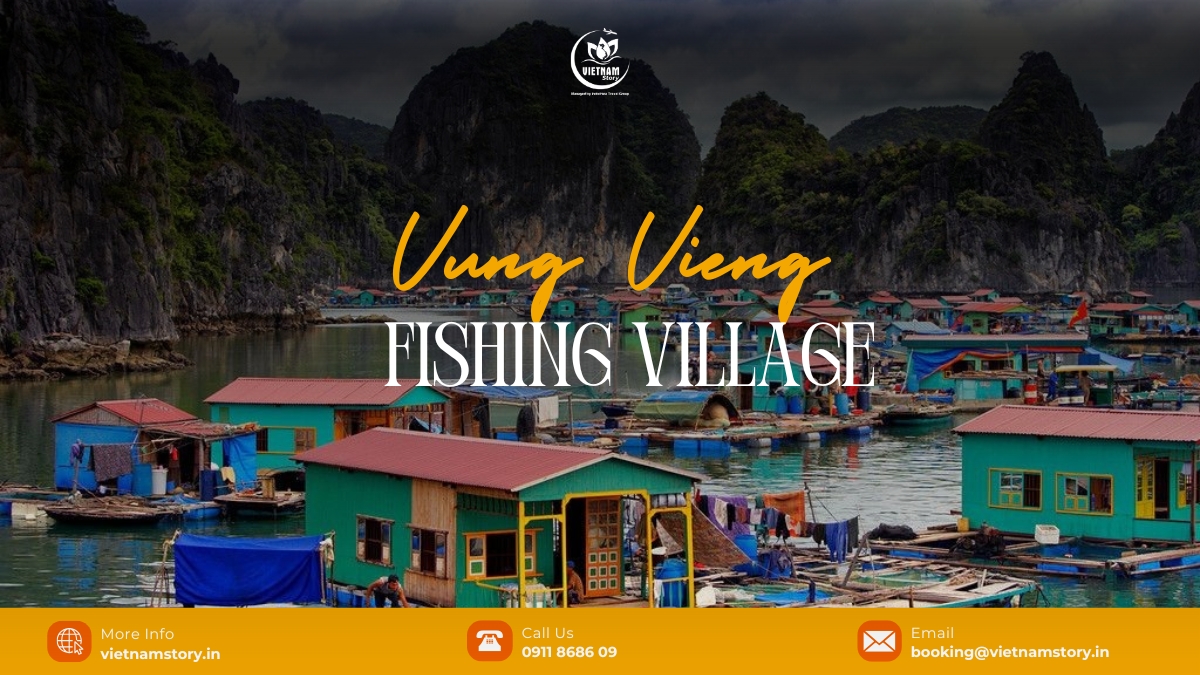
Where is Vung Vieng, and how does Route 4 work?
Vung Vieng lies on official Ha Long Bay Route 4, about 20 km from Tuan Chau International Marina and around 16 km from Ha Long International Passenger Port.One visual landmark is the natural limestone arch described by the management authority as a “village gate”. VNS does not publish the old 5–8 m clearance figure because the current authority page does not need that precision to explain the visitor experience. Access, boat type and the exact way you pass through the area depend on the programme and operating conditions.Route 4 is the useful inclusion signal, but it does not mean every Route 4 departure offers the same stop duration or activity set. Confirm Vung Vieng on the booked itinerary instead of assuming that day-cruise versus overnight-cruise labels determine inclusion.What is Vung Vieng today?
Vung Vieng was historically a residential fishing community. In 2014, Quang Ninh moved fishing households to the mainland as part of a wider resettlement programme intended to improve social-security conditions.Today, the tourism value is cultural interpretation rather than resident census. Visitors come to understand the customs, work and memory of Ha Long’s former fishing communities through the preserved setting and activities associated with Route 4.Older floating structures, including community and school-related elements, should be understood in historical context. VNS does not describe a former school structure as having a new present-day function unless a current authority source explicitly confirms that use.What can you do at Vung Vieng?
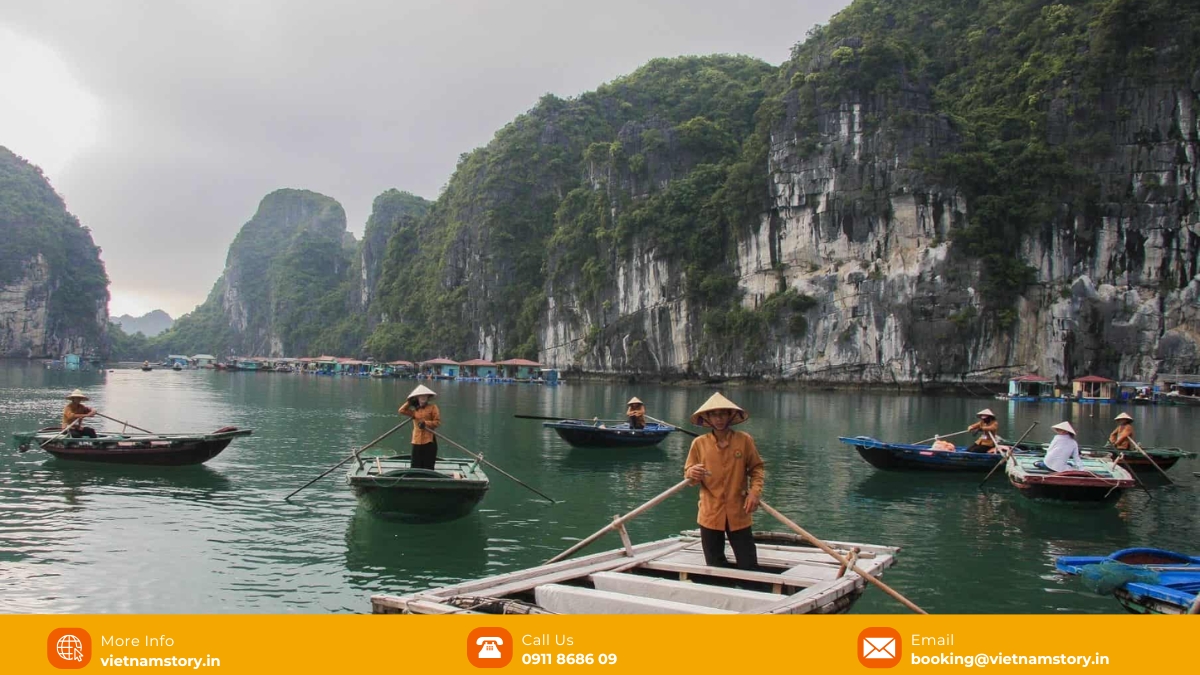
- Bamboo boat: useful for travellers who prefer not to paddle. Duration, boat setup and route vary by operator and operating conditions.
- Kayaking: available on some programmes, but it should be confirmed rather than assumed for every Route 4 departure.
- Fishing-community interpretation: the value is learning about former livelihoods, customs and the cultural landscape rather than treating Vung Vieng as an unchanged residential village.
- Pearl-related interpretation: official Route 4 material mentions pearl processing. VNS does not add fixed species, cultivation stages, harvesting timelines or guaranteed demonstrations unless the current programme confirms them.
VNS planning notes for families and Indian travellers
Vung Vieng can work well for travellers who prefer a quieter cultural activity over a strenuous cave climb, but VNS treats comfort and meal handling as separate planning questions rather than guarantees attached to the destination itself.- Families and seniors: a staffed bamboo-boat option may be easier than kayaking for travellers who do not want to paddle, when that option is operating. The crew’s instructions and actual conditions still matter.
- Vegetarian, Jain or Halal meals: meal handling is operator-specific. Confirm the exact requirement with the cruise before booking; do not assume a Route 4 itinerary guarantees a particular kitchen setup or cross-contact standard.
- Photography: lighting depends on weather, sailing time and viewing direction. VNS does not promise a fixed 8:00–10:00 window or one “best light” season.
How to plan a Vung Vieng stop
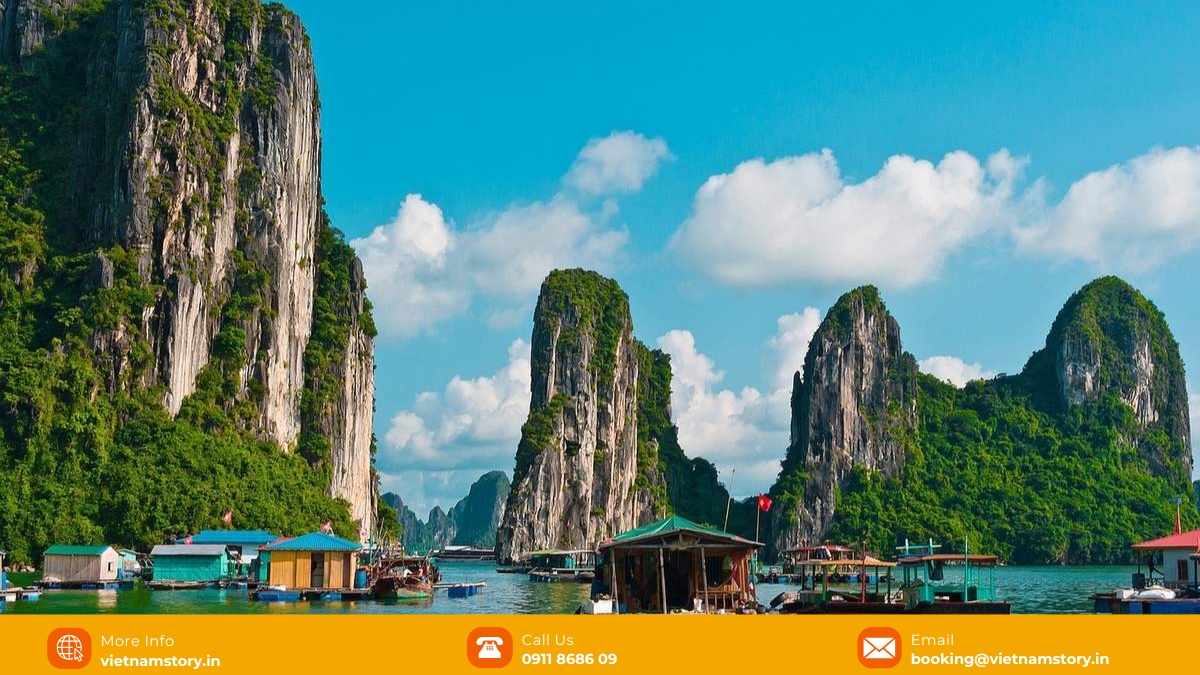
- Best time to visit: Use the short-range forecast and the cruise’s operating status close to travel. VNS does not promise one season as the calmest or one fixed month range as the best photography window.
- Combine your trip: Official Route 4 also lists Cỏ Cave (Thiên Cảnh Sơn), Cạp La, Tùng Áng, Cống Đỏ and Hòn Xếp. Treat those as route context rather than a promise that every departure stops for the same activities.
- Respectful etiquette: ask permission before taking close-up photographs of guides, workers or people participating in cultural activities.
READ MORE: Is Ha Long Bay worth visiting? See who it suits and when you may skip it