
Yes, swimming can be part of a Ha Long Bay trip, but it is not something to assume will be available everywhere or on every sailing. On a classic Ha Long itinerary, Ti Tốp is the clearest current example of a managed swimming stop. Other routes, especially around Lan Ha Bay and Cát Bà, may include beach or swimming time depending on the programme, tide, weather and the crew’s decision on the day.
From a trip-planning perspective, Vietnam Story treats swimming as a conditional activity: choose a route that normally includes a suitable stop, then confirm the actual conditions with the crew before entering the water. If the real question is which beach or island stop fits your itinerary, use our Ha Long Bay beaches guide instead.
Can you swim in Ha Long Bay safely?
Swimming is best treated as a managed activity rather than something you can do anywhere in the bay. Ha Long is also a working waterway with changing weather, tides and boat movements, so a calm-looking cove is not automatically a place to enter the water.
In VNS itinerary planning, we pay more attention to the actual swimming stop, weather and sea conditions, boat traffic, jellyfish reports and the crew’s decision on the day than to broad claims about the whole bay. If the crew closes a swim stop or changes the programme, follow that operational decision rather than trying to swim independently elsewhere.
Before you get into the water, check three practical things:
- Use the managed swimming stop on your itinerary. Stay inside the marked or supervised area and follow the beach staff or cruise crew rather than choosing an unmarked cove because it looks calm.
- Ask about jellyfish and current water conditions. VNS still considers this a useful question for the guide or crew, but we do not use a fixed jellyfish season as a guarantee. If you are stung, leave the water and follow the crew’s current first-aid procedure rather than relying on an improvised remedy.
- Treat water clarity as variable. If swimming is a priority, VNS often considers Lan Ha itineraries because some routes include more sheltered-water or beach-style stops. Actual clarity still depends on weather, tide, runoff and local activity on the day.
Where are the practical swimming stops?
Ti Tốp is the clearest current example on the classic Ha Long side. The Ha Long Bay management authority was still inspecting and managing the Ti Tốp beach during the 2026 summer season, including visitor-safety and rescue arrangements. Because it is a famous stop, it can also become busy at peak times.
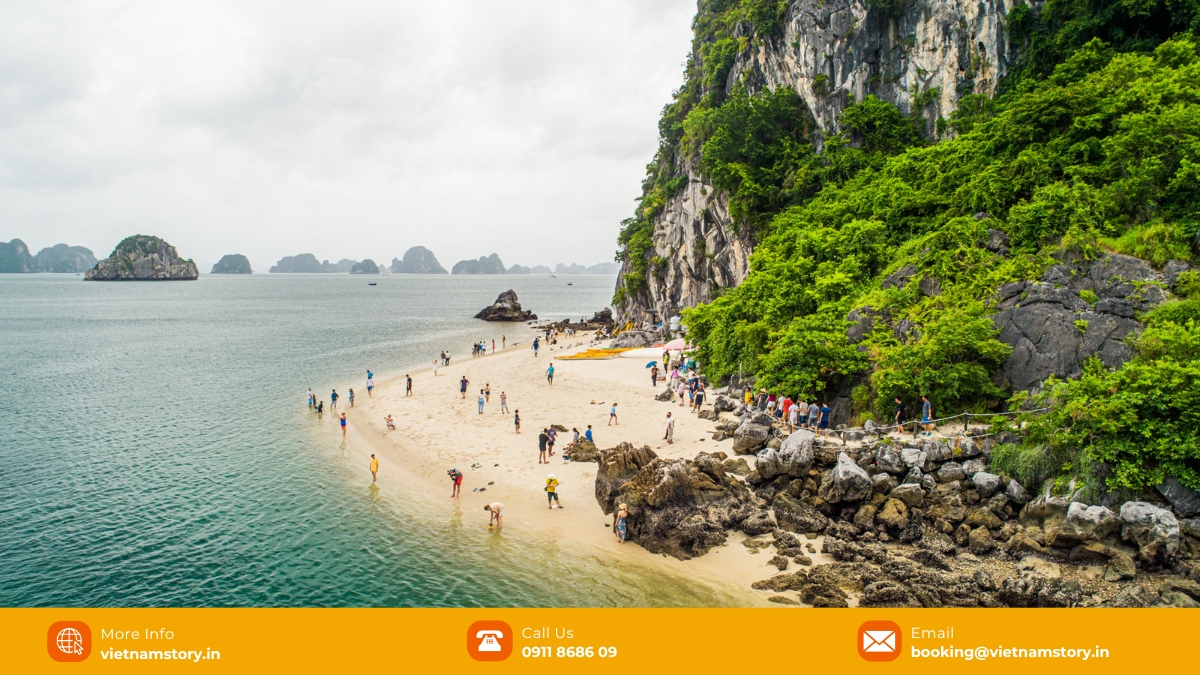
Older guides may also mention Soi Sim and several other beaches. Do not assume they are all operating in the same way today. In June 2026, the management authority described Soi Sim as being checked for infrastructure, landscape and technical conditions for future operation.
If your cruise operates around Lan Ha Bay / the Cát Bà side, Ba Trái Đào is one recognised beach-area example. It is not the same geographical bay as central Ha Long, and access still depends on the itinerary, tide and operating conditions.
| Area | What it is useful for | What to confirm |
|---|---|---|
| Ti Tốp, classic Ha Long route | A managed beach stop that combines swimming with the island viewpoint. | Whether your cruise route stops there and whether swimming is operating that day. |
| Ba Trái Đào, Cát Bà / Lan Ha side | A beach-style stop that may suit travellers who prioritise swimming on a Lan Ha itinerary. | Tide, route access and the operator’s programme. |
| Soi Sim | A well-known Ha Long beach name that appears in older guides. | Do not assume current public access; check the latest operator or management information. |
What should families and less-confident swimmers look for?
For families with young children, seniors or travellers who are not confident swimmers, VNS usually prefers an itinerary with a managed beach stop and an easy shore entry rather than treating open-water swimming as the goal. Crowd level, tender access, changing facilities and the amount of time available can matter as much as the water itself.
- Stay inside marked or supervised swimming areas and follow lifeguard or crew instructions.
- Use flotation equipment when the operator asks you to, and ask for a properly fitting life jacket if you are not a strong swimmer.
- Keep children within direct adult supervision rather than assuming a sheltered beach has no current or boat risk.
- If mobility is limited, confirm the tender transfer, beach access and any steps before choosing the itinerary.
When are conditions more comfortable?
Northern Vietnam has a real seasonal change, so the experience is not the same all year. Warmer months naturally make sea swimming more appealing, while winter water can feel too cool for travellers expecting a tropical beach holiday. Summer also requires more weather flexibility because thunderstorms or tropical weather can alter the cruise programme.
- Warmer periods: more travellers are comfortable getting into the sea, but summer weather can also change the activity programme at short notice.
- Cooler winter periods: the scenery can still be excellent, but sea swimming is less attractive for travellers who expect warm tropical water.
- Earlier swim stops: if the itinerary offers one, VNS often likes it for comfort and lower crowd pressure on busy routes. We do not treat a particular clock time as a guarantee of clearer water.
If your travel dates are fixed, use the seasonal pattern only as a planning guide and check the current forecast and cruise operating conditions closer to departure.
Practical comfort checks before you get in
For family groups and mixed-age travellers, VNS keeps the practical checklist simple: confirm the activity is running, use the equipment supplied by the operator and plan for basic comfort before and after the swim.
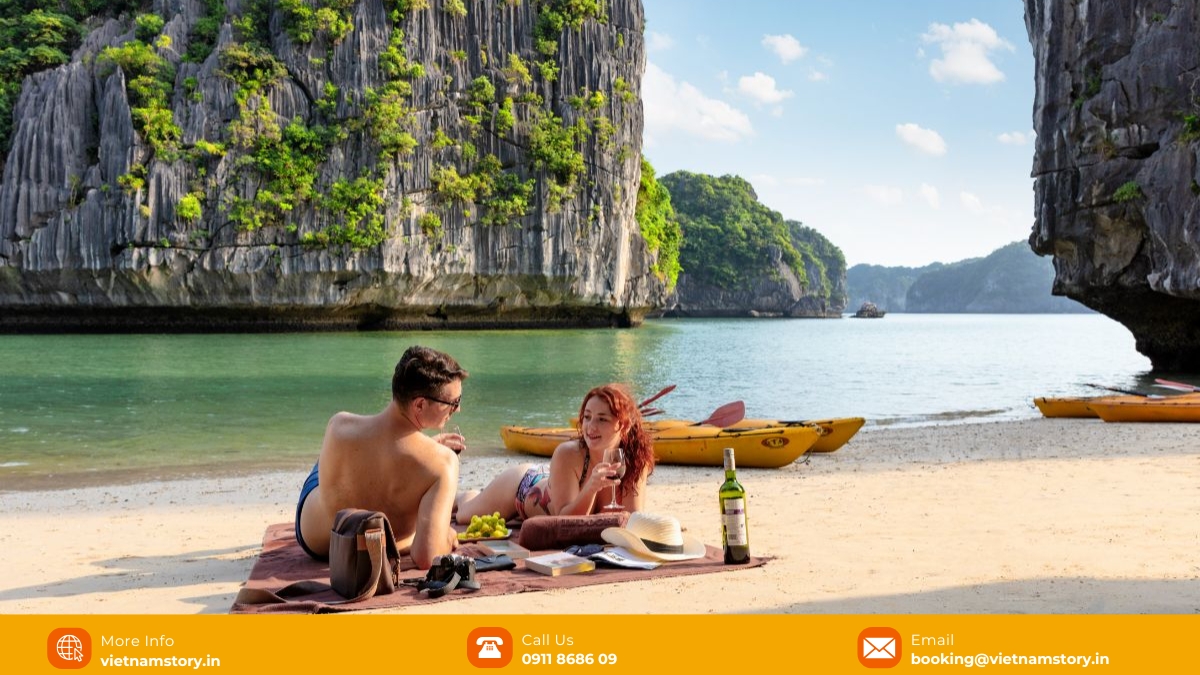
Before entering the water, follow the operator’s instructions on flotation equipment and the marked swimming area. For comfort, sun protection, drinking water, a freshwater rinse and suitable footwear are simple preparations that can make the stop easier.
- Flotation equipment: use the life jacket or other flotation equipment required or recommended by the operator, especially if you are not a confident swimmer.
- Sun protection: bring suitable sunscreen, a hat and a cover-up for time on deck or the beach.
- Rinse and hydrate: a freshwater rinse after salt water and drinking water after time in the sun are simple comfort measures.
- Footwear: water shoes can help where the shore is rocky, shell-covered or uneven.
SWIMMING PRIORITY → CRUISE ROUTE
If swimming matters, choose the route before the vessel
A cruise name does not guarantee a swim stop. The better comparison is whether the actual itinerary includes Ti Tốp, a Lan Ha beach-style stop or another managed water activity that fits your group.
Compare the current Ha Long Bay cruise options by route first; then check the day-of operating conditions before treating swimming as confirmed.
What VNS would confirm before you book
If swimming is one of your top reasons for choosing a cruise, VNS would confirm the route, likely swimming stop, beach access and weather fallback before booking. Do not choose a vessel only because a marketing page says “swimming included”; the programme can still change with operating conditions.
For current Ti Tốp management information, see the Ha Long Bay management authority’s 2026 inspection update.
- Route first: confirm whether the booked itinerary actually includes a managed swimming or beach stop.
- Conditions second: ask the crew about weather, tide, local water conditions and any jellyfish reports on the day.
- Traveller fit: if children, seniors or less-confident swimmers are travelling, confirm the shore access and equipment rather than relying on a generic “family-friendly” label.
Once those points are clear, you can compare current Ha Long Bay cruise options by route instead of choosing only by vessel category or marketing photos.
Conclusion
The practical answer is yes, but conditionally. Choose an itinerary that genuinely includes a suitable swim stop, then let the crew’s day-of decision determine whether you enter the water. That approach is more useful than treating swimming as guaranteed across the whole bay.
If this activity is important to your trip, tell VNS before choosing the cruise so the route can be checked against that priority. If swimming is only one part of a wider first-time visit, use the Ha Long Bay travel guide to decide the trip length and cruise format before narrowing the route around one activity.