
There is no single “best cave” in Ha Long Bay. The useful choice depends on the cruise route and how you want to experience it. Choose Sung Sot or Dau Go when you want a walk-through limestone cave; choose Luon when a kayak or bamboo boat suits the group better. First check the vessel’s actual route, because a cruise does not visit every cave listed in Ha Long Bay guides.
This page is the Ha Long Bay cave chooser. For the wider route structure, use our Ha Long Bay map and cruise route guide. For an individual cave, follow the specialist page instead of relying on a long generic list.

Which Ha Long Bay cave should you choose?
Start with the experience type, then confirm the official route:
- Walk-through cave: choose a route that includes places such as Thien Cung, Dau Go or Sung Sot.
- Kayak or bamboo-boat cave: Luon Cave is the clearest example on an official Ha Long route.
- More active cave visit: Me Cung or Thien Canh Son can suit travellers comfortable with more walking and steps.
- Archaeological context: Tien Ong is the specialist fit.
For families or multi-generational groups, we would compare the walking requirement with the actual activity stops before choosing the vessel.
Which caves are on the official Ha Long routes?
| Official route | Main cave stops | Useful planning angle |
|---|---|---|
| VHL1 | Thien Cung, Dau Go, Ba Hang | Classic cave route with walk-through cave stops and the Ba Hang area |
| VHL2 | Sung Sot, Me Cung, Bo Nau, Luon, Trong, Trinh Nu, Ho Dong Tien | Broadest cave mix, including major walk-through caves and Luon water access |
| VHL3 | Tien Ong | Useful when the programme focuses more on cultural and ecological stops |
| VHL4 | Co Cave (Thien Canh Son), Thay Cave, Cap La Cave | Cave stops combined with the Bai Tu Long-side route |
The Ha Long Bay Management Department also lists VHL5 as the VHL1 sequence continuing to Gia Luan, while VHL7 combines VHL1, VHL2, VHL3 and VHL4 for eligible discovery cruises. This is why the exact route code is more useful than a generic “best caves” list.
Route 1: Thien Cung and Dau Go
VHL1 is the cleanest choice when you want a classic cave visit without building the trip around the larger VHL2 circuit.
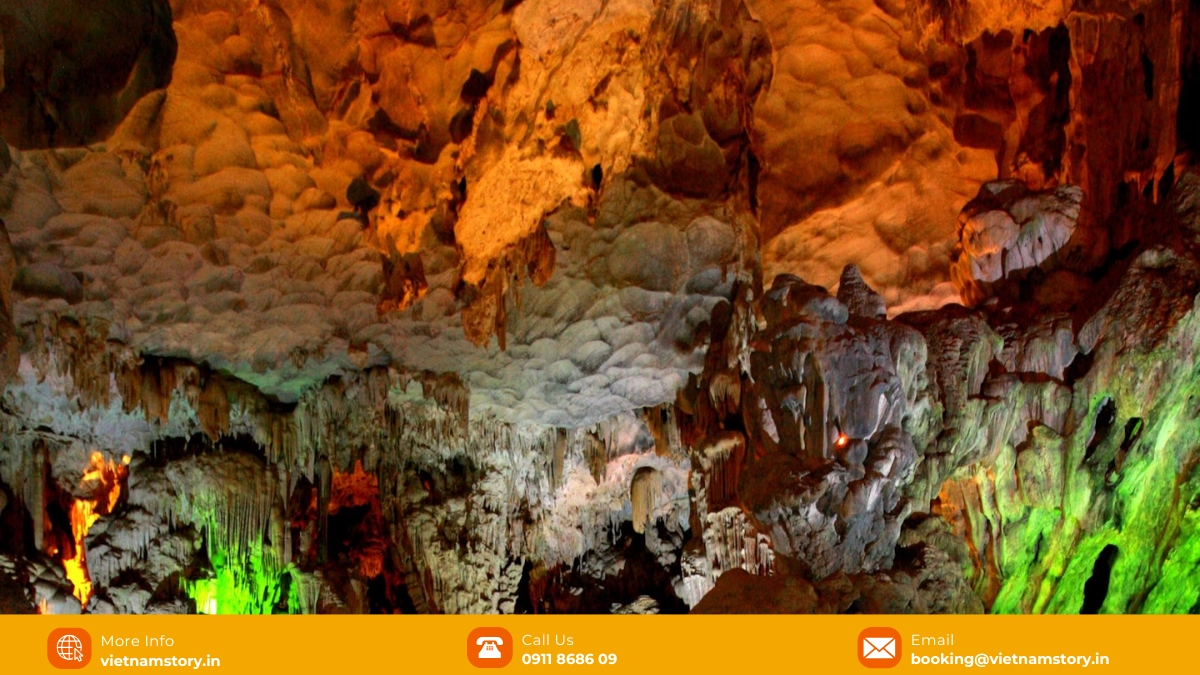
Thien Cung and Dau Go are both walk-through cave experiences. They work better for travellers comfortable with stairs and uneven cave surfaces than for someone specifically trying to minimise walking.
For detailed history, chamber layout and visitor tips, use our Dau Go Cave guide rather than duplicating the specialist content here.
Route 2: Sung Sot, Me Cung, Luon and more
VHL2 has the widest cave selection among the core Ha Long routes. The official route includes Sung Sot, Me Cung, Bo Nau, Luon, Trong, Trinh Nu and Ho Dong Tien alongside island and lagoon stops.
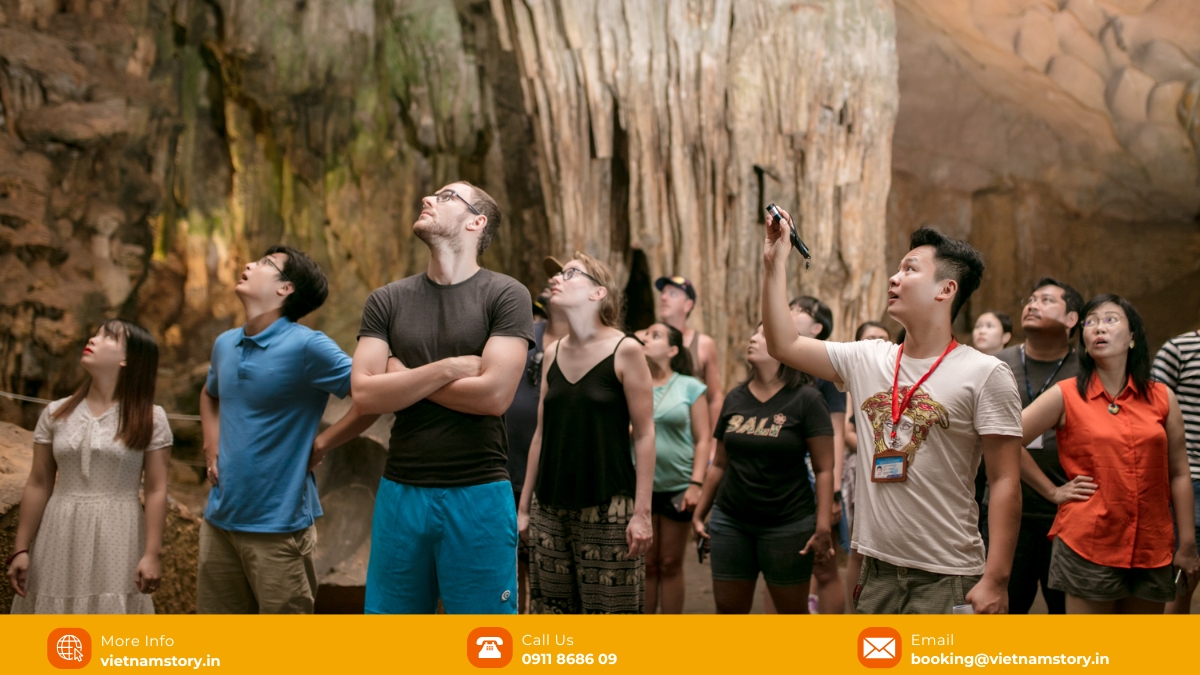
Sung Sot Cave is the stronger fit when your group wants a major walk-through cave. It involves more walking than a water-level experience, so footwear and mobility matter. Use our Sung Sot Cave guide for the exact visit flow.
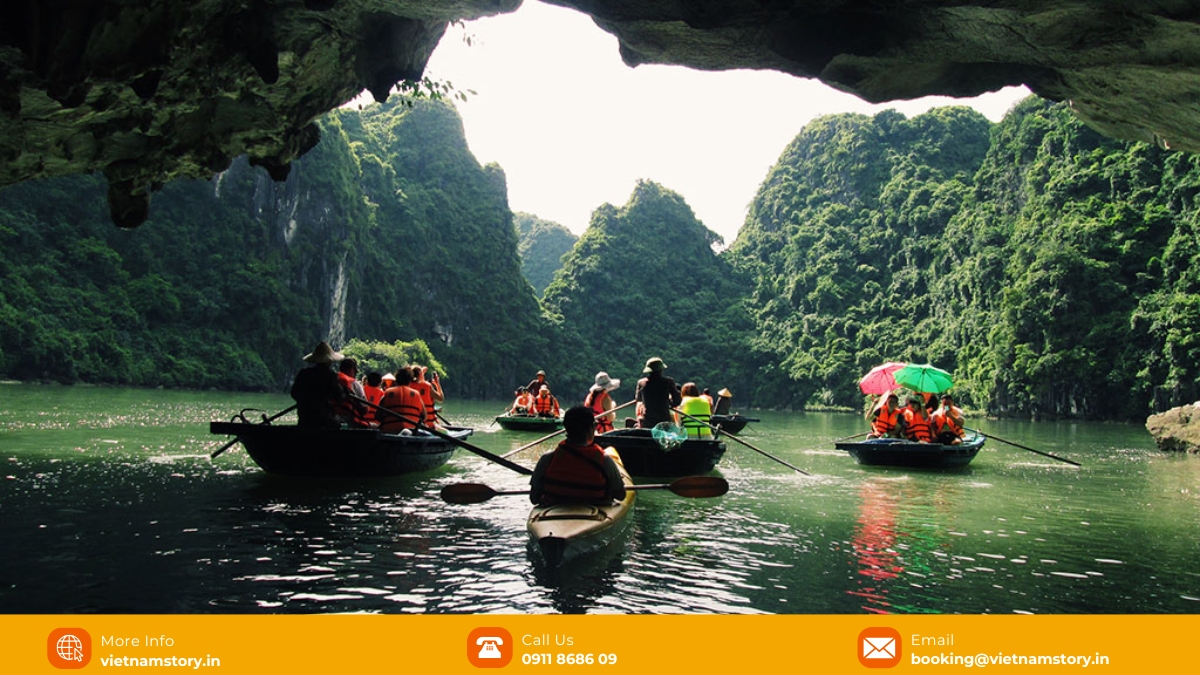
Luon Cave is different. The experience is through a low arch by kayak or bamboo boat rather than a conventional walk-through cave. That makes it a useful alternative when the group wants a water-based activity or wants to avoid a long cave walk. See our Luon Cave guide for kayak versus bamboo-boat planning.
Route 3: Tien Ong for archaeology and a quieter route mix
VHL3 includes Tien Ong Cave together with Cua Van, Ba Ham, Ba Men, Ang Du and the bamboo forest area.
We would choose this route for the overall cultural and ecological programme, not because Tien Ong is automatically “better” than Sung Sot or Dau Go. Its value is different: cave scenery combined with archaeological context.
Route 4: Thien Canh Son, Thay and Cap La
VHL4 includes Co Cave (Thien Canh Son), Thay Cave and Cap La Cave, then continues through Vung Vieng, Tung Ang, Cong Do and Hon Xep.
If your actual cruise includes Thien Canh Son, use our Thien Canh Son Cave guide for the approach, steps and route fit. We would not use “Route 4” as shorthand for every Bai Tu Long cruise because the operating programme still needs to be checked vessel by vessel.
What about Dark & Bright Cave and Lan Ha Bay caves?
Do not mix Lan Ha Bay cave content into the Ha Long route table. Dark & Bright Cave belongs to Lan Ha-oriented planning, not the VHL1–VHL4 cave ownership above.
If your cruise crosses into Lan Ha Bay, use our Lan Ha Bay caves guide and the Dark & Bright Cave specialist. This keeps the geography and route logic clear.
Which cave works better for families and older travellers?
We would not choose only by fame. Check how the cave is experienced.
- For travellers comfortable with stairs and cave walking: Sung Sot, Dau Go, Thien Cung or Thien Canh Son may fit.
- For lower walking demand: Luon can be easier because the main experience is by kayak or bamboo boat, although boarding the small craft still requires balance and mobility.
- For mixed-age groups: compare the cave visit with the rest of the day. A route that also includes a viewpoint, beach and kayaking can feel very different from a cave-only decision.
Inside major caves, stone steps and damp surfaces can be slippery. We would use footwear with good grip rather than treating flip-flops as the default.
Should you choose a cruise because it visits one famous cave?
Usually no. A cave is one part of the itinerary.
When comparing two cruises, also check:
- the official route and actual stop list;
- kayak or bamboo-boat activity;
- island, beach or village stops;
- boarding port and transfer timing;
- cabin configuration and family fit;
- dietary requests confirmed for the real vessel.
Use our Ha Long Bay cruise guide for the vessel-level decision.
What old Ha Long cave advice should you not rely on?
We would remove or re-check:
- “top 7 natural wonders” claims;
- the idea that all major caves belong on one standard cruise;
- Route 3 being Me Cung and Trinh Nu — both are on VHL2;
- Route 4 being only Thien Canh Son;
- fixed step counts copied across different caves;
- Ganesha or Indian-mythology interpretations presented as local cave heritage;
- guaranteed Jain or North Indian meals after a cave visit;
- “new 2026 quiet zones” or UNESCO QR cave-entry claims without an official operating source;
- Hospital Cave and Trung Trang as core Ha Long Bay cruise caves — they are Cat Ba inland attractions and should be planned separately.
How Vietnam Story would choose a cave route
We would start with the traveller, not the cave ranking. A family with seniors may prefer a route with less cave walking; an active couple may prefer Sung Sot plus kayaking; a traveller interested in archaeology may value Tien Ong more than a headline cave.
For Indian travellers, we would also check transfer timing, boarding port, child or senior mobility and dietary requirements with the selected cruise before finalising the route.
If you want Vietnam Story to match the cave route, cruise, transfers and wider northern Vietnam itinerary, browse our Vietnam tour packages. We can check the current vessel programme instead of assuming every Ha Long cruise visits the same caves.