
The Endangered Primate Rescue Center (EPRC) sits inside Cuc Phuong National Park, so we plan it as part of a Cuc Phuong nature day rather than as a separate Ninh Binh attraction. The reason to visit is the conservation work: rescue, rehabilitation, breeding, research and preparation for reintroduction where possible—not a promise of a zoo-style animal encounter.
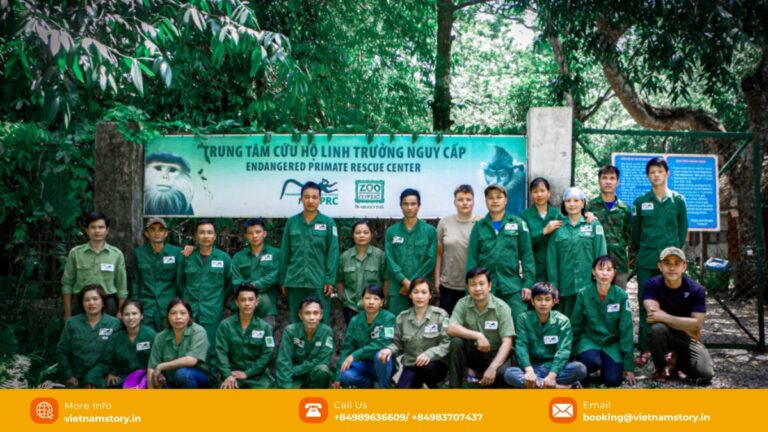
What EPRC is
EPRC was established in 1993 through cooperation between Frankfurt Zoological Society and Cuc Phuong National Park. The centre currently describes its work around five linked roles: rescue, rehabilitation, breeding, research and conservation of Vietnam’s endangered and critically endangered primates.
EPRC’s current official profile reports 230+ primates representing 15 species. Those numbers can change as animals are rescued, transferred, born, rehabilitated or released, so this page will not repeat older fixed headcounts elsewhere in the body or image metadata.
Why the conservation model matters
Many animals arrive through confiscations connected with illegal wildlife trade, hunting or habitat loss. EPRC’s role is therefore very different from a general animal attraction. Care can include veterinary treatment, rehabilitation, managed breeding and, for suitable animals, preparation for release into protected habitat.
The centre also uses semi-wild enclosures as part of the pre-release process for selected animals. That is useful context for visitors because the goal is not to make animals more visible or interactive; the goal is to support welfare and conservation outcomes.
What can visitors expect?
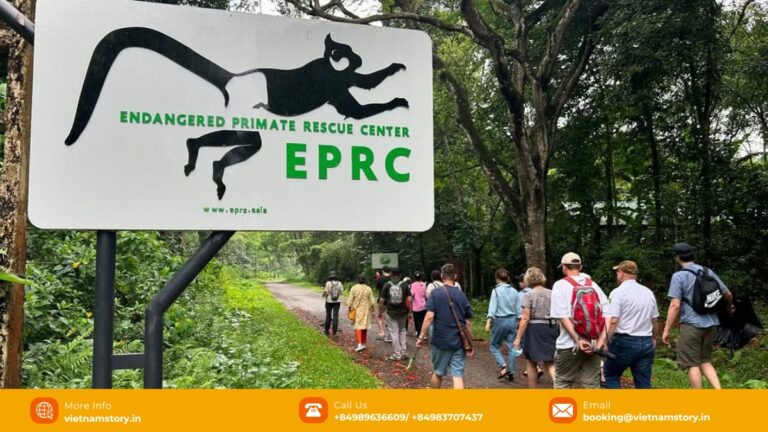
EPRC’s current visitor information says guided tours can be booked through the Cuc Phuong National Park tourism office. We would confirm the current visit time when planning the wider park day rather than assume a permanent walk-in schedule.
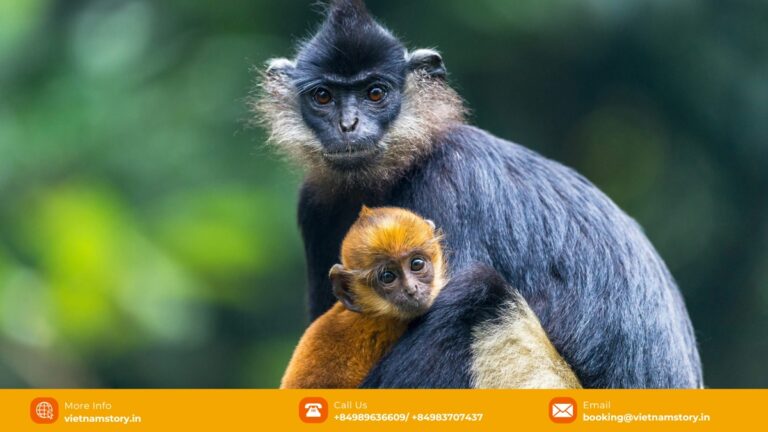
The visit is primarily educational. Depending on the animals visible and the current visitor route, you may see langurs, gibbons, lorises or other primates under the centre’s care. That should be treated as observation within a working conservation facility—not as a guaranteed species checklist or close-contact experience.
Animal-welfare etiquette at EPRC
- Follow the guide: use the visitor route and instructions provided by EPRC or park staff.
- Keep noise low: the centre is a working animal-care environment.
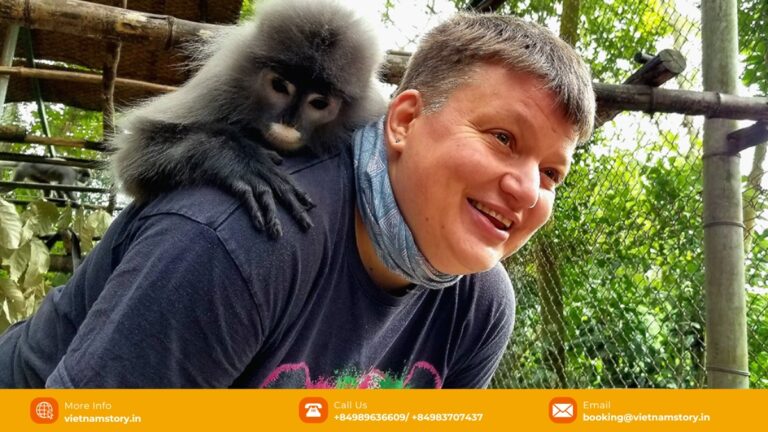
- Do not feed, touch or provoke animals: visitor interaction is not the purpose of the centre.
- Photography: follow the current centre rules and avoid flash or intrusive behaviour around animals.
- Keep expectations realistic: individual animals may be out of view, resting or managed away from the visitor route.
How EPRC differs from Bear Sanctuary Ninh Binh
Both are conservation-related visits, but they belong to different programmes and itinerary contexts. Bear Sanctuary Ninh Binh focuses on rescued bears and welfare education at a separate site. EPRC focuses on endangered primates inside Cuc Phuong National Park.
If animal welfare is a major interest, both can be meaningful on a longer Ninh Binh stay. We would not stack them automatically into a short itinerary simply because both involve rescued wildlife.
Plan EPRC inside a Cuc Phuong day
The parent Cuc Phuong National Park guide should own park access, 2026 fees, weather, forest trails and the current overnight-status check. This specialist page stays focused on the primate-conservation visit.
A practical first-visit structure is to combine EPRC with one additional park experience that suits your group, such as a short forest trail or archaeological cave. Trying to add a second Ninh Binh sightseeing cluster on the same day usually creates more road time than value.
What to check before you go
- Guided-tour availability: confirm the current time through the Cuc Phuong tourism office.
- Park access: use the current Cuc Phuong ticket and operating information rather than an old EPRC price copied from another site.
- Weather: forest conditions can affect the wider park day even when the centre itself is operating.
- Footwear: wear comfortable shoes that also work for the park activity you combine with EPRC.
- Children: the visit can be educational for families when children are comfortable following quiet animal-welfare rules.
Frequently asked questions about EPRC
Is EPRC a zoo?
No. It is a specialist rescue and conservation centre working with endangered and critically endangered Vietnamese primates.
Can you visit EPRC independently?
The centre’s current visitor page says guided tours can be booked through the Cuc Phuong National Park tourism office. Confirm the current arrangement before travelling.
How many primates are at EPRC?
EPRC’s current official profile reports more than 230 primates representing 15 species. The population changes over time, so use the centre’s own current figure rather than an older fixed count.
Can you see Delacour’s langurs?
EPRC works with Delacour’s langurs and other endangered primates, but a visitor should not expect any specific individual or species to be visible on demand.
Choose EPRC for the conservation story
EPRC earns a place in the itinerary when primate conservation, rescue and rehabilitation genuinely interest the group. Keep it inside a Cuc Phuong nature day, follow the guided-visit arrangement and treat animal visibility as secondary to the centre’s welfare and conservation work.
If you are still choosing between wildlife, wetland, forest and boat experiences across Ninh Binh, return to our Things to Do in Ninh Binh guide.