
A Ha Long pearl-farm stop is worth considering if you want to see how cultured pearls are produced or you are already interested in buying pearl jewellery. It is not a reason to choose a cruise on its own. The important question is whether the exact itinerary for your travel date includes a pearl-farm stop and whether that stop matters more to you than caves, kayaking, viewpoints or a quieter route.
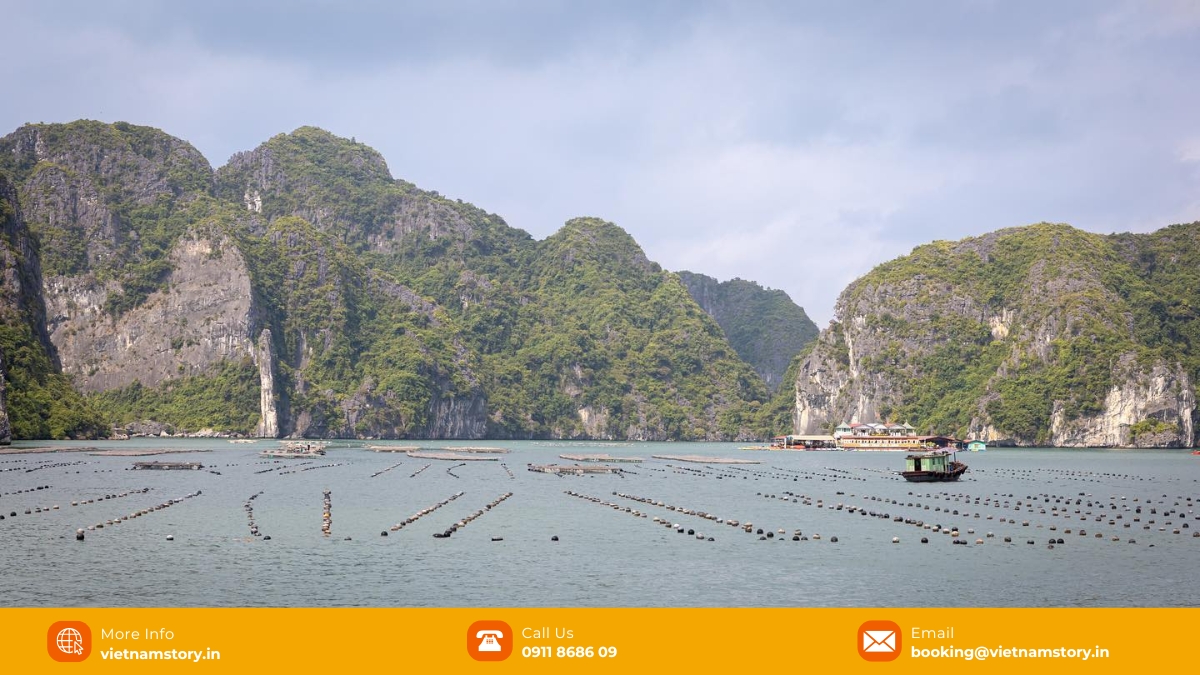
Ha Long still has active pearl-farming areas, including Tung Sau. Quang Ninh’s 2026 tourism information describes pearl cultivation in the bay as a local industry developed from Japanese pearl-farming technology more than 30 years ago. This page is the parent guide: how the visit fits the route, what you can realistically learn, and what to check before buying. For the detailed Tung Sau stop itself, use our Tung Sau Pearl Farm guide.
What does a Ha Long pearl-farm visit actually add to the trip?
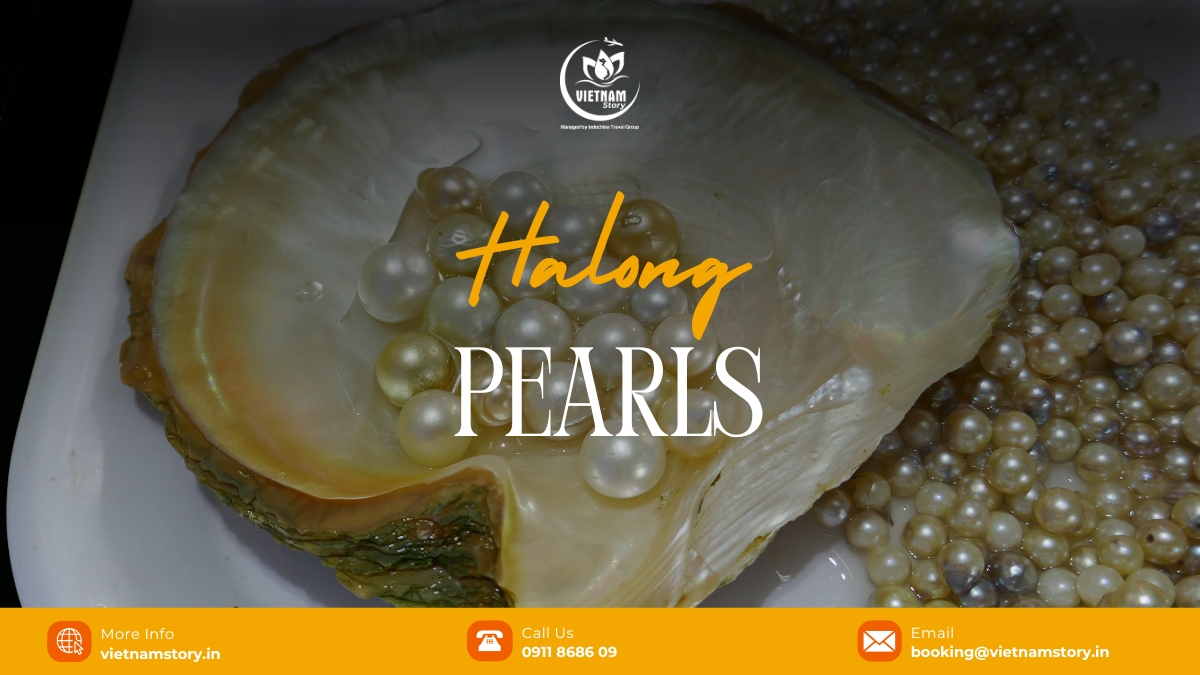
The useful part of the visit is seeing that a cultured pearl is an agricultural and craft product, not simply a souvenir pulled from the sea. Depending on the stop and the programme, visitors may see oyster cultivation, a demonstration of the implantation process, grading or jewellery preparation, followed by a showroom.
We would treat that as an educational stop with optional shopping. You do not need to buy anything for the visit to be worthwhile, and you do not need to add a pearl farm if the cruise route already gives you the caves, kayaking or viewpoints you care about more.
What kind of pearls are associated with Ha Long?
Ha Long pearl producers work with cultured saltwater pearls. Current provincial information on the local industry refers to several cultured pearl lines, including Akoya, Tahitian and South Sea pearls.
For a traveller, the useful distinction is not memorising pearl categories before arrival. Ask the seller to identify:
- the pearl type;
- whether it is cultured saltwater or another type of pearl;
- the approximate size;
- the shape and surface grade used by that seller;
- the jewellery metal and setting, if you are buying a finished piece.
That gives you something concrete to compare instead of relying on terms such as “premium”, “rare” or “highest quality”.
Will your Ha Long Bay cruise stop at a pearl farm?
Do not assume it will. Pearl-farm visits are route-specific. Current cruise itineraries show that one vessel can include Tung Sau while another vessel from the same operator uses a different activity at the same point in the programme.
| If the pearl farm matters to you | What to check |
|---|---|
| You want to see the cultivation process | Open the exact day-by-day itinerary and confirm the farm stop for your sailing date. |
| You mainly want classic Ha Long scenery | Compare caves, viewpoints, kayaking and route density first; the farm should be secondary. |
| You want to shop for pearls | Make sure the stop gives enough time to inspect the item and documentation without rushing the rest of the cruise. |
| You are not interested in jewellery | Choose the cruise for the bay route. A pearl-farm stop is optional. |
Use our Ha Long Bay cruise guide to compare the overall route first. If you are still deciding which bay activities matter most, our things to do in Ha Long Bay guide is the better parent decision page.
What should you expect at Tung Sau?
Tung Sau is one of the pearl-farming areas within Ha Long Bay and remains active in 2026. Some current cruise programmes include it as an excursion where guests can learn about cultivation and, on certain itineraries, combine the stop with kayaking.
The exact sequence, duration and activities depend on the cruise programme. We would not assume that every one-night or two-night cruise includes the same farm, the same demonstration or the same amount of shopping time.
For the detailed stop, continue to our Tung Sau Pearl Farm guide.
How should you judge a pearl before buying?
For a higher-value purchase, use documentation and product details rather than a quick “real or fake” trick.
- Pearl type: ask exactly what you are buying.
- Size: compare pearls using the stated millimetre size, not only the overall jewellery design.
- Lustre: look at how clearly and brightly the surface reflects light.
- Surface: natural-looking surface marks can exist; ask how the seller grades them.
- Shape: rounder does not automatically mean “better” for every design, but shape affects price.
- Matching: for earrings or strands, check how well the pearls match in size, colour and lustre.
- Setting: if the pearl is mounted, confirm the metal type and any hallmark or specification for the setting.
The common “tooth test” may tell you something about surface texture, but it does not establish origin, grade, treatment, jewellery value or whether the price is reasonable. We would not use it as the purchase decision.
What paperwork should you ask for?
For a meaningful jewellery purchase, ask the seller what documentation comes with the exact item. The useful items are:
- an itemised receipt or invoice;
- the stated pearl type and size;
- details of the jewellery metal and setting;
- any certificate supplied with that specific product;
- warranty, resizing or repair terms where relevant;
- the seller’s contact details in case you need after-sales support.
Do not assume that every farm or showroom purchase automatically carries the same “international certificate”. Ask what the document actually certifies and whether it refers to the individual item.
How much should a Ha Long pearl cost?
There is no useful fixed online price band for “Ha Long pearls”. Price changes with pearl type, size, shape, lustre, surface quality, matching, jewellery metal and the number of pearls used in the piece.
For that reason, we would not compare a loose souvenir pearl with a matched jewellery set only by headline price. Ask for a written price for the exact piece and compare like with like.
Should you buy at the farm, a city showroom or a market?
| Place | Best for | What to check |
|---|---|---|
| Pearl farm showroom | Combining the production story with shopping | Product documentation, exact item details and whether the visit leaves enough time to inspect the piece. |
| Established city showroom | More time to compare designs without cruise timing pressure | Seller identity, invoice, metal specification, pearl details and after-sales policy. |
| General market or informal seller | Low-value souvenir browsing | Do not assume origin or authenticity from the sales claim alone. |
If shopping is the main reason you are comparing locations, our Ha Long market guide explains the wider shopping context. For higher-value jewellery, documentation matters more than bargaining for a small percentage discount.
Do Ha Long pearls need to be compared with Phu Quoc pearls?
Usually no. They are different pearl-producing destinations, but a traveller buying one piece of jewellery does not need a destination-versus-destination ranking.
Judge the actual pearl in front of you: type, size, lustre, surface, shape, matching, setting and documentation. A broad claim that one destination always has thicker nacre, rarer colours or “better” pearls is not a useful buying rule.
How Vietnam Story would fit a pearl-farm stop into the route
We would plan in this order:
- choose the bay route and cruise duration;
- check whether the exact cruise includes Tung Sau or another pearl-farm stop;
- compare that stop with the caves, viewpoints and kayaking on the same itinerary;
- treat shopping as optional;
- if you plan a higher-value purchase, leave enough time to inspect the item and paperwork.
That keeps the pearl farm in the right place: part of the Ha Long experience when it fits the route, not a sales stop that controls the whole day.
Browse our Vietnam tour packages if you want Vietnam Story to fit the cruise, hotel, transfers and optional pearl-farm visit into one itinerary. We can help confirm whether the actual cruise route includes the stop before the programme is finalised.