
There is no single “best Ha Long market”. The useful choice depends on what you want to buy, which side of the city you are staying on, and how much time you actually have around the cruise. Ha Long Market 1 and Market 2 are important local wholesale hubs in Hồng Gai. Bai Chay has a different market pattern, including Cai Dam and the newer VUI-Fest night-time area. For most travellers, one well-chosen market is enough.
At Vietnam Story, we would choose the cruise and exact harbour first, then decide whether a market adds value to the remaining mainland time. This page is the citywide market chooser. If you are already staying in Bai Chay and want the detailed comparison between VUI-Fest, Cai Dam and older night-market listings, use our Bai Chay market guide.
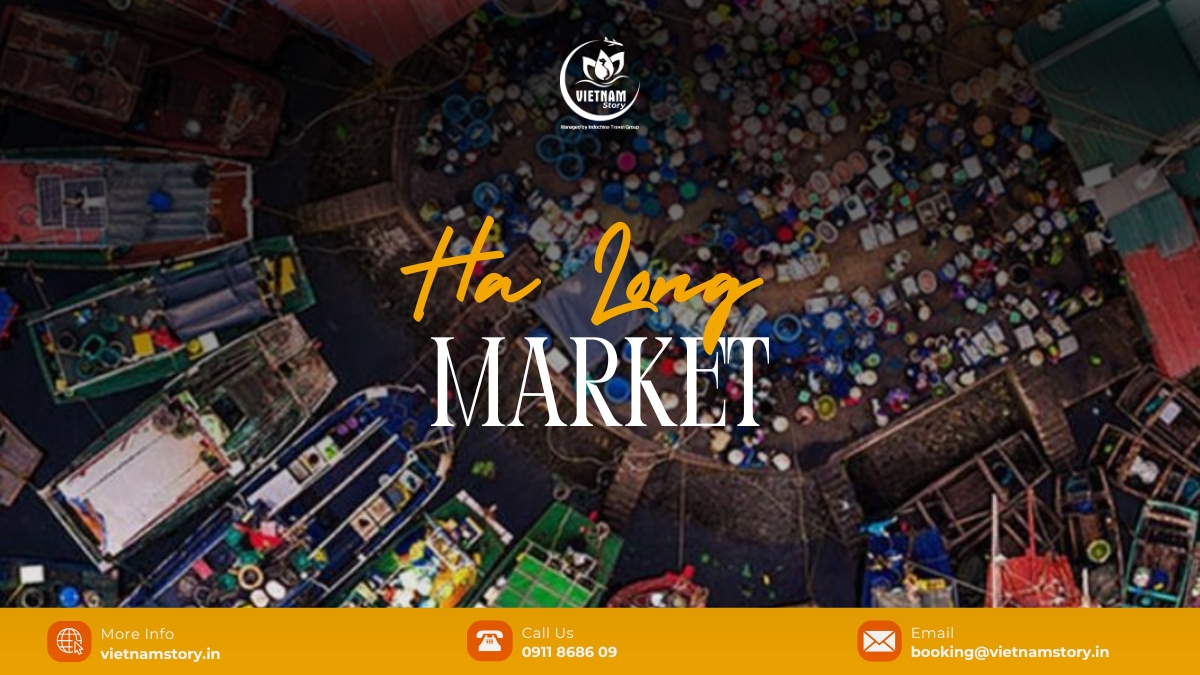
Which Ha Long market should you choose?
| Market or area | Best for | Planning note |
|---|---|---|
| Ha Long Market 1 | Broad local market, food products, seafood, regional goods | Strong wholesale activity starts at night, but travellers do not need to visit at wholesale hours |
| Ha Long Market 2 | Local shopping and food products | Useful if you are already on the Hồng Gai side; not a reason by itself to cross the city |
| Cai Dam Market | Traditional market experience in Bai Chay | Better for local shopping and seafood than for nightlife |
| VUI-Fest Ha Long | Evening food, entertainment and a waterfront night out | Best treated as a Bai Chay evening experience, not a traditional wholesale market |
| Older Marine Plaza night-market listings | Souvenir-shopping intent | Verify current stall activity before making a special trip |
If the goal is simply “something to do in the city” rather than shopping itself, use our things to do in Ha Long City guide. It is the better owner for deciding whether a market, museum, beach or Sun World makes sense in your available time.
Ha Long Market 1: the main Hồng Gai market hub
Ha Long Market 1 is one of the city’s main traditional trading hubs. It serves both retail shoppers and a much larger wholesale distribution role for food, produce and seafood moving through Quang Ninh.
That distinction matters. In 2026, local reporting continued to show the market at its busiest wholesale rhythm from late evening into early morning. This explains why some guides publish very early “opening times”, but it does not mean a visitor should plan a 2 AM or 4 AM sightseeing trip.
For most travellers, we would visit during normal daytime activity unless there is a specific reason to see the wholesale operation. A market visit should still fit safely and comfortably around hotel, transport and cruise timings.
Ha Long Market 2: useful when you are already in Hồng Gai
Ha Long Market 2 also plays a role in the city’s local distribution network. It can be useful for food products, dried goods and everyday shopping, but we would not treat it as a compulsory stop simply because it appears on a “top markets” list.
If your hotel, museum visit or other Hồng Gai activity already puts you nearby, the market can fit naturally. If you are based in Bai Chay and only have a short evening, crossing the city just to compare markets usually adds more transfer than value.
Bai Chay markets: use the specialist guide
Bai Chay now has a different market mix from Hồng Gai. Cai Dam remains the better traditional local-market option, while VUI-Fest has become a major night-time food and entertainment space since opening in 2026.
Because the market landscape on this side of the city has changed quickly, we keep the detail in one specialist owner rather than duplicate hours, stalls and event schedules here. Use the Bai Chay markets guide to compare:
- VUI-Fest for a current evening food-and-entertainment experience;
- Cai Dam for a more traditional market visit;
- older Ha Long Night Market / Marine Plaza listings that need current-status checking.
What should you buy at a Ha Long market?
Start with the purpose of the purchase rather than a fixed “must-buy” list.
- Local food products: chả mực and other Quang Ninh specialties can be worth trying or buying from established sellers.
- Dried seafood: useful as a travel-friendly local product, but check packaging, labelling and airline restrictions before taking it onward.
- Fresh seafood: more relevant when you have a clear plan to cook or eat it locally; confirm unit price and preparation charges first.
- Everyday goods and small souvenirs: markets can be convenient when you want practical, low-value items rather than a curated souvenir shop.
- Pearls or jewellery: treat these as higher-value purchases that need documentation, not as an impulse market buy.
For the regional food story, use our Ha Long food guide. If pearls are the actual purchase decision, continue to our Ha Long pearl guide before buying.
How should you judge seafood and local food products?
We would avoid rules such as “this stall is always the best” or “a particular colour proves freshness”. Market stock changes daily, and the useful checks are simpler:
- ask the price and unit before agreeing to the purchase;
- check packaging and labelling for products you plan to carry onward;
- for fresh seafood, confirm whether cleaning, cooking or packing costs extra;
- do not assume that everything sold in Ha Long was caught in Ha Long Bay;
- for higher-value packaged specialties, keep the receipt when practical.
Vegetarian and Jain travellers: markets need more checking than restaurants
A dish that looks vegetarian is not automatically suitable for vegetarian or Jain requirements. Fish sauce, shrimp paste, meat broth, shared grills, pre-made sauces and cooking oil can all affect the final dish.
We would not recommend a specific market snack as “Jain-friendly” without checking ingredients and preparation. For strict dietary requirements, a pre-arranged restaurant meal is usually easier to control than an improvised market-food stop.
How much should you bargain?
There is no reliable citywide percentage. Some stalls use fixed prices; others may negotiate.
- ask the price before ordering or opening packaging;
- compare similar goods when practical;
- negotiate politely only when the price is clearly flexible;
- do not assume a tourist should always start at “half the asking price”;
- walk away if the price, unit or product information is unclear.
This works better than applying one bargaining rule to every traditional market, night market and food stall.
Cash, QR payments and ATMs
Vietnamese dong remains useful for small purchases, but cash is no longer the only realistic payment method. QR payments and other digital options are increasingly common, while acceptance varies by seller.
Carry some VND, especially for low-value purchases, and do not depend on foreign currency being accepted at a fair rate. For the wider payment picture, use our Vietnam money and payment guide.
Should you visit a market before or after the cruise?
| Trip situation | What we would usually do |
|---|---|
| You have a Bai Chay hotel night | Choose one nearby Bai Chay market or evening area rather than crossing to Hồng Gai |
| You are staying or sightseeing in Hồng Gai | Ha Long Market 1 or 2 can fit naturally if shopping is genuinely useful |
| You have an early cruise check-in | Protect the boarding window and skip unnecessary market detours |
| You finish the cruise and stay one more night | A market can work well as a light post-cruise activity |
| You return directly to Hanoi | Usually skip the market unless it sits directly on the confirmed route |
If you are not yet sure which side of Ha Long to stay on, use our Bai Chay Ha Long guide. If the exact port is still unclear, check our Ha Long harbour guide before fixing hotel or market timing.
How Vietnam Story would fit a market into the route
We would not build the Ha Long itinerary around a market first. The order is:
- choose the day cruise or overnight cruise;
- confirm the vessel and exact harbour;
- choose the hotel area if a mainland night is needed;
- protect the road-transfer and boarding buffer;
- add one market only if it improves the remaining city time.
Start with our Ha Long Bay cruise guide or browse our Vietnam tour packages. Vietnam Story can then fit a local market, food stop or evening activity around the actual cruise and transfer plan instead of adding another stop just to complete a checklist.