
“Halong harbour” is not one single passenger port. For most travellers joining a sightseeing or overnight cruise, the two names that matter are Tuan Chau International Passenger Port and Ha Long International Cruise Port in Bai Chay. Both currently serve sightseeing vessels, and overnight vessels also operate from both.
If you are still choosing the cruise rather than checking a confirmed voucher, compare current options in our Ha Long Bay cruise collection first. Once the vessel is chosen, we do not guess the departure port from labels such as “day cruise”, “luxury cruise” or “overnight cruise”. We check the confirmed vessel and voucher because arriving at the wrong port can create an avoidable transfer problem on embarkation day.
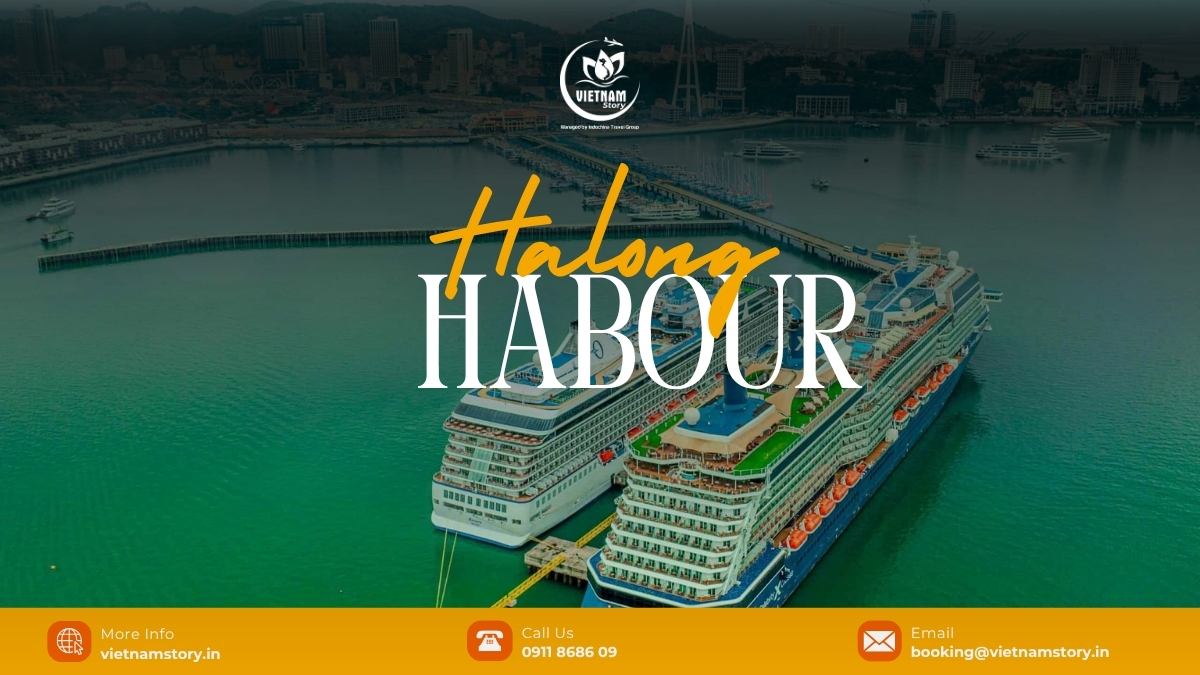
Which Ha Long passenger port is on your cruise voucher?
Your booking confirmation should name the actual departure port. Check that name before arranging a private transfer, taxi or hotel pickup. Do not rely on a driver’s assumption that every cruise departs from Tuần Châu.
The two main passenger gateways are Tuan Chau International Passenger Port and Ha Long International Cruise Port in Bai Chay. Current vessel listings from the Ha Long Bay management authority show day boats at both ports and overnight vessels at both ports, so cruise type alone is not a reliable way to identify your pier.
| Port | What is verified now | What VNS checks for you |
|---|---|---|
| Tuan Chau International Passenger Port | Current Ha Long Bay vessel listings include both day sightseeing boats and overnight boats departing here. | The exact vessel, terminal/pier instructions and check-in time on your booking. |
| Ha Long International Cruise Port, Bai Chay | Its domestic berths serve sightseeing vessels and overnight vessels; its international quay also receives large ocean cruise ships. | Whether your booking uses the domestic cruise berths or another port service, plus the operator’s current check-in instructions. |
The practical rule is simple: book the cruise first, then follow the confirmed port on the voucher. VNS treats the port as an operational detail tied to the vessel and itinerary, not as a shortcut for judging whether a cruise is “luxury”, “day” or “overnight”.
What can you expect at the two main Ha Long passenger ports?
Facilities, check-in desks and boarding procedures depend on the port and the operator. For families or seniors, the useful planning questions are practical: where the vehicle drops you, how far you need to walk with luggage, where the operator’s desk is, and how early the operator wants you there.
Let’s take a closer look at the specific services and characteristics of each major hub you might encounter.
Tuan Chau International Passenger Port
Tuần Châu remains a major departure gateway for trips to Ha Long Bay. Current provincial information still describes the port as an important transport hub for visitors going out onto the bay. VNS does not rely on fixed capacity, luggage-storage price or amenity claims unless the operator or port confirms them for the current trip.
Tuần Châu is also the Quang Ninh end of the Tuần Châu–Gia Luận ferry connection to Cát Bà. Treat the ferry as a separate transport service from your Ha Long cruise and check its current timetable independently, especially around holidays.
- Do not copy an old seasonal timetable into your itinerary. Ferry frequency and holiday operations can change.
- Tet is a good example: the Tuần Châu–Gia Luận ferry had reduced service on 16 February 2026, paused passenger transport on 17 February, and resumed on 18 February.
- Check the ferry and cruise separately. A ferry schedule does not prove whether your Ha Long sightseeing or overnight cruise is operating.
Ha Long International Cruise Port (Bai Chay)
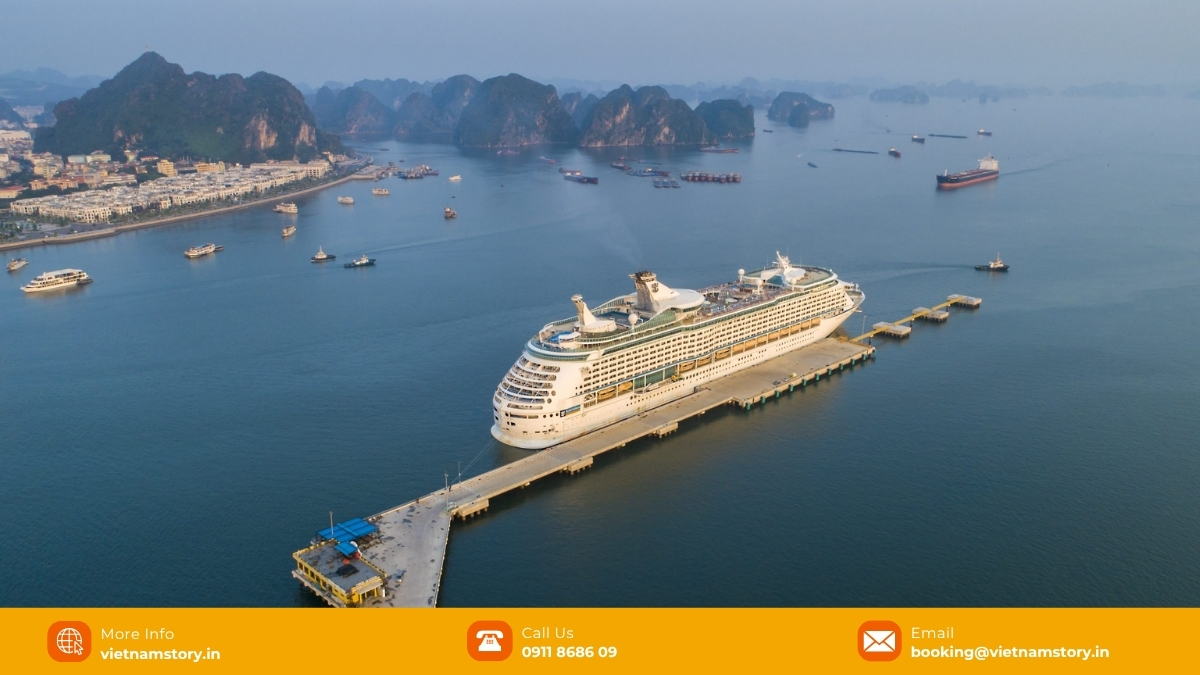
Ha Long International Cruise Port is in Bai Chay, about 500 metres from Sun World Ha Long Complex according to the port’s official information. It has an international quay for large ocean cruise ships and domestic berths for vessels visiting Ha Long Bay. The domestic side is not limited to day cruises: current vessel listings include overnight cruise ships here as well.
What if your voucher names another pier?
Follow the operator’s exact current instructions rather than trying to translate every local pier name into “Tuan Chau” or “Ha Long International”. Port and pickup wording can vary between operators, while the vessel assignment is the operational detail that matters on the day.
Port-day checklist for a smoother departure
The useful port-day checks are operational: confirm the port name, operator meeting point, check-in window, transfer pickup and any luggage or mobility needs. For special meal requirements, confirm the current arrangement with the cruise operator instead of assuming a particular terminal cafe will meet them.
- Use the operator’s check-in time. Boarding windows vary by vessel and programme; do not build the day around a generic 11:30 or 12:15 departure rule.
- Show the actual voucher to your driver. The port name and meeting point matter more than saying only “Ha Long harbour”.
- Allow a transfer buffer. VNS builds extra time around road conditions and the operator’s latest check-in instruction rather than promising one fixed Hanoi-to-port journey time.
- Confirm parking, luggage and accessibility when relevant. Fees and facilities can change, so travellers who self-drive, carry large luggage or need easier boarding should verify those details before departure.
Holiday, ferry and last-minute changes: what can vary?
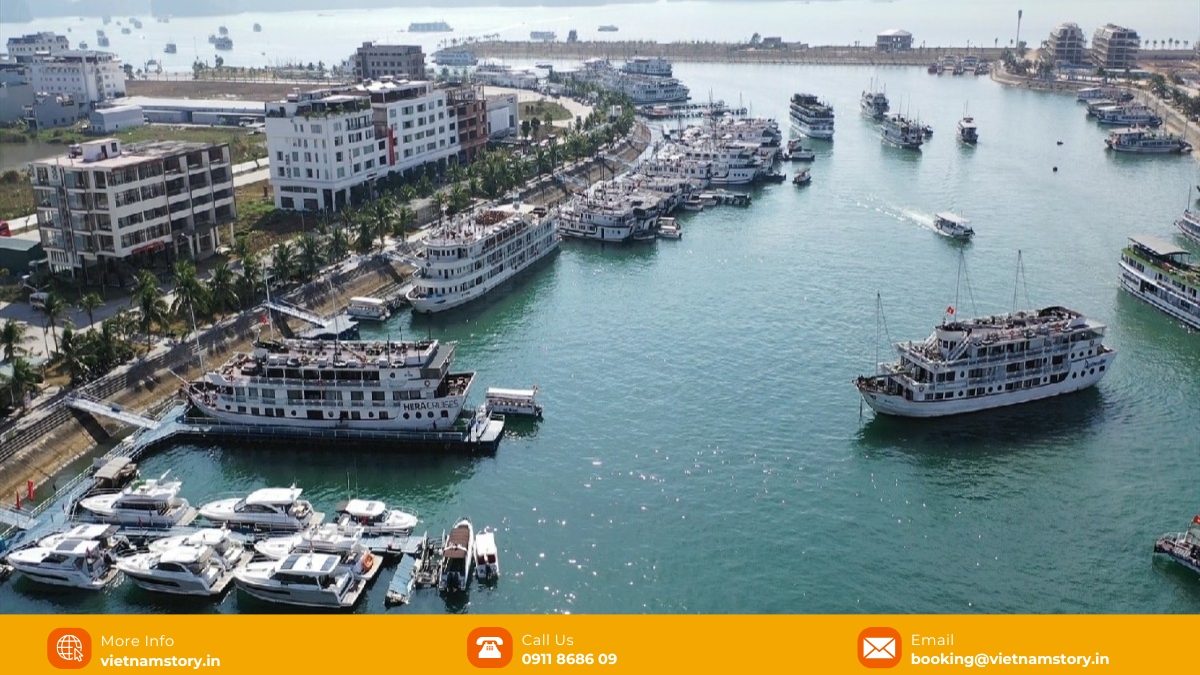
Port operations, cruise schedules and ferry connections are separate moving parts. Holiday periods and bad weather can affect them differently, so VNS avoids one blanket statement such as “the harbour never closes” or “all cruises run as usual”.
- During Tet and other holidays: confirm the specific cruise and any onward ferry separately. In Tet 2026, Tuần Châu Port was receiving Ha Long visitors on the first day of the lunar year, while the Tuần Châu–Gia Luận ferry paused passenger transport that same day. Different services can therefore have different operating plans.
- During severe weather: port access, vessel movement and the sightseeing programme can change for safety reasons. Follow the latest operator and authority instructions rather than an evergreen timetable.
- For Cát Bà connections: do not assume an old ferry or speedboat schedule is still current. Check the exact service you plan to use.
- For a same-day onward flight or train: avoid building a tight connection around the scheduled cruise return time. Disembarkation and road travel still need buffer.
Conclusion
The main planning point is not which port sounds more prestigious; it is whether you are going to the correct port for the vessel you actually booked. Both Tuần Châu and Ha Long International Cruise Port currently handle sightseeing traffic, and overnight vessels can depart from either.
VNS uses the confirmed voucher to match the transfer, port and check-in timing. If your trip also includes the Tuần Châu–Gia Luận ferry or another Cát Bà connection, that service should be checked separately rather than assumed to follow the cruise schedule.
For current vessel-to-port assignments, see the Ha Long Bay management authority’s vessel listings. For Ha Long International Cruise Port facilities and location, use the port’s official information.