
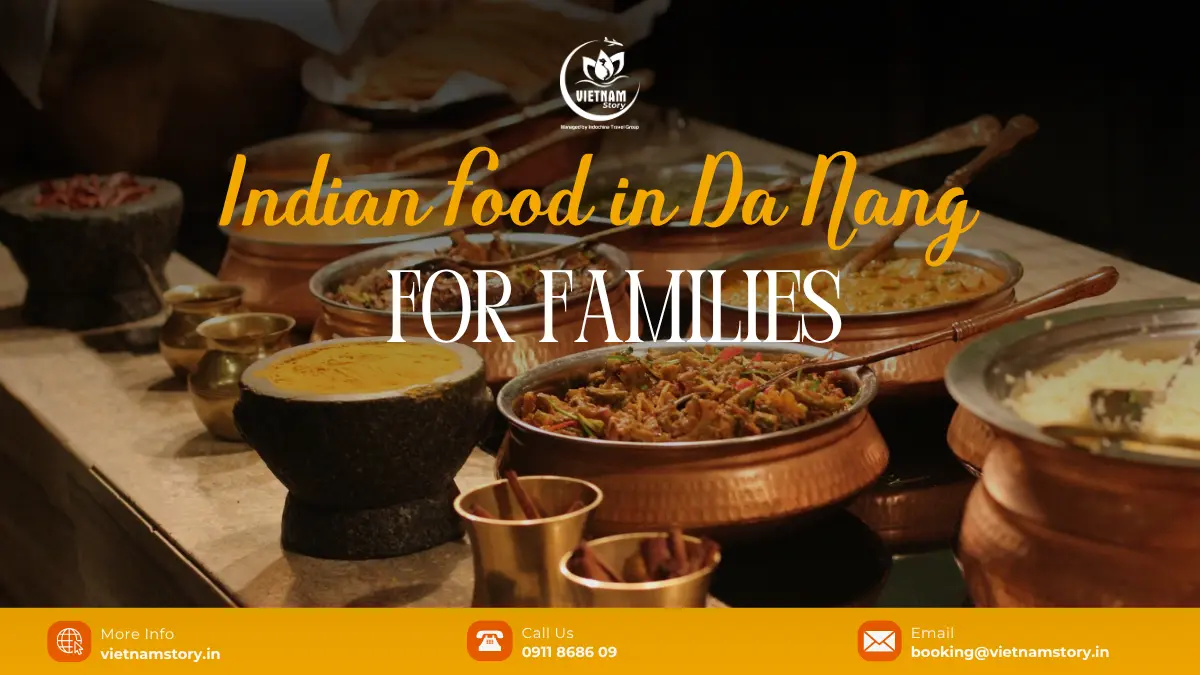
Indian and vegetarian food is straightforward to find in Da Nang, but families usually have an easier trip when they plan meals by day type rather than by restaurant list. A useful rhythm is to make breakfast predictable, keep city-day lunches flexible, and use familiar Indian food when children, seniors or strict dietary requirements need more certainty. Full-day excursions such as Ba Na Hills need separate planning because you have fewer alternatives once you leave the city.
If you want named restaurant choices, use our Indian restaurants in Da Nang guide or our Vietnamese vegetarian and vegan restaurants guide. Here, the focus is how to make those options work across an actual family stay.
How easy is Da Nang for Indian vegetarian families?

Da Nang works well as a food base because Indian restaurants, Vietnamese chay restaurants, vegan cafés and international dining are concentrated in the main visitor areas. That does not mean every kitchen handles vegetarian, vegan and Jain requests in the same way.
| Dietary need | How flexible can you be? | What needs checking? |
|---|---|---|
| General vegetarian | Usually quite flexible on city days | Broth, fish sauce, shrimp paste and egg when eating outside dedicated vegetarian venues. |
| Vegan | Dedicated plant-based restaurants are easiest | Dairy, egg and sauces in mixed kitchens. |
| Indian vegetarian | Indian restaurants provide familiar fallbacks | Whether the kitchen is vegetarian-only or mixed. |
| Jain | Plan the important meals in advance | Onion, garlic, root vegetables, egg and preparation method according to your own practice. |
| Mixed-diet family | Often easiest with one flexible lunch and one predictable dinner | Whether the strictest eater can use the same venue as everyone else. |
For Jain travel, do not stop at the word “vegetarian”. Our Jain food in Vietnam guide explains why ingredient-level communication matters.
Which Da Nang area is most convenient for food?
Food should be one factor in choosing a hotel, not the only factor. My An and An Thuong are convenient when Indian dining and beach access are high priorities. The My Khe area gives similar beach convenience with a wider spread of hotels. Hai Chau and the Han River side can work better when city sightseeing, riverfront evenings and central access matter more.
| Hotel area | Food advantage | Trade-off |
|---|---|---|
| My An / An Thuong | Dense choice of Indian, vegetarian and international restaurants. | Not the most central base for every city attraction. |
| My Khe | Beach hotels plus relatively easy access to dining around My An and An Thuong. | Exact walking convenience depends heavily on the hotel address. |
| Hai Chau / Han River | Useful for city sights, markets and riverfront evenings. | You may use a short taxi ride for a wider choice of Indian restaurants. |
| Resort farther south | Works when the resort itself can handle your meals well. | Less convenient if your family expects to leave the property for Indian dinner every night. |
We would therefore choose the hotel around the whole route. A family that needs Indian dinner every evening may value My An more than a couple that is comfortable eating local vegetarian food and only wants one Indian meal during the stay.
How should you plan breakfast, lunch and dinner?
Breakfast: make the first meal predictable
Hotel breakfast is useful because it reduces one daily decision. Before booking, check whether the buffet or kitchen can provide enough simple food for your group. General vegetarians may be comfortable with fruit, bread, rice, noodles or vegetable dishes after checking ingredients. Strict Jain travellers should communicate their exclusions before arrival rather than trying to explain them during a busy breakfast service.
Lunch: use the sightseeing area
On a normal Da Nang city day, lunch is the easiest meal to keep flexible. This is a good time to try Vietnamese vegetarian food because you still have many alternatives if a menu does not suit the group.
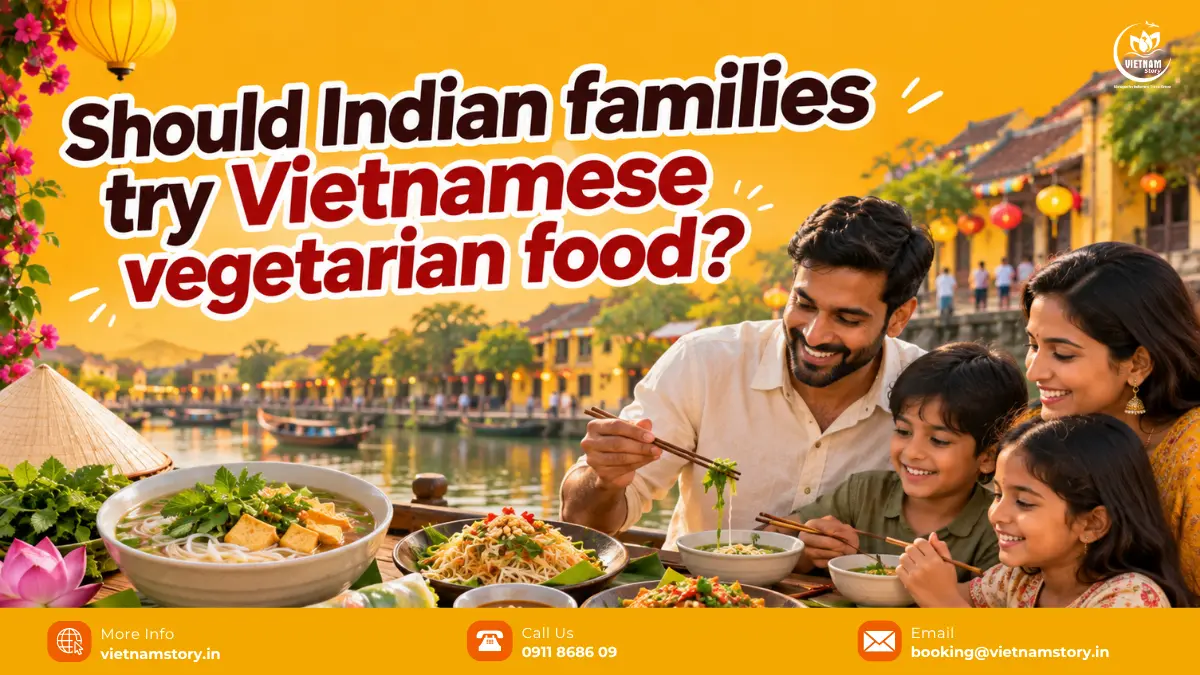
Vietnamese chay food can include tofu, mushrooms, vegetables, rice, noodles and plant-based versions of local dishes. At a dedicated chay restaurant this is much simpler than trying to modify a meat or seafood dish. Even then, Jain travellers should separately confirm onion, garlic and root-vegetable requirements.
Dinner: use familiar food when the group needs it
After a long day, familiar food often matters more than variety. This is why an Indian dinner can work well for families with children, seniors or travellers who have already spent the day adapting to local food. It is a planning option, not a rule: if everyone enjoyed Vietnamese vegetarian food at lunch and still wants local food at dinner, there is no reason to force an Indian meal.
How should the plan change by day type?
| Day type | Meal strategy | Why |
|---|---|---|
| Arrival day | Keep the first meal close to the hotel and familiar if the flight arrives late. | No need to add a restaurant transfer after airport and hotel check-in. |
| Da Nang city / beach day | Flexible local vegetarian lunch, Indian or local dinner depending on energy. | The city gives you the most alternatives. |
| Ba Na Hills day | Eat breakfast before departure and decide the lunch venue before going up. | Outside food is not generally permitted and on-site choices need separate planning. |
| Hoi An afternoon/evening | Decide before departure whether dinner will be in Hoi An or after returning to Da Nang. | Avoid crossing back to Da Nang only because nobody agreed on dinner. |
| Early departure day | Confirm breakfast timing or a permitted takeaway arrangement with the hotel. | Restaurant choice matters less than airport timing. |
What changes on a Ba Na Hills day?
Ba Na Hills is the main exception to the flexible city-day approach. Sun World does not generally allow visitors to bring outside food and drinks into the complex, so the old advice to “carry a backup snack” should not be the basis of your plan.
Current on-site choices include the dedicated plant-based Ngoc Chi restaurant and the Indian-oriented Bharata buffet, but Jain suitability still requires ingredient confirmation. Use our vegetarian food at Ba Na Hills guide for the current venue, hours, price and dietary trade-offs rather than repeating those details here.
What works best for children and seniors?
With children and older travellers, the goal is usually consistency rather than culinary variety at every meal. Keep one meal each day easy to predict and avoid waiting until the group is already tired or hungry before deciding where to eat.
- Young children: identify a few simple foods they reliably eat, such as plain rice, bread, mild noodles or familiar Indian dishes.
- Seniors: prioritise seating, easy access and meal timing; a slightly less interesting restaurant close to the hotel can be the better choice after a full excursion.
- Mixed generations: avoid splitting the group between distant restaurants unless the dietary need is genuinely strict.
- Late dinners: check closing times on the day rather than assuming a restaurant remains open because it appeared in an older guide.
What should Jain families do differently?

Jain travel needs more precision than general vegetarian travel. Requirements also differ between travellers, so the safest communication is the actual ingredient list your family avoids.
- Send the restrictions to the hotel or restaurant before the meal when possible.
- Reconfirm the requirements when ordering.
- Ask about sauces, curry bases and pre-prepared buffet food rather than only visible ingredients.
- Do not assume a pure-vegetarian kitchen automatically follows your Jain practice.
- For excursion meals, confirm the venue before leaving Da Nang because alternatives may be limited.
A realistic 4-day meal plan for a family stay
| Day | Typical sightseeing | Food logic |
|---|---|---|
| Day 1 | Arrival + My Khe / Han River | Easy meal near hotel; familiar dinner if arrival is late or the family is tired. |
| Day 2 | Ba Na Hills | Reliable hotel breakfast; pre-decided on-site lunch; flexible dinner after returning. |
| Day 3 | Da Nang + Hoi An | Hotel breakfast; flexible vegetarian lunch; decide in advance whether dinner is in Hoi An or Da Nang. |
| Day 4 | Marble Mountains / city + departure | Breakfast at hotel; keep the final meal near the route to the airport rather than adding a cross-city detour. |
The sequence should change with your actual hotel, flight times and sightseeing. Its purpose is to show the pattern: make the constrained meals predictable and leave the easy city meals flexible.
Common meal-planning mistakes
- Booking a hotel first and checking food later. This matters most for strict diets or resorts far from My An and central Da Nang.
- Treating vegetarian, vegan and Jain as interchangeable. They solve different dietary requirements.
- Choosing restaurants for every meal before the trip. A rigid list becomes inconvenient when weather or sightseeing changes.
- Leaving excursion lunch until the same morning. Ba Na Hills and other long days give you fewer fallback options.
- Making children experiment at every meal. One familiar meal can make the rest of the day easier.
- Assuming an online menu or opening time is permanent. Recheck important meals close to the visit date.
When should food affect your Da Nang itinerary?
Food should change the route when the requirement is strict enough that a missed meal would create a real problem: for example, a Jain family, a child with very limited food acceptance, a large group needing one restaurant, or seniors who need regular meal times. Otherwise, it is usually better to choose the sightseeing route first and select a suitable restaurant in that area.
For the broader sequence of Ba Na Hills, Hoi An, Son Tra, Marble Mountains and city time, see our Da Nang itinerary planning page.
Travelling with vegetarian, Jain, vegan or mixed dietary requirements? Send your dates, hotel area, group size and the exact restrictions that matter. We can plan the difficult meals around the route without turning the whole holiday into a restaurant schedule.
Indian and vegetarian food in Da Nang FAQs
Is Indian food easy to find in Da Nang?
Yes. Indian restaurants are concentrated around the main visitor areas, especially My An and An Thuong. For current restaurant choices, use the dedicated Indian restaurants guide rather than relying on an old shortlist.
Is Vietnamese chay food suitable for Indian vegetarians?
Often, especially at dedicated vegetarian restaurants. If you are eating in a mixed kitchen, check broths, fish sauce, shrimp paste and egg. Chay should not be assumed to meet Jain requirements.
Where should a family stay if Indian food is important?
My An and An Thuong are particularly convenient for Indian dining, while My Khe combines beach access with relatively easy restaurant access. Hai Chau can still work well if city sightseeing matters more and you are comfortable using short taxi rides for dinner.
Do Jain families need to pre-book every meal?
No, but important meals should be confirmed in advance. Breakfast, excursion lunches and group dinners deserve more planning than a normal city lunch where several alternatives are nearby.
Can we carry our own food to Ba Na Hills?
Do not plan on it. Sun World has a general policy against outside food and drinks, so confirm the on-site lunch option before the visit. Ask the operator directly about exceptional medical or infant-feeding needs.