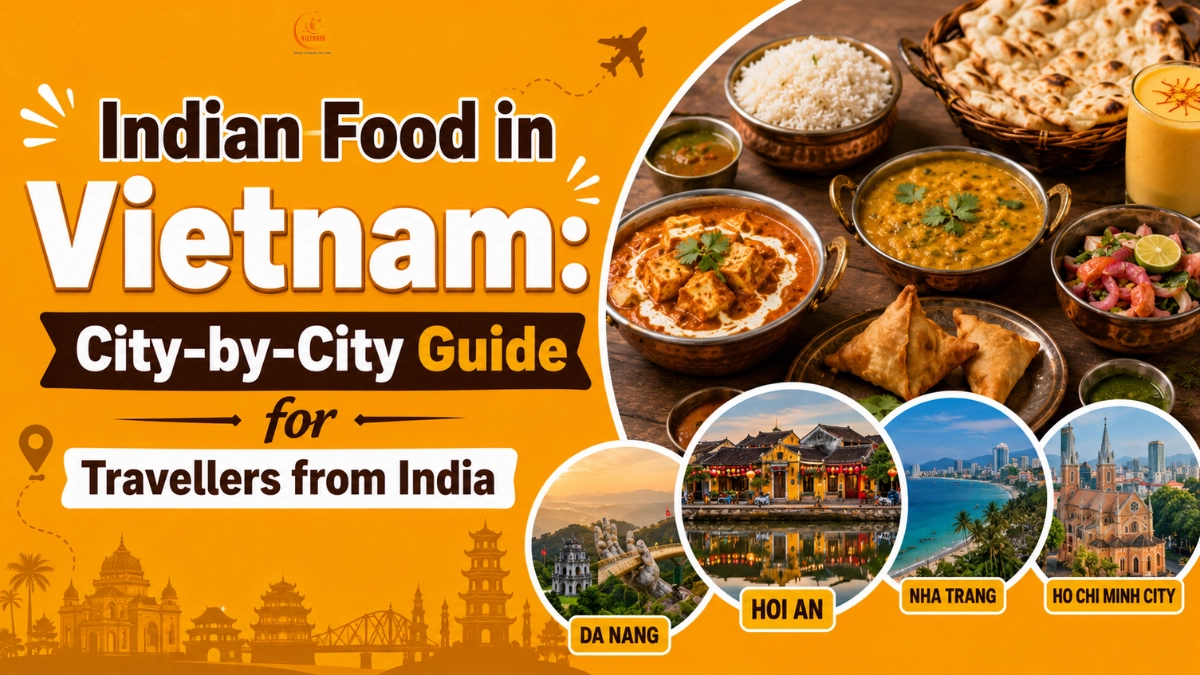
If you’re planning a Vietnam holiday from India and wondering whether you can find dal, roti, paneer, dosa, biryani, or vegetarian meals along the way, the answer is yes—especially in Vietnam’s major tourist cities. For Indian travellers, the smartest approach is therefore not to eat Indian food at every meal. Instead, use major cities as food anchors, enjoy local Vietnamese cuisine when it suits you, and plan ahead for excursions or remote destinations.
This city-by-city guide explains where Indian food is easiest to find in Vietnam and how to build a trip around both sightseeing and dietary comfort.
Is Indian food easily available in Vietnam?
Indian food is readily available in Vietnam’s major tourism hubs, but availability is not equal across the country.
Ho Chi Minh City offers the broadest metropolitan dining environment, while Hanoi provides a convenient Indian food base for travellers exploring North Vietnam. Da Nang and Hoi An make Central Vietnam relatively easy, particularly for families and couples. Phu Quoc requires more attention to hotel location.
This difference matters because Vietnam stretches a long way from north to south. A restaurant strategy that works in Ho Chi Minh City may not work during a mountain trip or an overnight cruise.
A useful rule is simple: the larger and more tourism-oriented the destination, the easier it is to maintain familiar dining habits. Here is a quick overview before looking at each city.
| Destination | Indian Food Access | Best For |
| Ho Chi Minh City | Very strong | Variety, longer stays, families |
| Hanoi | Strong | North Vietnam trips |
| Da Nang | Strong | Families, beach holidays |
| Hoi An | Good | Couples, heritage trips |
| Phu Quoc | Moderate–Good | Resort and beach holidays |
| Ha Long Bay | Limited independently | Pre-arranged cruise meals |
| Ninh Binh | Moderate–Good | Tam Coc and Trang An restaurant clusters |
| Sapa/remote North | More limited | Flexible eaters or pre-planned meals |
Plan Food Around the Way You Travel
Use this city-by-city guide to understand where Indian food is easiest to find, then move to the planning question that matters for your trip.
Indian food in Hanoi: Best base for North Vietnam
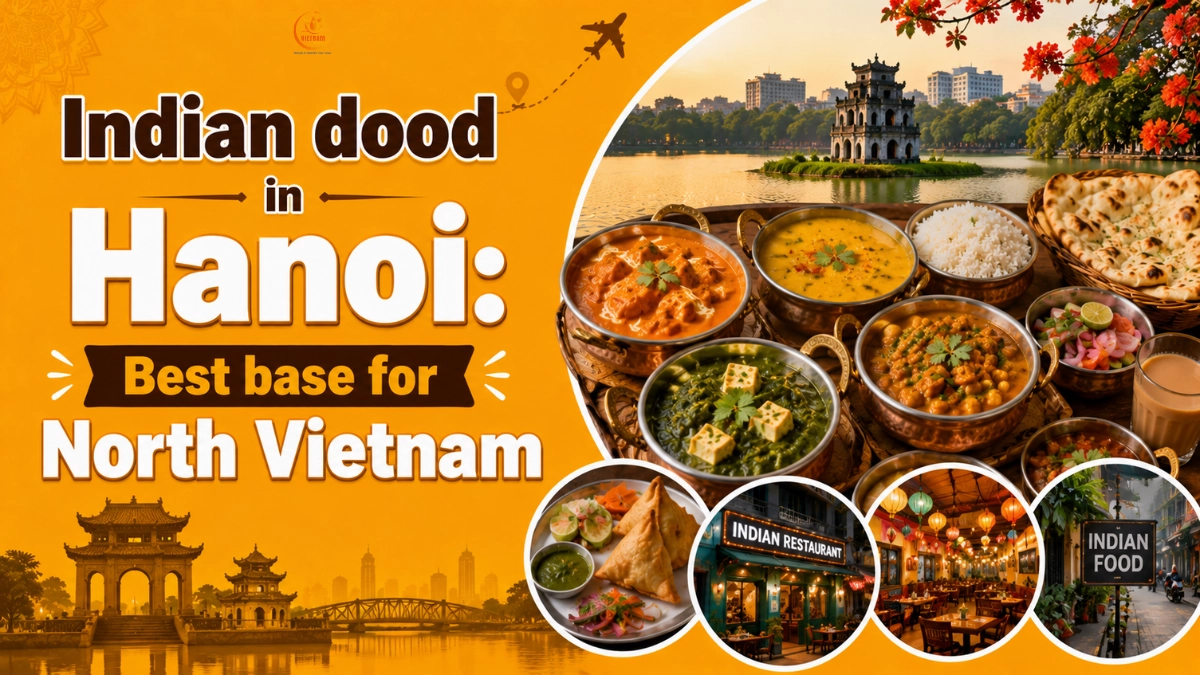
Hanoi is usually the first major food anchor for travellers exploring North Vietnam. Its tourism infrastructure makes it relatively easy to alternate between Indian meals and Vietnamese cuisine. This is particularly useful if Hanoi is your base for excursions to Ninh Binh or the beginning of a Ha Long Bay journey.
The Old Quarter and surrounding central areas are convenient for travellers because sightseeing, accommodation, cafés, and international dining are concentrated within a relatively compact part of the city. West Lake is another international dining area worth considering, although it serves a somewhat different travel pattern from the Old Quarter.
For Indian families, Hanoi works well because you can keep food planning flexible. Have a familiar meal after arriving, explore Vietnamese food during sightseeing, and return to Indian cuisine when children, parents, or other family members want something familiar.
Vegetarians also have an advantage here. Hanoi has Vietnamese Chay cuisine alongside Indian vegetarian options, allowing you to experience local food without depending exclusively on Indian restaurants.
If you’re visiting Ninh Binh as a day trip, breakfast and dinner can remain in Hanoi while lunch is planned around the excursion.
For Ha Long Bay, however, do not depend on Hanoi once you board your cruise. Dietary requirements should be communicated to the cruise operator beforehand.
This makes Hanoi ideal for a Hanoi → Ninh Binh → Ha Long Bay route, provided excursion meals are planned in advance.
Indian food in Da Nang: The Central Vietnam Food Anchor
Da Nang is one of the easiest Central Vietnam destinations for Indian travellers who want beaches, sightseeing, and access to familiar food within the same trip.
Tourism areas around the coast provide access to international dining, while the city works well as a base for Ba Na Hills and Hoi An. This base strategy matters more than the number of restaurants available.
Instead of changing hotels between Da Nang and every nearby destination, families can stay several nights in Da Nang, establish a comfortable breakfast and dinner routine, and explore surrounding attractions during the day.
For example, on a Ba Na Hills day, have a substantial breakfast before leaving and keep lunch flexible. Once you return to Da Nang, choose an Indian dinner if you want a familiar meal after a long sightseeing day. This approach reduces the need to plan your attractions around restaurants.
Da Nang is particularly suitable for families, seniors, honeymooners, and travellers who want a slower Central Vietnam holiday. If easy food access is a priority, choose accommodation near established tourism areas rather than an isolated property far from the city.
Indian food in Hoi An: Heritage with plenty of dining flexibility
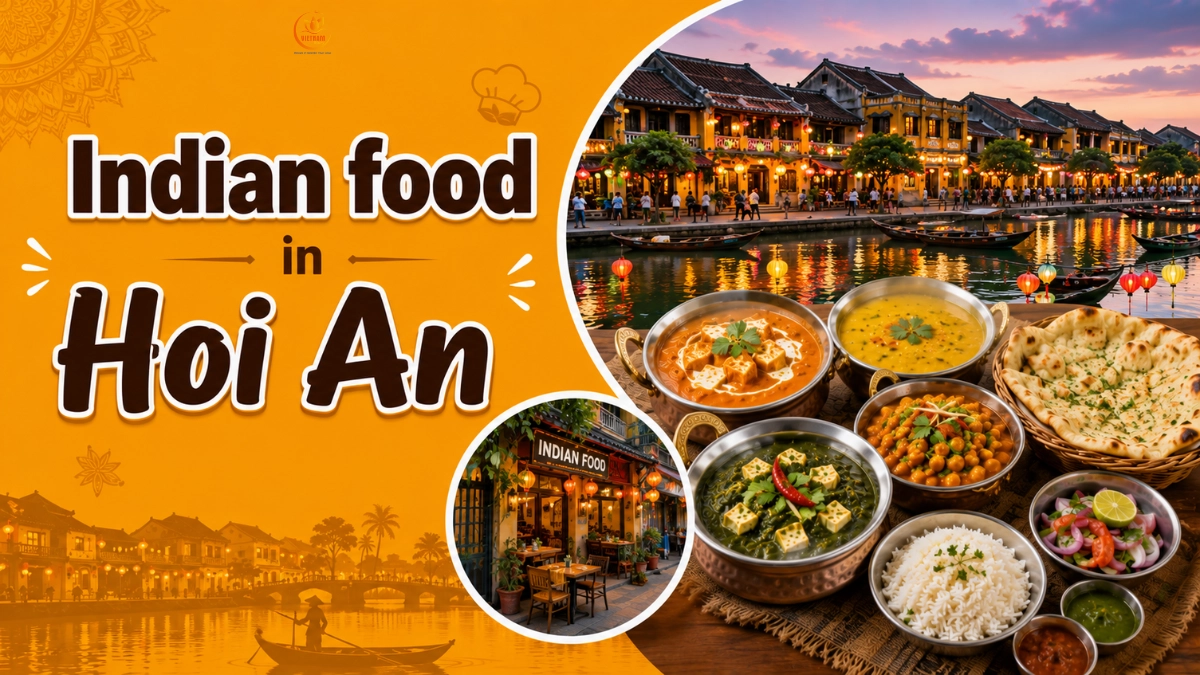
Hoi An is smaller than Hanoi, Da Nang, or Ho Chi Minh City, but its compact tourism centre makes dining relatively convenient.
Most travellers come for the Ancient Town, lantern-lit streets, traditional architecture, tailoring, cafés, and riverside atmosphere. Because the central area is walkable, food can become part of the experience rather than a separate logistical task.
Hoi An is also an excellent place for Indian travellers to move beyond familiar cuisine. Vietnamese vegetarian restaurants and cafés are widely associated with the town’s slow-travel atmosphere, so vegetarian visitors can explore local Chay dishes alongside Indian meals.
A practical approach is to try Vietnamese cuisine for lunch, explore the Ancient Town through the afternoon, and choose Indian food for dinner if your group wants familiar flavours before returning to Da Nang or the hotel.
For families prioritising convenience, Da Nang generally makes the stronger main base because it is a larger city and transportation hub. For couples and travellers who prefer the atmosphere, Hoi An can justify an overnight stay. You do not need to choose one exclusively. The two destinations complement each other well within the same Central Vietnam trip.
Indian food in Ho Chi Minh City: Best for variety
If food choice is one of your highest priorities, Ho Chi Minh City is the easiest destination to include.
As Vietnam’s largest metropolitan centre, the city offers a diverse international dining scene. Indian travellers can find options across different styles of Indian cuisine rather than relying on one or two fallback meals.
This makes Ho Chi Minh City particularly comfortable toward the end of a longer Vietnam journey. After several days of cruises, excursions, or local Vietnamese meals, having plenty of familiar choices can be welcome.
Central areas such as District 1 are especially convenient for first-time travellers because accommodation, attractions, shopping, and dining are concentrated nearby.
Food delivery services can provide another option when your family is tired after sightseeing, although restaurant availability and delivery coverage vary by location and time.
Families, seniors, food-sensitive travellers, and visitors staying several days benefit most from the city’s variety.mIt is also a useful food anchor for travellers combining Vietnam’s North, Central, and South regions.
Indian food in Phu Quoc: Choose your location Carefully
Phu Quoc requires a slightly different strategy. As a resort island, your dining experience depends heavily on where you stay. Travellers based around established tourism and resort areas generally have more choices than those staying in remote parts of the island.
If Indian food is important to your family, check both your hotel’s dining capabilities and nearby restaurant options before booking the accommodation.
This is particularly important for strict vegetarians and Jain travellers. A beautiful remote resort may be perfect for someone happy with international or Vietnamese cuisine but inconvenient for a family expecting Indian food every day.
Phu Quoc therefore works best as a beach extension rather than the primary destination for a food-focused Vietnam trip.
What about Indian food in Ha Long Bay and Ninh Binh?
Not every destination needs to have a strong Indian restaurant scene to fit into an Indian-friendly itinerary. If food access is shaping the whole route, plan at itinerary level rather than choosing restaurants one destination at a time.
Ha Long Bay is the best example. On an overnight cruise, the important question is not “Where is the nearest Indian restaurant?” but “Can the cruise accommodate our dietary requirements?” Provide meal preferences when booking and reconfirm strict requirements before travelling. Vegetarian, Jain, allergies, and other restrictions should be communicated specifically rather than grouped together as “Indian food.”
Ninh Binh is easier for Indian food in 2026 than older guides suggest. Tam Coc now has the densest cluster of dedicated Indian restaurants, while the Trang An side also has several current options. If familiar food matters to the group, choose by the area your sightseeing day finishes in rather than automatically returning to Hanoi for dinner. Use our Indian restaurants in Ninh Binh guide for the current Tam Coc vs Trang An decision and dietary checks.
Vegetarian food for Indian travellers in Vietnam
Indian vegetarians have two useful food systems available: Indian vegetarian cuisine and Vietnamese Chay cuisine.
Chay is associated with Vietnam’s Buddhist vegetarian tradition and can include tofu, mushrooms, vegetables, noodles, rice, and soy-based ingredients.
However, travellers with strict requirements should still verify what is used in a dish rather than assuming every vegetable-based meal meets their dietary preferences.
This is especially important outside dedicated vegetarian restaurants, where sauces or broths may contain ingredients you avoid.
If vegetarian food influences your entire route, plan the bases and excursions around food access rather than treating every destination as equally easy.
What Jain travellers should know?
Jain travellers need a different level of meal planning from general vegetarians. Simply requesting “vegetarian” is not enough if you also avoid onion, garlic, root vegetables, eggs, or other ingredients.
Communicate each restriction clearly with restaurants, hotels, cruises, and your tour provider. Advance coordination becomes especially important on overnight cruises and excursions where changing restaurants is difficult.
A translated dietary card can also help when communicating with local staff. Jain travellers should plan destinations, meals and cruise requests more explicitly than general vegetarian travellers.
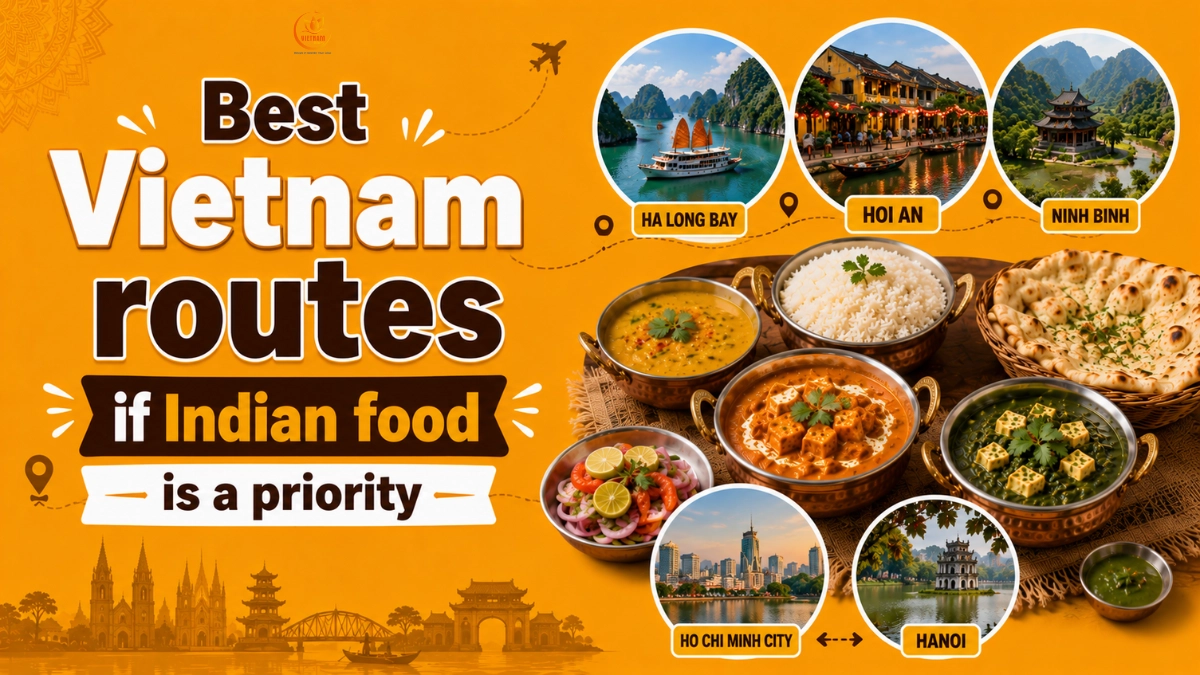
Best Vietnam routes if Indian food is a priority
You do not need to redesign your entire Vietnam holiday around food, but selecting strong food anchors makes planning easier.
- For a short Central Vietnam trip, Da Nang → Hoi An offers easy logistics and relatively few transfers.
- For a first-time North + Central trip, Hanoi → Ha Long Bay → Da Nang → Hoi An balances Vietnam’s major experiences with two strong food bases.
- For a longer journey, Hanoi → Da Nang/Hoi An → Ho Chi Minh City keeps you close to Vietnam’s major urban dining hubs while showing you three distinct regions of the country.
The principle is more important than the exact itinerary: stay in well-connected cities and treat remote attractions as planned excursions.
FAQ
Is Indian food available in Vietnam?
Yes. Indian food is readily available in major tourism cities such as Hanoi, Da Nang, Hoi An, and Ho Chi Minh City. Options become more limited in remote areas, so advance planning is useful.
Which Vietnam city is best for Indian food?
Ho Chi Minh City offers the strongest overall variety, while Hanoi and Da Nang are excellent food anchors for North and Central Vietnam respectively.
Can I find vegetarian Indian food in Vietnam?
Yes, particularly in major cities. Indian vegetarians can also explore Vietnam’s Chay cuisine, although strict dietary requirements should always be communicated clearly.
Can I get Indian food on a Ha Long Bay cruise?
Meal options depend on the individual cruise. If Indian or specialised meals are important, confirm what can be provided before booking rather than assuming they will be available onboard.
Do I need to carry food from India?
Most travellers staying on common tourist routes do not need to bring meals for the entire trip. A small supply of familiar snacks can still be useful during long transfers, excursions, or remote stays.
Conclusion
Indian food in Vietnam is no longer limited to a single major city. Hanoi can anchor your North Vietnam journey, Da Nang and Hoi An make Central Vietnam easier, and Ho Chi Minh City provides the greatest metropolitan variety. Phu Quoc and more remote destinations simply require additional planning.
The goal is not to find dal and roti beside every attraction. It is to build a route where familiar food is available when you want it while still leaving room to discover Vietnamese cuisine and culture.
Vietnam Story designs Vietnam Tour Packages from India around how Indian travellers actually travel—from destination pacing and hotel locations to vegetarian, Jain, family, and meal requirements. Choose the right food anchors, plan the difficult days in advance, and your Vietnam journey can be about what you came to see rather than where you need to eat next.