
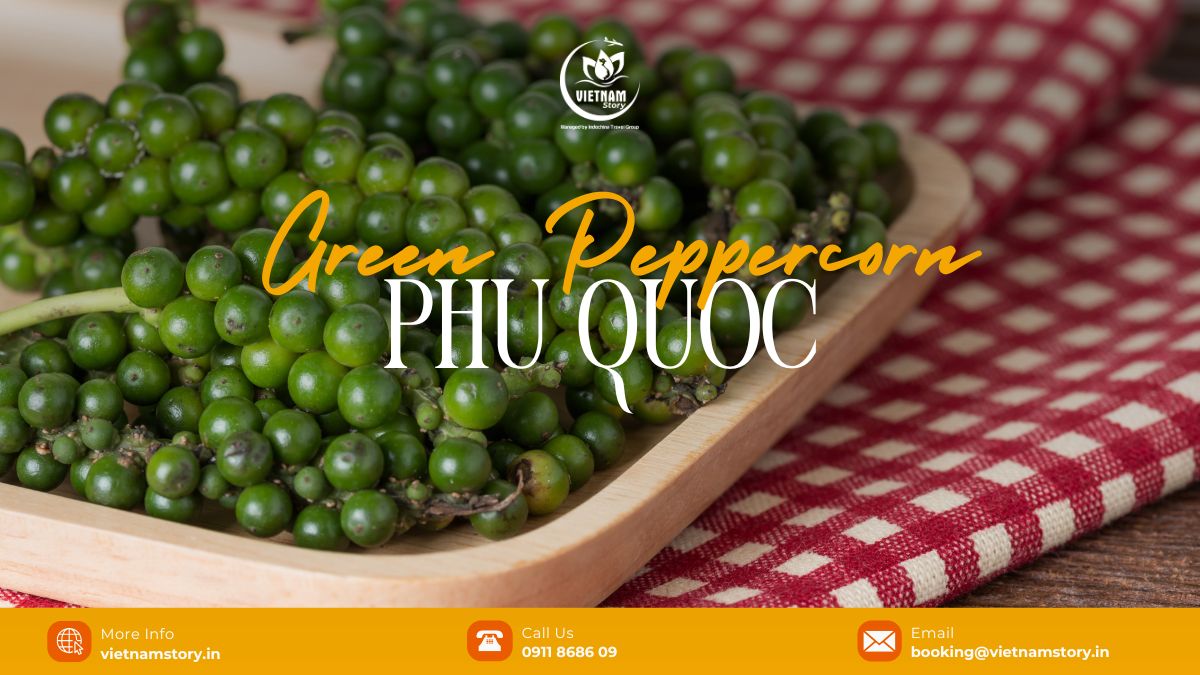
When guests ask us what makes Phu Quoc pepper different, fresh green peppercorn is the easiest place to start. It lets you taste the pepper before it becomes the dry black, red or white product most travellers know from home. The flavour is fresher, greener and less one-dimensional than a spoonful of dried pepper.
If you want to see how the crop is grown, use our Phu Quoc Pepper Farms guide. If you are deciding what to carry home, use the Phu Quoc Shopping guide.
Green, black, red and white pepper: what actually changes?
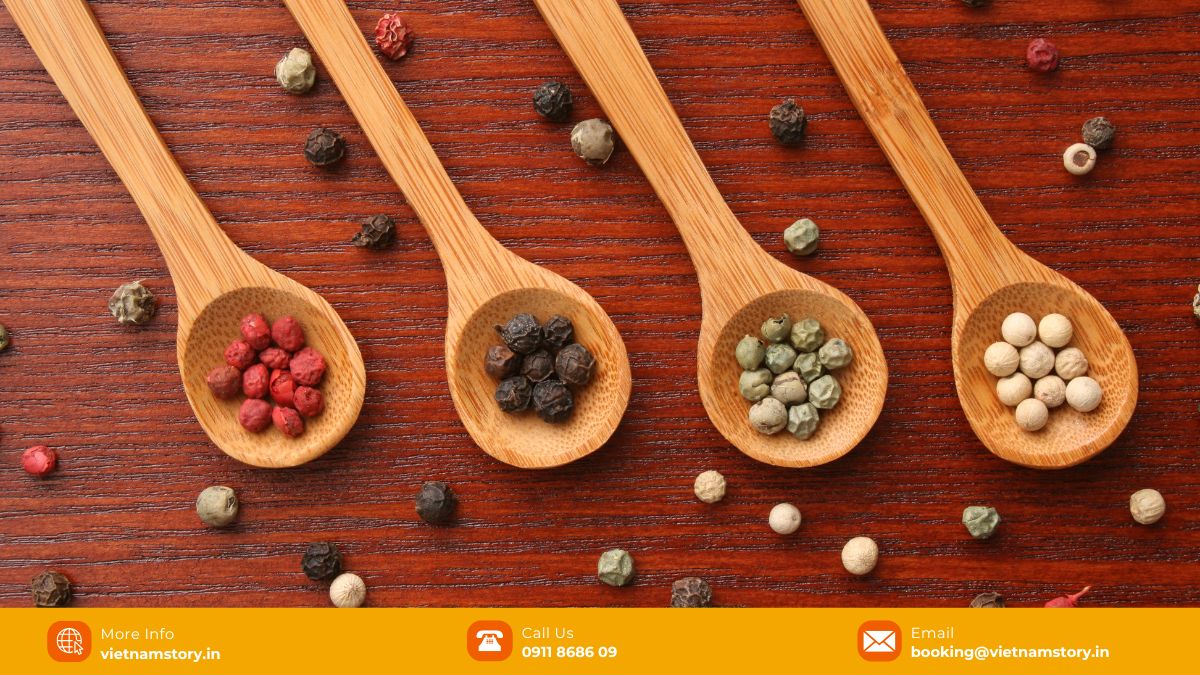
Most of the familiar Phu Quoc pepper products come from the same pepper plant, but the berries are harvested and processed differently.
- Green peppercorn: fresh, unripe berries used before drying. They are juicy, aromatic and much softer than dried pepper.
- Black pepper: berries are harvested before full ripeness and dried until the outer surface darkens and wrinkles.
- Red pepper: ripe berries are selected and dried with more of the outer fruit character retained.
- White pepper: ripe berries are processed to remove the outer skin, leaving the pale inner seed.
We would not describe one colour as universally “better”. Green pepper is useful when you want freshness and texture; black pepper is the easiest everyday dry spice; white and red pepper bring different aroma and processing styles.
What does fresh green peppercorn taste like?
Fresh green peppercorn has heat, but the first thing many travellers notice is the fresh, herbal and slightly fruity aroma. The berries are soft enough to bite, so the pepper heat arrives differently from dry ground pepper.
For Indian travellers, we often explain it this way: it is still unmistakably pepper, but it behaves more like a fresh ingredient than a table seasoning. You can eat the berries with the dish rather than simply sprinkle them on top.
How green peppercorn appears in Phu Quoc food
On Phu Quoc, green peppercorn often appears with seafood, meat, sauces and stir-fried dishes. The point is not only extra spice; the whole berries add aroma and a soft burst of pepper flavour.
With seafood and meat
Green pepper sauces and whole peppercorn clusters pair naturally with grilled or pan-cooked seafood and meat. If you enjoy black pepper chicken or pepper-based curries in India, the flavour family will feel familiar even though the fresh texture is different.
For vegetarian travellers
Green pepper also works well with mushrooms, tofu and vegetables. If you are vegetarian or Jain, the pepper itself is not the difficult part—the sauce is. Ask whether fish sauce, meat stock, oyster sauce, onion or garlic is used according to your own requirement.
For restaurant planning, use our Vegetarian Restaurants guide or Indian Restaurants guide.
Where the farm visit fits
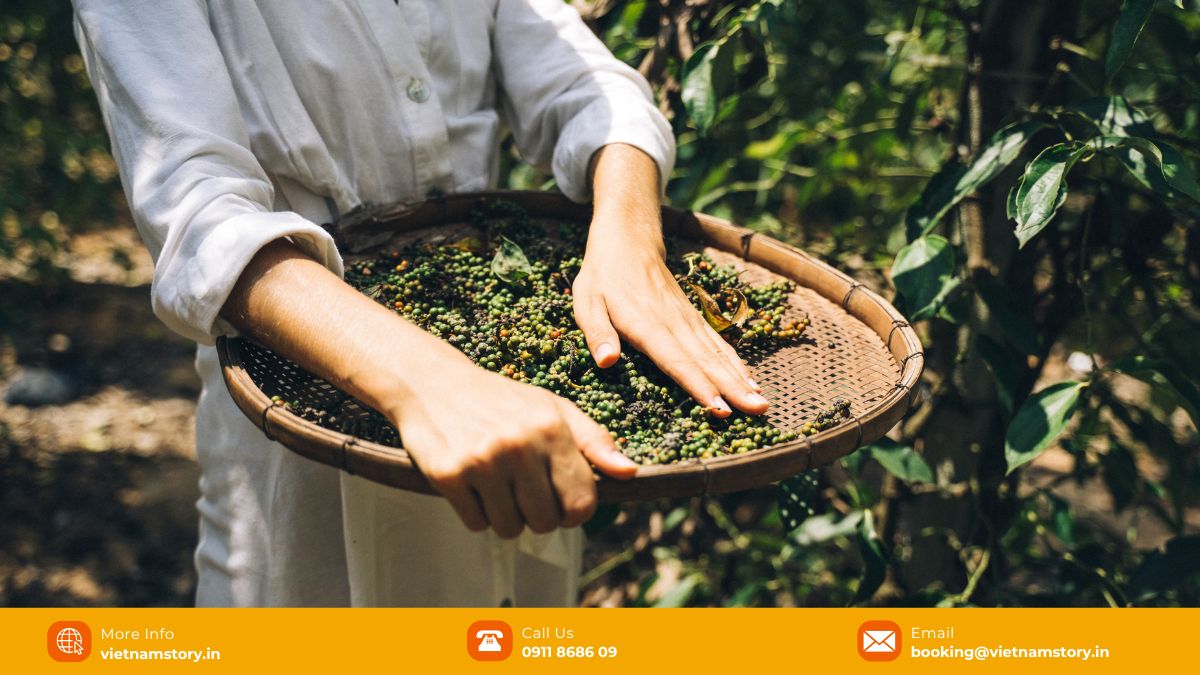
If green pepper interests you, a farm stop makes more sense than buying a jar without context. You can see how the vines grow, how the berries are harvested and why one crop becomes several different pepper products.
We normally keep the visit to about 30–60 minutes and choose a farm that already fits the day. Crossing the island only for a pepper farm rarely makes sense unless agriculture or food is a major interest.
Buying fresh or processed pepper
Fresh green pepper has a shorter life than dried pepper, which is why travellers often buy pickled green peppercorn or dried pepper instead of raw fresh clusters.
We would check:
- sealed packaging;
- producer and ingredient information;
- manufacturing / best-before information where applicable;
- whether liquid or brine packaging suits your baggage;
- current Indian customs rules for plant/food products before carrying a large quantity home.
We have removed old per-kilogram price ranges from this guide because farm-gate and retail prices change. Compare the actual package size and product type instead of relying on an old “normal price”.
Fresh pepper or dried pepper as a souvenir?
| Product | Best for | Travel practicality |
|---|---|---|
| Fresh green pepper | Cooking soon after purchase | Least convenient for an international flight |
| Pickled green pepper | Keeping the soft green-pepper style longer | Check liquid/baggage rules |
| Dried black/red/white pepper | Easy gift and home cooking | Usually the simplest to pack when commercially sealed |
How we would use green pepper in a Phu Quoc trip
We would first taste it in a meal, then visit one farm if food and local agriculture interest you, and only after that decide what to buy. That order makes the souvenir more meaningful without turning pepper into another attraction you have to “tick off”.
For us, green peppercorn is most interesting as a local ingredient with a story. The farm and souvenir are useful because they help you understand the flavour—not because every visitor needs to take a bag of pepper home.
If pepper is only one layer of the island experience, return to our Phu Quoc travel guide to keep the farm, food and shopping stops in proportion to the rest of the trip.