

Sapa is suitable for beginner trekkers, provided they choose activities that match their walking ability and current weather conditions. Short guided village walks around Cat Cat or selected areas of Muong Hoa Valley are generally more approachable than extended multi-village treks. You do not need to spend an entire day walking to appreciate Sapa’s rice terraces, mountain landscapes and cultural heritage. At Vietnam Story, we recommend choosing your experience according to terrain, walking duration, family comfort and available holiday time rather than distance alone.
Is Sapa trekking suitable for beginners?
Yes. Sapa offers several different ways to experience its countryside, from short village visits to more demanding outdoor activities. Understanding these three categories helps you choose appropriately:
- Village sightseeing: Short cultural and scenic visits, sometimes involving slopes and steps.
- Valley trekking: Longer countryside walks with varying terrain and elevation.
- Mountain trekking: More demanding activities requiring professional assessment and specialist preparation.
For a first visit, a guided village sightseeing experience may be enough. Our Sapa travel guide explains how these experiences fit into a wider Northern Vietnam holiday.
Sapa trekking routes: Difficulty at a glance
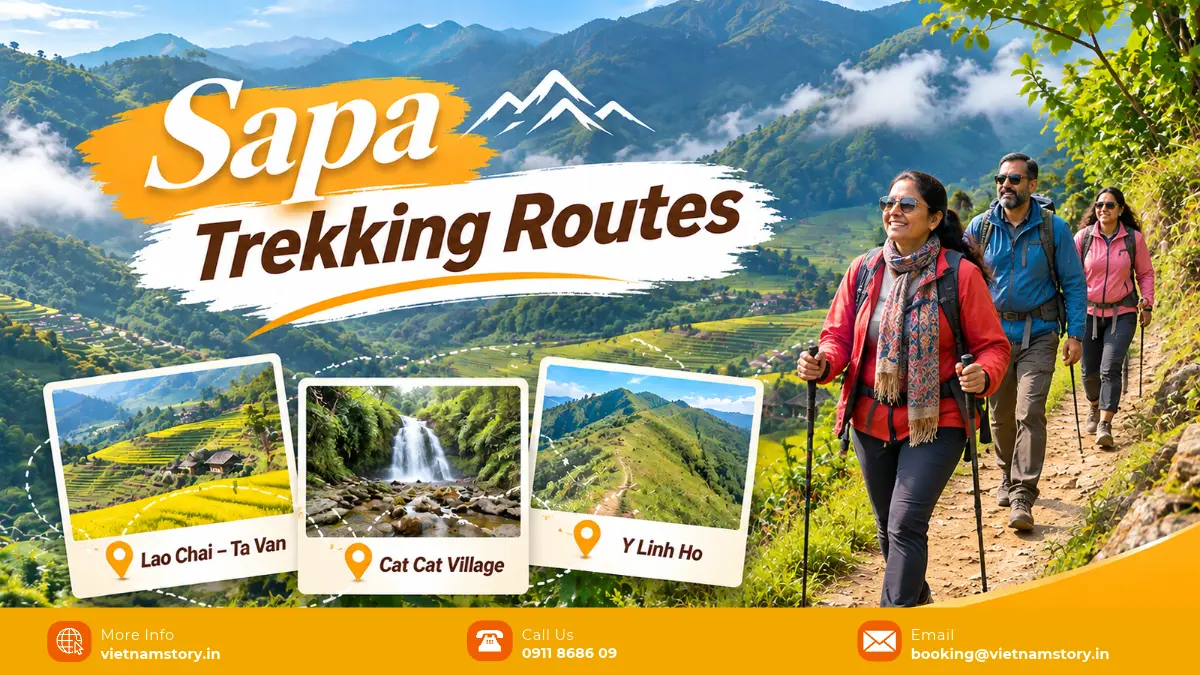
| Route or area | General difficulty | Main experience |
| Cat Cat Village | Easy to moderate | Village culture, hillside scenery and waterfalls |
| Selected Muong Hoa Valley walks | Easy to moderate | Rice terraces and countryside |
| Lao Chai and Ta Van | Route-dependent | Agricultural landscapes and village culture |
| Ta Phin Village | Route-dependent | Red Dao cultural heritage |
| Extended multi-village treks | Moderate to demanding | Longer countryside experiences |
| Fansipan mountain trekking | Demanding | High-altitude mountain terrain |
These are general comparisons, not official trail ratings. Actual difficulty depends on weather, gradients, trail conditions and individual walking ability.
Cat Cat Village: A convenient introduction to Sapa
Cat Cat Village is close to Sapa town and is associated with the local Hmong community. Its hillside setting includes traditional buildings, craft displays, mountain scenery and a waterfall area.
Although Cat Cat is often described as an easy sightseeing destination, visitors should expect slopes, stairs and uneven surfaces. The return uphill can feel more demanding than the initial descent. Our Cat Cat Village and Fansipan tour illustrates a highlights-focused Sapa holiday rather than a dedicated trekking programme. For visitors with mobility concerns, ask about shorter sightseeing alternatives before confirming the visit.
Best for: First-time visitors interested in combining cultural sightseeing with mountain scenery.
Muong Hoa Valley: Rice terraces and village landscapes
Muong Hoa Valley offers some of Sapa’s most recognisable countryside scenery. The area includes terraced agricultural fields, mountain landscapes and villages such as Lao Chai and Ta Van.
For beginners, visiting the valley does not necessarily mean completing a long trek. Selected vehicle-accessible viewpoints and shorter guided sightseeing walks can provide rewarding experiences with less physical demand. Rice terraces also change throughout the agricultural season. Water-filled fields, green crops and golden harvest landscapes are different seasonal experiences.
Best for: Travellers interested in rice terraces, photography and countryside culture.
Ta Phin Village: Culture beyond Sapa Town
Ta Phin is associated with Red Dao communities and offers another perspective on life in the surrounding highlands.
A village visit may introduce traditional textiles, local architecture and rural landscapes, depending on the arrangements. Walking conditions vary between different areas, so do not assume that every Ta Phin excursion is suitable for beginners. Ask permission before photographing residents, respect private homes and avoid entering agricultural land without consent.
Best for: Travellers interested in cultural heritage and village-based experiences.
What determines Sapa trek difficulty?
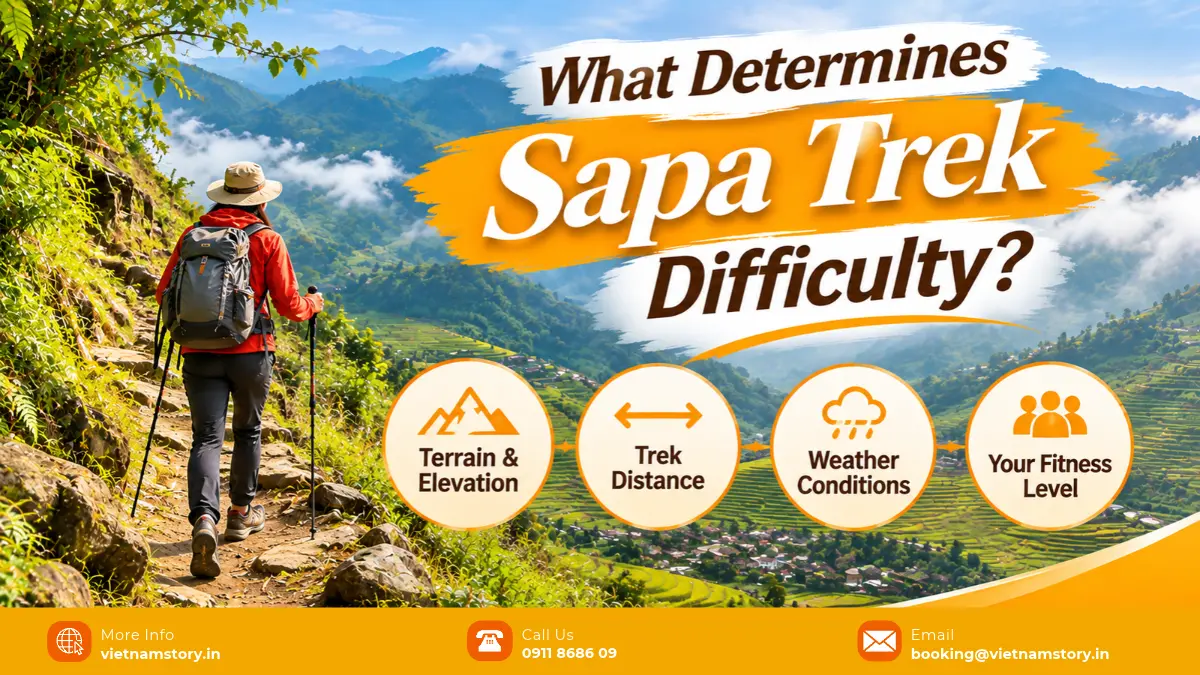
Walking distance is only one part of trekking difficulty. A short route with steep steps can feel more demanding than a longer walk on relatively level ground.
| Factor | How it affects difficulty |
| Elevation changes | Uphill sections require additional effort |
| Trail surfaces | Uneven ground affects walking comfort |
| Rain and mud | Increase the risk of slipping |
| Walking duration | Influences fatigue and rest requirements |
| Temperature | Affects outdoor comfort |
| Vehicle access | Determines available alternatives |
Before confirming an activity, ask your guide about the actual walking requirements, rest opportunities and transport arrangements. For families travelling with grandparents, our guide to Sapa with senior parents from India explains how to select more comfortable mountain experiences.
When is the best time for easy Sapa trekking?
March to May and September to November are often attractive periods for countryside sightseeing.
| Season | Typical considerations |
| March – May | Mild conditions and changing agricultural landscapes |
| June – August | Green scenery, frequent rain and potentially muddy paths |
| September – November | Harvest landscapes in some areas and cooler conditions |
| December – February | Cold weather, mist and reduced visibility |
September is often associated with rice harvest scenery, although agricultural timing varies between villages and years. Mountain weather can change quickly in any season. During heavy rainfall, weather warnings or unsafe trail conditions, postpone outdoor walking and choose an appropriate alternative. Our Sapa rainy-day itinerary provides options when weather affects your original plans.
What to pack for Sapa trekking?
An ordinary guided village walk does not require expedition equipment. For comfortable countryside sightseeing, consider bringing:
| Essential item | Why it helps |
| Comfortable walking shoes with good grip | Uneven paths and steps |
| Lightweight waterproof jacket | Unexpected rain |
| Removable warm layers | Changing mountain temperatures |
| Small daypack | Carrying personal belongings |
| Drinking water and snacks | Comfort between scheduled stops |
| Sunscreen and insect repellent | Outdoor exposure |
| Personal medication | Individual health needs |
| Waterproof pouch | Protecting phones and documents |
Footwear and clothing should suit the actual activity and conditions. More demanding trekking experiences require a separate suitability and equipment assessment by a qualified operator.
Do beginners need a local guide in Sapa?

We recommend guided arrangements for first-time visitors unfamiliar with Sapa’s countryside. A knowledgeable guide can explain local customs, assess current conditions and identify appropriate sightseeing options. Before booking, confirm:
- Expected walking duration and terrain.
- Availability of rest stops and transport.
- Age and participation requirements.
- Alternatives for guests who prefer not to trek.
- Procedures when weather affects the programme.
Children should participate only in supervised, age-appropriate activities. A guided experience should also help you appreciate the communities behind Sapa’s agricultural landscapes, rather than simply passing through them.
How trekking fits into Vietnam Story’s Sapa tours?
Vietnam Story’s Sapa programmes illustrate why two itineraries of the same duration can offer very different experiences. Our Cat Cat and Fansipan programme focuses on village sightseeing and cable-car access to mountain scenery.
By contrast, our published Sapa village and valley itinerary includes Y Linh Ho, Lao Chai, Ta Van and Giang Ta Chai, with an overnight homestay. The latter lists approximately 13 kilometres of walking across two days. It therefore requires a separate assessment of walking ability, age eligibility and current conditions. It should not be considered an automatically beginner-friendly option.
At Vietnam Story, we encourage guests to communicate their preferred activity level before choosing a programme.
Is two or three days better for Sapa?
| Duration | Suggested experience |
| 2 days, 1 night | Selected village sightseeing and Fansipan, if suitable |
| 3 days, 2 nights | Additional time for gentle valley experiences and rest |
| Longer stays | More flexibility for countryside accommodation and cultural visits |
Three days generally provide more flexibility around mountain weather and the long transfers from Hanoi. Our Sapa itinerary for two or three days explains how to balance these experiences.
Sapa town is often the most practical accommodation base for first-time visitors. Valley lodges and homestays may suit travellers prioritising countryside surroundings. Read our guide to where to stay in Sapa before choosing your accommodation.
Practical tips for Indian families
Allow sufficient rest after travelling from Hanoi rather than immediately beginning a demanding outdoor programme. Arrange vegetarian or Jain meals in advance, particularly when visiting villages outside Sapa town.
For mixed-age families, select activities according to the comfort of the group and provide alternatives for anyone who prefers not to participate. Never allow a fixed itinerary to take priority over unsuitable weather or individual health concerns.
FAQs
Is Sapa trekking difficult for beginners?
Not necessarily. Short guided village walks can be manageable, although slopes, steps and weather affect difficulty.
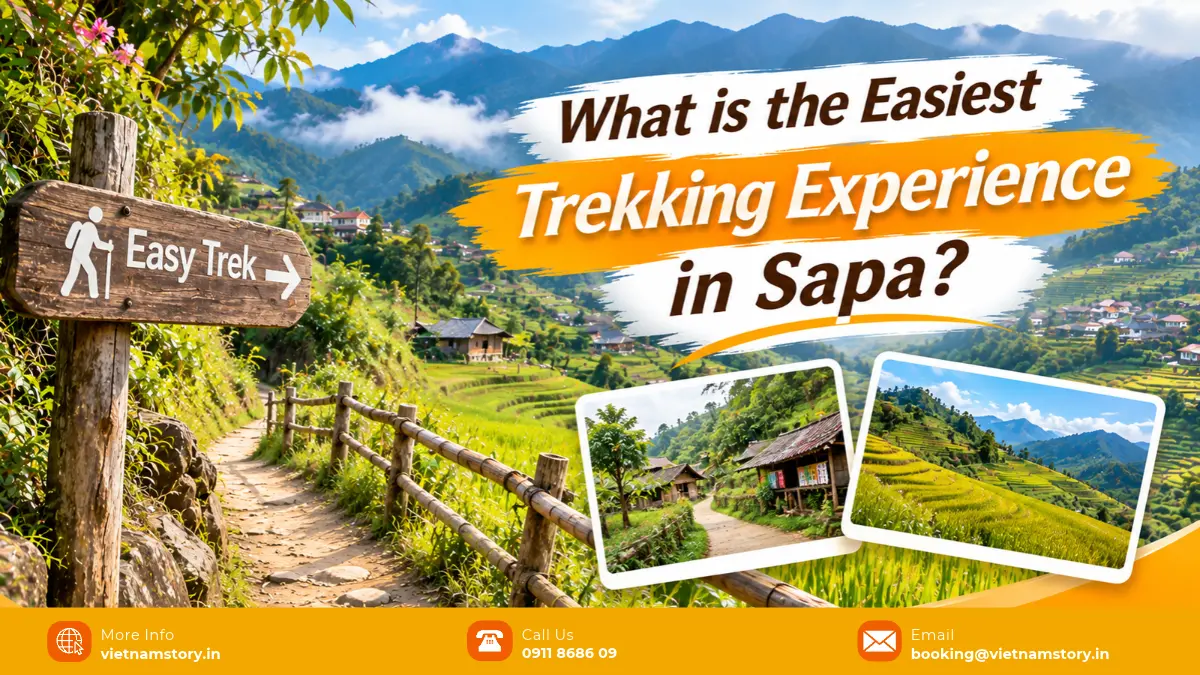
What is the easiest trekking experience in Sapa?
A short, guided sightseeing walk on suitable village paths is generally the most approachable experience.
Is Fansipan cable-car sightseeing the same as trekking?
No. Cable-car sightseeing provides mountain access without an extended trek, although stairs and high-altitude conditions may still affect visitors.
Do I need trekking boots for Sapa?
Comfortable walking shoes with reliable grip may be sufficient for ordinary village sightseeing. Footwear requirements depend on the activity and conditions.
Conclusion
Sapa is not about proving how far you can walk. Its beauty lies in the mountain scenery, terraced fields and communities you encounter. Explore our Vietnam tour packages from India and discuss your preferred activity level, accommodation and dietary requirements before finalising your holiday. Choose the experience that allows you to appreciate Sapa comfortably, rather than the itinerary that covers the greatest distance.