

Shopping in Hoi An is easiest when you decide what kind of purchase deserves time before you start walking from shop to shop. Tailored clothing needs measurements and fittings; leather goods need material and construction checks; lanterns and small crafts are easier to compare quickly; markets are better for browsing and smaller everyday purchases.
The Ancient Town streets around Tran Phu, Nguyen Thai Hoc and Le Loi hold many tailors, boutiques and craft shops, while the Cloth Market, Central Market and Night Market serve different purposes. If you have limited time, choose one or two things you actually want to buy rather than turning shopping into another sightseeing checklist.

Choose the purchase before choosing the shopping area
Needs return visitsTailored clothingAllow time for measurements, a fitting and alterations instead of ordering just before departure.
Needs material checksLeather and silkAsk what the material actually is and inspect construction rather than buying from appearance alone.
Easy to compareLanterns and small craftsCompare size, finish, packing and price across a few shops or market stalls.
Low-commitment giftsCoffee, tea and packaged foodPrioritise sealed packaging, labels and luggage practicality over novelty.
| Shopping area | Useful for | Main trade-off |
|---|---|---|
| Tran Phu / Nguyen Thai Hoc / Le Loi | Tailors, boutiques, jewellery, lanterns, art and craft shops | Quality and pricing vary widely between shops |
| Hoi An Cloth Market | Browsing fabrics and seeing many textile choices together | Fabric choice can be overwhelming if you do not already know what weight or composition you want |
| Central Market | Everyday goods, food, produce and smaller purchases | It is a working market, not a curated craft showroom |
| Night Market | Lanterns, small souvenirs, casual browsing and snacks | Not the place to rush a high-value custom order |
Give tailoring enough time for fittings
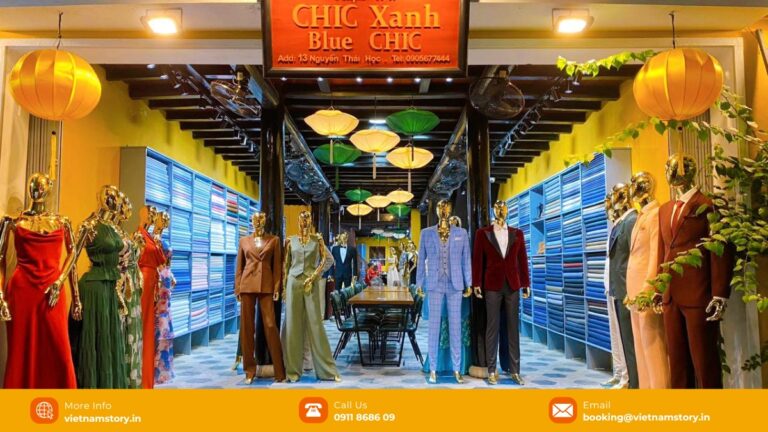
Hoi An still has a strong custom-tailoring trade, but speed should not be the only reason to order. A simple garment and a structured suit do not need the same amount of work, and the useful deadline is the one that leaves enough time to correct the fit before you leave town.
Bring reference photos if you have a specific silhouette in mind. Discuss fabric, lining, pockets, buttons, trouser break, sleeve length and any other detail that would be annoying to discover only at collection. Ask when the first fitting will happen before paying a deposit.
- Do not skip the fitting. Check movement as well as how the garment looks while standing still.
- Inspect seams and finishing. Look at lining, buttonholes, zips and areas under tension.
- Keep the agreed details in writing. A receipt or message with fabric and design notes is more useful than relying on memory.
- Leave correction time. A fast first version is not the same thing as a finished garment.
If a custom garment is the main purchase, continue to the Hoi An tailor guide rather than choosing a shop from a general shopping list.
Custom leather goods need construction checks
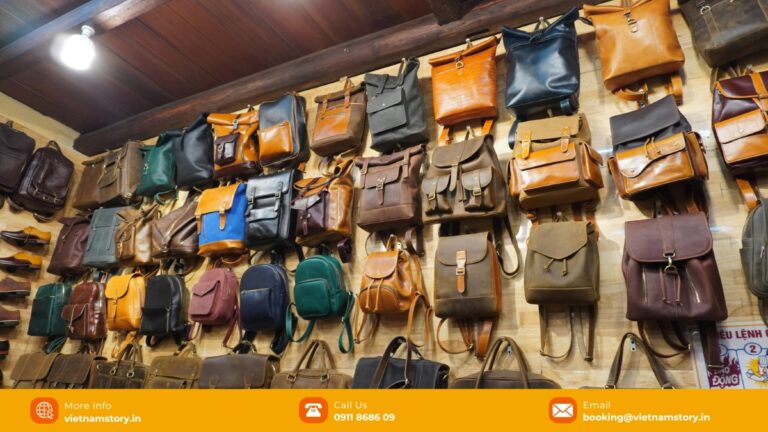
Leather shoes, bags and accessories are widely available in Hoi An, including made-to-order work. Before discussing colour or shape, ask what leather is being used and whether the quoted price refers to the same material shown in the sample.
For a custom bag, confirm the lining, zip quality, strap length, hardware and internal pockets. For shoes, check the sole, heel, stitching and how the pair feels while walking. A product being made quickly does not remove the need for a final fit or finish check.
Silk and fabric labels deserve a closer look
Hoi An’s trading history is closely connected with textiles, and silk remains part of the town’s shopping identity. That does not mean every glossy scarf or dress labelled “silk” has the same fibre content or quality.
Ask for the material composition when it matters. If you are paying a premium for silk, ask whether the item is pure silk or a blend and request that the composition is written on the receipt when possible. Colour, shine and softness alone are not enough to verify fibre content.
The Cloth Market is useful when you want to compare many fabrics in one place. A tailor shop can be easier when you mainly care about the finished garment because the fabric selection, measurement and construction can be handled together.
Lanterns are easy to buy but still worth comparing
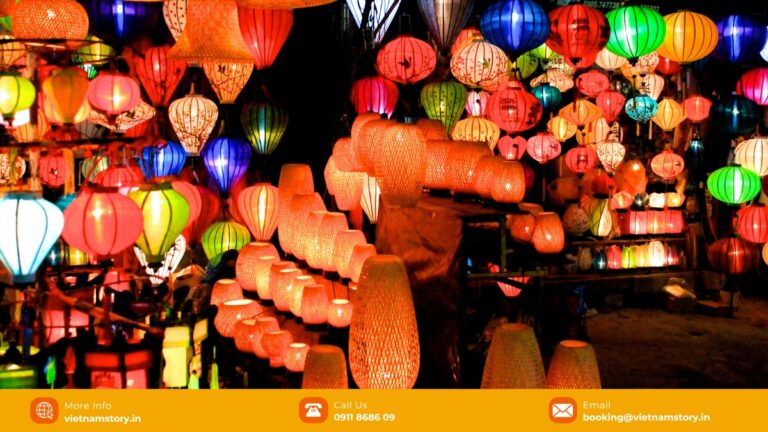
Lantern-making has a long association with Hoi An, and collapsible lanterns are one of the easiest locally recognisable souvenirs to carry home. The practical differences are size, frame construction, fabric, finishing and how well the lantern folds for transport.
- Open and close it once. Check whether the frame moves smoothly and returns to shape.
- Look at the seams and fabric attachment. Small defects become more visible once the lantern is lit.
- Check the packed size. A large lantern is less useful if it will be crushed inside your suitcase.
- Compare before buying multiples. Quality can vary even when several stalls sell similar colours and shapes.
The Hoi An Night Market is convenient for casual lantern and souvenir browsing, while dedicated shops and workshops can be better when construction quality or making the lantern yourself matters more.
Ceramics, wood and craft products need an origin check
Hoi An and the surrounding craft villages are associated with pottery, woodworking, lantern-making and other handicrafts. A product sold in the Ancient Town should not automatically be assumed to have been made in a nearby craft village just because its style looks traditional.
If origin matters, ask where the item was made and whether the shop can explain the maker or workshop. For ceramics, inspect chips, glaze and cracks; for wood, think about weight, luggage space and any restrictions that may apply to natural materials when you travel home.
Packaged food gifts are easier when the label is clear

Coffee, tea, spices, chilli products, preserves and packaged sweets are common gift options. Choose sealed products with an ingredient list, expiry date and enough protection for the journey rather than relying on an open market bag for a long flight home.
If you have vegetarian, Jain or allergy requirements, read the ingredient list rather than assuming a packaged local speciality is suitable. For fresh market food and daily produce, use the Hoi An markets guide instead.
Bargaining works better after you know the reference price
Some market and souvenir prices are negotiable; others are fixed. There is no useful rule that says every negotiation should begin at 50%, 60% or 70% of the first price.
- Ask the price before committing.
- Compare similar items at two or three places.
- Check whether the price changes with material or workmanship.
- Negotiate politely when the seller indicates the price is flexible.
- Walk away when the price or quality does not suit you.
VND cash remains useful for smaller purchases, while cards and QR payments vary by business. Ask about payment method and any fee before a larger purchase. For the wider trip, see the Vietnam currency and payment guide.
High-value purchases need a written check before payment
| Purchase | Confirm before paying | Check at collection |
|---|---|---|
| Tailored clothing | Fabric, lining, design details, fitting time, total price and alteration process | Fit, movement, seams, buttons, zips and final alterations |
| Leather goods | Leather type, colour, lining, hardware, dimensions and delivery time | Stitching, zips, straps, sole/fit if footwear |
| Silk / jewellery | Material composition, quoted quality and return/alteration terms if applicable | Item matches what was agreed and has no visible defects |
| Fragile crafts | Dimensions, origin if important, packing and shipping options | Cracks, chips, finish and protective packaging |
Fit shopping into the time you actually have
One evening: use the Night Market or Ancient Town shops for lanterns and small souvenirs. Do not start a custom order that requires a fitting unless you are staying longer.
Half a day: compare a few tailor or leather shops, then use the remaining time for ready-made crafts and gifts.
Two or more days: place custom orders early, schedule the fitting, and keep the final collection away from your departure deadline.
Shopping is not a priority: buy one or two useful items during a normal Ancient Town walk and keep the rest of the trip for sightseeing, food and the beach.
Buy fewer things and check them properly
Hoi An gives you more choice than most short stays can use. The useful approach is to spend time on purchases where craftsmanship, fit or material actually matters, and keep simple souvenirs simple.
If you already know what you want to bring home and prefer a shorter list, continue to things to buy in Hoi An. If custom clothing is the priority, move straight to the tailor guide and leave enough time for the fitting.