
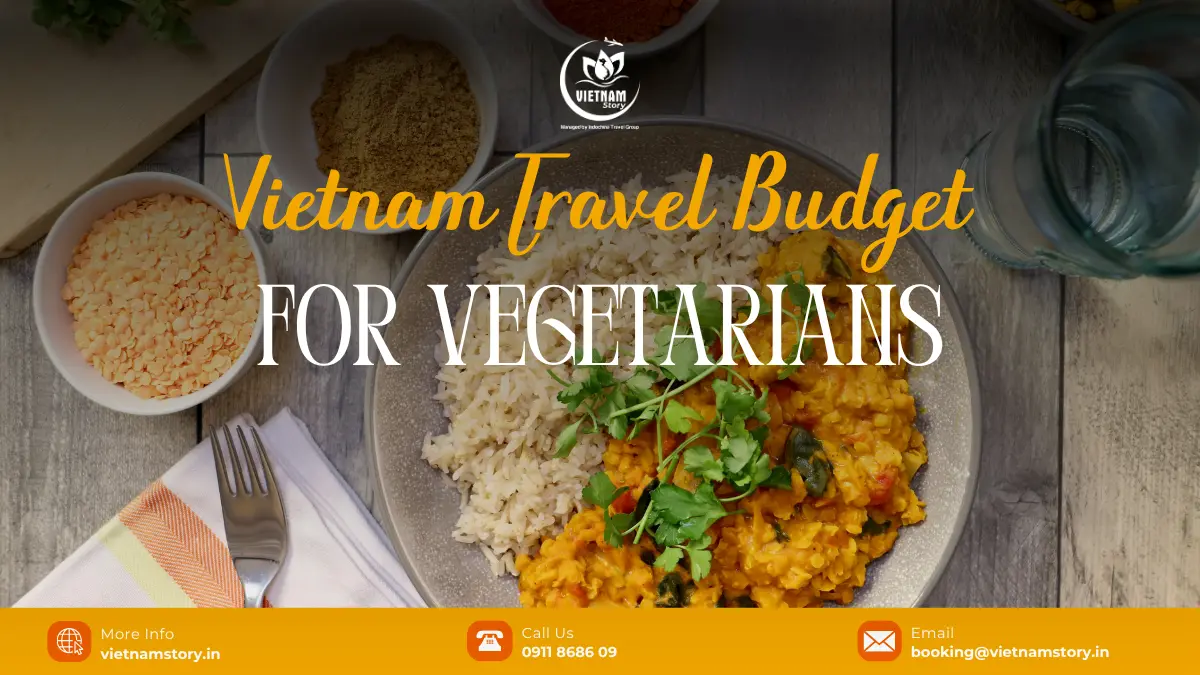
Vietnam is a relatively affordable destination for Indian vegetarian travellers, but your costs will depend on the type of food you choose. If you mainly eat local vegetarian dishes, you can budget around ₹800 – ₹1,500 per person per day. If you need Indian food or specially prepared Jain meals, plan for approximately ₹1,500 – ₹3,000+ per person per day. These figures are estimates and may vary depending on the city, restaurant, exchange rate and dietary requirements.
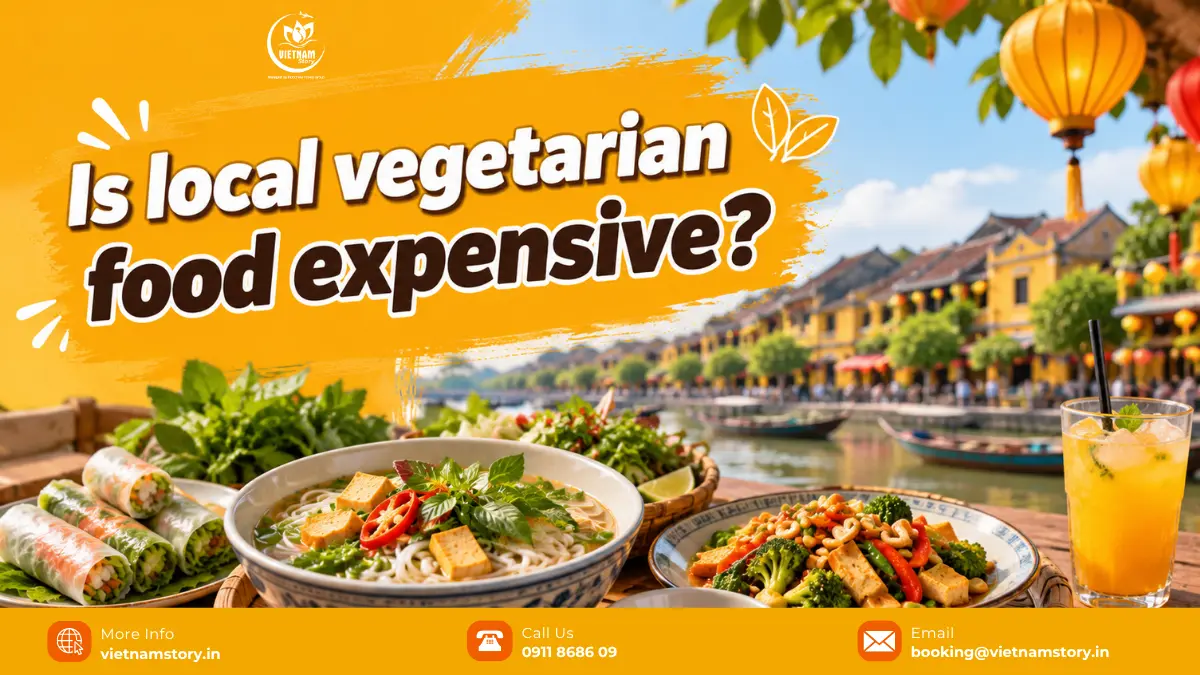
Is vegetarian food expensive in Vietnam?
Vietnam has an established Chay vegetarian food culture, and local vegetarian restaurants can be considerably more affordable than international or Indian restaurants. The budget begins to increase when you want familiar Indian food for several meals each day or require strict preparation requirements.
Think of your food budget in three levels:
| Food style | Planning budget/day | Best for |
| Mostly local vegetarian | ₹500 – ₹1,000 | Flexible vegetarian travellers |
| Local lunch + Indian dinner | ₹800 – ₹1,500 | Most Indian vegetarians |
| Indian/Jain-focused meals | ₹1,500 – ₹3,000+ | Strict diets and comfort-first travellers |
Breakfast included with your accommodation can reduce these daily costs considerably. The biggest budgeting mistake is therefore asking only, “How much does vegetarian food cost?”
A better question is: “How many meals per day need to be Indian or specially prepared?” That number will have a much greater impact on your budget. If you want a general benchmark for local meals, Indian restaurant meals and daily spending beyond vegetarian or Jain requirements, see our Vietnam food prices in Indian rupees guide.
How much does local vegetarian food cost?
Local Vietnamese vegetarian food is usually the most economical option. Look for restaurants displaying the word “Chay.” Depending on the restaurant and city, you may find rice dishes, vegetarian noodle soups, tofu, mushrooms, vegetables, spring rolls and plant-based versions of traditional Vietnamese dishes.
For budgeting, allow roughly ₹150–₹400 for a simple local vegetarian meal, with more polished vegetarian cafés and restaurants costing more. This makes a local lunch particularly useful for Indian travellers trying to control their trip budget.
For example, you might have breakfast at your hotel, eat Vietnamese vegetarian food for lunch and choose an Indian restaurant for dinner. That gives you both local food experiences and familiar flavours without paying Indian restaurant prices three times a day. However, strict Jain travellers need a different strategy.
Does Jain food cost more in Vietnam?
Not necessarily because restaurants charge. a specific “Jain surcharge.” The additional cost usually comes from where you need to eat and how much advance coordination is required.
A general vegetarian traveller can walk into many Chay restaurants and find something suitable. A Jain traveller may additionally need to exclude onion, garlic and particular root vegetables according to their dietary practice. That can make spontaneous dining more difficult.
Instead of choosing the cheapest restaurant nearby, you may need an Indian restaurant, a hotel kitchen that has confirmed your requirements, or a pre-arranged meal through your tour operator.
For that reason, Jain travellers should generally budget toward the upper end of the food range, particularly on days involving cruises or destinations with fewer suitable restaurants.
The important point is: Jain travel does not automatically mean expensive food. It means less room for improvisation. For detailed ordering guidance, see our Jain Food in Vietnam guide.
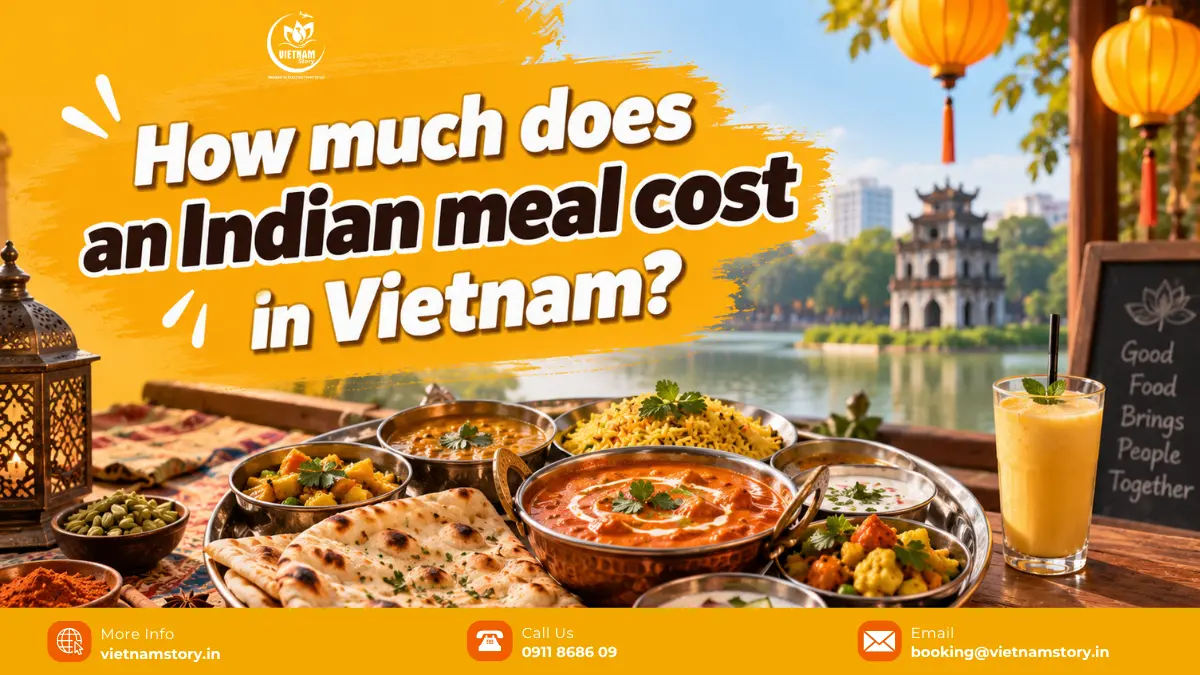
What does an Indian meal cost in Vietnam?
Indian restaurants are widely available in major tourist hubs such as Hanoi, Da Nang and Ho Chi Minh City. As a practical planning range, allow approximately ₹600 – ₹1,200 per person for a normal Indian restaurant meal. More elaborate meals, premium restaurants and hotel dining can cost considerably more.
Instead of eating Indian food for every meal, many travellers can use it as a comfort anchor. A simple daily structure might look like this:
- Breakfast: Hotel breakfast
- Lunch: Vietnamese vegetarian restaurant
- Dinner: Indian restaurant
For many Indian vegetarian travellers, this provides the best balance between cost, dietary comfort and experiencing Vietnamese cuisine.
Three daily food budgets to consider
Rather than planning meal by meal for your entire holiday, choose a daily budget profile first.
Budget 1: Flexible vegetarian (₹500 – ₹1,000 per day)
This works best if you are comfortable exploring Vietnamese vegetarian food. Breakfast can be included with your hotel, followed by an inexpensive Chay lunch and another local vegetarian meal or simple Indian dinner.
This style is best suited to younger travellers, couples and anyone interested in trying Vietnamese cuisine rather than eating primarily Indian food.
Budget 2: Comfort vegetarian (₹800 – ₹1,500 per day)
This is the most practical starting point for many first-time Indian travellers. Have breakfast at the hotel, try Vietnamese vegetarian food for lunch and reserve dinner for a familiar Indian meal.
You still experience the local food culture without having to compromise on comfort every day.
Budget 3: Jain or Indian-food focused (₹1,500 – ₹3,000+ per day)
Choose this budget when you require most major meals to be Indian or prepared according to strict dietary requirements.
The additional allowance gives you more freedom to choose established restaurants, coordinate special meals and avoid selecting food purely on price. This is particularly useful for families, seniors and strict Jain travellers.
Your food budget changes by destination
Where you travel also matters.
Hanoi
Hanoi is one of the easiest Northern bases for combining Indian restaurants with local vegetarian dining.
If you are visiting Ninh Binh as a day trip, you can also use Hanoi as your food anchor: eat breakfast before leaving, arrange an appropriate lunch and return to the city for dinner.
Ha Long Bay
Ha Long Bay requires more planning because an overnight cruise controls your meals once you board.
Before comparing food prices independently, first check whether lunch, dinner and breakfast are already included in the cruise fare.
Vegetarian and Jain travellers should also confirm exactly what the cruise can prepare before booking.
Our Indian Food on Halong Bay Cruise guide provides a complete pre-booking checklist.
Da Nang and Hoi An
These destinations work well for travellers who want a mix of Vietnamese vegetarian cuisine and Indian comfort meals.
Staying close to the main tourist areas also reduces the need to make a separate taxi journey every time you want Indian food.
Ho Chi Minh City
Ho Chi Minh City offers extensive dining choice, making it easier to move between different price levels. You can use inexpensive local vegetarian restaurants for some meals and Indian restaurants when you want familiar food.
Sapa, Ha Giang and more remote areas
Remote destinations do not necessarily make food more expensive, but your choices become narrower.
For strict Jain travellers, that can create indirect costs because you may need pre-arranged meals, suitable hotel kitchens or additional food planning. This is why route selection matters as much as restaurant prices.
Hotel breakfast can reduce your daily food budget
Before booking accommodation, check what breakfast actually includes. If breakfast is included in the room rate and offers enough suitable options, you have effectively removed one meal from your daily food budget.
- General vegetarians can usually look for fruit, bread, rice, vegetables and other suitable dishes while confirming ingredients where necessary.
- Jain travellers should communicate their requirements with the hotel beforehand rather than assuming the buffet will contain appropriate dishes.
If your dietary rules are strict, a hotel willing to prepare a simple suitable breakfast may be more valuable than choosing accommodation purely because it has a huge buffet.
When should you pre-book meals?
You do not need to pre-book every meal in Vietnam. In major cities, general vegetarians usually benefit from keeping some flexibility. Pre-arrangement becomes more valuable when you are:
- Taking a Ha Long Bay overnight cruise, because you cannot simply change restaurants after sailing.
- Travelling to remote destinations, where alternatives may be limited.
- Following a strict Jain diet, because preparation requirements need to be communicated.
- Joining a group tour, where the restaurant and meal schedule may already be fixed.
Before buying a Vietnam Tour Package from India, check whether meals are included and exactly what “vegetarian meal” means. A package containing meals is only good value if those meals actually meet your dietary requirements.
How to save money without compromising your diet?
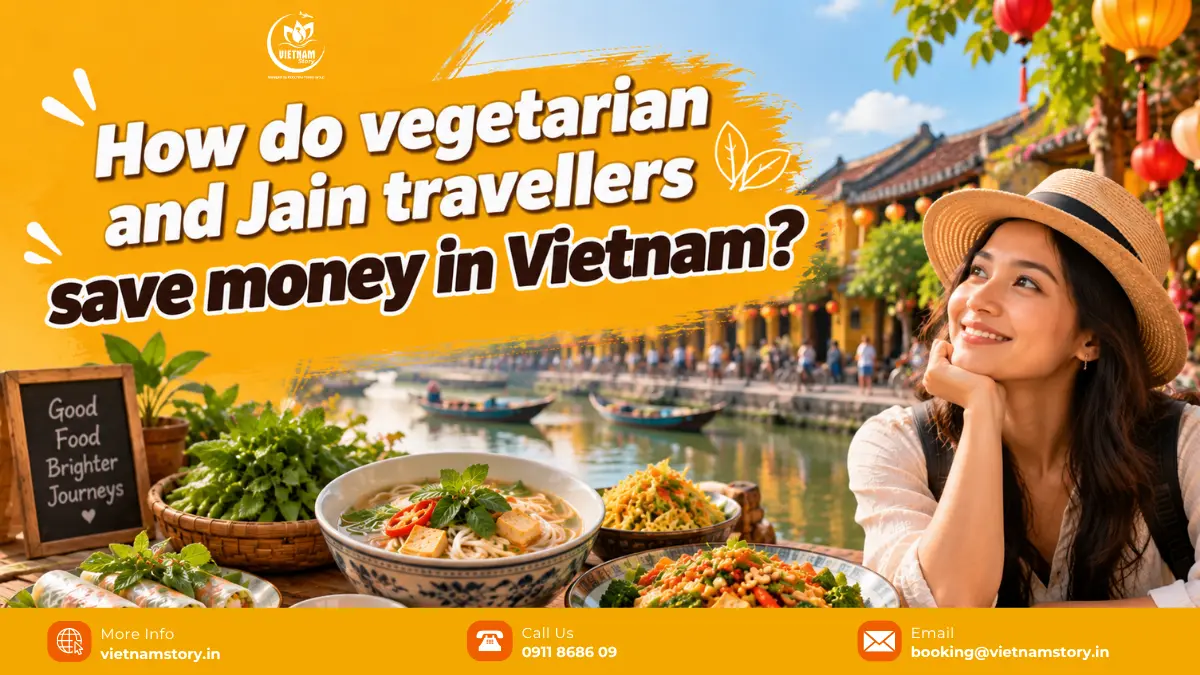
You do not need to choose between eating safely and travelling economically. A few planning decisions make a much bigger difference than hunting for the cheapest restaurant.
- First, use the “local lunch, Indian dinner” strategy. Local Chay restaurants let you experience Vietnamese cuisine while keeping lunch inexpensive, and dinner becomes your familiar comfort meal.
- Second, choose accommodation close to suitable dining areas. A slightly cheaper hotel far outside the centre can lose its advantage when you repeatedly need transport to restaurants.
- Third, carry a small amount of familiar packaged food for long transfer days. Snacks such as khakhra or other suitable packaged foods can be useful between Hanoi, Ninh Binh, Ha Long Bay or on longer journeys. Check customs requirements for anything you plan to bring into Vietnam.
- Finally, communicate strict requirements before travelling. Dietary misunderstandings can lead to wasted meals and paying twice for replacement food.
Dietary mistakes can cost more than money—they may leave you searching for a replacement meal when suitable options are limited. Before travelling, make sure you know how to explain exactly what you do and do not eat, especially when “vegetarian” alone may not communicate every restriction. Our Dietary Restrictions in Vietnam for Indians guide includes practical Vietnamese phrases and a dietary request card you can show to restaurants, hotels and tour operators.
Example: 7-day food budget for two travellers
Suppose two vegetarian travellers are visiting Vietnam for seven days and hotel breakfast is included. Using a mixed approach of local vegetarian lunches and Indian dinners, a sensible planning allowance would be:
- ₹800–₹1,500 × 2 people × 7 days: That produces an approximate food allowance of ₹11,200–₹21,000 for two people.
- A Jain-focused couple relying more heavily on Indian or specially arranged meals might instead plan: ₹1,500–₹3,000 × 2 × 7 days. That gives approximately ₹21,000–₹42,000.
Again, these are budgeting envelopes rather than guaranteed trip costs. Included tour meals can reduce the amount, while premium restaurants and hotels can increase it.
FAQs
Is vegetarian food expensive in Vietnam?
Local Vietnamese vegetarian food can be inexpensive. Your budget rises primarily when you choose Indian restaurants, premium dining or require specially arranged meals.
How much should an Indian vegetarian budget per day?
A useful planning range is around ₹800–₹1,500 per person per day for a mix of local vegetarian and Indian meals, excluding included breakfasts or tour meals.
Does Jain food cost more?
Not necessarily on the menu itself. However, strict Jain requirements can limit restaurant choice and require more pre-arrangement, so budgeting toward the higher range is sensible.
Should I book a meal-inclusive Vietnam tour?
It can simplify budgeting, especially for Jain travellers and families. However, confirm what meals are included and whether your exact dietary restrictions can be accommodated before comparing package prices.
Should I budget in INR or VND?
Use INR to build your trip budget at home, but compare and pay local expenses in Vietnamese Dong (VND). Exchange rates fluctuate, so convert your budget again shortly before travelling.
Conclusion
For most Indian vegetarians, Vietnam does not need to be an expensive food destination. The most useful starting point is:
- ₹500–₹1,000/day if you mainly eat local vegetarian food.
- ₹800–₹1,500/day for a balanced mix of Vietnamese vegetarian and Indian meals.
- ₹1,500–₹3,000+/day if you depend heavily on Indian restaurants or need specially coordinated Jain meals.
More importantly, build your budget around dietary complexity rather than simply the word “vegetarian.”
At Vietnam Story, we can incorporate vegetarian and Jain meal requirements when planning Vietnam Tour Packages from India, particularly for Ha Long Bay cruises, group tours and destinations where suitable food needs to be arranged beforehand. Plan your food strategy alongside your route, and you can spend less time worrying about the next meal—and more of your budget on experiencing Vietnam.