
The best resort in Vietnam is not automatically the most luxurious property. It is the resort that fits the part of Vietnam you actually want to visit, leaves enough usable time to enjoy the stay and does not turn every sightseeing day into a long transfer.
For Indian travellers, we would choose the resort area first and the hotel second. Phu Quoc works well when the holiday itself is beach- and resort-led. Da Nang and Hoi An are easier when you want a high-comfort stay without giving up heritage, food and day trips. Ninh Van Bay, Vinh Hy, Phu Yen and Con Dao suit travellers who are deliberately choosing seclusion. Sapa and the Mekong are slower stays for a different reason: scenery and pace matter more than a beach.

Which Vietnam resort area should you choose?
| Area | Best for | How it fits the route | When we would hesitate |
|---|---|---|---|
| Phu Quoc | Beach-focused holidays, families, honeymooners | Easy to give 2–4 nights to the resort itself | A very short first Vietnam trip already covering several mainland regions |
| Da Nang / Hoi An | Resort comfort plus sightseeing | Good balance of beach, Hoi An, Da Nang and selected day trips | You book a remote resort but still plan to cross the region every day |
| Nha Trang / Ninh Van Bay | Beach resort stay with access to Nha Trang | Works when Nha Trang is a main base, not a transit night | You only have one night before moving again |
| Vinh Hy / Phu Yen / Quy Nhon | Privacy, design, slower luxury | Best when the resort is part of the reason for travelling there | You still want a dense sightseeing schedule |
| Con Dao | Remote island stay, nature, couples | Needs deliberate flight and island time | You are trying to add it as a quick side trip |
| Sapa | Mountain views and slow stays | Works after Hanoi when the scenery is the priority | You expect a conventional beach-resort experience |
| Mekong / Can Tho | Quiet riverside stay | Useful as a slower Southern Vietnam contrast | You need to be in Ho Chi Minh City for frequent activities or flights |
If you are still deciding the region, start with our where to stay in Vietnam guide. This page begins one step later: you already want a resort-style stay and now need to decide where it belongs in the itinerary.
Phu Quoc: the easiest place to build a resort-first holiday
Phu Quoc is usually the simplest choice when the resort is meant to be a major part of the holiday. The island has several distinct hotel zones, and the right one changes how much time you spend travelling between the airport, beaches, north-island attractions and the south.
That is why we would not choose Regent, JW Marriott, Salinda or another well-known property in isolation. First decide whether Long Beach, the south, Ong Lang or the north fits the trip. Our where to stay in Phu Quoc guide owns that area decision.

Three useful Phu Quoc resort profiles
- Regent Phu Quoc: suits travellers who want a high-comfort resort stay on the western side of the island and are happy for the property itself to be part of the holiday.
- JW Marriott Phu Quoc Emerald Bay: makes more sense when Khem Beach and the south-island side are already important to the route.
- Salinda Resort: is a useful example for Indian travellers because the resort currently operates Pakka, a North Indian restaurant on site. That is a concrete meal-planning advantage; it is more useful than simply labelling a property “Indian-friendly”.
We would still confirm room type, meal plan and the restaurant schedule for the actual travel dates rather than assuming every service operates identically year-round.
Da Nang and Hoi An: best when you want resort comfort without giving up the trip
Central Vietnam is usually a stronger fit than a remote island resort when the group wants both a high-quality hotel and a real sightseeing programme. You can stay near the beach and still use the trip for Hoi An, Da Nang, Ba Na Hills, My Son or Hue—but the exact hotel area matters.
If you stay around My Khe or Non Nuoc, access to Da Nang restaurants and urban services is easier. A Son Tra resort feels much more secluded. A Hoi An beach resort changes the balance again because the Ancient Town becomes an evening transfer rather than a walk.
Use our where to stay in Da Nang guide and where to stay in Hoi An guide before choosing a property. If the beach side of Hoi An is already the decision, continue to the Hoi An beach resorts guide.

Resort profiles worth comparing in Central Vietnam
- InterContinental Danang Sun Peninsula: a secluded Son Tra stay. We would choose it when privacy and resort time matter more than walking out to restaurants or using the city as a simple base.
- Four Seasons Resort The Nam Hai: works well when Hoi An is already central to the route but the travellers still want a true beach-resort experience.
- Banyan Tree Lang Co: is better treated as a destination stay between Da Nang and Hue, not as a convenient substitute for a central Da Nang hotel.
The common mistake is paying for a resort designed for downtime and then leaving it early every morning for long excursions. If the itinerary does that for three consecutive days, a well-located luxury hotel may be the better choice.
Nha Trang, Ninh Van Bay and the South-Central coast: decide how much seclusion you actually want
Nha Trang gives you two very different accommodation ideas. You can stay close to the city and use restaurants, beaches and attractions easily, or choose a more isolated bay and make the resort itself the experience.
Six Senses Ninh Van Bay is the clearest example of the second model. It is not a convenient city hotel with a nicer pool; the separation from Nha Trang is part of the stay. If your plan still requires frequent trips into the city, that seclusion becomes a logistical cost.

Further south and north along this coastline, properties around Vinh Hy, Phu Yen and Quy Nhon make even more sense as destination stays. Amanoi, Zannier Bãi San Hô and Anantara Quy Nhon Villas are examples we would compare when privacy and a slower coastal stay are priorities. We would not add these areas simply to collect another luxury hotel name.
Con Dao: choose it because you want Con Dao, not only because of the resort
Con Dao can support a high-end island stay, but it requires more deliberate planning than Phu Quoc. Flights, island time, historical sites and nature all need to justify the extra sector.
Six Senses Con Dao is an obvious resort reference, but the larger question is whether Con Dao belongs in the trip at all. For a first seven-day Vietnam journey, we would usually not add the island on top of Hanoi, Central Vietnam and Ho Chi Minh City. For a return trip or a resort-led holiday, the calculation changes.
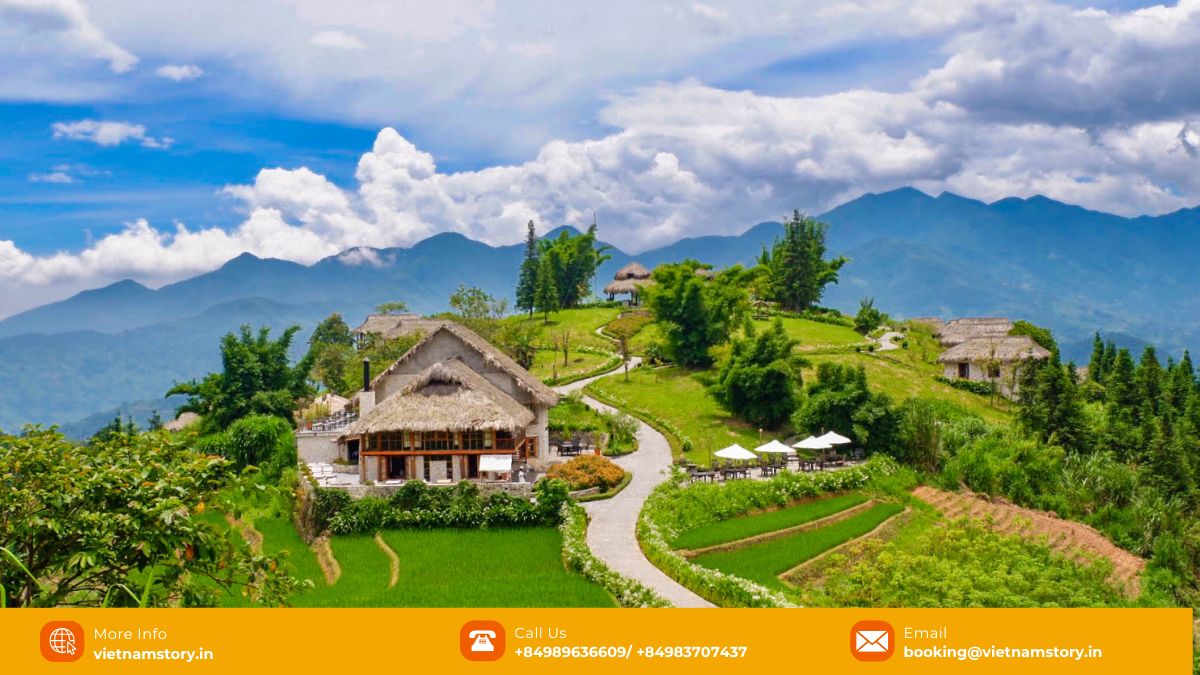
Sapa: a mountain retreat is a different kind of luxury
Sapa should not be compared directly with Phu Quoc or Da Nang on pools and beach access. The value here is the mountain setting, views, trekking access and slower pace.
Topas Ecolodge works for travellers who accept being away from Sapa town in exchange for landscape and retreat time. Hotel de la Coupole represents the opposite choice: stay in town and keep restaurants, transport and the town centre close.
Our where to stay in Sapa guide explains the more important decision—town, Muong Hoa Valley or a more remote stay—before you choose the individual property.
Mekong Delta: use a resort to slow the Southern Vietnam route
A riverside stay around Can Tho is useful when you want the Southern Vietnam leg to feel different from Ho Chi Minh City. Azerai Can Tho is one example of a stay where the setting is part of the reason to stop.
We would not choose a Mekong property only because it appears on a national luxury list. It should support a real Mekong block in the itinerary, with enough time to enjoy the river environment rather than arriving late and leaving after breakfast.
Luxury city hotels are not the same decision as resorts
Older “best resorts” lists often mix Capella Hanoi, The Reverie Saigon and similar city hotels into the same category as beach or island resorts. We would separate them.
A luxury city hotel is mainly about location, room quality and service while you continue sightseeing. A resort is more likely to justify time spent on the property itself. If Hanoi or Ho Chi Minh City is the base, choose the neighbourhood first rather than judging the hotel by whether it appears in a national resort ranking.
For Hanoi specifically, our where to stay in Hanoi guide compares Old Quarter, French Quarter and West Lake by trip fit.
How should you compare Vietnam resorts?
We would compare six things before star rating or brand name.
- Usable resort nights: a two-night stay with a late arrival and early departure is effectively one resort day.
- Transfer pattern: check airport transfer and the distance to the attractions you genuinely plan to visit.
- Room configuration: families should confirm connecting rooms, extra beds, child occupancy and whether a villa layout actually works for the group.
- Meals: breakfast inclusion, vegetarian/Jain requirements and the need to leave the resort for dinner can change the practical value of the stay.
- Mobility: large hillside or villa resorts may involve stairs, buggies or long walking distances. This matters with seniors and young children.
- Season and weather: Vietnam does not have one national beach season. The best resort area changes by month.
For accommodation budgets, our Vietnam hotel prices in Indian rupees guide helps put nightly rates into the wider trip budget.
Vegetarian and Jain travellers should check the actual meal plan
A five-star label does not guarantee that a strict vegetarian or Jain meal will be handled in the exact way your family expects. Ask what can be prepared, whether onion and garlic can be excluded, how breakfast works and whether the resort is isolated from alternative restaurants.
For ingredient-level planning, use our dietary restrictions guide and Jain food in Vietnam guide. We would rather verify the meal arrangement for the selected hotel than call an entire resort “Jain-friendly” without conditions.
How many nights should you give a resort?
If the resort itself is one of the reasons for the trip, two to three usable nights usually make more sense than a single overnight stop. That gives you at least one day when you are not packing, flying or crossing the region.
If the holiday is mainly a sightseeing route, upgrade the hotel where it improves comfort but do not force a resort block into every destination. Hanoi → Ha Long → Da Nang → Hoi An → Ho Chi Minh City already involves enough movement; adding remote resorts at every stop can make an expensive itinerary feel less restful, not more.
Want a resort stay that actually fits the Vietnam route?
Start with our Vietnam tour packages and compare route and duration first. Vietnam Story can then help place resort nights where they add real downtime, check the transfer pattern and flag room or meal requirements before the final quotation.
Our rule is simple: pay for the resort when you have time to use it. A well-located four- or five-star hotel can be the better choice on active sightseeing days; save the resort upgrade for the part of the trip where the family can actually slow down.