
You do not need a long list of cultural rules to behave respectfully in Da Nang. The most useful approach is simple: follow site-specific signs, dress more modestly at religious places, ask before photographing people at close range, do not touch altars or offerings, and stay calm when something goes wrong. Many other habits depend on the home, restaurant, temple or situation rather than being universal Vietnamese rules.
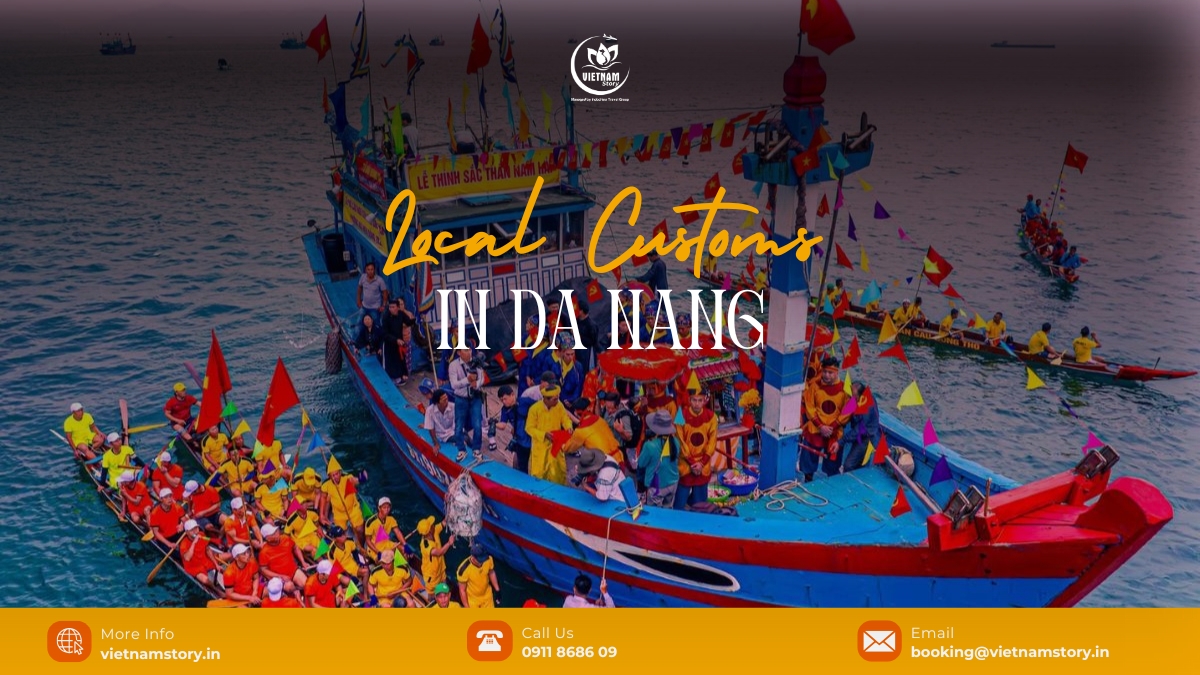
Da Nang etiquette in one minute
| Situation | What we would do | What not to assume |
|---|---|---|
| Pagoda or temple | Dress modestly, lower your voice, follow shoe/photography signs and leave worshippers space. | Every hall has exactly the same dress, shoe or photography rule. |
| Family home | Watch what the host does with shoes and follow their lead. | Shoes are always removed at every Vietnamese home. |
| Market | Ask the price first; negotiate politely only where bargaining is part of that stall or market. | Every price in every market should be bargained down. |
| Restaurant | Follow the table’s pace, use serving utensils when provided and avoid sticking chopsticks upright in rice. | Every Vietnamese meal follows one rigid seniority ritual. |
| Photography | Ask before close portraits, ceremonies or photographing someone during prayer. | Public access means every person or ritual is automatically available for photos. |
| Problem or disagreement | Explain the issue calmly and clearly. | You need to understand a textbook concept of “face” to resolve ordinary travel problems. |
Temple and pagoda etiquette: follow the place, not a universal checklist
Da Nang has active Buddhist sites ranging from Linh Ung on Son Tra to pagodas and cave shrines at Marble Mountains. They are places of worship as well as visitor attractions, so the basic principle is to avoid making sightseeing interfere with religious use.
- Dress more modestly than you would at the beach. Covering shoulders and knees is a sensible default for worship areas, but follow the actual site’s posted requirements rather than claiming one dress rule applies identically everywhere.
- Remove shoes where instructed or where everyone entering the hall is doing so. Do not assume every courtyard, corridor or building requires shoes off.
- Keep voices and phone audio low. This matters most near prayer halls, ceremonies and people worshipping.
- Do not touch or rearrange statues, incense, offerings or altar objects.
- Ask before photographing a ceremony, monk, nun or worshipper at close range. A wide photograph of architecture is different from putting a camera into someone’s religious practice.
- Do not invent a ritual greeting. A polite nod, respectful distance and normal greeting are sufficient unless a host or guide shows you a local practice.
Our Da Nang temples and pagodas guide helps choose which religious site fits the route; the Buddhism in Vietnam guide provides the wider religious context. This page stays focused on visitor behaviour.
Ancestor altars: observe without treating them as décor
Ancestor veneration is visible in many Vietnamese homes and businesses, but altar size and placement vary widely. You may see photographs, incense, fruit, flowers, drinks or other offerings.
As a visitor, the practical rule is straightforward: do not touch, move, sit on or place personal belongings on an altar or offering area. There is no need to perform a ritual yourself. If you are invited to participate in a family observance, follow the host’s instructions rather than copying a gesture from a travel article.
Homes and shoes: watch the host
Removing shoes is common in many Vietnamese homes, but “always remove your shoes before entering any private home” is too rigid. Entry layouts and household habits differ.
If there is a shoe rack, a line of footwear at the door or the host removes their shoes, follow that cue. If you are unsure, ask. That is more respectful than turning a flexible household habit into a national rule.
Markets and bargaining: not every price is negotiable
The old version of this guide said bargaining is expected in local markets. That is too broad. Some souvenir, clothing and tourist-facing stalls may negotiate; food stalls, supermarkets, convenience stores, restaurants and clearly fixed-price shops generally are not places to haggle over every purchase.
- Ask the price before committing if it is not displayed.
- If negotiation is normal at that stall, make a reasonable counter-offer rather than repeatedly pushing for a symbolic “lowest price”.
- If the seller declines, either accept the price or move on politely.
- Do not start bargaining after a service has already been delivered.
- For taxis and transport, use the meter/app or agree the fare under the relevant service rather than treating it as market bargaining.
If shopping is the real question, use our Da Nang markets guide; it separates Han, Con, Bac My An and night markets by purpose instead of using one bargaining rule for all of them.
Dining etiquette: a few useful habits, not a ceremony
Vietnamese meals range from quick bowls eaten alone to large shared family tables. The setting matters more than memorising a rigid order of who must sit or eat first.
- Avoid leaving chopsticks standing vertically in a bowl of rice. The image can resemble incense used in ritual contexts and is widely avoided at the table.
- Do not point at people with chopsticks or play with communal food.
- Use serving spoons or communal utensils when they are provided. In casual settings, observe what the table is doing rather than insisting on a rule that does not match the meal.
- Let the host set the pace at a hosted meal. There is no need for a foreign visitor to police whether the oldest person has taken the first bite.
- Dietary restrictions should be explained directly. Vegetarian, vegan, Jain and allergy requirements are not interchangeable and are better handled as food communication than etiquette.
Communication: calm and clear usually works better than cultural theory
Many travel guides explain Vietnam through the idea of “saving face”. That can be useful background, but it becomes a stereotype when every disagreement is reduced to one cultural concept.
For travellers, the practical advice is simpler: if a hotel booking, bill, transfer or restaurant order is wrong, show the relevant information and explain the correction calmly. Raising your voice rarely improves a service problem in any destination. If language is the issue, use the written booking, map pin, photograph or translation app rather than assuming the other person is being deliberately difficult.
Do not overgeneralise gestures such as touching the head, pointing with feet or using two hands
You will find travel advice claiming that touching anyone’s head is universally taboo, pointing with a foot is a major offence, or every object must be handed to an elder with two hands. These ideas mix real regional sensitivities with overconfident rule-making.
A better standard is ordinary courtesy: do not touch strangers unnecessarily, do not put shoes or feet on furniture or sacred objects, and handle gifts, documents and personal items respectfully. With older people or in formal situations, using both hands can be a courteous gesture, but travellers do not need to perform it mechanically in every exchange.
Cham heritage: a real India connection, but not a shortcut to modern Da Nang customs

Indian travellers may recognise Sanskrit-derived names and Hindu imagery in Cham art, including representations associated with Shiva, Vishnu, Ganesha and other deities. Those connections reflect centuries of maritime exchange and the development of Cham religious traditions in mainland Southeast Asia.
That history is valuable, but it should not be stretched into the claim that modern Da Nang and India share one set of customs. Contemporary Vietnamese social behaviour developed through many different historical, religious and regional influences.
If this is a major interest, the Museum of Cham Sculpture guide is the right specialist page. It gives the art and historical context without turning this etiquette article into a second museum guide.
Festivals change the normal visitor experience
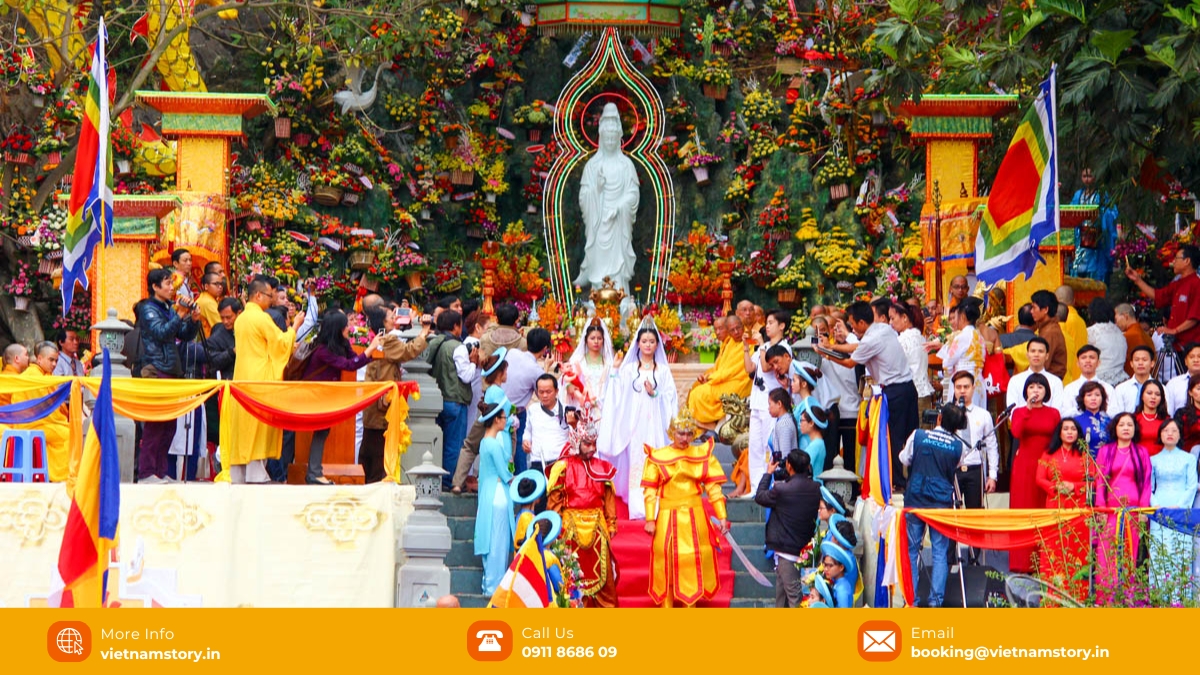
During Tet, Quan The Am Festival, Cau Ngu celebrations and other local events, crowd levels, opening patterns and the use of public or religious spaces can change. The most important etiquette adjustment is to recognise that you are entering an event used by local families, worshippers or communities — not a performance staged only for visitors.
- Give processions, worship and ceremonial spaces room.
- Ask before close-up photography of participants.
- Expect some businesses to change hours during major holidays.
- Check the year’s dates rather than copying last year’s festival calendar.
- Do not treat offerings, costumes or rituals as props for staged photographs.
For dates and event-specific planning, hand off to our Da Nang festivals guide. For Tet logistics across Vietnam, see the Vietnam Tet guide.
Environmental behaviour is simpler than “responsible tourism” slogans
Do not leave rubbish at beaches, mountains or religious sites; stay within permitted paths in protected areas; do not feed or approach wildlife for photographs; and follow temporary closures caused by weather or conservation management.
We would not claim that choosing any particular “local family-run seafood restaurant” automatically supports sustainable fishing. Sustainability depends on sourcing and practice, not business size or a marketing label.
What should Indian travellers actually remember?
Do not look for an Indian equivalent for every Vietnamese custom. Some historical connections are real, particularly in Cham art and the longer history of Buddhism, but everyday etiquette should be learned from the actual Vietnamese setting in front of you.
For most trips, five habits are enough: dress appropriately at sacred sites, follow local signs, ask before intrusive photography, treat altars and offerings as private/sacred space, and handle disagreements calmly. The rest can be learned by observing your host, guide or the people using the space.
How does cultural planning fit a Da Nang itinerary?
You do not need a separate “etiquette day”. Cultural context becomes useful when it helps you understand the places already in the route — Linh Ung, Marble Mountains, Cham Museum, a market, a family-run experience or a festival.
If you are deciding which of those experiences fit the number of days you have, use our Da Nang tour routes for Indian travellers to build the geography first and add cultural stops where they make sense.
Travelling during Tet or a major Da Nang festival, or with a family that wants more cultural experiences? Send your dates and group profile. We can place the relevant sites without turning the itinerary into a checklist of temples and museums.
Da Nang etiquette FAQs
Do I need to cover my shoulders and knees at every Da Nang temple?
Modest clothing is the safest default for worship areas, but follow the specific site’s signs and instructions. Do not assume every courtyard and building applies an identical dress rule.
Should I remove my shoes in a Vietnamese home?
Often, but not as an automatic national rule. Look for shoes at the entrance or follow the host’s example; ask if you are unsure.
Is bargaining expected at Da Nang markets?
It depends on the stall and product. Bargaining may occur at some tourist-facing clothing and souvenir stalls, while fixed-price shops, food businesses and supermarkets are different. Ask the price first and negotiate politely only where it is appropriate.
Is it rude to photograph people in Da Nang?
Wide public-street photography is different from a close portrait or photographing someone praying or taking part in a ceremony. Ask before intrusive or identifiable close-up photography.