
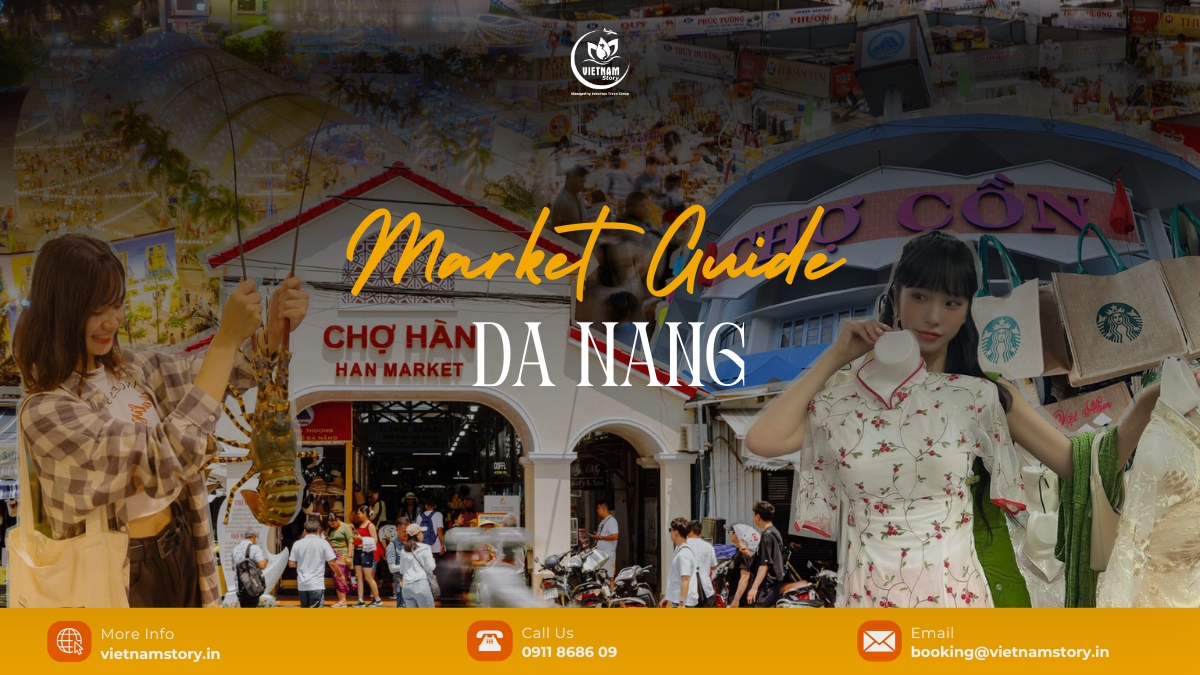
Which Da Nang market should you choose?
The fastest way to choose is by purpose + hotel area + time of day. We would not send every traveller to the same market, because the useful choice changes depending on whether you want souvenirs, local food, a morning market or an evening stop.| Market | Best for | Useful time to allow | Works best with | Main trade-off |
| Han Market | First-time shopping, packaged gifts, clothes, fabrics | About 45–75 minutes | Da Nang Cathedral, Han River, central Hai Chau | More tourist-facing; compare prices before buying |
| Con Market | Local food, snacks, everyday market activity | About 60–90 minutes | Lunch or an afternoon city-centre food stop | Busier and less polished; not the easiest souvenir-only stop |
| Bac My An | Casual local food if you stay near My Khe/My An | About 45–60 minutes | Beach-side hotels, An Thuong, My Khe | Not worth crossing the whole city for if you are already staying in Hai Chau |
| Son Tra Night Market | Evening snacks + Dragon Bridge | About 60–90 minutes; longer on show nights | Han River, Love Bridge, Dragon Bridge | More tourist-oriented than a working daytime market |
| Helio – B.fair | Food, seating, entertainment, groups and families | About 90–120 minutes | A self-contained evening at Helio Center | Less useful if your main goal is traditional-market shopping |
Han or Con Market: choose by what you want to do
Han and Con are the two central markets most first-time visitors compare, but they solve different problems. Han is easier for packaged gifts, clothing and a quick central stop; Con is stronger when food and everyday market activity are the priority.Han Market (Chợ Hàn) – easiest for a central shopping stop
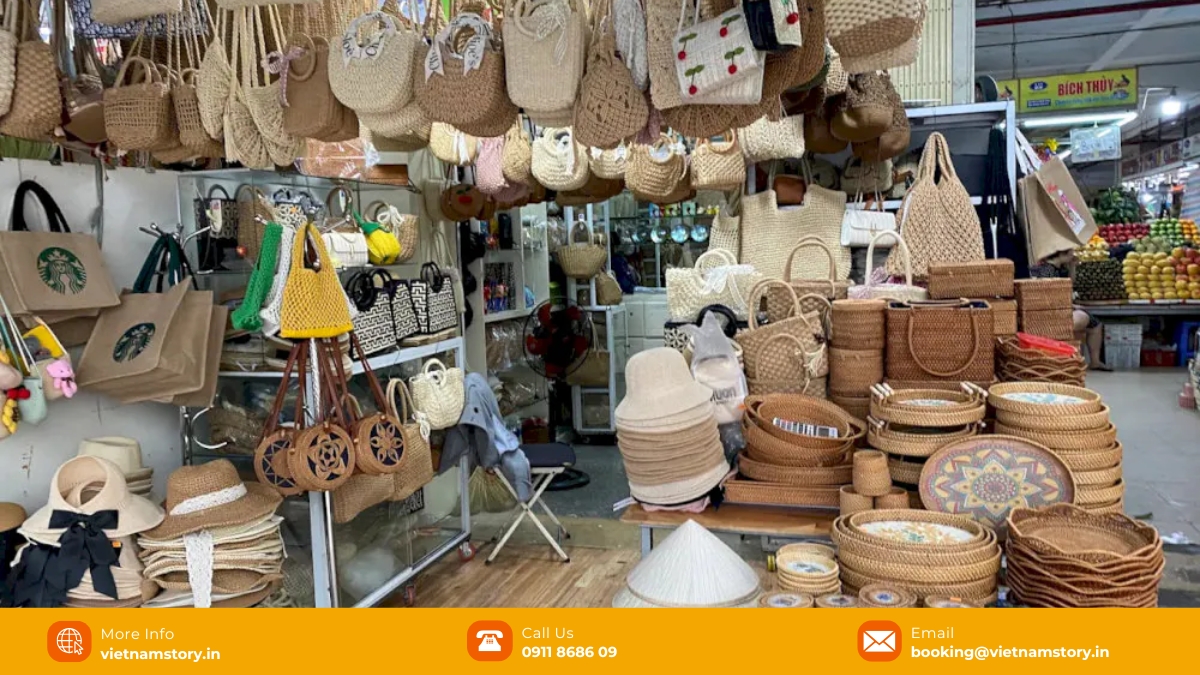
Con Market (Chợ Cồn) – better when food is the priority
Con Market is at 290 Hung Vuong, Hai Chau. Plan for roughly 06:00–19:00, with individual stall times varying. If you want food as well as shopping, late morning through afternoon usually makes more sense than arriving only to tick off the building.Choose Con if you want to eat as well as browse. Mi Quang, banh xeo, banh beo, rice-paper dishes, sweet soups and avocado ice cream are all associated with the market, but there is no need to arrive with a rigid food checklist. Walk once, see which stalls are actually operating, check the displayed price where available, and order what suits you.For vegetarian or Jain travellers, do not assume a vegetable-looking dish is suitable. Fish sauce, meat stock, shrimp paste, pork, onion or garlic can still be part of sauces and broths, so ask before ordering.Bac My An Market: the beach-side decision
Bac My An matters because of where you are staying, not because every first-time visitor needs a third daytime market.If your hotel is around My Khe, My An or An Thuong and you want local food, this is the market we would consider before taking a car across the river to Han or Con. It serves everyday local shopping as well as prepared food, so the experience feels different from a night market and more practical than a souvenir-focused stop.Choose Bac My An if
- you are already staying on the beach side;
- you want a compact local-food stop rather than dedicated souvenir shopping;
- you are happy with a working market environment;
- you want to keep the rest of the day around My Khe or An Thuong.
Skip it if
- you are staying in central Hai Chau and already plan to visit Con for food;
- your only goal is gifts and packaged souvenirs;
- you expect an evening attraction or a polished entertainment venue.
What time should you visit a Da Nang market?
There is no single “best time” because a traditional market and a night market do different jobs.Morning: better for working-market rhythm
If you want produce, breakfast activity and the sense of a market being used by local households, morning is the stronger window. Han and Con are both active from early in the day. We would choose morning for travellers who are comfortable with a busier, more practical market and who want to see daily shopping rather than only souvenir stalls.Late morning to afternoon: easier for casual visitors
This is often the simplest window if the market is only one stop in a city itinerary. You can browse without building the whole morning around it, then continue to lunch, the riverfront or another attraction. For Con Market, this is also when a food-focused stop can make sense if you are already hungry rather than visiting simply to “see the market”.Evening: switch to a night-market owner
After sunset, move the decision to Son Tra or Helio – B.fair. Son Tra fits a Dragon Bridge evening; Helio works better when food, seating and entertainment are the main event. This avoids the common mistake of treating all markets as interchangeable just because they share the word “market”.Night markets: choose by where your evening already takes you
Night markets are a different experience from Han, Con or Bac My An. Treat them as an evening food-and-stroll option rather than as the place to understand everyday local shopping.Son Tra Night Market – easiest to pair with Dragon Bridge
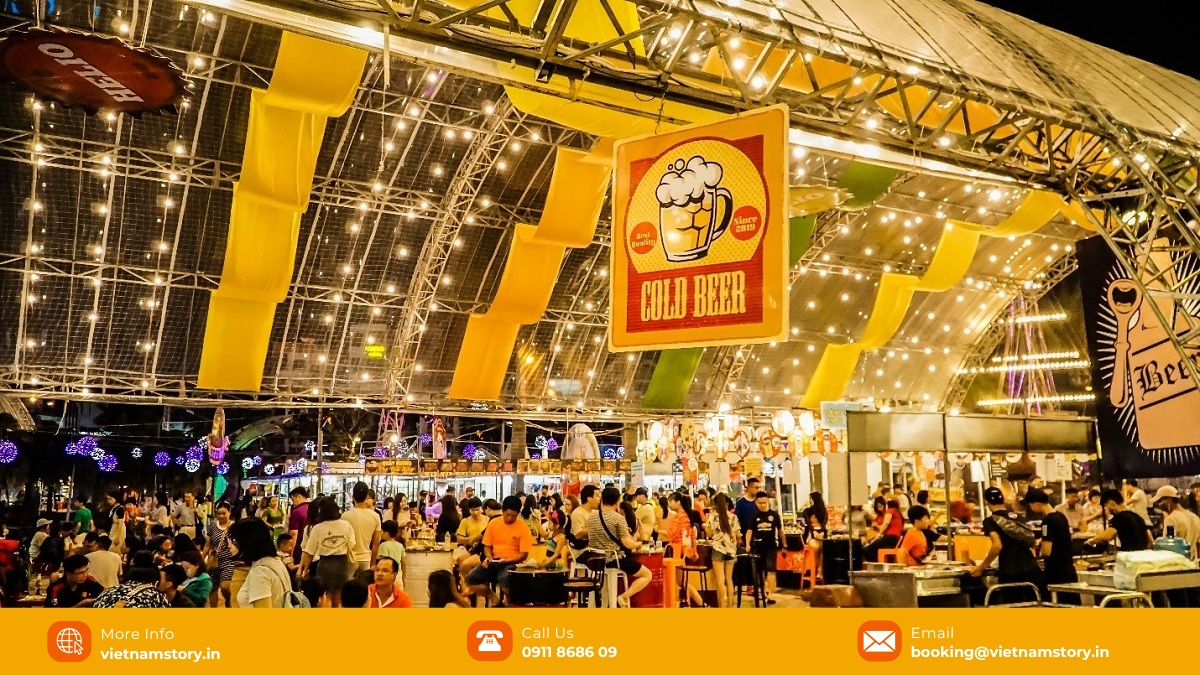
Son Tra Night Market is on Vo Van Kiet, An Hai, by the Dragon Bridge, and currently runs roughly 17:00–23:00. If you are already planning the riverfront or the weekend Dragon Bridge show, this is the night market that fits most naturally. Expect street food, grilled seafood, small souvenirs and crafts; go for the location and evening atmosphere rather than for a deep local-market experience. For the current show timing, food strategy and a step-by-step evening plan, use our Son Tra Night Market guide.Helio – B.fair – the relaunched Helio night-market format
Secondary markets that only make sense on the right route
These are useful when they already fit your day, not because every traveller needs another market stop.- Tho Quang wholesale seafood market: this is a working wholesale seafood market, not a normal souvenir stop. If you specifically want to see the wholesale trade, go very early and confirm the current trading window locally; do not build a casual morning around one old 03:00–05:00 time slot.
- Dong Da Market: this remains an active large local market in Hai Chau. Choose it for everyday shopping if your route already passes the area; there is little reason to cross the city for it when Han, Con or Bac My An already fits your day.
Three practical market routes we would actually use
A market becomes much more useful when it fits a route you already wanted to take. These are planning frameworks, not fixed tours.Route 1: city-centre shopping + food
Han Market → Da Nang Cathedral / central cafés → Con Market for food. This works when you are staying in Hai Chau or already spending the day around the Han River. Give Han the shopping job and Con the food job instead of expecting both markets to feel different while doing the same thing.Route 2: beach-side local food without crossing the city
My Khe / An Thuong → Bac My An Market → back to the beach side. If your hotel is near My Khe or My An, this is often a better use of time than taking a car into the centre only to eat at a market. We would use Bac My An as a compact local-food stop, then continue with the beach, a café or dinner nearby.Route 3: evening market + landmark
Riverfront → Son Tra Night Market → Dragon Bridge on a show night. If the bridge is not part of your plan and you would rather sit, eat and stay in one entertainment venue, choose Helio – B.fair instead. These are two different evening jobs, not two markets you need to collect.Shopping etiquette and practical tips

Bargaining and payment
For clothing, souvenirs and unpriced goods, some negotiation is normal, but there is no reliable percentage formula. Food stalls and clearly priced items are usually better treated as fixed-price purchases.Cash in Vietnamese dong is still the easiest option for visitors. Some vendors may also accept domestic QR or bank transfer, but an international card should not be your only payment method in a traditional market.Safety and food hygiene
Markets can be crowded, so keep your phone and wallet secure and stay aware of bags when moving through narrow aisles.A busy stall can suggest fast turnover, but it does not prove hygiene or freshness. Prefer food cooked to order, look for clean utensils and sensible hot/cold storage, and skip anything that does not look well handled. If you are vegetarian or Jain, ask specifically about fish sauce, shrimp paste, meat stock, lard, onion and garlic rather than relying only on the word “vegetarian”.If food is the main reason you are choosing a market, our Da Nang street-food guide gives you more context on dishes and how to build meals into the day.
Extra planning notes for Indian travellers
The market choice itself does not change because you are travelling from India, but a few attributes do change the visit.- Vegetarian / Jain food: “vegetarian-looking” is not enough. Sauces and broths may contain fish sauce, shrimp paste or meat stock; Jain travellers also need to ask about onion and garlic. Choose dishes where the ingredients are easy to explain and verify.
- Family groups: Han is easier for a compact shopping stop; Helio is easier when different family members want food, seating and entertainment in one venue. Con and Son Tra can feel more crowded at peak periods.
- Cash: keep Vietnamese dong available for small stalls. Domestic QR payment is common in Vietnam, but an overseas visitor should not assume every vendor can take an international card.
- Food gifts: do not buy meat or seafood purely because it is vacuum-sealed. If the item is for your flight back to India, check the product and import implications in our what to buy in Da Nang guide before putting it in your luggage.
How to fit a market into your Da Nang day
A market works best when it sits naturally on a sightseeing or food route, rather than becoming a separate cross-city trip. Han Market is the straightforward central choice when you want one shopping stop around Hai Chau and the Han River without adding another transfer.If your priority is local food, a market near your hotel, or a vegetarian/Indian/Jain-friendly day plan, the more useful question is how much time the market deserves and what you can combine around it. A customised itinerary can leave that window in the right part of the day instead of squeezing it between two fixed visits. If you are planning with us, mention the market you care about when discussing the route, duration and ground arrangements, and flag dietary requirements before the final itinerary is confirmed.If that kind of route planning is useful for your trip, you can send us your preferred market and travel dates, then use the comparisons above to decide which stop actually fits.
As always, treat a market stop, transfer or other service as included only when it appears in the final itinerary and quotation.