
Ha Long food is seafood-led, but you do not need to turn the trip into a checklist of unusual dishes. For most first-time travellers, one good local seafood meal, chả mực, a regional noodle dish or breakfast, and a simple dessert give enough local context without making every meal another sightseeing stop.
At Vietnam Story, we would plan food around the cruise, hotel area and dietary needs first. This page is the regional food decision guide: what is worth prioritising, what is optional, and what needs extra checking. For restaurant-by-restaurant choices, use our Ha Long restaurant guide. For Indian dining specifically, use our Indian restaurants in Ha Long Bay guide.
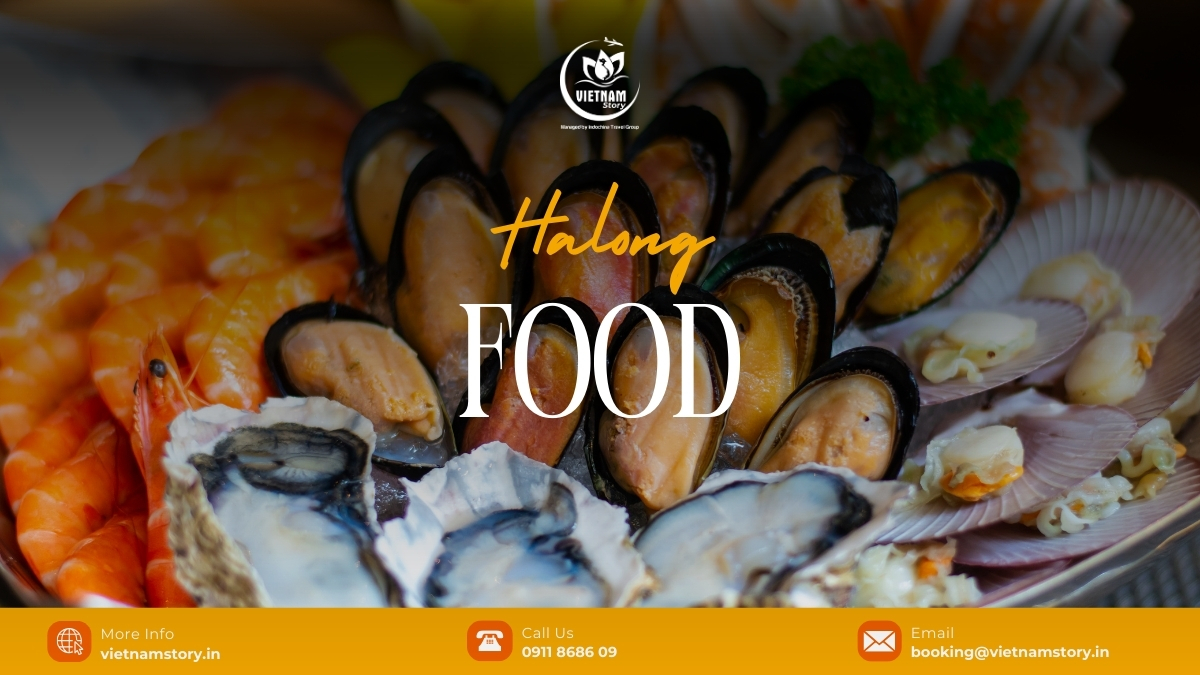
What Ha Long food is actually worth prioritising?
| If you want… | What we would prioritise | What we would not force |
|---|---|---|
| One recognisable local specialty | Chả mực | Several similar seafood snacks in one meal |
| A local breakfast or light meal | Bún bề bề or another seafood noodle dish | Crossing the city for one named stall |
| A full seafood meal | A restaurant that shows prices clearly and fits your hotel/route | Ordering rare seafood just because it is labelled a specialty |
| A simple dessert | Ha Long-style yogurt with tapioca pearls | Turning dessert into a separate transfer |
| Vegetarian or Jain meals | Pre-confirmed restaurant or cruise arrangement | Assuming a meat-free-looking market dish is suitable |
Chả mực: the easiest local specialty to understand
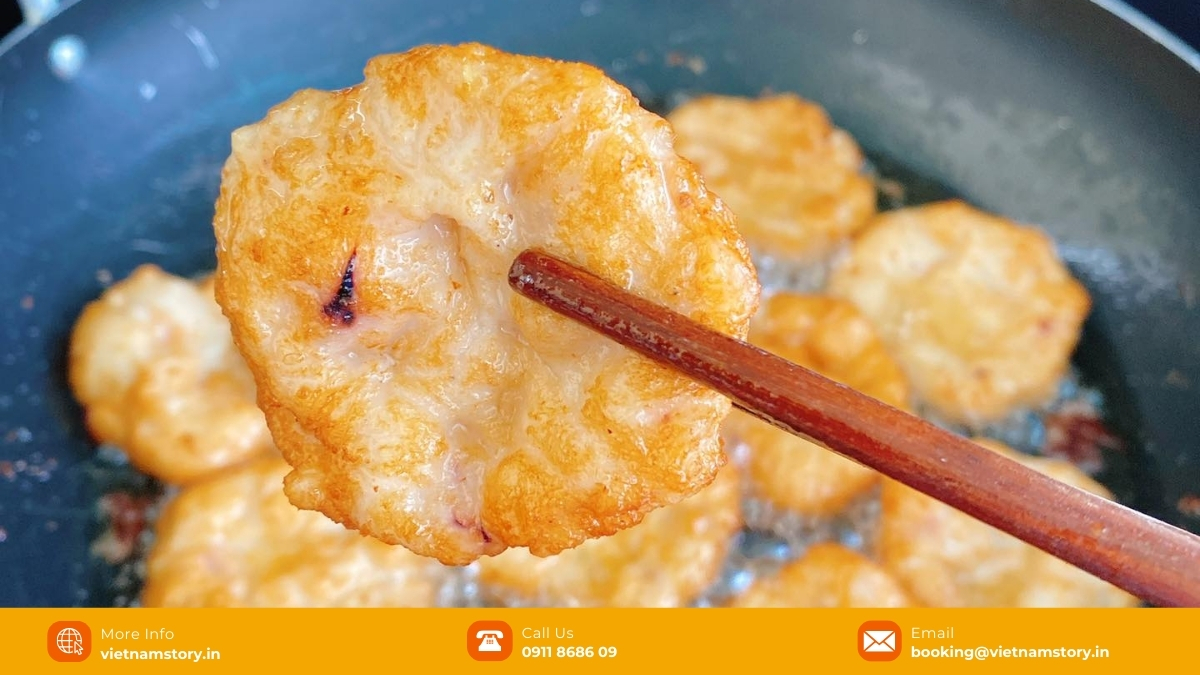
Chả mực is one of the best-known Quảng Ninh foods and one of the easiest specialties to add to a normal meal. It is a squid cake or patty, usually fried and served on its own or with rice, sticky rice or bánh cuốn.
The useful decision is not whether you find the “most famous” stall. Quality varies by batch and seller, and there is no need to cross Ha Long just to reproduce a social-media recommendation. If you are already eating in Hồng Gai or Bai Chay, try it from an established restaurant or food seller that fits the route.
Seafood noodles and breakfasts: useful when you want a local meal without a long dinner
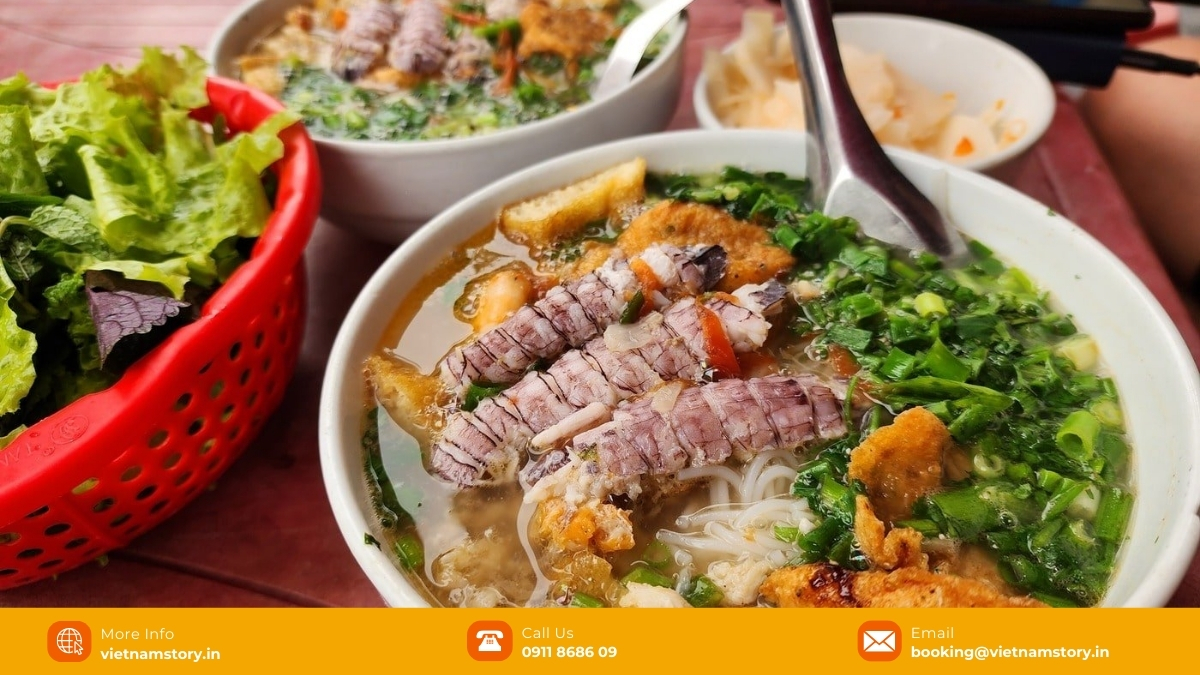
Seafood noodle dishes are a practical way to try the coastal food culture without committing the whole evening to a large seafood restaurant. Bún bề bề, made with mantis shrimp, and noodles with cù kỳ are common examples associated with Ha Long and the wider Quảng Ninh coast.
We would choose the dish by what is available near the hotel or next route stop rather than build the itinerary around one restaurant name. This is especially useful on a morning when the group needs to move on to a cruise, Hanoi transfer or another sightseeing block.
What about shellfish, sá sùng and other unusual local foods?
Ha Long and Quảng Ninh have a much wider seafood tradition than the few dishes most visitors recognise. Depending on season and restaurant, you may see razor clams, other shellfish, sá sùng and less familiar marine ingredients.
We would treat these as optional regional food context, not “must-try” items. Availability, sourcing and price can change, and unfamiliar seafood is not a good place to rely on a fixed online price or a claim that one stall is always best.
Sam (horseshoe crab) also appears in regional food discussions, but we would not promote it as a casual first-timer recommendation. If a traveller deliberately wants to try an unusual seafood dish, use an established restaurant and ask exactly what is being served and how it is prepared.
What can you eat if you do not want seafood?
You do not have to eat seafood at every meal in Ha Long. Mainland Bai Chay and Hồng Gai have Vietnamese, international and Indian dining options, and the hotel or cruise meal plan may already cover most of the trip.
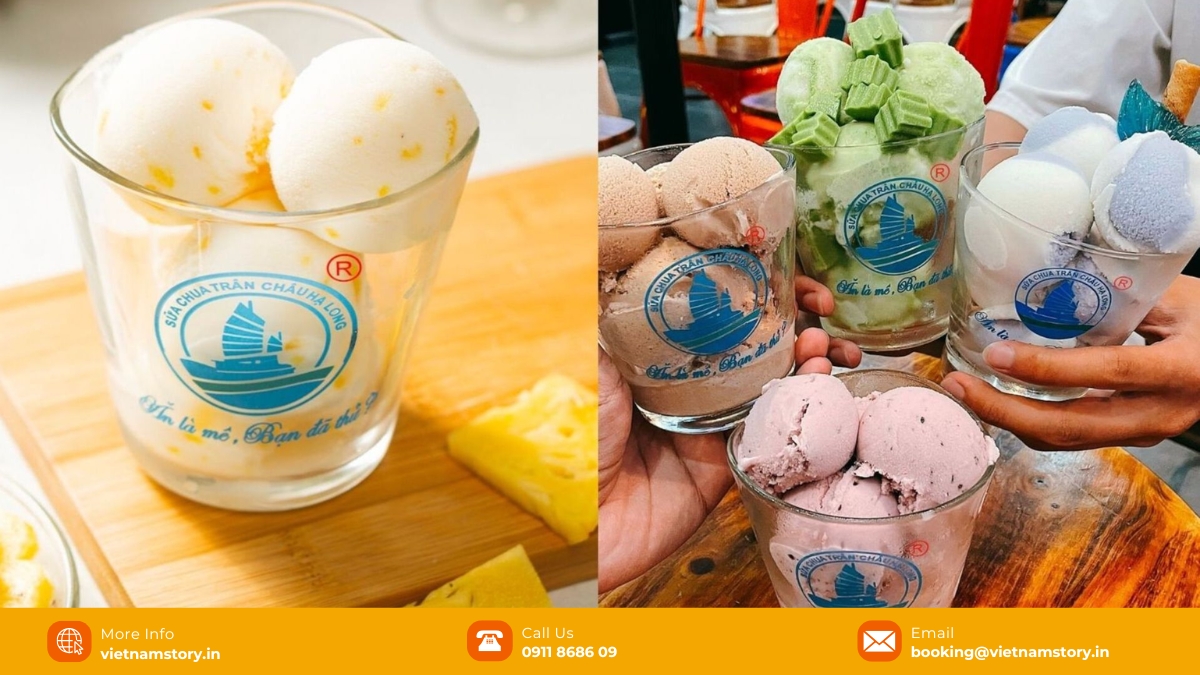
For a local dessert, yogurt with tapioca pearls is an easy option to consider. For a larger non-seafood meal, we would usually choose the restaurant by location and dietary fit rather than search for an “authentic Ha Long” meat dish that requires another detour.
Vegetarian and Jain travellers: what needs to be confirmed?
“Vegetarian available” is not the same as Jain, Satvik or zero cross-contact. In Ha Long, the detail matters more on a cruise because changing restaurants is difficult once the vessel has departed.
- For cruise meals: confirm the exact vessel, sailing date and what the operator has agreed to provide before payment.
- For Jain requirements: state the actual restriction set you need, including onion, garlic and root vegetables if applicable; do not rely only on the word “Jain”.
- For strict vegetarian meals: ask about fish sauce, shrimp paste, broth and shared cooking surfaces.
- For allergies: treat this separately from preference-based dietary requests and communicate the allergen clearly to the restaurant or cruise operator.
On the mainland, our Indian restaurants in Ha Long Bay guide is the better place to compare dining options. Vietnam Story can also build the meal requirement into the route before confirming a cruise or group programme, but the arrangement should be specific to the actual supplier rather than assumed from star rating.
Food safety: keep the rules simple
For most travellers, the useful rules are straightforward: choose food that is properly stored and freshly prepared, eat seafood thoroughly cooked when possible, avoid raw or undercooked shellfish if you want to reduce foodborne-illness risk, and keep cold food cold and hot food hot.
There is no reliable rule that “live seafood is automatically safe”, and there is no need to boil every shellfish for one fixed number of minutes. Different seafood and cooking methods have different safe-cooking guidance. If a dish smells sour, rancid or strongly ammonia-like, do not eat it.
If food safety is a major concern for the trip, continue to our Vietnam food safety guide. It is the correct owner for broader hygiene, water, street-food and stomach-upset planning.
Market, restaurant or cruise: where should you try local food?
| Setting | Best for | Main trade-off |
|---|---|---|
| Local market | Browsing ingredients, packaged products, simple snacks | Ingredient and preparation detail can be harder to confirm |
| Seafood restaurant | A deliberate local meal with clearer ordering | Price varies widely by species, weight and preparation |
| Indian restaurant | Familiar meal and easier dietary communication | Not the place to prioritise regional seafood |
| Cruise meal | Convenience during the bay programme | You are dependent on the vessel’s agreed menu and kitchen setup |
For market shopping and market-food context, use the Ha Long market guide. If you are staying in Bai Chay, the Bai Chay markets guide explains the current difference between Cai Dam, VUI-Fest and older night-market listings.
How should you choose a restaurant?
We would not rank restaurants only from an old list of “best places”. Instead, check:
- whether the restaurant is convenient from your hotel or cruise port;
- whether seafood is priced by weight, portion or set menu;
- whether preparation charges are included;
- whether the restaurant can actually meet the group’s dietary requirement;
- whether the opening time still fits your transfer or cruise schedule.
Use our Ha Long restaurant guide for the restaurant decision itself. This page stays focused on what to eat and how food should fit the route.
How Vietnam Story would plan meals around Ha Long
Food planning works best after the transport and cruise decisions are clear. We would usually:
- confirm the day cruise or overnight cruise;
- confirm the exact harbour and hotel area;
- identify which meals are already included on the vessel;
- lock any vegetarian, Jain or allergy requirements with the actual supplier;
- use the remaining mainland meals for one local-food experience or an Indian meal, depending on the group.
That avoids three seafood meals in a row, avoids searching for a restaurant during a tight boarding window, and leaves room for travellers who simply want familiar food after a long transfer.
Start with our Ha Long Bay cruise guide or browse our Vietnam tour packages. Vietnam Story can then fit local food, Indian meals and confirmed dietary arrangements around the actual route instead of adding restaurants as a separate checklist.