
When planning a journey through Northern Vietnam, many of our guests look at the deep, emerald waters of the Gulf of Tonkin and ask one very specific question while booking their Halong Bay Cruise: “How deep is Halong Bay?” It is a natural curiosity – after all, when you see those majestic limestone karsts rising from the sea, you want to know if it is truly safe to jump in for that perfect swimming shot or if the water is stable enough for a restful night’s sleep. In this guide, we will clarify every detail regarding the underwater topography, historical safety records, and current protocols to ensure your peace of mind.

The “drowned karst” profile: How deep is Halong Bay really?
To understand the water, one must understand the land. Ha Long Bay is not a deep ocean abyss; it is essentially a “drowned karst” landscape. Millions of years ago, this area was a limestone forest on dry land. As sea levels rose after the last Ice Age, the valleys between the peaks were flooded, leaving only the tops of the mountains visible as islands.
So, how deep is Halong Bay? On average, the bay is surprisingly shallow, with most areas sitting between 5 and 10 meters deep. While navigation channels for large ships can reach nearly 30 meters, the majority of the bay remains a gentle, submerged plateau that keeps currents low and water temperatures pleasant for travelers. When we look at the specific measurements for the season, the data is very reassuring for those who may have a fear of deep water:
- Average depth: Most of the bay floor is relatively flat and sandy, sitting at a comfortable 5 to 10 meters (16 – 33 feet). This is why the water remains such a vibrant emerald green; the sunlight can reach the bottom in many places.
- Navigation channels: The “highways” used by our 5-star cruise ships and international vessels are naturally deeper or dredged for safety, reaching depths of 15 to 29 meters (49 – 95 feet).
- Deepest points: As you move further offshore toward the transition zones of the Gulf of Tonkin or Lan Ha Bay, the depth can drop to 30 meters (98 feet).
- The technical record: While far from standard tourist routes, specific technical diving spots near the outer Cat Ba islands can reach nearly 70 meters, though your cruise will never anchor in these zones.
To help you visualize where you will be spending your time during your 2D1N or 3D2N expedition, we have compiled a detailed comparison of the different zones you will visit.
READ MORE: How Was Halong Bay Created?
A comprehensive depth comparison table for your journey
Every activity you enjoy on the bay happens at a different depth. Whether you are stepping off a beach, paddling a kayak into a hidden cave, or sleeping on a luxury vessel, the water beneath you changes.
This table clarifies exactly how deep Halong Bay is across its various activity zones. From the very shallow 1-meter waters at the edges of Ti Top Beach to the stable 15-meter depths of the overnight anchorages, these figures show that the bay is designed by nature to be a safe, accessible maritime playground.
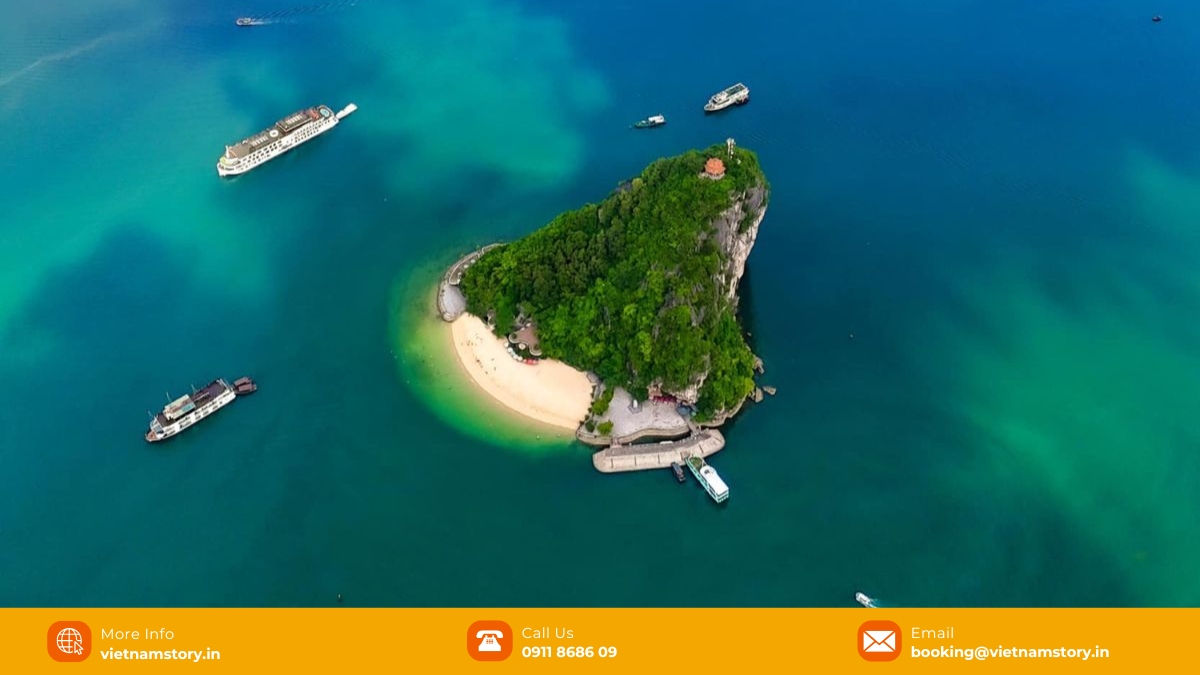
Please refer to the following structure to see the depth profiles for the March 2026 season:
| Area / Feature | Depth range | Activities and suitability |
| Beaches and coves (e.g., Ti Top) | 1 – 5 meters | Safe for children, wading, and beginner swimming. |
| Kayaking lagoons (e.g., Luon Cave) | 3 – 8 meters | Calm, crystal-clear shallows; easy to see the seabed. |
| Cruise anchorages | 10 – 15 meters | Stable overnight stays; perfect for Squid Fishing. |
| Main navigation channels | 20 – 30 meters | Ship transit; home to larger fish species. |
| Lan Ha Bay extension | 5 – 30 meters | Pristine coral reefs; ideal for Scuba Diving. |
Knowing these depths allows you to plan your family’s safety, especially if you are traveling with children or seniors who may not be confident swimmers.
How does the depth of Halong Bay impact your adventure?
The shallow nature of our bay is actually its greatest asset. It is what makes Ha Long Bay different from the deep, dark waters of the open ocean. For our guests from Mumbai or Delhi, understanding this “shallow-water advantage” often changes their entire perspective on the trip.
The answer to “how deep is Halong Bay” directly impacts three major parts of your trip: safety from predators, water temperature, and the success of your night activities. Because the water is shallow and enclosed by limestone walls, it stays warmer, remains free of large open-ocean predators like sharks, and allows boat lights to attract squid more effectively. Let’s look at the specific evidence of how these depths improve your experience:
- Safety and predators: Because the bay is a shallow “maze” of karsts, it acts as a natural barrier. Large, predatory sharks prefer the deep, cold shelves of the open ocean. They simply do not enter the shallow, busy tourist loops of Ha Long Bay. You can swim with total peace of mind.
- The squid fishing “sweet spot”: Have you ever wondered why we catch so much squid? Our cruises anchor in about 10–12 meters of water. This is the perfect depth for the ship’s powerful LED lights to penetrate all the way to the seabed, attracting the squid to the surface where you can easily jig for them.
While the natural depths are stable, there is another “hidden” factor that our Indian guests must be aware of: the power of the tides.
READ MORE: Best things to do in Halong Bay
Expert insights for Indian travelers
For our Indian guests, the most important depth-related factor is the “4m Rule” of tidal shifts. With a tide that can swing by 4 meters in a single day, a lagoon that is perfect for kayaking at noon might be too shallow to enter by 4:00 PM. We also prioritize “Indian Family Safety” by recommending specific beaches like Ba Trai Dao, where the gradual depth is ideal for non-swimmers. At Vietnam Story, we pay close attention to these three logistical details for you:
- Tidal shifts (The 4m Rule): Ha Long has a significant diurnal tide system (one high and one low per day). The amplitude can be as much as 3.5 to 4 meters. This means a grotto that is 5m deep at high tide could be almost empty at low tide! Our captains use 2026 digital tidal charts to ensure your kayaking is never interrupted.
- Safety for non-swimmers: We know many of our guests prefer to stay in waist-deep water. For this, we recommend Ba Trai Dao (Three Peaches) Beach. Unlike other spots, it has a very gradual, sandy slope that stays under 1.5m deep for a long distance from the shore.
- Sun reflection: Because the water is shallow, the light reflects off the sandy bottom. In the clear March air, this intensifies the UV rays. We always provide our guests with reef-safe sunscreen to protect them from the sun while preserving the corals that live in the 5m-deep reefs.
Beyond the numbers and safety tips, there is a “rare attribute” of the bay’s depth that most people never realize until they are actually on the water.
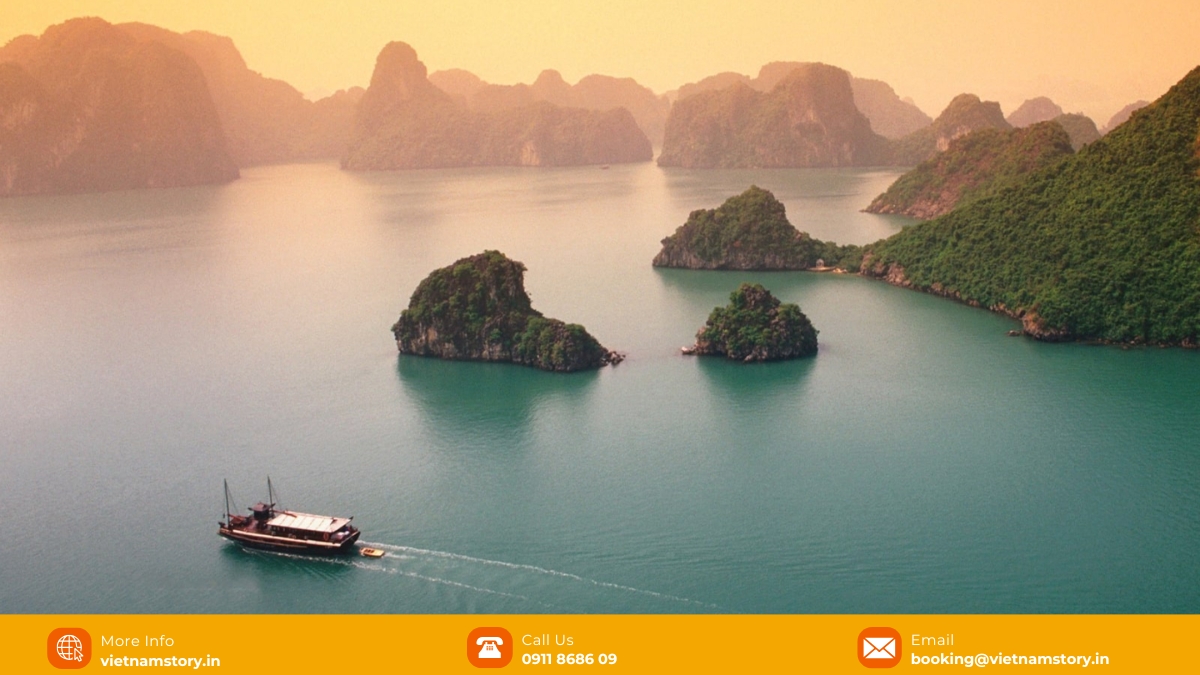
Rare topography and marine visibility
The topography of the bay is truly a “hidden mirror,” where submerged valleys and limestone shelves create a wave-less environment. Combined with the “Clean the Bay” initiative, which has improved visibility to 8 meters, travelers can now see the underwater extensions of the karsts and vibrant coral colonies more clearly than ever before.
Beneath the surface lie “submerged valleys” and “hidden karsts.” In some spots, you might be kayaking over a 15-meter canyon, only to have your paddle tap a limestone shelf just 0.5 meters below the surface. This hidden landscape is what creates the bay’s uniquely calm, “wave-less” character – the underwater peaks act as natural breakwaters, stopping the heavy waves of the ocean from entering the inner loop.
Conclusion
So, How deep is Halong Bay? It is just deep enough to hold a world of legends, but shallow enough to keep you and your family safe. Whether you are fishing for squid at 12 meters or wading at the shore at 1 meter, the water is your friend. At Vietnam Story, we are ready to welcome you to our home. We handle the tidal charts, the safety gear, and the local secrets so that you can simply focus on the emerald horizon.
Top Halong Bay Tours You’ll Love


Vietnam Highlights 7 Days: From Hanoi to Phu Quoc
Hanoi - Halong bay - Da Nang - Hoi an ancient town - Phu Quoc


8 Days Vietnam Journey: Culture, Heritage & Natural Wonders


Hanoi - Halong - Sung Sot - Titop - Luon Cave - Hanoi


Serenity Grandeur Cat ba cruise
Lan Ha Bay - Cat Ba - Cai Beo Floating Village - Viet Hai Village - Turtle Island - Tai Keo Cave


Hanoi - Lan Ha Bay - Dark And Bright Cave - Hanoi