
Non Nuoc Pagoda is a small Buddhist site at the foot of Non Nuoc Mountain (Duc Thuy Son) in central Ninh Binh. We would add it when the route already passes through the city and you want a compact heritage stop combining the pagoda, mountain inscriptions and Truong Han Sieu context. If you are choosing between Ninh Binh’s main spiritual sites, use our temples and pagodas comparison first.
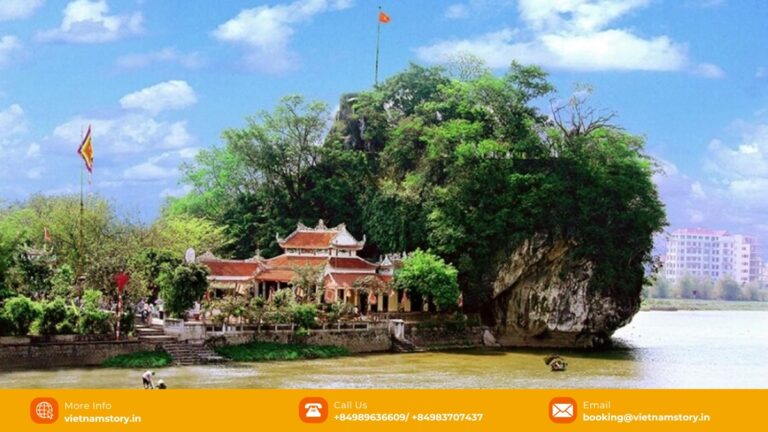
Non Nuoc Pagoda at a glance
| Planning point | What to know |
|---|---|
| Where it is | At the foot of Non Nuoc Mountain in the central Ninh Binh city area, close to the Day–Van river confluence. |
| Main reason to visit | A compact combination of Buddhist site, mountain inscriptions, river/city views and Truong Han Sieu literary history. |
| Time | A short city-side stop rather than a half-day anchor. |
| Physical effort | The pagoda itself is easy to visit; the mountain section adds roughly 72 stone steps. |
| Best fit | Travellers staying in or passing through Ninh Binh City. |
Why the pagoda and mountain belong together
Non Nuoc Pagoda makes more sense when read as part of the wider Non Nuoc Mountain / Duc Thuy Son heritage cluster. Official Ninh Binh tourism information places the pagoda at the foot of the mountain and dates its origins to the reign of King Ly Nhan Tong.
The mountain itself carries the stronger historical and literary layer. It is associated with the Tran-dynasty scholar Truong Han Sieu, who named it Duc Thuy Son, and its rock faces preserve a large collection of old inscriptions and poems by Vietnamese historical figures.
What to see during a short visit
Non Nuoc Pagoda
Use the pagoda as the spiritual part of the visit. It remains an active Buddhist site, so the useful approach is simple: enter quietly, follow local footwear and photography instructions, and keep the visit secondary to worship when ceremonies or local visitors are present.
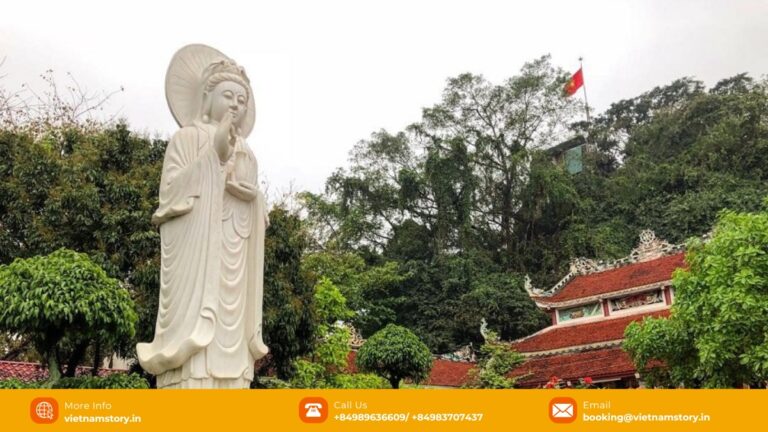
Non Nuoc Mountain and the inscriptions
Official tourism material describes Non Nuoc Mountain as a nationally significant historic and scenic site, with numerous poems and inscriptions carved into the rock. The climb is short enough to add when weather and mobility suit the group, but the inscriptions and historical context—not a dramatic summit—are the main reason to continue upward.
Current tourism information describes around 72 stone steps to the upper area. After rain or in strong heat, treat the climb as optional rather than a compulsory part of the pagoda visit.
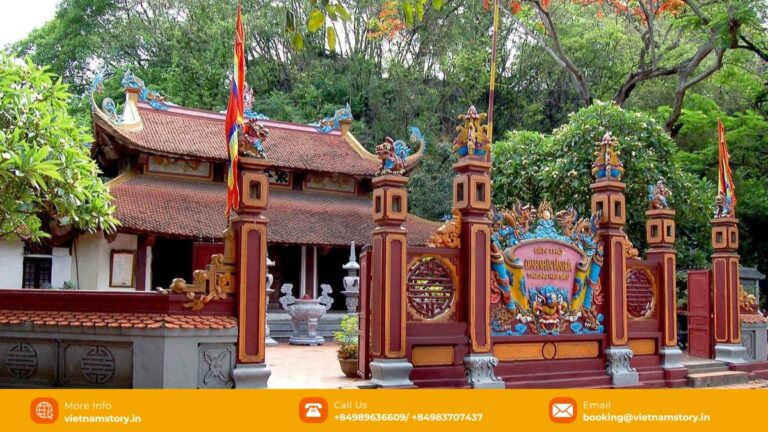
Truong Han Sieu Temple
The nearby temple adds the literary-history context. Truong Han Sieu was a Tran-dynasty scholar and official closely associated with the mountain; pairing the temple with the inscriptions helps explain why this small city site has more historical depth than a quick pagoda photo stop.
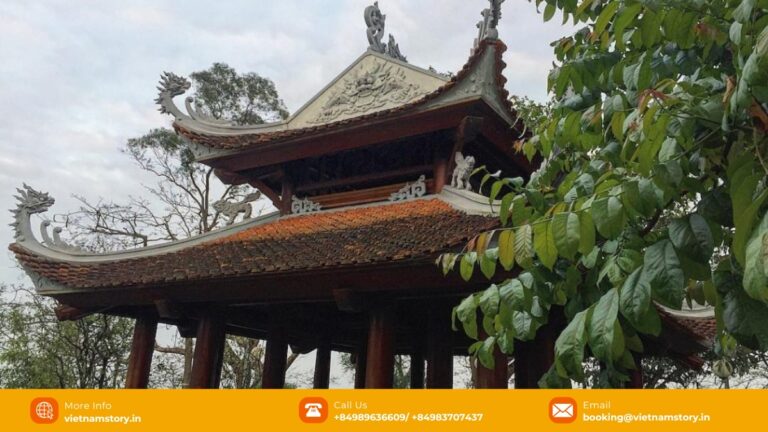
Nghinh Phong Pavilion and the city view
Nghinh Phong Pavilion sits on the mountain route and gives a place to pause above the riverside city area. We would treat the view as part of the combined mountain visit rather than market it as a separate attraction.
When Non Nuoc fits the itinerary
Choose Non Nuoc when the location solves an itinerary need:
- You are staying in Ninh Binh City: it adds culture without another long transfer.
- You have rail or city-side logistics: the heritage cluster can fill a short block before or after another city task.
- You want a compact history stop: pagoda, inscriptions and Truong Han Sieu context sit in one area.
- You do not need another major attraction: this works best as a short contrast, not a replacement for Trang An, Tam Coc or Bai Dinh.
If your whole day is centred on Tam Coc or Trang An, we would not cross Ninh Binh only to add Non Nuoc unless the literary or city history is a real priority.
How to reach Non Nuoc Pagoda
The site sits in the city area, so use a live map from your actual hotel, railway station or previous stop. Walking can make sense from nearby city accommodation; otherwise a short taxi, app-based ride or arranged vehicle is simpler.
If you are still solving the intercity journey from Hanoi, use our Hanoi to Ninh Binh transport guide. This page should not duplicate train, bus or limousine comparisons.
Etiquette and practical checks
- Dress modestly: cover shoulders and knees in worship areas.
- Keep voices low: especially inside the pagoda and around people praying.
- Do not touch inscriptions: the carved rock text is part of the protected heritage.
- Follow photography signs: avoid intrusive photos of worshippers and use flash only where permitted.
- Use the weather to decide the climb: the mountain section is optional if heat, rain or mobility makes the steps a poor trade-off.
Non Nuoc or a larger spiritual site?
Non Nuoc is the city-side choice: compact, historical and easy to add when you are already nearby. Bich Dong gives a cave-pagoda climb near Tam Coc; Thai Vi adds Tran-dynasty context; Bai Dinh is a much larger Buddhist complex requiring a substantial time block.
For that wider decision, use our Ninh Binh temples and pagodas guide.
Frequently asked questions about Non Nuoc Pagoda
Is Non Nuoc Pagoda in Ninh Binh City?
Yes. It sits at the foot of Non Nuoc Mountain in the central city heritage area near the Day and Van rivers.
How many steps are there on Non Nuoc Mountain?
Current Ninh Binh tourism information describes about 72 stone steps to the upper area.
Is the mountain climb necessary to visit the pagoda?
No. The pagoda is at the foot of the mountain. Add the climb when the inscriptions, literary history and city view interest you and conditions suit the group.
How long should you spend?
It works best as a short city-side heritage stop. The total time depends on whether you also climb the mountain and visit Truong Han Sieu Temple.
Use Non Nuoc as a city-side heritage stop
Non Nuoc is most useful when you are already in Ninh Binh City and want one compact stop combining Buddhist, literary and riverside history. Keep it in that role rather than stretching it into another major Ninh Binh attraction.