
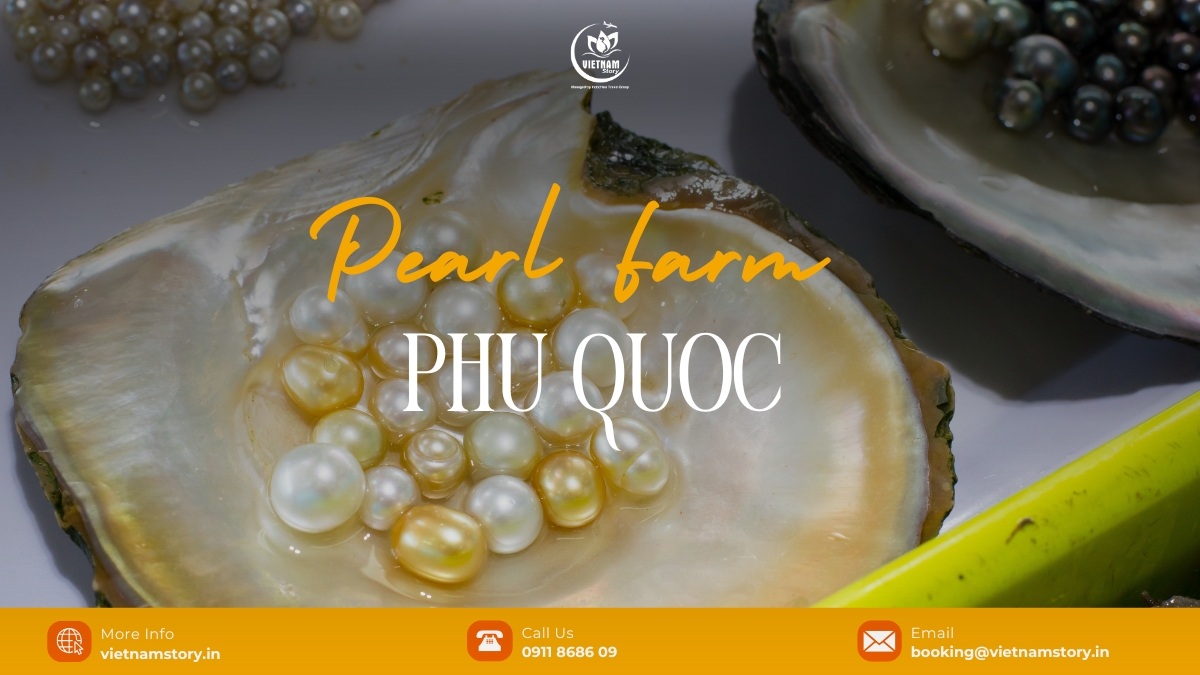
When we include a pearl stop, we first ask whether the guest is genuinely curious about the cultivation process or actually thinking about buying jewellery. That changes how much time the stop deserves. If you are still planning the island route, start with our Phu Quoc travel guide; if pearls are just one souvenir idea, our Phu Quoc shopping guide is enough.
Which Phu Quoc pearl farm should you visit?
The first decision is whether you want to see cultivation or mainly shop for finished jewellery. Current 2026 information still shows Ngoc Hien as a Phu Quoc cultivation brand with a showroom in Duong To, while Long Beach Pearl’s 124 Tran Hung Dao location is clearly a showroom/retail stop. Quoc An remains another farm-style option for travellers who want to compare a smaller cultivation visit.
| Stop | Best for | How we would use it |
|---|---|---|
| Ngoc Hien Pearl | Cultivation context + showroom | Choose when you want the strongest connection between Phu Quoc pearl farming and finished jewellery. Confirm which visitor location or farm experience is operating on your date. |
| Quoc An Pearl | Smaller farm-style comparison | Useful if you want a second cultivation stop before deciding whether to buy; confirm current visiting hours before making a special trip. |
| Long Beach Pearl | Finished jewellery / showroom shopping | The 124 Tran Hung Dao Phu Quoc location is best treated as a retail showroom, not as a substitute for a farm visit. |
Why visit a pearl farm in Phu Quoc?
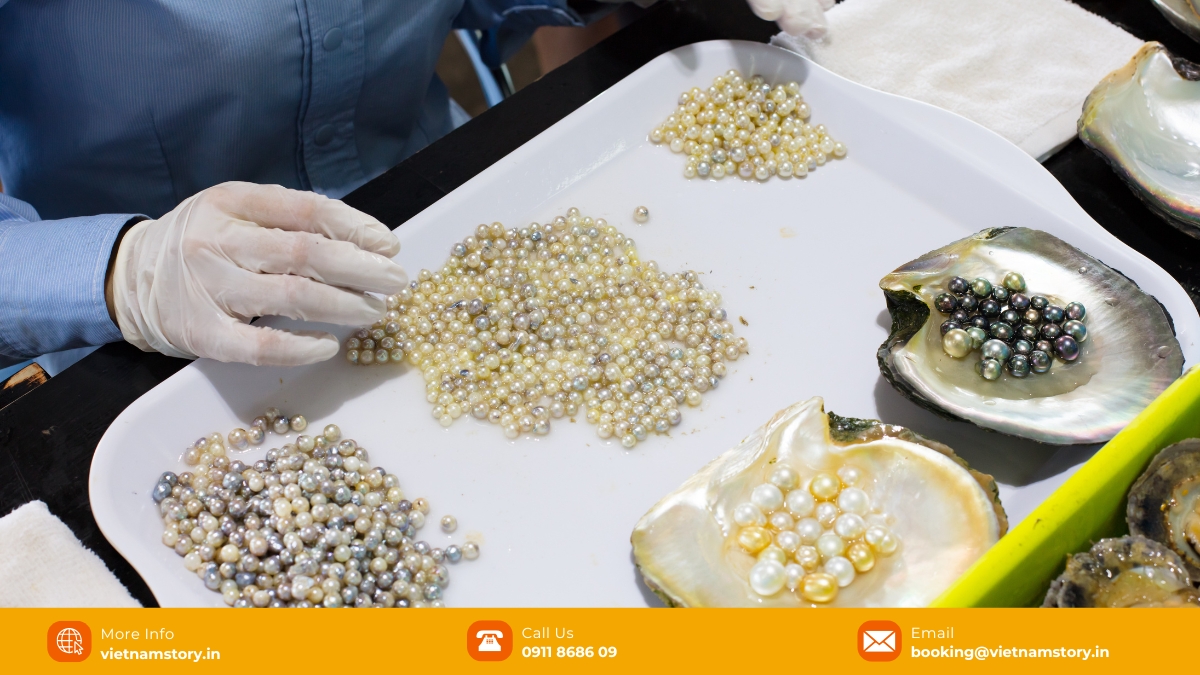
A pearl farm is worth adding if you want to understand what happens before a pearl reaches the jewellery counter. Depending on the visitor setup, you may see how oysters are prepared for cultivation, how pearls are harvested and sorted, and how the finished pieces are displayed in the showroom.If you are not planning to buy jewellery, keep the stop short and enjoy it as a look at a local craft. If you are thinking about a more expensive purchase, spend a little longer on the cultivation and grading explanation first. It will make the showroom much easier to understand.First, know what “real pearl” means
Before you compare prices, it helps to separate three terms that are often mixed together in souvenir shops and travel guides:- Natural pearl: formed in a mollusk without human intervention. These are rare in the modern jewellery market.
- Cultured pearl: formed in a mollusk after human intervention starts the process. Cultured pearls are genuine pearls, not “fake” pearls.
- Imitation pearl: a manufactured product made to look like a pearl, using materials such as glass or plastic.
How cultured pearls are produced
A typical cultured-pearl process includes:- Oyster selection: suitable oysters are selected and prepared for cultivation.
- Implantation: a trained technician introduces a nucleus and tissue into the oyster to begin cultured-pearl formation.
- Growing period: the oysters are returned to the water and monitored while layers of nacre form around the nucleus.
- Harvesting and grading: harvested pearls are sorted by characteristics such as size, shape, colour, luster and surface quality before they are set into jewellery.
Buying more than pearls? The wider Phu Quoc shopping guide covers pepper, fish sauce, local products and shopping areas; here we keep the focus on pearl cultivation and buying checks.
What each Phu Quoc pearl stop is actually like
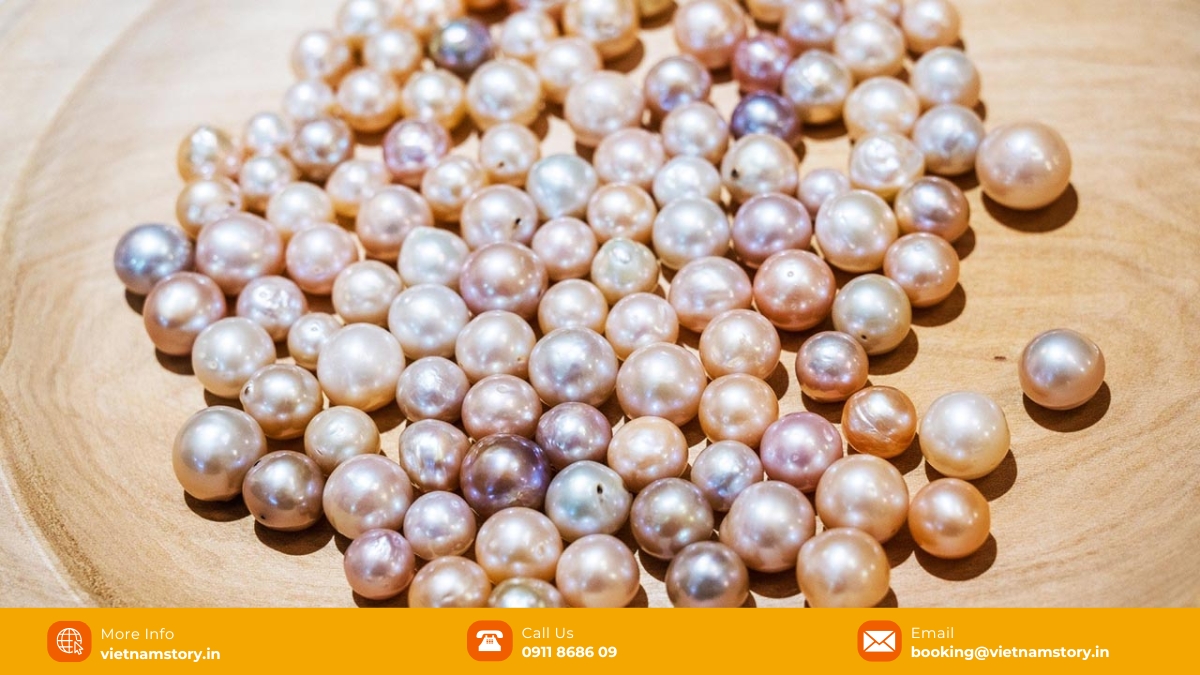
Ngoc Hien Pearl
Ngoc Hien says it has been cultivating pearls in Phu Quoc since 1994. Choose this stop if you want both sides of the experience: an introduction to pearl cultivation and time to browse finished jewellery. Before you set out, check the current visitor or showroom location, because the farming area and the retail point are not always the same place.Quoc An Pearl
Quoc An is another long-running pearl-cultivation stop in the Duong Bao / Duong To area. It makes sense if you want to compare another local producer before deciding what, or whether, to buy. Check the current visiting hours before you go rather than relying on an older itinerary or map listing.Long Beach Pearl
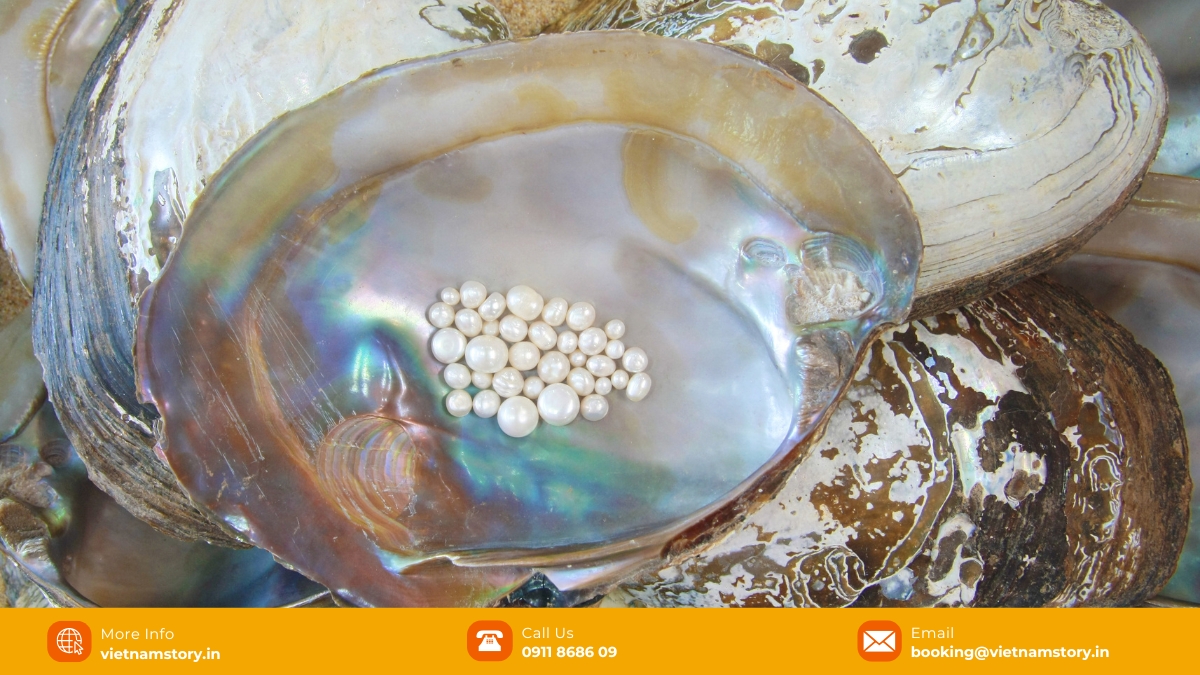
How to buy pearls in Phu Quoc with more confidence
If you find a piece you like, slow the purchase down for a few minutes and check these points before you pay:- Ask exactly what you are buying: Is the item a natural pearl, cultured pearl or imitation? If it is cultured, ask what type the seller is claiming and whether any treatment has been disclosed.
- Compare quality, not just “real versus fake”: A cultured pearl can be genuine and still vary greatly in quality and value. Look at size, shape, colour, luster, surface, nacre and how well the pearls match if you are buying a set.
- Ask for a detailed receipt and product documentation: The paperwork should identify the item and the seller. A shop certificate is useful to keep with your purchase, but for an expensive piece it should not be treated as the same thing as an independent laboratory report.
- Consider independent verification for a high-value purchase: If you are spending enough that the pearl type, treatment or quality really matters to you, an independent report gives you stronger reassurance than any quick test in the showroom.
- Take time to compare: You do not need to buy immediately after a demonstration. Compare pieces, quality descriptions, return or warranty terms, and the final price before deciding.
Our advice: You may hear about the tooth test, weight test or checking the surface for tiny marks. These tricks can sometimes help you spot an obvious imitation, but they cannot tell you everything that matters about a pearl. Do not use one quick test as proof. For an expensive piece, good paperwork and independent gemological verification give you much stronger reassurance. You can also refer to GIA’s pearl buyer guide before you shop.
When to visit and how to fit a pearl stop into your itinerary
If your pearl stop is already on the east side, the Ham Ninh Fishing Village guide can help decide whether a waterfront/meal stop fits the same route. If farms and villages are the wider theme of the day, use the Phu Quoc Countryside Route.
READ MORE: When is the best time to visit Phu Quoc?
Frequently asked questions
Are cultured pearls real pearls?
Yes. Cultured pearls are formed by mollusks after human intervention starts the pearl-forming process. They are different from imitation pearls made from materials such as glass or plastic.Can I prove a pearl is genuine with the tooth test?
No. A gritty feel can sometimes help separate some genuine pearls from smooth imitations, but it cannot tell you the pearl’s origin, treatment or overall quality. Treat it as a rough clue, not proof.Where should I buy pearls in Phu Quoc?
Start with an established seller that clearly describes the product and gives you a proper receipt and paperwork. Ngoc Hien and Quoc An are useful options if you want a pearl-cultivation stop as part of the visit. Long Beach Pearl makes more sense if your priority is browsing finished jewellery in a showroom.Do I need to buy something when visiting a pearl farm?
No. Treat the cultivation demonstration and the showroom as separate decisions. Learn first, then buy only if the piece, documentation and price make sense for you.PEARL STOP → ISLAND ROUTE
If a pearl farm is a must-do, decide what it replaces in a 5-day trip
A pearl stop normally needs less time than a theme park, beach block or marine day, but its location still matters. Fit it beside an east/countryside route instead of creating a separate cross-island journey just for the showroom.
Route check: a pearl farm is not currently listed in the published 5 Days 4 Nights Phu Quoc itinerary. Use the five-day route as a planning baseline and swap the pearl stop into the most logical day if it matters to you.