

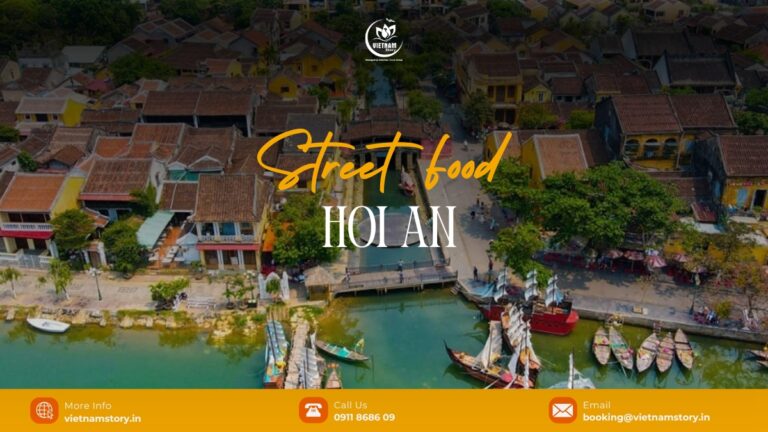
Hoi An street food is less about finding one famous stall and more about knowing what is in the dish before you order. Cao lau, com ga, white rose dumplings, mi Quang, banh xeo and banh mi all appear around markets, small eateries and roadside stalls, but several contain pork, chicken stock, shrimp, fish sauce or raw herbs by default.
For a first taste of local food, choose a few dishes that fit your diet, then decide whether you want the daytime market, a small specialist eatery or an evening stall. If you need strict vegetarian, vegan or Jain preparation, a dedicated restaurant is usually easier to assess than an improvised street-food order.
Start with the dishes that are most closely tied to Hoi An
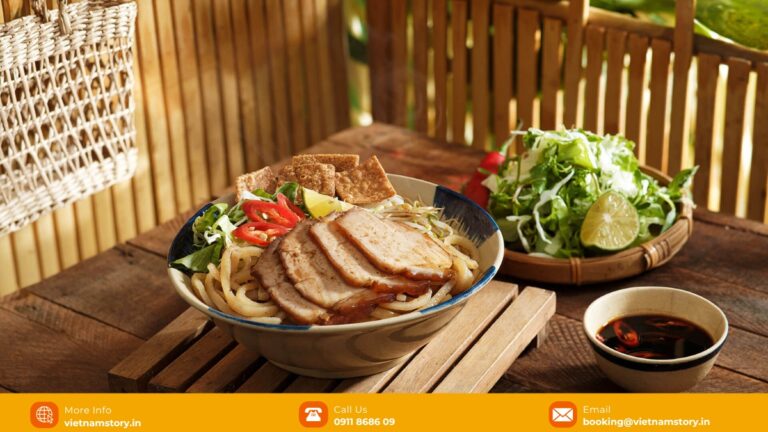
Cao lauHoi An noodle dishThick rice noodles are usually served with pork, greens, herbs, crisp rice crackers and a small amount of sauce or broth.
White roseSteamed local dumplingBanh bao banh vac is commonly filled with pork, shrimp and mushrooms and finished with fried shallots.
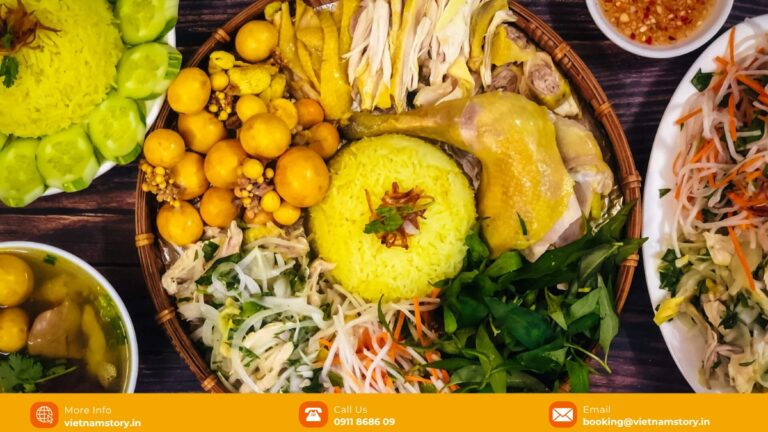
Com gaChicken riceHoi An chicken rice normally combines yellow rice, shredded or chopped chicken, herbs and a fresh salad or pickle element.
Cao lau comes with a well-known local story: the noodles are said to have been made with water from Ba Le Well and ash associated with trees from the Cham Islands. Treat that as part of the dish’s tradition rather than an ingredient claim about every bowl sold today. What is consistent is the firm noodle texture and the usual pork-and-herb presentation.
Mi Quang, banh xeo and banh mi add different kinds of meals
| Dish | Typical components | Useful when you want | Dietary detail to check |
|---|---|---|---|
| Mi Quang | Wide noodles, a small amount of broth, herbs, peanuts and toppings such as pork or shrimp | A fuller central-Vietnam noodle meal | Broth, meat/seafood topping and peanuts |
| Banh xeo | Rice-flour pancake, bean sprouts, often pork/shrimp, herbs and dipping sauce | A dish you wrap and eat with herbs and rice paper | Filling and dipping sauce; fish sauce is common |
| Banh mi | Baguette with pâté, meat, vegetables, herbs and sauces; fillings vary widely | A quick meal rather than a seated lunch | Pâté, mayonnaise, butter, meat and sauces |
| Banh beo | Small steamed rice cakes with savoury toppings | A lighter snack or several small dishes | Dried shrimp, pork and sauce |
| Fresh spring rolls | Rice paper, noodles, herbs and often pork or prawns | A lighter dish | Protein, raw herbs and dipping sauce |
Central Market works differently from the Night Market
Hoi An Central Market is most useful during the daytime when you want a market meal, fresh produce and stalls serving local dishes in one area. It fits naturally into a morning or lunchtime Ancient Town walk.
The Hoi An Night Market on the An Hoi side is an evening shopping and snack environment. It is useful for browsing and casual bites, but it should not be treated as the only place to “do street food” in Hoi An.
Small eateries on streets around the heritage area can be easier than a moving stall when you need to ask about ingredients, wait for a dish to be cooked or sit down with children and older parents.
Do not use crowd size as a food-safety guarantee
A busy stall may have faster food turnover, but popularity does not tell you how ingredients were stored, how raw and cooked food were separated or what water was used. There is no street-food checklist that can make a meal risk-free.
If you choose street food: favour food that is cooked thoroughly and served steaming hot. Be more cautious with food sitting at room temperature, raw or undercooked meat/seafood/egg, pre-cut raw produce and drinks or ice when the water source is uncertain. Wash or sanitise your hands before eating.
This is especially relevant for travellers who are pregnant, immunocompromised, very young, older or managing a medical condition that makes foodborne illness more consequential. In those cases, a seated restaurant where you can ask about ingredients and how the food is cooked and served may be easier to assess.
Vegetarian street food needs an ingredient check
The word chay is useful for identifying Vietnamese vegetarian food, but it does not automatically answer vegan, Jain, allergy or cross-contact questions. A dish that looks meat-free can still contain fish sauce, animal stock, egg, butter or mayonnaise.
| Food | Why it may look suitable | What can change the answer |
|---|---|---|
| Grilled corn | No obvious meat | Butter, sauces or shared grill surfaces |
| Banh trang nuong | Can be ordered with vegetables | Egg, meat toppings, sauces and shared preparation |
| Che | Often built from beans, fruit, jelly or coconut components | Dairy ingredients and ice/water handling vary by vendor |
| Banh mi chay | Vegetarian filling may be offered | Mayonnaise, butter, pâté, sauces and shared utensils |
| Vegetarian noodles | Tofu and vegetables can replace meat | Broth and sauce may still need confirmation |
For strict vegetarian, vegan or Jain meals, compare vegetarian restaurants in Hoi An. For Indian food and dedicated Jain options, use the Indian restaurants in Hoi An guide.
Check the VND price before ordering
Street-food prices depend on the dish, portion, location and whether you are eating at a market stall, specialist eatery or tourist-heavy evening area. Fixed INR conversions age quickly as exchange rates move, so check the displayed VND price before ordering and carry some smaller notes for places that prefer cash.
If you are planning the whole trip budget rather than one snack, use the Vietnam food prices in Indian rupees guide.
Food tours help with context, not with a guarantee of safety
A food tour can be useful when you want someone to explain ingredients, show how several dishes fit together and reduce the time spent deciding where to go. It can also help when you are uncomfortable ordering at small stalls on your own.
Do not assume the words “food tour” mean every stop is suitable for your allergy, vegetarian, Jain or halal requirement. Share restrictions before booking and ask whether the operator can explain ingredients at each stop or substitute a dish when necessary.
Fit street food into the part of Hoi An you are already exploring
Morning / lunchtime: Central Market and small local eateries combine naturally with an Ancient Town sightseeing block.
Afternoon: use a seated café or restaurant if heat, rain or food storage at an outdoor stall makes you uncomfortable.
Evening: the An Hoi Night Market works as a snack-and-browse stop after the riverside, not as a compulsory dinner.
Strict diet: eat the main meal at a restaurant where you can explain ingredients clearly, then treat street snacks as optional rather than depending on them for nutrition.
Choose the dish first, then decide where to eat it
You do not need to chase one famous vendor to understand Hoi An food. Pick the dishes that interest you, check what they normally contain, and choose the market, stall or small restaurant that fits your timing and dietary needs that day.
For stricter diets or familiar meals, the vegetarian restaurant options and Indian dining options are easier places to plan a full meal than a street stall.