
Vietnam can suit older travellers from India when the route, walking demands and daily schedule match the group’s needs. Start by limiting hotel changes and long transfer days. Check actual walking distances, hotel and vehicle access, meal timings and rest breaks before choosing a tour. A “senior-friendly” label does not confirm that a specific hotel, boat or vehicle will be accessible. At Vietnam Story, we would plan around what each traveller wants to enjoy comfortably, rather than the number of stops advertised.
Is Vietnam suitable for senior groups?
Yes. Vietnam can be suitable for older travellers, including retired friends and families travelling with elderly parents. Major tourism destinations offer hotels, transport services and guided sightseeing.
However, accessibility varies. Some historic sites have steps or uneven pathways. Boat excursions may involve difficult boarding, and busy streets can be challenging for travellers with limited mobility. The best senior-friendly Vietnam tour is one that matches the group’s interests, mobility and comfort requirements.
Choose a slower travel pace
A common planning mistake is counting attractions without checking how many hours the group will be away from its hotel. A short sightseeing list can still mean a tiring day if transfers, waiting times and steps are overlooked.
An itinerary with early departures, long drives and repeated hotel changes can become tiring. For many senior groups, one or two main sightseeing activities per day may be enough. Allow time for unhurried breakfasts, regular meals and afternoon rest. Avoid scheduling a demanding excursion immediately after arriving from India. Also compare the actual daily timetable. A tour with fewer attractions may still be exhausting if it involves several hours on the road.
An easy-paced itinerary should provide time to enjoy each experience, not simply reduce the number of stops.
Which Vietnam route is easiest for elderly travellers?
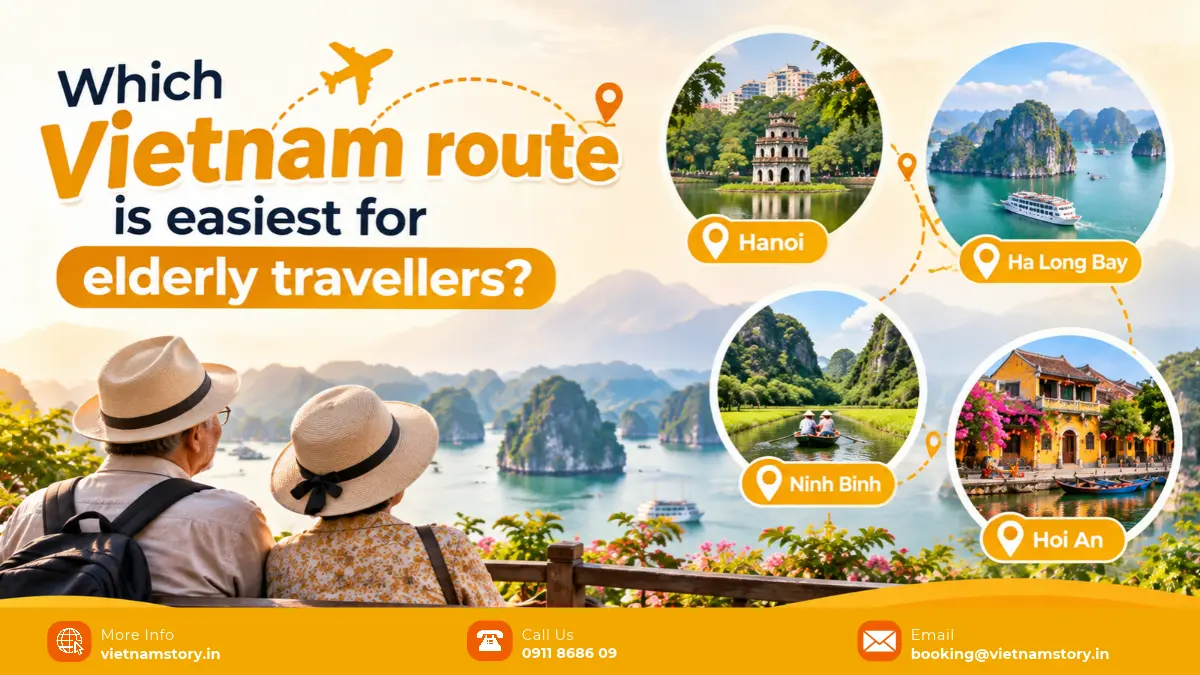
The easiest route depends on the group’s mobility, interests and travel season.
| Route | Main advantage | What to check |
| Da Nang and Hoi An | Coastal base with nearby cultural attractions | Walking conditions in Hoi An |
| Hanoi with selected visits | Museums, history and cultural landmarks | Traffic, steps and excursion distances |
| Ho Chi Minh City | Urban hotels, restaurants and city sightseeing | Heat, traffic and pedestrian access |
| Phu Quoc | Resort relaxation with fewer outings | Flight connections and resort accessibility |
Da Nang and Hoi An
Da Nang is a practical starting point for a relaxed group holiday when flight connections and hotel facilities fit. Travellers can stay in one base while enjoying coastal scenery and selected sightseeing. See our Da Nang travel guide for the city’s main areas and experiences. Hoi An is a possible excursion, but some historic streets are uneven and vehicles may not stop beside the sights. Check where the vehicle can drop guests off before finalising the day.
Hanoi
Hanoi suits travellers interested in history and culture. Choose a few meaningful attractions rather than attempting to cover the entire city in one day. Ninh Binh and Ha Long Bay may be possible additions, but each can require a long day and boat boarding. Our Hanoi day-trip comparison helps you check the road time and the time actually spent sightseeing before adding an excursion.
Ho Chi Minh City and Phu Quoc
Ho Chi Minh City offers urban hotels and dining choices. Private sightseeing transport can reduce unnecessary walking. Phu Quoc may be preferable for travellers who mainly want a relaxing resort holiday.
For a first easy-paced trip, staying in one region is often more comfortable than travelling across Vietnam.
Check hotel accessibility before booking
A luxury hotel is not automatically accessible.
Before confirming accommodation, ask whether lifts serve the guest rooms and whether entrances or corridors involve steps. If needed, confirm accessible rooms, walk-in showers, bathroom grab rails and suitable bed arrangements. Also check the distance between rooms, restaurants and the hotel entrance.
For groups, request rooms near one another when possible. A centrally located hotel may reduce daily transport time. Do not rely only on photographs or star ratings: ask the property to confirm specific room features in writing, including a step-free route from the entrance to the room and bathroom facilities if those are needed. A lift or a hotel described as accessible does not by itself confirm that every room will suit every guest.
Is a private vehicle better for senior groups?
A private vehicle can offer more control over departure times, rest stops and sightseeing pace. For larger groups, this may be more comfortable than following a fixed shared-tour schedule.
However, the vehicle itself must be suitable. Ask about seat comfort, air-conditioning, boarding steps, luggage space and room for mobility aids. If a traveller uses a wheelchair, confirm whether an appropriate accessible vehicle is available. A standard coach should not be assumed to provide wheelchair access.
Our Vietnam group tours for Indian travellers guide explains shared departures and private groups. For the wider decision, compare private tours, shared group tours and DIY travel by how much control the group needs over pickup times and rest stops. Neither private transport nor wheelchair access should be assumed to be included until confirmed in the quotation.
Plan restroom stops and comfortable breaks
Long road journeys should include planned rest stops. Ask the tour operator about expected driving times and where suitable restroom facilities are available.
For travellers who need more frequent breaks, communicate this before finalising the itinerary. Also consider walking distances between parking areas and attraction entrances. A short sightseeing stop on paper may involve considerable walking. Regular breaks, flexible departure times and convenient facilities can make a meaningful difference to the day.
Medical preparation and travel insurance
Travellers with ongoing health needs should prepare before departure.
- Consult an appropriate healthcare professional about travel suitability, medication and precautions relevant to the itinerary.
- Carry necessary medicines in their original packaging with prescriptions or supporting documents where required.
- Check Vietnam’s applicable medicine-entry rules before travelling.
- Review travel insurance carefully, particularly medical coverage, pre-existing-condition exclusions and age-related limits.
- Keep emergency contacts and essential medical information accessible to the traveller and a trusted companion.
- Confirm how the group would obtain medical assistance if needed.
A tour guide may assist with communication and logistics but is not a substitute for professional medical care. The CDC’s guidance for older travellers recommends discussing your itinerary and ongoing medicines with a healthcare professional ahead of travel. For practical contacts, read our Vietnam emergency numbers and medical help guide for Indian tourists.
Indian, vegetarian and Jain meals

Food arrangements can strongly influence the comfort of senior travellers. Some guests prefer familiar Indian meals, while others enjoy trying Vietnamese cuisine. Confirm which meals are included, where they will be served and whether dietary requirements can be accommodated.
Vegetarian food does not automatically meet Jain requirements. For specific restrictions, communicate ingredients clearly rather than relying only on dietary labels. Our dietary restrictions in Vietnam for Indians guide explains how to communicate vegetarian, Jain and other food requirements. Regular meal times and convenient restaurant locations can also help maintain a comfortable daily routine.
Our guide to Indian food and vegetarian options for Vietnam group tours explains what to confirm before booking meals.
Check attraction accessibility
For a mixed-age family, comparing the walking route can help more than looking only at the attraction name. See the Vietnam attractions walking and stair guide and the three-generation itinerary checklist before adding demanding viewpoint climbs.
Some famous Vietnamese attractions involve stairs, uneven ground or boat boarding. A Ha Long Bay cruise, for example, may require boarding from a pier or a smaller transfer boat; cabin decks and bathrooms also vary by vessel. Our Ha Long Bay day versus overnight cruise comparison helps with the time-and-comfort decision, but the exact boat’s access arrangements must be confirmed separately. Historic sites can have areas that are difficult to access.
Before booking, ask about walking distances, steps, seating, restrooms and boarding arrangements. Also ask whether guests can skip an activity and enjoy a comfortable alternative. A tour should not require everyone to complete every excursion. Easy-paced does not automatically mean accessible. Both must be checked separately. For step-free rooms, adapted transport and accessible activities, use the Vietnam limited-mobility booking checklist.
Sample 6-day easy-paced Vietnam itinerary
A Da Nang-based holiday can work well for travellers seeking coastal scenery and culture without frequent hotel changes.
| Day | Suggested plan |
| Day 1 | Arrive in Da Nang, hotel check-in and rest |
| Day 2 | Gentle city sightseeing and a relaxed afternoon |
| Day 3 | Hoi An visit with flexible walking time |
| Day 4 | Free morning and optional accessible activities |
| Day 5 | Selected local sightseeing or resort relaxation |
| Day 6 | Breakfast and airport transfer |
This six-day, one-base example assumes arriving in and departing from Da Nang; it is not a confirmed tour or an accessibility guarantee. The activities should be adjusted to arrival flight times, the group’s mobility, weather and preferred pace. Our Vietnam 6-day itinerary offers additional regional route ideas. For senior travellers, we would generally simplify the schedule before adding more attractions.
Questions to ask before booking
Before paying a deposit, confirm the details that affect daily comfort:
- How many hours of sightseeing and driving are planned each day?
- How many hotel changes are required?
- Are the rooms, bathrooms and hotel facilities suitable?
- Can the vehicle accommodate mobility needs?
- Are regular restroom and rest stops possible?
- What walking distances, steps or boat transfers are involved?
- Can Indian, vegetarian or Jain meals be confirmed?
- What support is available if a traveller needs to change plans?
Ask for the answers in writing. Our Vietnam tour quotation checklist shows how to verify accommodation, transport, meals, guides, optional activities and exclusions. When comparing Vietnam tour packages from India, check whether flights, assistance and any mobility-specific arrangements are included before paying a deposit.
FAQs
Is Vietnam suitable for senior groups?
Yes. Vietnam can suit senior groups when the itinerary matches their mobility, health needs and interests. Suitable accommodation, comfortable transport, manageable sightseeing and rest breaks are particularly important.
Which Vietnam route is easiest for elderly travellers?
Da Nang and Hoi An are often practical because travellers can stay in one regional base. However, the easiest route depends on mobility, travel dates and the activities selected.
Is a private tour better for senior citizens?
A private tour can provide greater flexibility with departure times, transport and rest stops. Shared group tours can also work when their schedules and facilities suit everyone.
Can senior travellers find Indian vegetarian food in Vietnam?
Yes, suitable options may be available, particularly in major tourist destinations. Specific vegetarian, Jain and other dietary needs should be confirmed before booking.
Conclusion
A comfortable holiday for older travellers starts with a route that suits the group, not with a long attraction list. Planning a Vietnam trip from India with parents, grandparents or a senior group? Share your travel dates, departure city, number of travellers, preferred pace, any walking or boarding limitations and vegetarian or Jain meal requirements with Vietnam Story. We can help review suitable route options and what must be checked with hotels, vehicles and activity providers. Confirm the exact inclusions, accessibility arrangements and costs in the written proposal before booking.