For most Indian travellers, getting mobile internet in Vietnam is easy. The main decision is whether to use a local physical SIM, a Vietnam eSIM or international roaming on your Indian number. A simple rule works for most trips: eSIM = easiest to prepare before arrival, physical SIM = practical local option, Indian roaming = easiest if you want minimal changes. Do not choose only by price or headline data allowance. Your phone, trip length, destinations and need to keep your Indian number active matter more.
Vietnam SIM vs eSIM vs Roaming: Quick comparison
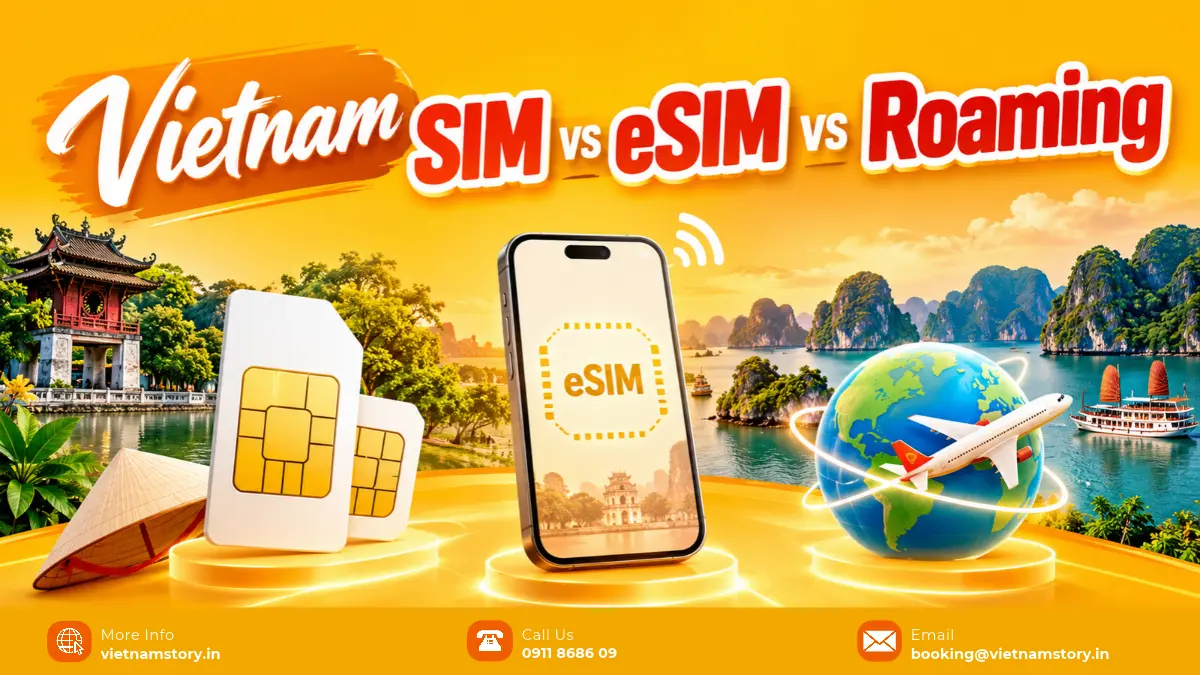
| Option | Best for | Main advantage | Check first |
| Physical Vietnam SIM | Travellers comfortable buying locally | Local connection | Registration + phone compatibility |
| Vietnam eSIM | Travellers wanting data ready quickly | No SIM swap | eSIM compatibility |
| Indian roaming | Short trips / existing-number priority | Minimal setup | Current roaming charges |
| Dual-SIM setup | Travellers needing Indian number + local data | Flexibility | Device configuration |
For many tourists, there is no universal “best Vietnam SIM”. Instead ask: How do I want my phone to work from the moment I land? Choosing a SIM is easier when the rest of your trip logistics are already clear. Our Vietnam Travel Guide for Indian Travellers covers the wider practical planning around transport, money, weather, food and other essentials for a first trip from India.
Option 1: Buy a physical SIM in Vietnam
A local physical SIM is a straightforward choice if you are comfortable arranging connectivity after arrival. Major Vietnamese mobile operators include Viettel, VinaPhone and MobiFone.
When comparing current tourist options, look beyond the advertised number of gigabytes. Check: network → data allowance → validity → calls if required → total price → registration → activation. SIM registration requirements matter, so purchase through an appropriate authorised channel and make sure activation is completed correctly.
Before leaving the counter, switch off Wi-Fi and test mobile data, also think about your Indian SIM. If your phone supports dual SIM, you may be able to use the Vietnam SIM for mobile data while keeping your Indian connection available, depending on your device and operator settings.
If you physically remove your Indian SIM, store it somewhere secure. Losing your primary Indian SIM abroad can create unnecessary problems.
Option 2: Use a Vietnam eSIM
For many first-time visitors, an eSIM offers the smoothest arrival experience. You can arrange it before flying from India and avoid changing a physical SIM after landing but check your exact phone model first. Do not assume that every version of a particular phone supports eSIM. Before buying, confirm: phone compatibility → data allowance → validity → network → activation timing → data-only or calls included. Read the installation instructions while you still have reliable internet access.
Some eSIM products have specific activation rules, so do not activate one earlier than intended without checking when its validity period begins. The main advantage is simple: your maps and messaging can potentially work soon after landing.
Option 3: Keep your Indian SIM on international roaming
International roaming is worth considering when convenience matters more than changing your mobile setup.
You retain your existing number and, depending on your operator and current plan, may be able to use supported calls, SMS and data in Vietnam. Before leaving India, check: Vietnam coverage → data allowance → validity → call charges → SMS/OTP requirements → total cost. Do not assume your normal domestic Indian plan works internationally.
Roaming can be particularly practical for a short Vietnam trip or for travellers who depend heavily on their existing number.
What about OTPs and your Indian number?
This is an important consideration for Indian travellers. You may need your Indian number for banking messages, OTPs or other account verification while abroad. That does not necessarily mean your Indian SIM also has to provide your mobile data.
On compatible dual-SIM phones, one possible setup is: Vietnam SIM/eSIM for data + Indian SIM retained for your existing number. The exact behaviour depends on your device, Indian operator and roaming settings, so configure it before departure rather than experimenting when an important OTP is required.
WhatsApp can also continue working while you use another connection for mobile data. Avoid changing your WhatsApp registered number unnecessarily if your only objective is to change the data source.
Should you buy a SIM at Vietnam airport?
An airport SIM can be useful when you land without another working connection. Having data soon after arrival helps with: messaging your driver, opening maps, checking your hotel address, using ride-hailing, accessing booking details, contacting your tour operator but do not feel obliged to buy another SIM if your eSIM or roaming already works.
A practical arrival sequence is: Immigration → baggage → customs → connectivity → transport → hotel. If you need an airport SIM, confirm the network, validity, data allowance and price, then test the connection before leaving.
Reliable mobile data makes meeting a driver or arranging onward transport easier, but you should still save your pickup details offline. If you are already connected, continue to your hotel. There is no benefit in creating another mobile setup unnecessarily. If this is your first visit, our Vietnam airport arrival guide for Indian tourists explains the full sequence from immigration and baggage collection to connectivity, transport and hotel arrival.
How much mobile data do you need?
Most sightseeing travellers do not need the largest available data package. Your everyday mobile usage is more likely to be: Google Maps → WhatsApp → ride-hailing → translation → restaurant searches → bookings → tour communication.
Streaming video, remote work, cloud backups and frequent social-media uploads increase usage much faster. Instead of asking: “Which tourist SIM has the most data?”, ask: “What will I actually use when I am away from hotel Wi-Fi?” Then compare current packages accordingly.
Does everyone in a family need a Vietnam SIM?
Usually not.
A family of four travelling together does not automatically need four separate connections. A better rule is: Every independent subgroup should have at least one connected phone. If parents and children stay together throughout the trip, two reliably connected phones may provide useful redundancy.
If family members regularly split for shopping, sightseeing or separate activities, more independent connections become useful. The same logic applies to group tours. The tour leader and key group members should remain connected even if every traveller does not purchase a separate SIM.
For families and groups, mobile connectivity works best when it is planned together with airport transfers, hotels, sightseeing and local coordination. Travellers who prefer these arrangements to be organised before departure can compare Vietnam Tour Packages from India based on their route, trip length and travel style.
What about internet outside major cities?
Connectivity is generally easier to plan in Hanoi, Da Nang and Ho Chi Minh City than on mountain or rural routes. If your itinerary includes Sapa, Ha Giang or other remote areas, network coverage deserves more attention than headline data allowance.
Do not select a connection solely because it offers the cheapest or largest data package. Check current coverage information for the destinations on your actual route and always prepare for periods of weaker connectivity.
If your itinerary continues into Northern Vietnam’s mountains, the connectivity question becomes more important. When comparing Sapa vs Ha Giang, consider road time and remote travel alongside mobile coverage.
Keep important information offline
Mobile internet should make your trip easier. It should not become a single point of failure. Before travelling, save offline copies of:
- Hotel names and addresses
- Airport pickup information
- Key booking confirmations
- Important telephone numbers
- Travel insurance information
- Emergency contacts.
Downloading offline map areas can also be useful. If your battery dies or the network becomes temporarily unavailable, you should still know where you are going and whom to contact.
Along with offline hotel and booking details, save the key Vietnam emergency numbers for Indian tourists so essential contacts remain available even when mobile data is not.
Common Vietnam SIM Mistakes
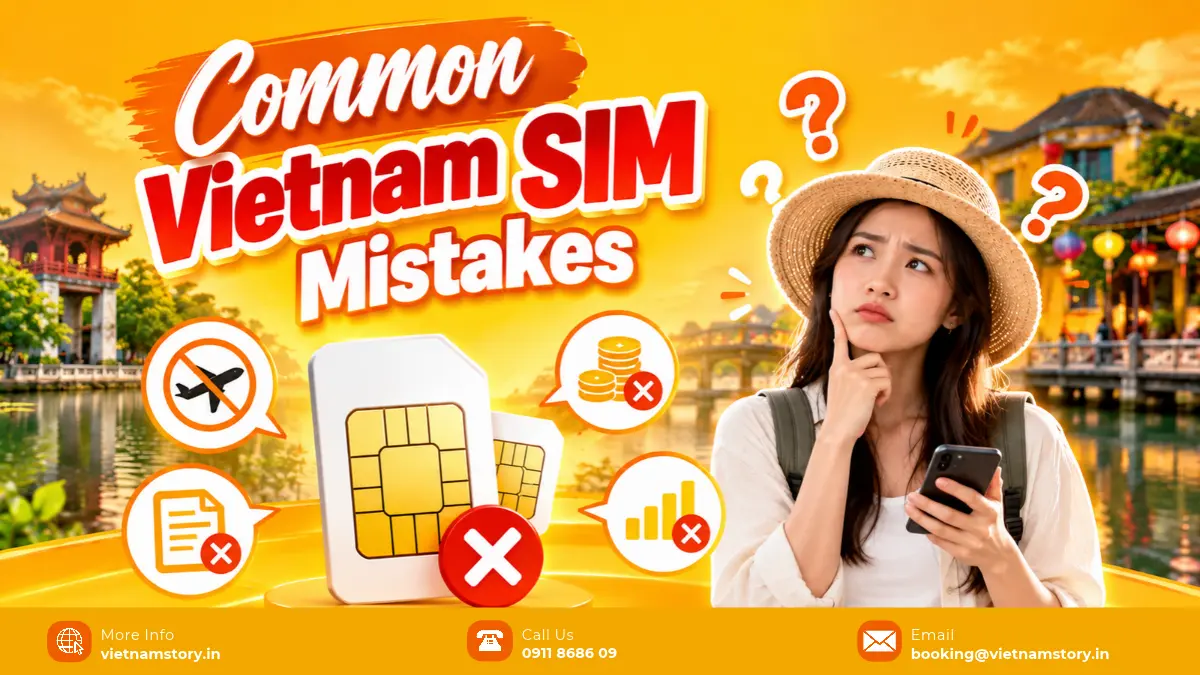
- Buying an eSIM without checking phone compatibility. Check the exact model first.
- Choosing only by data allowance. Coverage, validity and convenience can matter more.
- Activating an eSIM too early. Understand when validity starts.
- Leaving an airport counter without testing the SIM. Confirm mobile data works before leaving.
- Losing your Indian SIM. Store it securely if you remove it.
- Assuming everyone needs a SIM. Plan connectivity around how your family or group will move.
- Depending entirely on mobile internet. Keep essential travel information offline.
Your phone setup should be checked alongside chargers, adapters and other electronics before departure. Use our guide on What to pack for Vietnam from India to organise these essentials according to your route, season and traveller type.
Get your Vietnam eSIM through VietnamStory
Want to stay connected in Vietnam without spending time shopping for a SIM card at the airport or comparing different local sellers? VietnamStory offers a convenient eSIM option for travellers who prefer to arrange their mobile data before their trip.
Our Vietnam eSIM package includes:
- Price: US$13
- Data allowance: 4GB per day
- Validity: 15 days
This option is particularly convenient for Indian travellers who want mobile data for Google Maps, WhatsApp, ride-hailing apps and everyday travel needs while exploring Vietnam. Instead of looking for a SIM card after arrival, you can contact Vietnam Story to arrange your eSIM and receive guidance on the next steps.
Interested in a Vietnam eSIM? Contact Vietnam Story on WhatsApp to check availability, confirm device compatibility and arrange your package before travelling.
FAQs
Should I buy a SIM at Vietnam airport?
It can be convenient if you arrive without working mobile data. Verify the network, validity, allowance and price, and test the connection before leaving the counter.
Is an eSIM better for Vietnam?
An eSIM is particularly convenient for travellers who want connectivity prepared before arrival and have a compatible phone. Physical SIMs and Indian roaming can still be better for other travel styles.
Can I use WhatsApp with a Vietnam SIM?
Yes. Using another SIM or eSIM for mobile data does not automatically require changing your WhatsApp registered number. Follow the app’s prompts carefully.
Can I keep my Indian SIM active in Vietnam?
Potentially, depending on your phone, operator and roaming configuration. Dual-SIM travellers may choose local/eSIM data while retaining their Indian number for supported SMS or other services.
Is mobile internet good outside Vietnamese cities?
Coverage varies by network and location. If travelling through mountains or rural areas, check current coverage for your route and keep essential information available offline.
Conclusion
Keep the final decision simple.
- Choose eSIM if you want connectivity prepared before landing and your phone supports it.
- Choose a physical Vietnam SIM if you are comfortable arranging a local connection after arrival.
- Choose Indian international roaming if keeping your existing setup with minimal changes is the priority and the current roaming terms suit your trip.
For families and groups, make sure each independent subgroup has at least one reliable connection rather than automatically buying a SIM for every traveller. The best Vietnam SIM card for Indian travellers is not necessarily the cheapest plan or the one advertising the most data. It is the setup that keeps maps, WhatsApp, transport and essential travel communication working when you need them.