
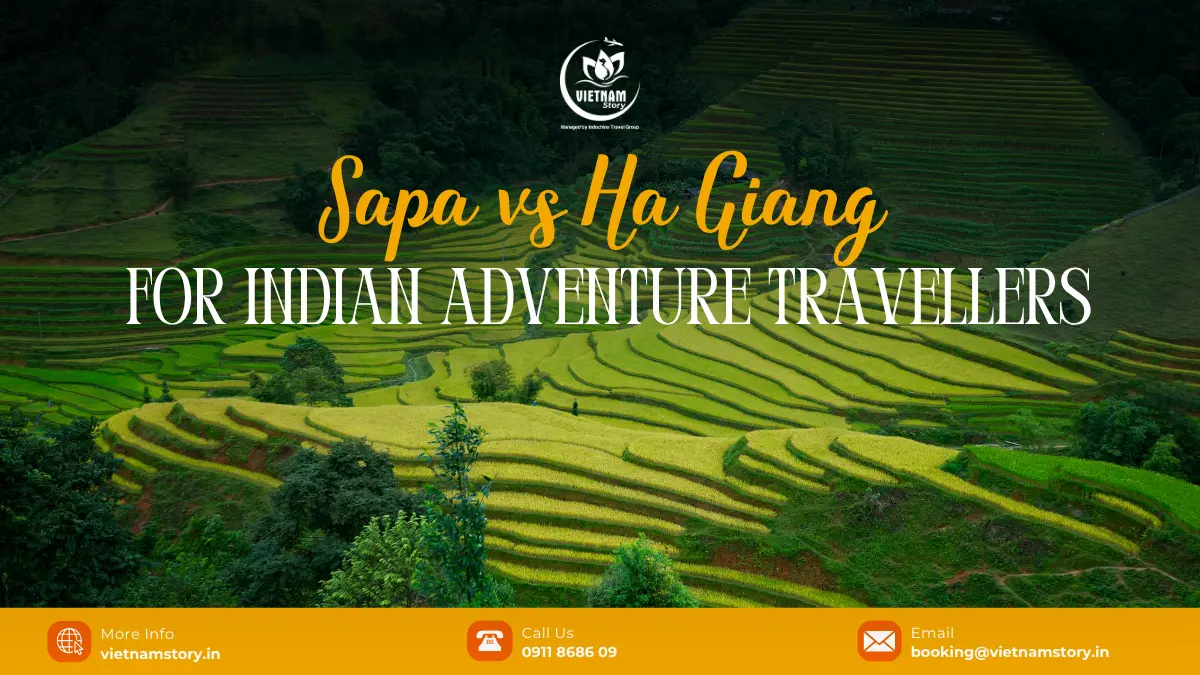
Choosing between Sapa vs Ha Giang comes down to how you want to experience Northern Vietnam’s mountains: choose Sapa for trekking with easier logistics and flexible comfort, choose Ha Giang for a more adventurous multi-day journey through dramatic mountain landscapes. Neither is simply “better.” For Indian travellers on a first Vietnam trip, Sapa is usually easier to add to a broader itinerary. Ha Giang becomes the stronger choice when mountain adventure is one of the main reasons for travelling to Vietnam. The biggest difference is not the scenery. It is how much effort, road time and flexibility you want the mountain experience to involve.
Sapa vs Ha Giang at a glance
| Factor | Sapa | Ha Giang |
| Main experience | Trekking and mountain villages | Multi-day mountain road journey |
| Difficulty | Adjustable | More consistently demanding |
| Physical challenge | More walking/trekking | More long road days |
| Tour style | Stay at a base | Keep moving along a route |
| Comfort | More options | Simpler in remote areas |
| First Vietnam trip | Easier fit | Better for adventure-first trips |
| Typical time | 2–3 days | 3–4+ days |
| Best for | Trekkers, couples, mixed groups | Road-trip lovers, photographers, adventurers |
The simplest distinction is: In Sapa, activities create adventure. In Ha Giang, the journey itself is the adventure.
Which is more difficult: Sapa or Ha Giang?
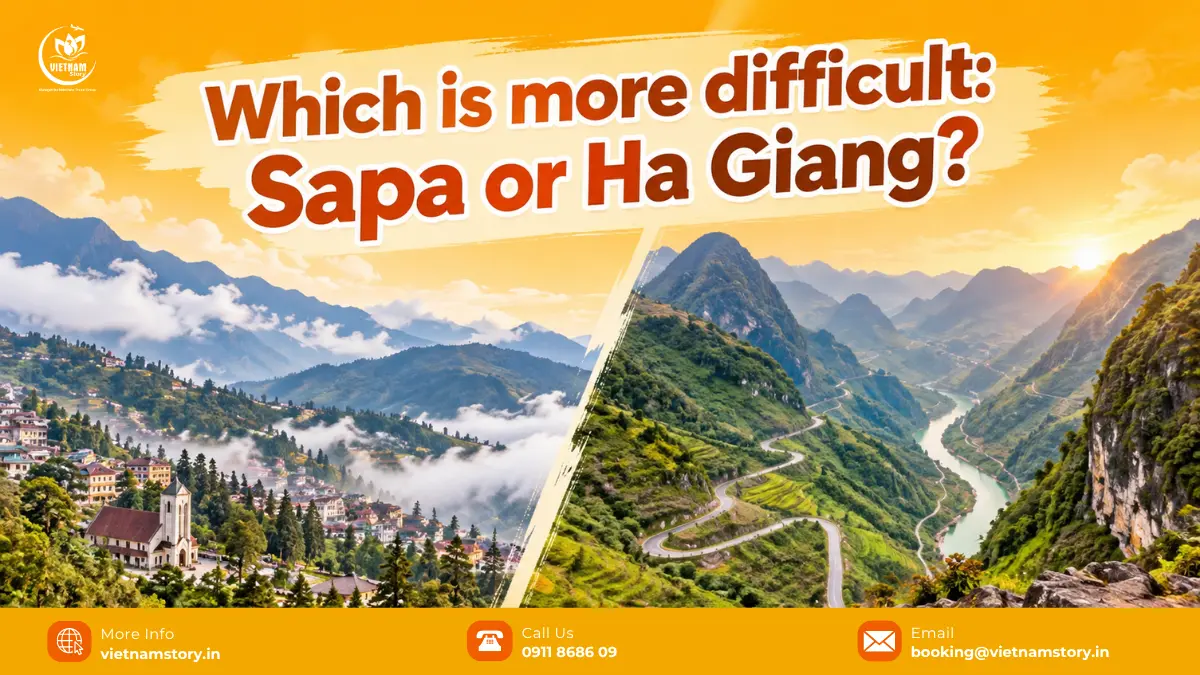
This depends on what you mean by “difficult.”
Sapa: You control the physical difficulty
Sapa works from a relatively convenient base. You can stay in town or a nearby homestay and choose activities according to your fitness level.
One traveller might spend several hours trekking through valleys and villages. Another might choose shorter walks and viewpoints. Longer treks can become physically demanding because of elevation, uneven paths and slippery conditions after rain but the important advantage is flexibility.
If your group includes different fitness levels, Sapa makes it easier to adjust each day. That makes it particularly useful for Indian couples or families where one person wants serious trekking while others mainly want mountain scenery.
Ha Giang: Less trekking does not mean easier
Ha Giang challenges travellers differently. The experience normally involves travelling through mountain roads over several consecutive days, with viewpoints, villages and overnight stops forming part of one continuous route.
You may walk less than in Sapa but spend much longer in transit. That creates a different type of fatigue. Sapa can challenge your legs more. Ha Giang can challenge your road stamina and tolerance for continuous travel more. If winding mountain roads or frequent moving days tire you easily, do not assume Ha Giang is the easier option simply because trekking is not the main activity.
Tour style: Base adventure and route adventure
This is probably the most useful way to compare the two destinations.
Sapa: Base-based adventure
You establish a base and explore from there. A typical stay can combine trekking, villages, viewpoints and downtime. If the weather changes or someone feels tired, the next activity can often be adjusted.
This suits: first-time Vietnam visitors, couples, mixed-fitness groups, travellers who want adventure plus comfort and people adding mountains to a wider Vietnam itinerary.
If Sapa matches your travel style, use our Sapa Travel Guide for Indians to plan trekking, accommodation, sightseeing and the practical details of your mountain stay.
Ha Giang: Journey-based adventure
Ha Giang works as a route rather than one fixed destination. You travel through different sections of the mountains and usually stay in different places as the journey progresses.
This creates a stronger expedition feeling, but less flexibility. Ha Giang suits: adventure-focused travellers, road-trip lovers, photographers, travellers comfortable with simpler stays and people willing to dedicate several days to one mountain journey.
Let’s ask yourself: Do I want to explore the mountains from a base, or travel through the mountains as a journey? That question often settles the Sapa or Ha Giang decision.
If you are leaning towards the more adventurous option, our Ha Giang Travel Guide explains how to plan the route, how many days to allow and what to expect from a multi-day mountain journey.
Is Ha Giang safe?
Ha Giang can be explored safely with appropriate planning, but its mountain-road environment deserves more caution than a typical city or resort itinerary. Road conditions, bends, visibility and weather can all affect the journey. The key distinction is: Experiencing Ha Giang does not mean you have to personally ride a motorbike.
Travellers without suitable mountain-road riding experience should not treat Ha Giang as somewhere to learn simply because self-riding appears frequently on social media. This matters for Indian travellers who may be comfortable using scooters at home but have little experience with unfamiliar mountain roads and changing weather.
A professionally operated transport arrangement can let you experience the route without making your own riding ability the deciding factor. Sapa generally involves less road exposure because you have a fixed base, although trekking conditions can still become slippery or difficult during poor weather.
Which is better by season?
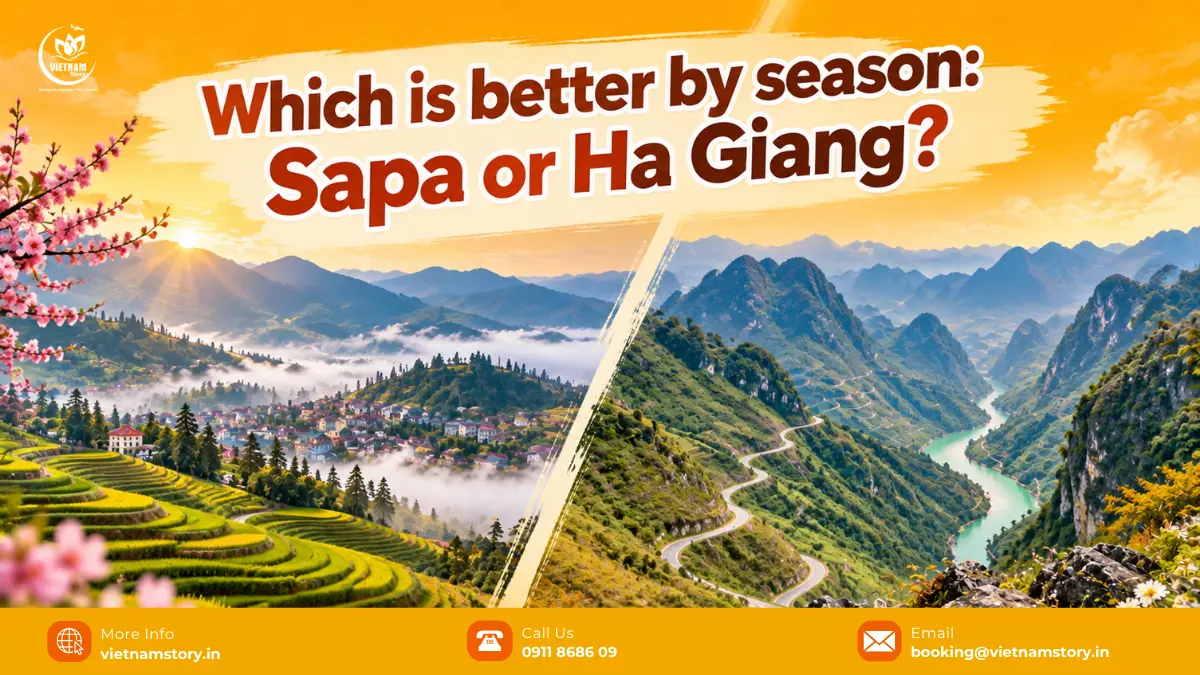
Season matters for both destinations, but in different ways.
- In Sapa, weather changes the trekking experience. Rain can make trails muddy or slippery, while mist may reduce mountain views. The appearance of the rice terraces also changes through planting, growing and harvest periods.
- In Ha Giang, weather affects both scenery and road experience. Rain, fog and reduced visibility can make mountain travel more demanding.
This means seasonal planning carries extra weight if you are considering Ha Giang. Do not choose either destination solely because of a photograph showing perfect green terraces or clear mountain passes. Check the expected conditions for your travel period and, especially for Ha Giang, review the forecast closer to departure.
Because mountain conditions can change the experience significantly, you can check the best time to visit Sapa before trekking.
How many days do you need?
- Sapa is easier to fit into a shorter Northern Vietnam itinerary. Allow around 2–3 days for a useful Sapa experience. This can include trekking or village exploration without allowing the mountain segment to dominate the entire holiday.
- Ha Giang deserves around 3–4 days or more. Trying to compress the route removes much of what makes it worthwhile and can create unnecessarily long travel days.
For Indian travellers with limited annual leave, this distinction matters.
- If you have only 5 – 6 days in Northern Vietnam and also want Hanoi and Ha Long Bay, Sapa is generally easier to combine.
- If you have 7 – 10 days in the North and adventure is one of your main priorities, Ha Giang becomes much more realistic.
If Sapa needs to fit around Hanoi and Ha Long Bay, understanding how to travel from Hanoi to Sapa will help you calculate the real time needed for the mountain extension.
Sapa or Ha Giang: Which traveller are you?
Use your travel style rather than Instagram scenery to decide.
| If you are… | Better fit |
| First-time Vietnam visitor | Sapa |
| Trekking enthusiast | Sapa |
| Couple wanting mountains within a wider trip | Sapa |
| Group with different fitness levels | Sapa |
| Traveller wanting more accommodation choice | Sapa |
| Road-adventure traveller | Ha Giang |
| Landscape photographer | Ha Giang |
| Traveller comfortable with remote journeys | Ha Giang |
| Adventure-first Vietnam visitor | Ha Giang |
There are exceptions, but this gives you a much better starting point than asking which destination has “better views.”
Should you visit both Sapa and Ha Giang?
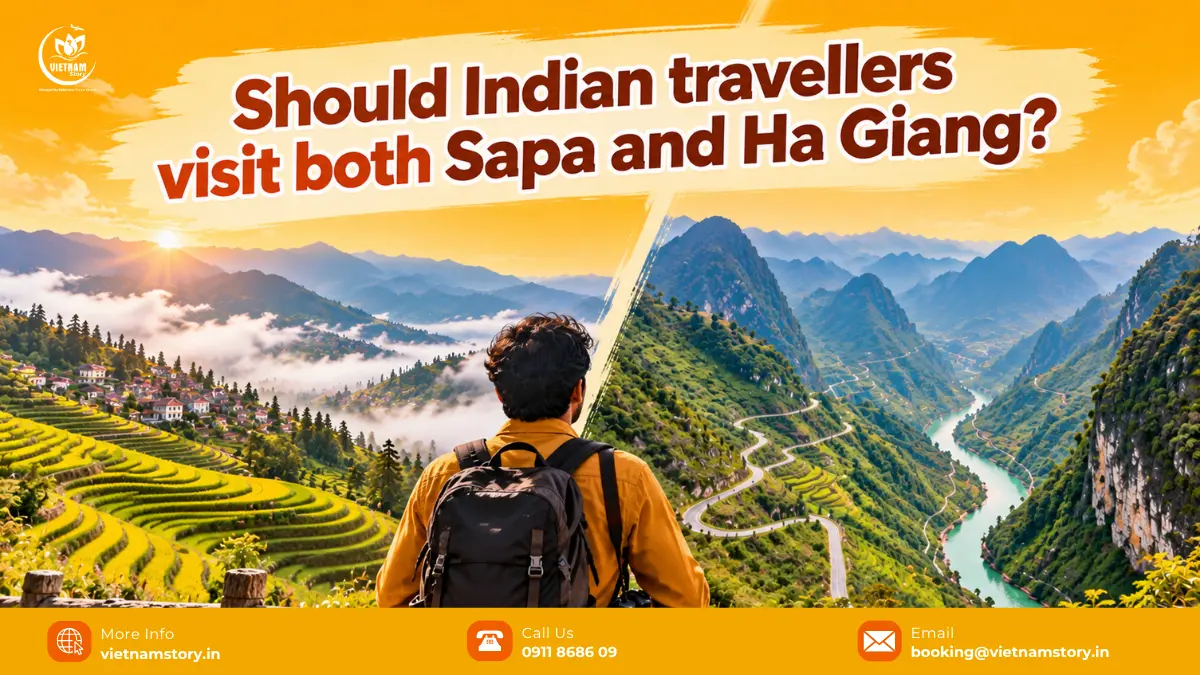
You can, but you do not need to. Both provide Northern Vietnam mountain experiences, but in very different forms.
- On a long, mountain-focused trip, combining them can be rewarding because you experience both trekking and road adventure.
- On a shorter first Vietnam trip, visiting both can consume too much time in transfers and reduce the days available for Hanoi, Ha Long Bay or other regions.
A useful rule is: If you have to rush both, choose one. If you also want Hanoi, Ha Long Bay or Ninh Binh, build a Northern Vietnam itinerary first and then decide whether Sapa or Ha Giang fits naturally into your available days.
FAQs
Which is better, Sapa or Ha Giang?
Choose Sapa for trekking, flexible pacing, greater comfort choice and easier integration into a first Vietnam itinerary. Choose Ha Giang for dramatic road scenery and a more adventurous multi-day mountain journey.
Is Ha Giang safe?
Ha Giang can be explored with appropriate planning, but mountain roads, visibility and weather require caution. Travellers without suitable riding experience do not need to self-ride; professionally operated transport is an alternative.
Is Sapa easier than Ha Giang?
Logistically, generally yes. But a challenging Sapa trek can be physically harder than simply sightseeing in Ha Giang. The two destinations involve different kinds of difficulty.
Sapa or Ha Giang for a first Vietnam trip?
For most first-time visitors, Sapa is easier because it requires fewer days and offers more flexibility. Choose Ha Giang when mountain adventure is a major reason for the trip.
How many days should I spend in Sapa or Ha Giang?
Plan around 2–3 days for Sapa and 3–4 days or more for Ha Giang, depending on your route and travel style.
Sapa vs Ha Giang: Choose the experience, not the photograph
The final Sapa vs Ha Giang decision is simpler when you stop comparing which destination looks more dramatic. Instead, ask: How do I want to experience the mountains?
- Choose Sapa if you want to walk through mountain landscapes, control the difficulty of your activities and return to a comfortable base.
- Choose Ha Giang if you want to travel through the mountains, accept longer road days and make the journey itself part of the adventure.
For most Indian travellers adding a mountain experience to a first Vietnam holiday, Sapa is the easier choice. For travellers planning a Vietnam mountain trip around adventure itself, Ha Giang may be worth building the itinerary around.
At Vietnam Story, the objective is not to choose the destination that looks most adventurous online. It is to match Northern Vietnam to your available days, fitness, comfort expectations and preferred travel style – so the mountain experience feels exciting rather than exhausting.